A chapter authored by Neha Mishra and Sayantan Datta, Assistant Professors of Practice, Krea-CWP, titled Paam Padati, has been published in the book Decolonial Keywords: South Asian Thoughts and Attitudes. The book has been published by Tulika Books and Columbia University Press, and has been edited by Sasanka Perera and Renny Thomas.
Brief Note About the Chapter
In this chapter, authors investigate attitudes and practices associated with paam padati — a common greeting among the hijras — through vignettes from online interviews with hijra, transgender and intersex persons. They identify how caste is simultaneously invoked and denied in discursive practices like paam padati. They also document other emerging greetings in hijra collectivities across India (jai shri ram, jai shri mahakaal). In doing so, they identify how contemporary forms of colonialism — like Hindutva/Hindu nationalism — rewrite and redirect the respect borne by gestures of greeting. By analysing their interlocutors’ narratives, they underscore the urgency of decolonial praxis in gender and sexuality studies in India to interrogate (i) the erasure of caste in historicizing cultural practices of gender- and sexually transgressive communities; and (ii) the quest for seeking precolonial roots by invoking one’s belonging to dominant religious collectivities alongside a fractured belonging to the subjugated collectivity. The authors argue that decolonial praxis in gender and sexuality studies includes an analytical lens that combines frameworks of religion, caste and coloniality.


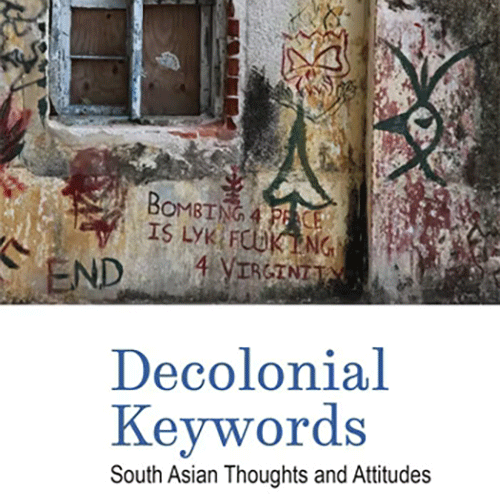
Brief Note About the Book
The volume presents a set of keywords and concepts anchored in the region’s languages and its vast cultural landscape. It reiterates specific attitudes, ways of seeing and methods of doing, embedded in the historical and contemporary experiences in South Asia. The words, concepts, ideas, and attitudes in this volume explore the contexts of their production and how their meanings have changed at different historical moments. Individual essays, from across disciplines, argues for the importance in moving away from the intellectual shackles of colonial and neo-colonial experiences while also not succumbing to the traps of local reductionist nativisms and cultural nationalisms.