IFMR GSB Faculty Sathyanarayanan R presented his case study at the National Conference organised by the Indian Institute of Public Administration (IIPA)

A case study by Professor Sathyanarayanan R, Sundram Fasteners Associate Professor, Marketing, IFMR GSB, Krea University was accepted for presentation at the National Conference organised by the Indian Institute of Public Administration (IIPA), New Delhi, on 30 September, 2024. He presented his case study Marketing and Public administration challenges of Overtourism – The Case of Amsterdam and pointers for India through virtual mode. The case documents the issue of Overtourism in Amsterdam and looks at the inherent conflicts through the lens of Public Administration and Marketing with discussion pointers for scenarios in India. It meanders through the balancing acts between destination branding-focused marketing efforts and sustainability-focused public administration issues.

IIPA is an autonomous academic institution of national eminence established in 1954 for training, research and information dissemination in streams related to the ethos of Public Administration. It is known internationally as a premier centre for Training and Research in Public Administration and Management.

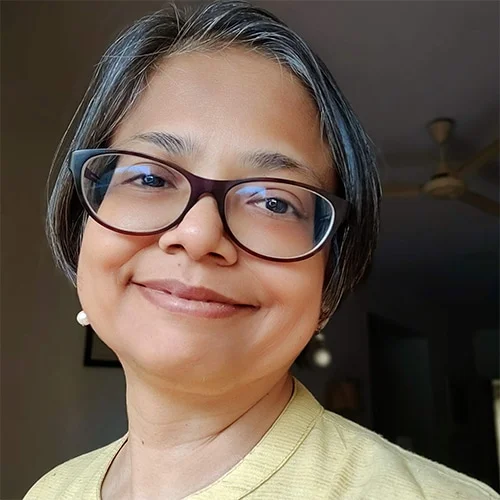
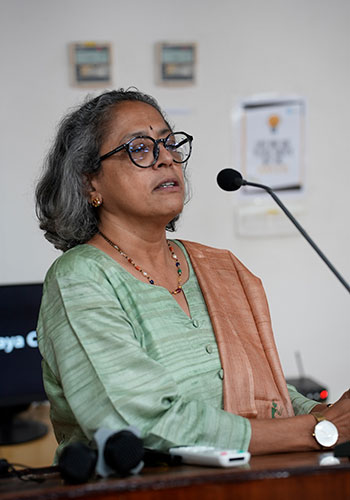
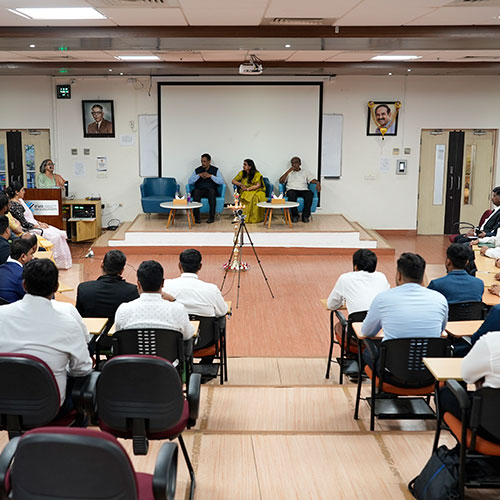
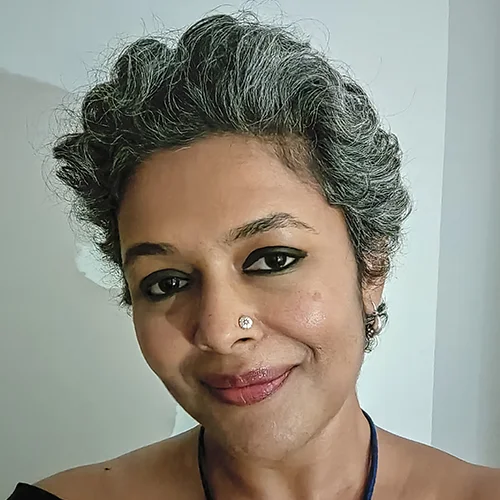
Dr Anannya Dasgupta, Director, Centre for Writing & Pedagogy (CWP) was invited as a keynote speaker at the inauguration of BITSLAW Writing Center

Dr Anannya Dasgupta, Director, Krea-CWP (Centre for Writing and Pedagogy) was the keynote speaker at the launch of the new BITSLAW Writing Centre. The event was held on 1 October, 2024. On 3 October, Dr Dasgupta held an assessment workshop for the law faculty at BITS Law School for the newly launched centre, working with student writing to demonstrate how feedback to student writing can help fine-tune classroom instruction.

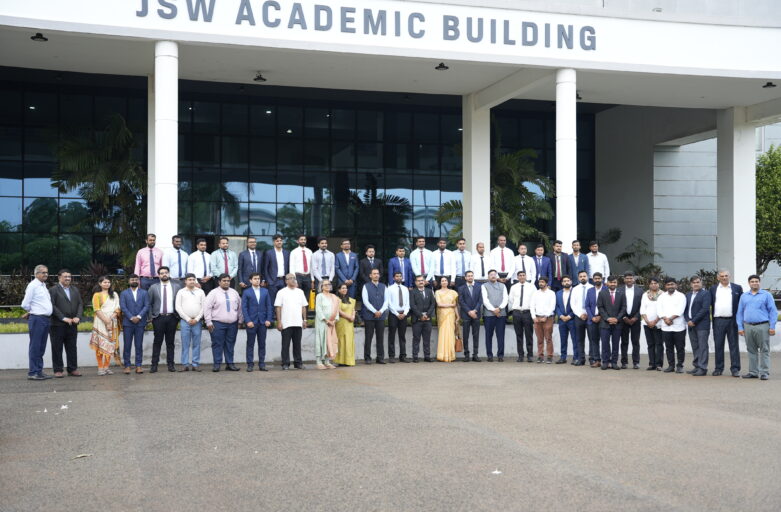
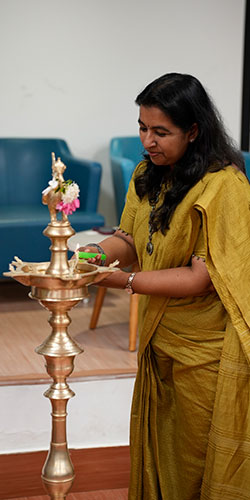
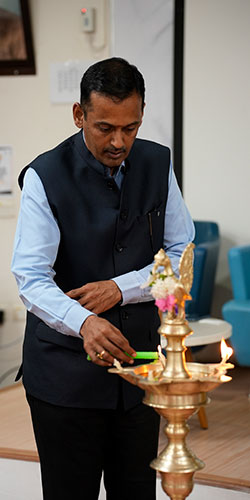
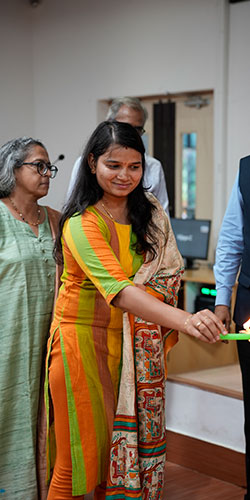
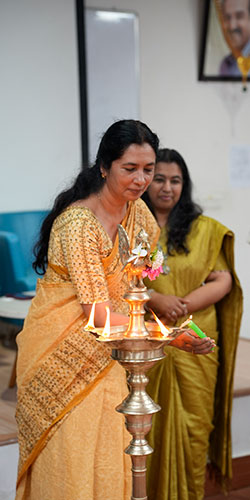
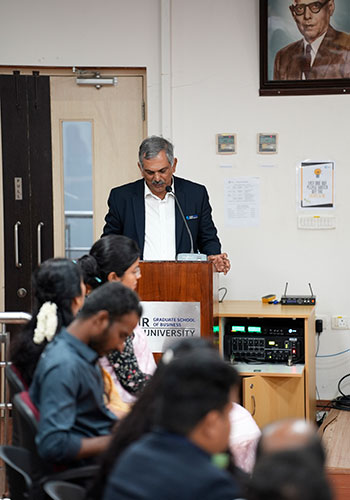
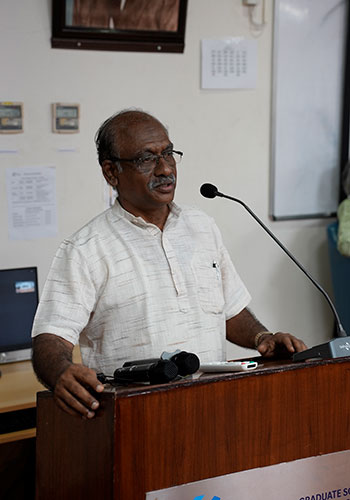
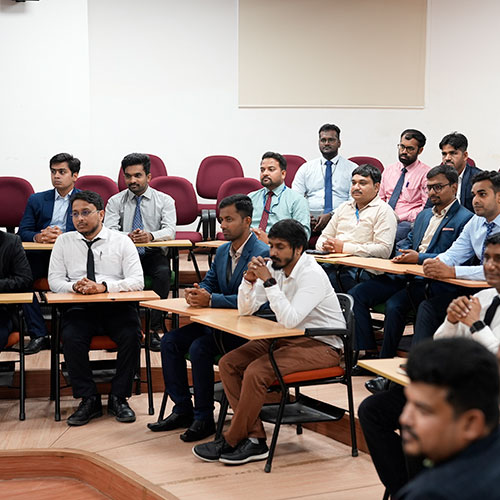
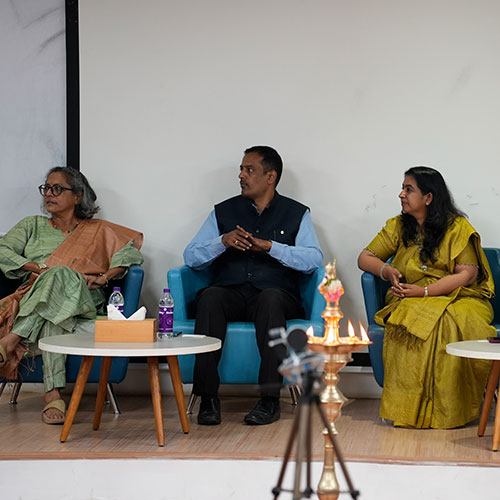
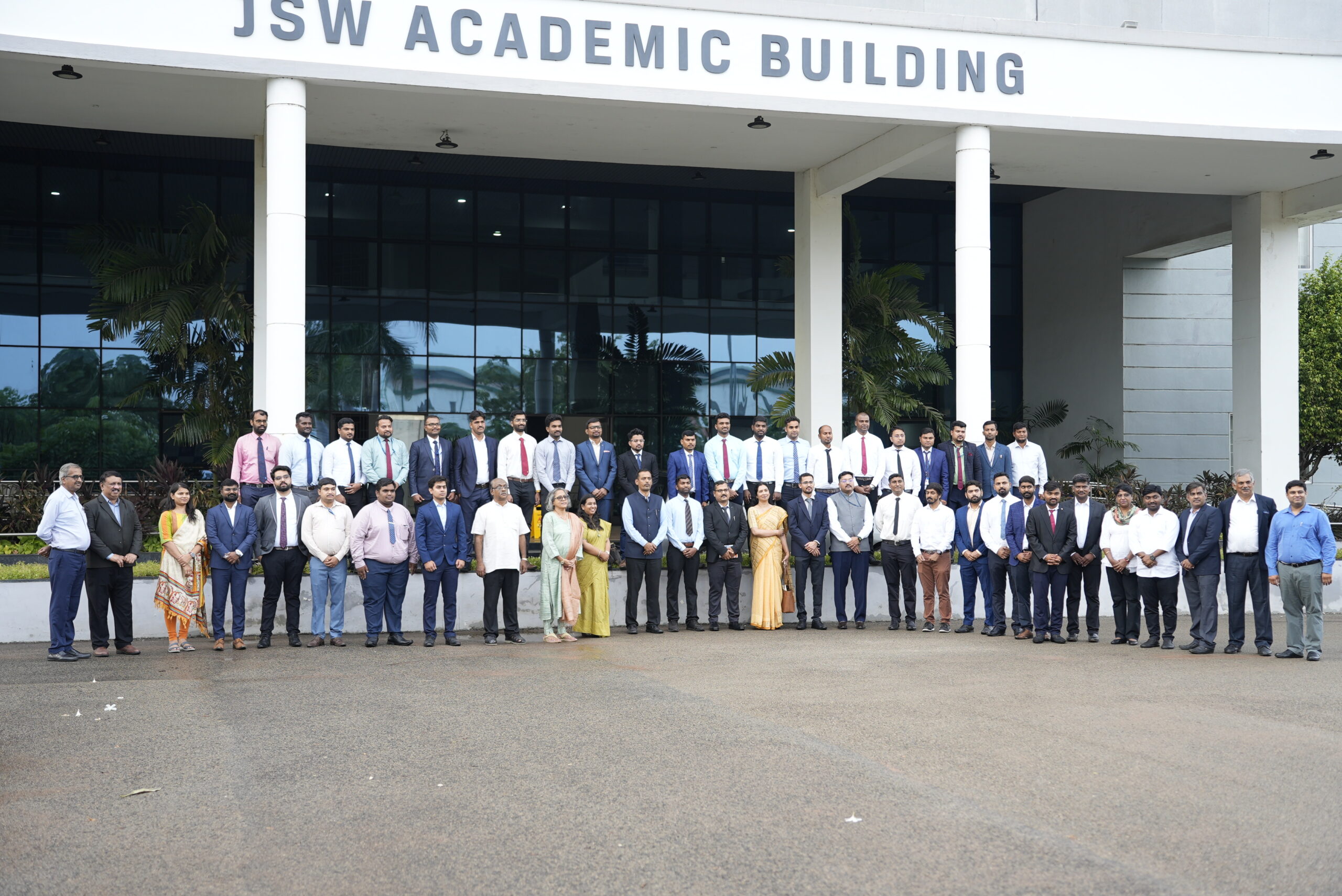
Inauguration of the 6th Batch of L&T Executive MBA at IFMR GSB, Krea University

Inauguration of the 6th Batch of L&T Executive MBA at IFMR GSB, Krea University

On 3 October 2024, the inauguration of the 6th batch of the Larsen & Toubro Limited (L&T) Executive MBA programme took place at IFMR GSB, Krea University, Sri City. The event was graced by L&T dignitaries and participants. Mr Ramanathan, Executive Director of Executive Education at IFMR GSB, Krea University, served as the master of ceremonies. He extended a warm welcome to the distinguished guests, including Mr R Ganesan, Ms Jayanthi Anilkumar, Ms Febin MF, Dean of IFMR GSB Professor Lakshmi Kumar, Executive MBA Programme Chairperson Professor N Chandrasekaran, the L&T MBA students, faculty and staff.

Dean Lakshmi Kumar delivered the welcome address, acknowledging the presence of the L&T dignitaries, Mr Ganesan and Ms Jayanthi. She expressed gratitude to Mr Raghavendran, who has been the Single Point of Contact (SPOC) for the programme for over a decade. Professor Lakshmi also highlighted the background of Krea University, emphasising the exceptional quality of education and the distinguished faculty at IFMR GSB.

Professor N Chandrasekaran, Chairperson of the Executive MBA Programme at IFMR GSB, Krea University, provided an overview of the course structure, discussing the core and elective courses. He emphasised the significance of the project component, encouraging participants to fully engage in this critical part of the programme.

Mr R Ganesan, Head of the Corporate Centre at L&T and the event’s Chief Guest, spoke about the evolving business landscape, driven by technology. He urged participants to not only excel in their technical domains but also to harness the power of data using AI tools. He outlined three key areas for success at L&T beyond technical competency: cost management, people management, and data mastery. He encouraged the cohort to take full advantage of the programme to fast-track projects, mitigate client challenges, and enhance client experiences. After his address, Mr Ganesan interacted with participants individually.

Guest of Honour Ms Jayanthi Anilkumar, Head of the Shared Services Centre at L&T, lauded L&T’s commitment to employee education. She humorously noted that the acronym L&T could also stand for Learning & Training, given the company’s investment in employee development. She commended participants for their dedication to balancing work and education, highlighting the importance of self-reflection and live project work during the programme. She also emphasised diversity goals and the possibility of expanding the programme in the future.

Mr Raghavendran, Head of the L&D Delivery Centre at L&T, shared the origins of the programme, recounting how the need for an MBA programme arose when a young deputy left to pursue further studies. This prompted discussions with Dr C Jaya Kumar, leading to the co-creation of the L&T-specific MBA programme with IFMR GSB, Krea University. Drawing from his own experience of studying at XLRI while working at L&T, he advised participants to network with their 37 fellow high-potential colleagues and to build strong relationships with their bosses and co-workers to manage the demands of the programme.

Mr Aswin Kumar, Head of Customer Interface at IFMR GSB, Krea University, concluded the event with a vote of thanks, expressing gratitude to the dignitaries, participants, and organisers for a successful inauguration.
Jyothis Franklin, PhD student, IFMR GSB  presented a research paper at the 15th European Marketing Academy Conference (EMAC) Regional 2024

Jyothis Franklin, PhD student, IFMR GSB, Krea University presented a research paper titled Understanding the Literature on Advertising Ethics at the 15th European Marketing Academy Conference (EMAC) Regional 2024 hosted by the ISEG, Lisbon School of Economics and Management and ADVANCE – Research Center in Management on 25-27 September, 2024 in Lisbon, Portugal. She co-authored it with Dr Jayasankar Ramanathan, Associate Professor in Marketing, IFMR GSB, Krea University. Franklin held the position of session chair in the same session.

Abstract of the Paper:

This study reviews the literature on advertising ethics and identifies research gaps to provide scope for future work. The relevant literature was identified by searching Scopus and Web of Science. The final sample of 119 articles was carefully read to determine dimensions and variants, which were used in morphological analysis (MA) to construct a cross-consistency matrix (CCM) and obtain a comprehensive understanding of the domain of advertising ethics. The CCM was used to identify explored and unexplored areas of study. A comprehensive MA framework of 6 dimensions and 27 variants of advertising ethics research was constructed and led to the identification of 87 research gaps. This study contributes to the literature by identifying research gaps to be pursued in subsequent work. In addition, this study is the first in the advertising ethics literature to construct an MA framework.

Dr Sushant Raut, Assistant Professor of Physics, SIAS was an invited speaker at the Frontiers in Physics 2024 conference 

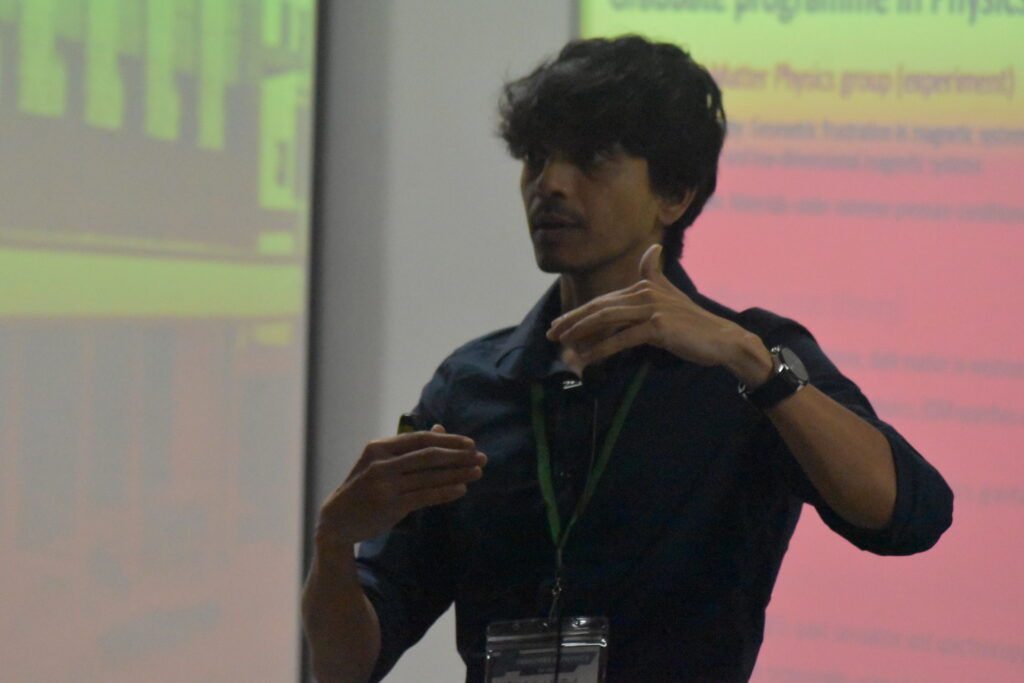
Dr Sushant Raut, Assistant Professor of Physics, SIAS, Krea University was an invited speaker at the Frontiers in Physics 2024 conference conducted by the School of Physics, University of Hyderabad on 27-28 September, 2024. The conference included invited and contributed talks from particle physics, classical and quantum optics, and condensed matter physics. The talk reviewed neutrinos in and beyond the Standard Model of particle physics and surveyed current research areas and future directions in neutrino physics.

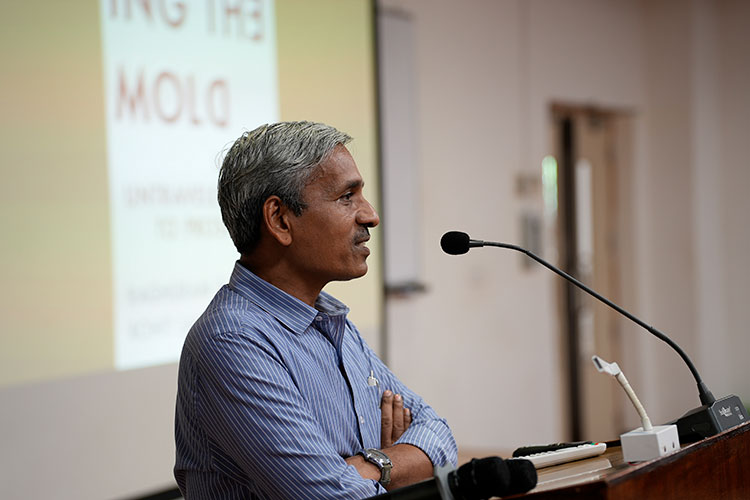
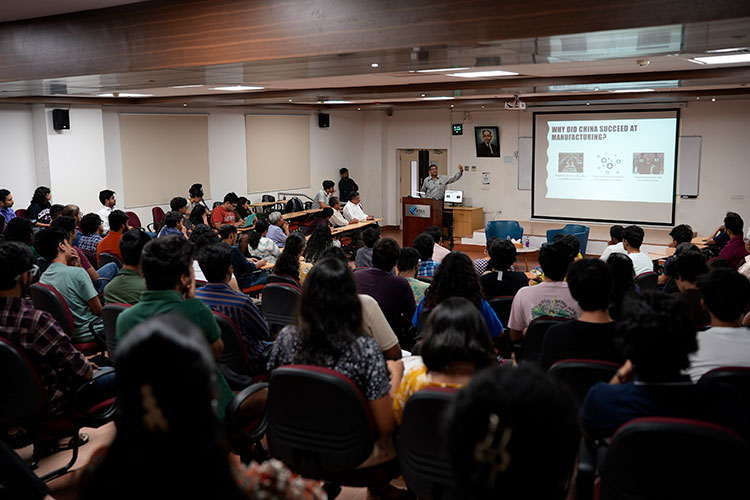
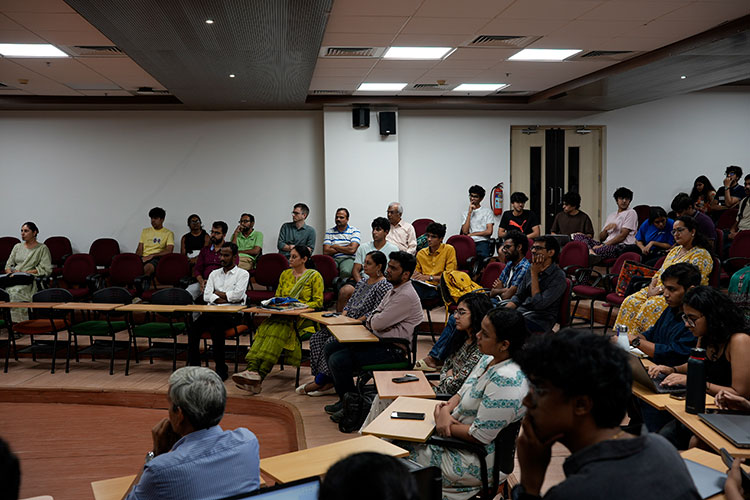
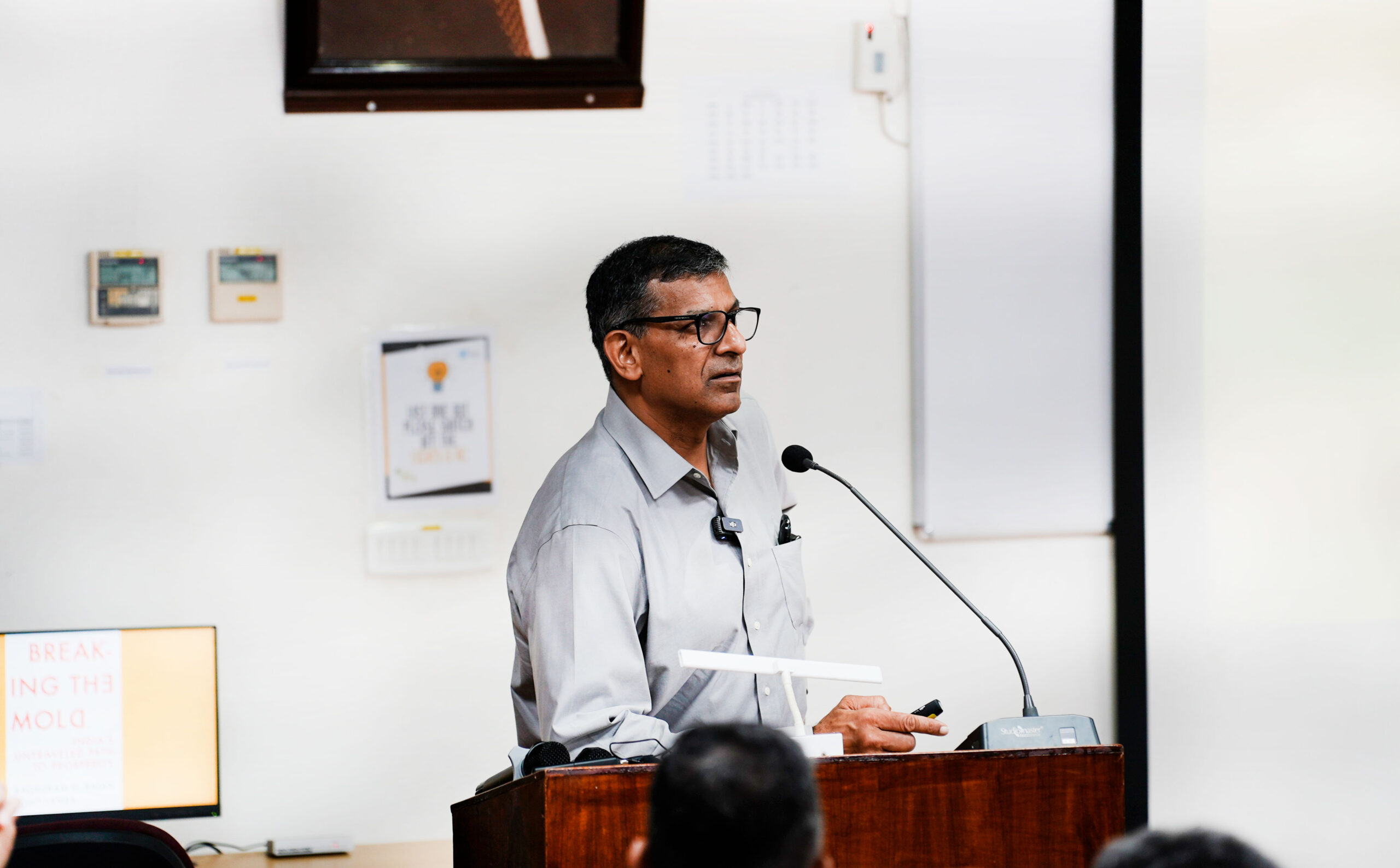
Breaking the Mould – A Presentation by Dr Raghuram Rajan

Breaking the Mould – A Presentation by Dr Raghuram Rajan

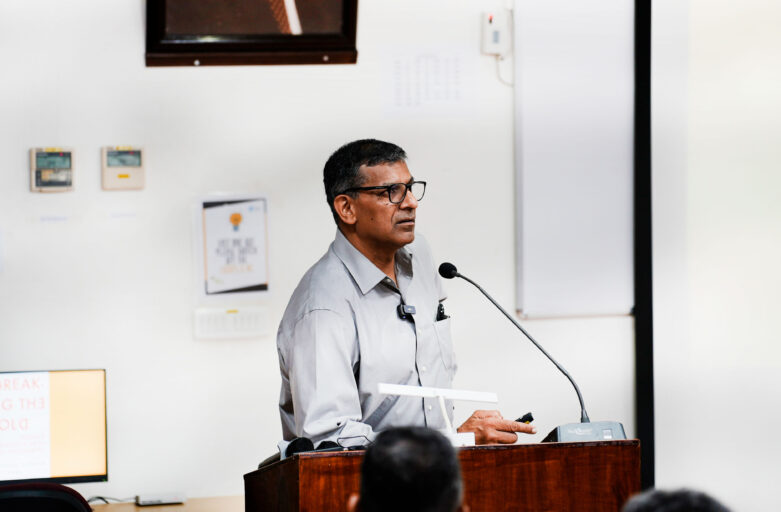
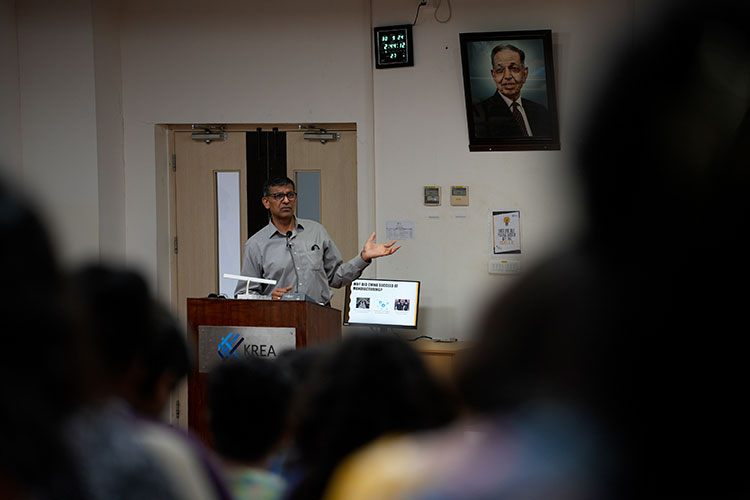
On 30 September, 2024, Krea University hosted a thought-provoking talk by Dr Raghuram G Rajan, Former Governor of the Reserve Bank of India, Katherine Dusak Miller Distinguished Service Professor of Finance at the University of Chicago’s Booth School of Business and Member of the Governing Council at Krea University. He discussed the future of India’s development, drawing from his book Breaking the Mould: Reimagining India’s Economic Future. Dr Rajan emphasised that India faces significant challenges, particularly in creating enough jobs and increasing female employment rates. He noted that the pandemic has worsened these issues, making it even more crucial for India to explore new, innovative pathways. Rather than fixating on one specific route, he argued that India must expand its options.

He challenged the traditional belief that manufacturing is the key to prosperity. While China has succeeded through manufacturing, India has developed a stronger service sector. He posed an important question: Is India prematurely de-industrialising, or is it playing to its strengths? He pointed out that many semi-skilled jobs, which are important to our day-to-day lives, like plumbing and repair, are found in the service industry and hence shouldn’t be seen as inferior to manufacturing.

He also highlighted the global challenges in low-skill manufacturing, noting fierce competition from countries like Vietnam and Mexico along with protectionist policies, and the increasing role of robotics. Dr Rajan used the “smile curve” to illustrate how value in production is now concentrated in research, development and marketing. Companies like Apple, which focus on intellectual property, capture most of the profits, leaving little room for those focused solely on manufacturing.

Dr Rajan repeatedly stressed that India doesn’t have to choose between manufacturing and services but should strive to excel in both. He cited examples like Tilfi, which rebranded traditional weaving, and Agnikul, a company innovating in rocket design, as successful models that combine services and manufacturing.

A particularly compelling point that Dr Rajan made was the need for India to focus on developing intellectual capital rather than just industries. He argued that while building industries is important, nurturing minds and fostering innovation are the true engines of future growth. By investing in education research, and creativity, India can position itself as a leader in high-value services. Dr Rajan suggested that India prioritise the development of intellectuals — those who can drive innovation and design the products of tomorrow — rather than focusing solely on physical industries.

A report by Pranvi Khare, Cohort of 2026, SIAS

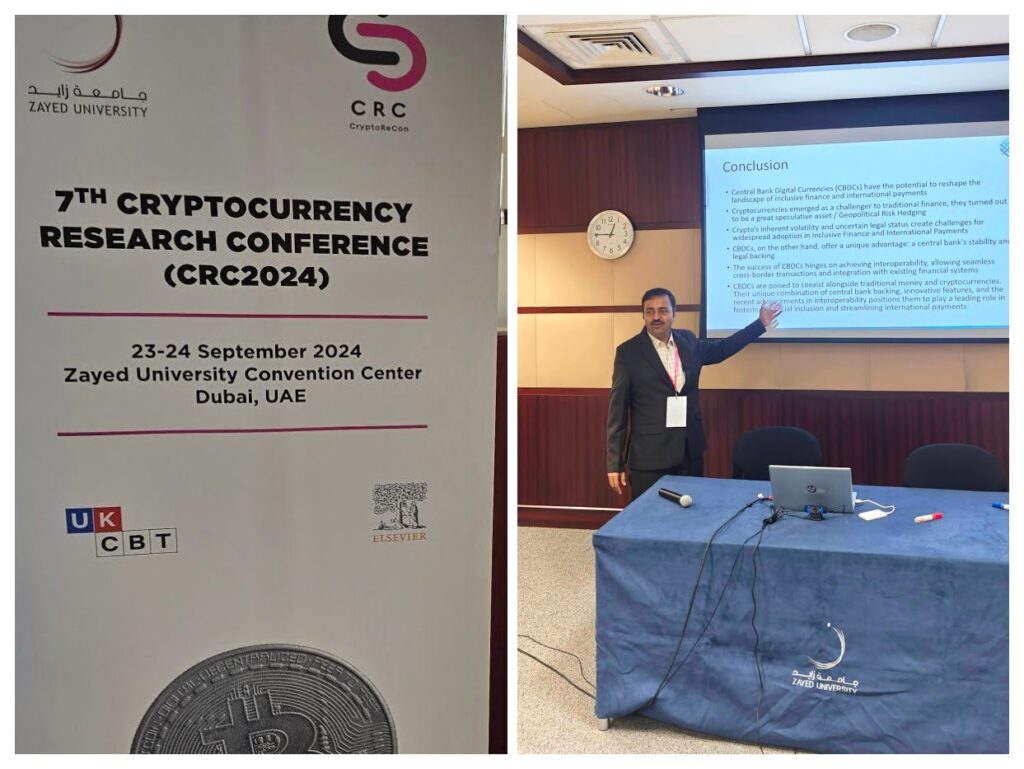
Professor Srinivasan Kalyanasundaram, IFMR GSB presented a co-authored research paper at the Cryptocurrency Research Conference 2024

Professor Srinivasan Kalyanasundaram, Professor of Practice in Finance, IFMR GSB, Krea University attended the Cryptocurrency Research Conference 2024 (CRC 2024) at Zayed University in Dubai and presented a paper titled Role of CBDCs in Shaping International Payments and Promoting Inclusive Finance. He co-authored it with Sanjana Mattaparthi, an SIAS student. His paper presentation was well received with interactive questions and answers at the conference. The conference was attended by experts in Cryptocurrency and Blockchain.

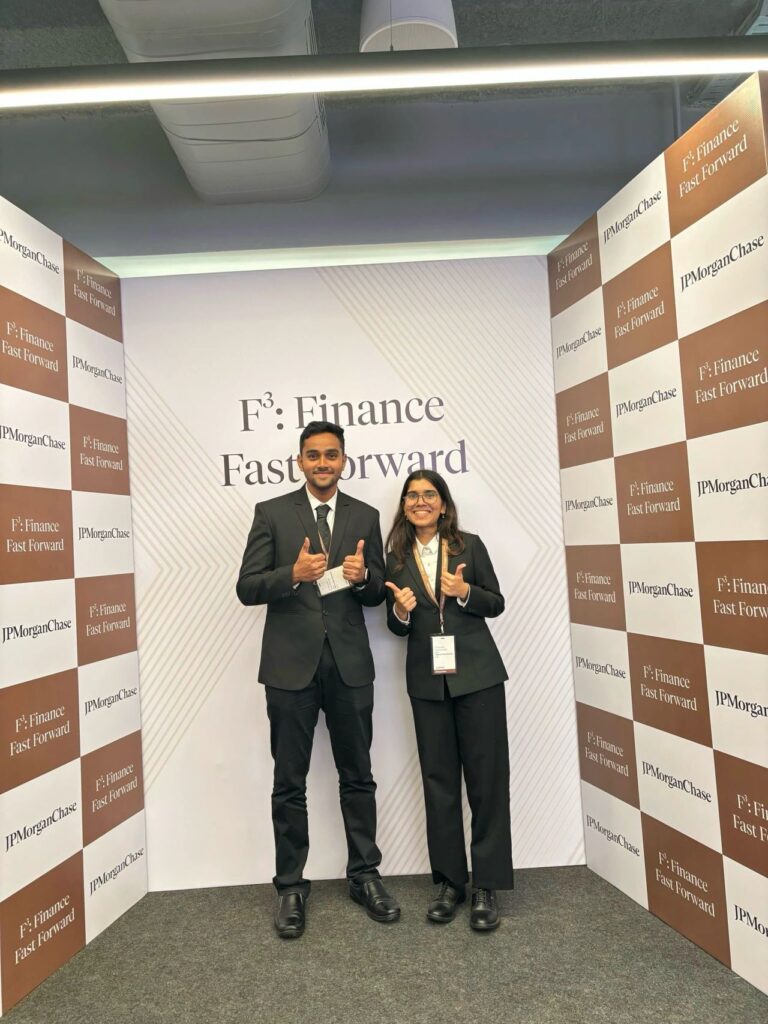
Abinav Ram Kumar and Tejasvini Karthikeyan from IFMR GSB bagged the 1st prize in Finance Fast Forward Competition (F3), organised by J.P. Morgan Chase & Co

We are thrilled to announce that Abinav Ram Kumar and Tejasvini Karthikeyan, first-year MBA students from IFMR GSB, Krea University, have secured 1st place in the prestigious Finance Fast Forward Competition (F3), organised by J.P. Morgan Chase & Co. The event took place on 20 September, 2024 at JPMC’s Mumbai office, with over 11 colleges competing. This achievement underscores the finance acumen and talent at IFMR GSB, where our students consistently excel on national platforms. Congratulations to both!

Dr Joya John was an invited speaker at Manipal University for an International Conference on Modern Indian Literatures 

Dr Joya John, Assistant Professor of Literature, SIAS, Krea University, was an invited speaker at the Manipal Centre for the Humanities, Manipal University, for an International Conference on Modern Indian Literatures held on 23 September, 2024. The conference included the release of the Oxford Handbook of Modern Indian Literatures. Dr John contributed an article titled Adivasi Poetry: The Poetics of Indigeneity in Contemporary India. She participated in a roundtable discussion with the editors and fellow contributors, exploring the evolving directions of Modern Indian literature.