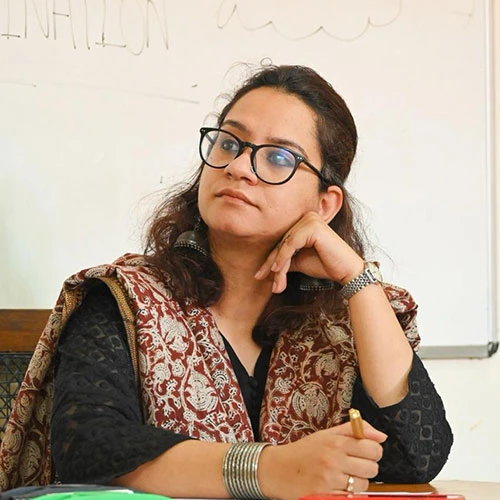
Dr Chirag Dhara, Assistant Professor, Environmental Studies, SIAS has co-authored a research paper titled *A post-AR6 update on observed and projected climate change in India* published in *PLOS Climate*.
Dr Dhara was also part of a fireside chat session for the WCRP IITM Hub Workshop on “Leveraging Climate Research and Modeling for Action and Policy in the Indo-Pacific”, organised as a side event of the INTROMET 2025, on 21 November 2025 at IITM, Pune, India. The workshop aimed to strengthen the capacity of Early and Mid-Career Researchers (EMCRs) to engage effectively at the science–policy–community interface. The one-day event will feature interactive discussions, EMCR-led brainstorming sessions, and mentorship by domain experts, fostering actionable insights and collaborative learning.
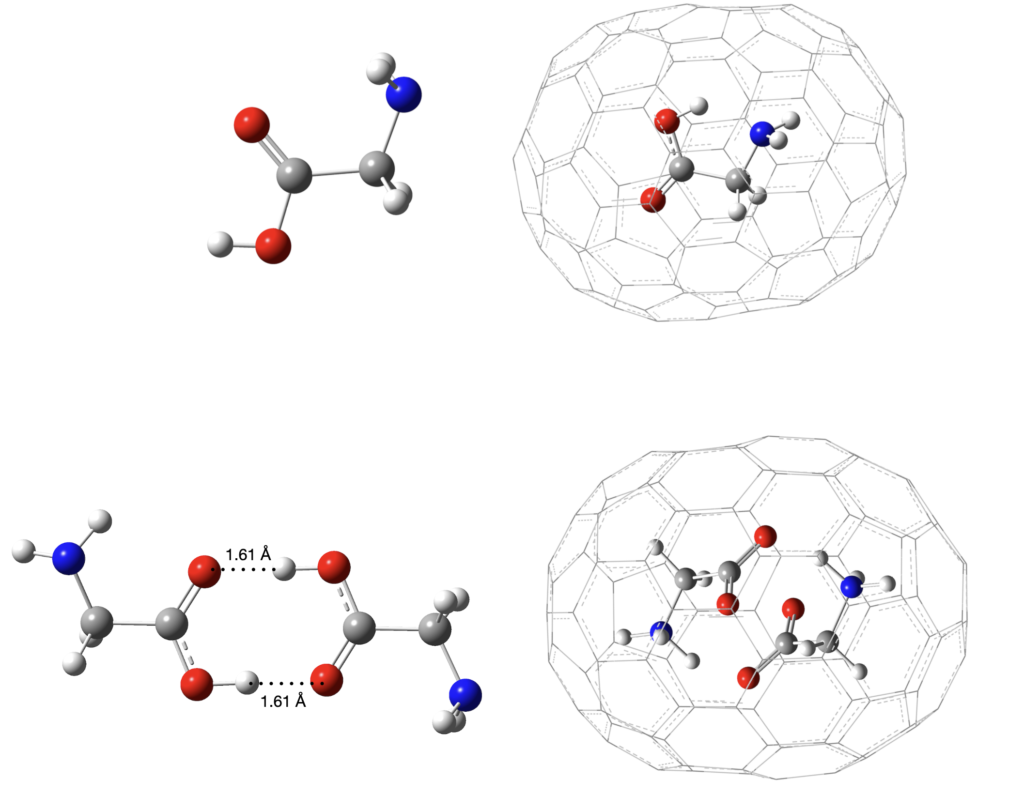
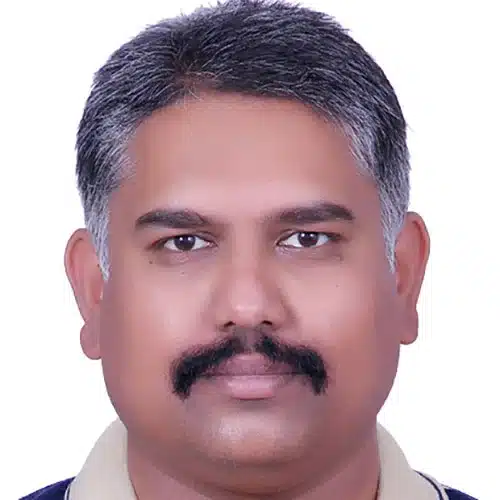
Dr Brijesh Kumar Mishra, Associate Professor, Chemistry, SIAS, co-authored a paper titled Consequences of Heterogeneity of Organic Molecules in Water: Enhanced Photodimerization of Olefins published recently in the scientific journal Langmuir by the American Chemical Society.
Abstract: Photodimerization of organic molecules such as indene and coumarin is dramatically enhanced in water compared to that in an organic solvent. In this study, we have probed the origin of this phenomenon through NMR spectroscopy, dynamic light scattering (DLS) experiments, quantum chemical calculations, and molecular dynamic simulations. Indene molecules are inferred to exist as an equilibrium mixture of monomers, noncovalent dimers, and small (NMR-detectable) and large (DLS-detectable) aggregates in water. This behavior is distinctly different from that observed in an organic solvent, where indene molecules remain homogeneously distributed as monomers. The enhancement of thermal bimolecular reactions such as the Diels–Alder reaction is analyzed in terms of “in-water”, “on-water”, and “on the surface of microdroplets”. The inhomogeneous distribution of small organic molecules identified in this study could be a reason for their enhanced photodimerization in water. The presence of small aggregates, detectable by their unusually sharp 1H NMR signals, rules out the need for diffusion, which is often slower than the decay rates of excited molecules. The results presented here demonstrate that the knowledge of reactions in organic solvents cannot be directly extended to those occurring in water.
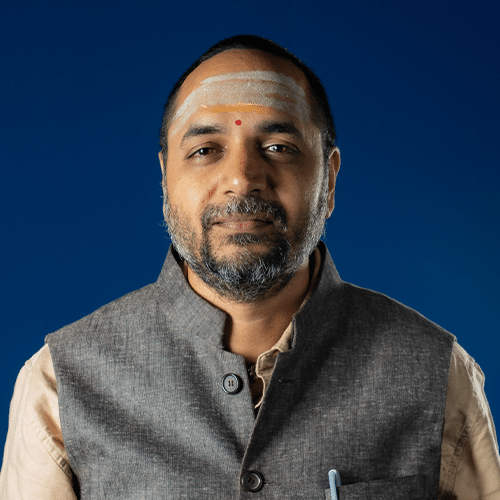
Jaideep Hardikar, Visiting Professor of Practice, Environmental Studies, School of Interwoven Arts and Sciences (SIAS) has been awarded the maiden Ramoji Excellence Award in the Journalism category. After a rigorous selection process, Jaideep was chosen for his exceptional body of work documenting rural India and the agrarian crisis.
Dr Sairam Moturi, Assistant Professor, Finance, Accounting and Quantitative Finance, IFMR GSB, conducted a workshop on Cost Accounting using LEGO Blocks for MBA students in Analytics, Hospitality, and Healthcare Management at the School of Management Studies (SMS), University of Hyderabad.
A research article co-authored by Dr Debajit Maiti, Assistant Professor, Chemistry, SIAS titled Electrooxidative Divergent Halocyclizations of Ambident Amides has been published in Angewandte Chemie International Edition.
Dr R S Sathya Saminadan, Associate Professor of Practice, Marketing, IFMR GSB has penned his most recent work of fiction titled The Kingmaker Conspiracy, which is now available on all online platforms.
Professor Bishnu Mohapatra, Professor, Politics, SIAS and Director – Moturi Satyanarayana Centre for Advanced Study in the Humanities and Social Sciences delivered a talk titled ‘Reimagining the Humanities: Potential and Possibilities’ at SAU Thought Cafe, hosted by South Asian University.
Dr Shimna Kannoth, Post-Doctoral Fellow, Environmental Studies, SIAS has co-authored a paper published in Space Weather titled Impact of the Gannon Superstorm on the Equatorial Ionization Anomaly Dynamics During Its Recovery Phase on 11 May 2024. The present study, for the first time, reveals the combined influence of geomagnetic storm-induced modifications in equatorial electrodynamics, meridional wind circulation, and substantial compositional changes during the recovery phase of a superstorm on the ionospheric plasma distribution. The integration of observational evidence with model simulations provides strong corroborative support, thereby offering new insights into the complex coupling processes governing ionospheric responses during extreme geomagnetic disturbances.
A team of MBA students from IFMR Graduate School of Business (GSB) emerged as Joint Winners (1st Position) at the SAMANVAY 2025 – Fynergy Case Competition, hosted by IIT Madras. The winning team comprised Hardik Gupta, Parag Sachdev and Harshit Lawaniya, who presented a strategic acquisition model balancing profitability, scalability, and sustainability. Sharing the title with them are their juniors — Sparsh Jain, Aniket Jaiswal, and Gaurav Patil.
A few of the recent publications by Professor Shanti Pappu, Adjunct Professor, Archeology and History, SIAS
Bhattacharya, S., Joshi, P., Akhilesh, K., & Pappu, S. (2025). Crafting Traditional Granite Grinding Stones in South India. Lithic Technology, 1–18. https://doi.org/10.1080/01977261.2025.2562261
We present a study of contemporary traditional granite grinding stone manufacturing processes based on ethnographic studies in South India. We discuss the reduction sequence of upper and lower stones from quarrying the initial blocks to achieving the final morphology of the utensils. After selecting suitable granite blocks, three key reduction stages were identified: rough-out creation, dressing, and final shaping with pecking and smoothing. We analyze the resultant waste products and morphologies of the grinding stones arising during various stages of the reduction sequence, investigating the decision-making strategies of the craftsman. These findings provide analogies for interpreting grinding stone contexts in early farming sites, highlighting the influence of raw material selection, quarry access, and economic needs on crafting. We also compare the lithics from granite manufacturing strategies with those from our basalt grinding stone production case studies, investigating the influences of raw material and decision-making strategies on variability in tool morphologies and waste products.
Kumar Akhilesh, Susana Rubio-Jara, Joaquín Panera, Manuel Santonja, Alfredo Pérez-González, Manuel Domínguez-Rodrigo, Patricia Bello-Alonso & Shanti Pappu. 2025. Reconstructing Skills and Strategies of Hominins During the Early Acheulean: Behavioral Flexibility in Handaxe Production at Olduvai Gorge (Tanzania). Journal of Palaeolithic Archaeology 8, 27 (2025). Read more here: link.springer.com/article/10.1007/s41982-025-00224-3#citeas
Technological strategies for biface manufacture adopted during the Acheulean represent a significant shift in the Lower Palaeolithic. The appearance of intentional bifacial shaping indicates the imposition of form on stone tools not seen previously. Despite this importance, there is considerable scope for research into hominin decision-making while factoring in the differential properties of varied raw materials. Here, we discuss the results of an experimental knapping program of Acheulean handaxes on Naibor Soit quartzites (NSQ), aiming at investigating technological strategies observed at the Lower Floor TK Site (TKLF), Olduvai Gorge, Tanzania. We examine the unique properties of the NSQ raw material and the challenges faced during knapping slabs at various stages of the handaxe reduction sequence. We explore how the selection and extraction of suitable slabs for handaxe manufacture and the impact of specific geological structures within this raw material determine the final artefact form. We note the effect this had on the need for careful choices in selecting suitable slabs at the raw material sources based on considerations of the properties of the slab, thickness, and width, amongst other factors. Functional requirements and the NSQ slabs’ properties influenced strategies adopted for handaxe façonnage and the final tool morphology. We discuss choices made by Acheulean toolmakers when they adopted freehand and bipolar knapping techniques. These decisions can be identified through the nature of the debitage generated and the organization of flake scars on handaxes. We suggest that Acheulean hominins displayed high skill levels and evolved knapping strategies. These strategies allowed them to adapt to the complex task of implementing specific shaping techniques on NSQ slabs. This provides one of the few experimental studies that directly explore the impact of the particular requirements of flaking quartzites during the Acheulean. This study contributes to understanding the diversity of strategies and behavioral flexibility exhibited by Acheulean hominins.
In this study, we utilize the chaîne opératoire approach to examine the complex process of traditional manufacturing of basalt grinding stones in India. We examine decision-making processes related to knapping strategies beginning with the sourcing of basalt, the quarrying of appropriate blocks, and varied stages of knapping using indirect percussion with specialized iron chisels and hammers. We document the nature of waste products and the morphology of the grinding stone at various stages during this process. We compare this with ethnographic and archaeological data from Neolithic-Chalcolithic archaeological sites in India and globally where basalt grinding stones are noted, discussing variability like the lithic assemblages generated.
While it is clear that current human impact on the earth system is unprecedented in scope and scale, much less is known about the long-term histories of human land use and their effects on vegetation, carbon cycling, and other factors relevant to climate change. Current debates over the possible importance of human activities since the mid second millennium CE cannot be effectively resolved without evidence-based reconstructions of past land use and its consequences. The goal of the PAGES LandCover 6K working group is to reconstruct human land use and land cover over the past 12,000 years. In this paper, we present the first large-scale synthesis of archaeological evidence for human land use in South Asia at 12 and 6kya, a critical period for the transition to agriculture, arguably one of the land use transitions most consequential in terms of human impact on the Earth system. Perhaps the most important narrative we can pick out is that while there are some shifts in land use across these time windows, hunter-gatherer-fisher-foraging remained the dominant land use, and within this there was a mosaic of strategies exploiting diverse and complex landscapes and ecologies. This is not necessarily a new conclusion–it is not new to state that South Asia is comprised of many niches, but demonstrating the deep time history of how people have adapted to these and adapted them is an important step for modelling the impacts of human populations and thinking about their footprints in a longue-durée perspective. Despite the new development of food production between the early and mid-Holocene by overall area foraging life ways continued as the dominant land use practice into the 6kya time window. The development of agriculture and food production was not unimportant–it is the beginning of a land use that eventually comes to dominate the sub-continent, but at 6kya agriculture was restricted to specific contexts. Across 12kya to 6kya and different land uses, the use of mosaic ecologies, diverse strategies and the importance of water as a resource stand out as shared themes.
In other news through the year:
Professor Pappu presented a paper for the IIT-Gandhinagar Curiosity Conference, speaking on “Stories in Stone: Uncovering India’s Earliest Prehistoric Heritage” on 19 January 2025.
She also presented papers with colleagues from the Sharma Centre for Heritage Education at a conference at the Two-Day National Seminar on ‘Revitalizing Indian Knowledge Systems: Bridging History and Technology’ organised by the Internal Quality Assurance Cell (IQAC) & Centre of Excellence – Art & Culture, Shasun Jain College funded by ICHR on 24 January 2025.
Professor Pappu was invited to present the B.M. Das Memorial Oration at the Anthropological Society of India Annual conference on 21 January 2025.
Several papers were presented with colleagues from the Sharma Centre for Heritage Education at the annual conferences of the Indian Society for Prehistoric and Quaternary Studies from 7-9 March 2025 at Raipur.
Professor Pappu also presented the Indira Gandhi Endowment lecture at Stella Maris College and spoke on “A Case for Curiosity” on 10 September 2025.
Professor Pappu is also involved in INQUA-INDIA 2027 as a member of the Scientific Committee, and is on the RAC of BSIP, Lucknow.
She and colleagues from the SCHE led a survey with volunteers including Krea University students as part of a collaborative program with University of Liverpool on “Stone tools and Social Signalling. What assumptions do people make about the makers of different stone tools?”