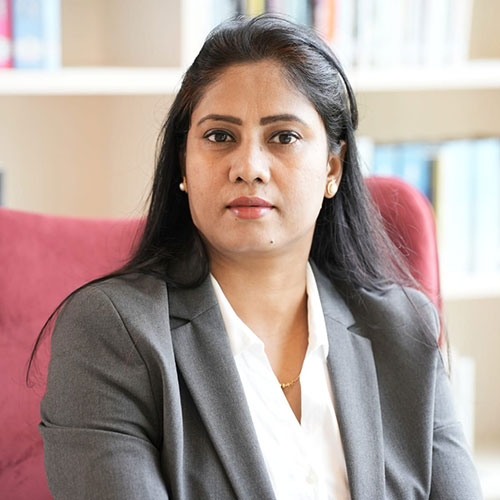
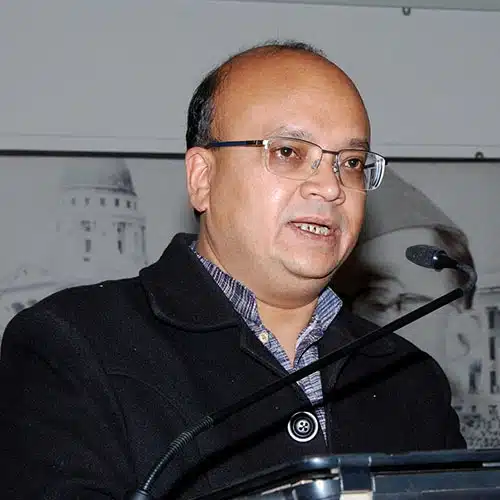
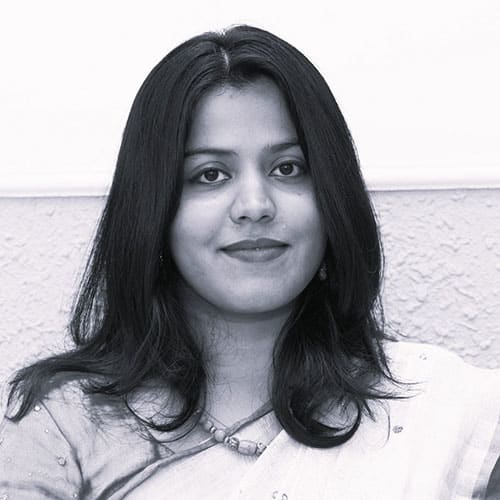
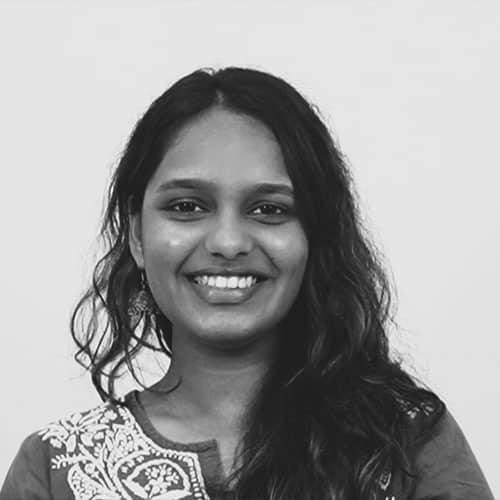
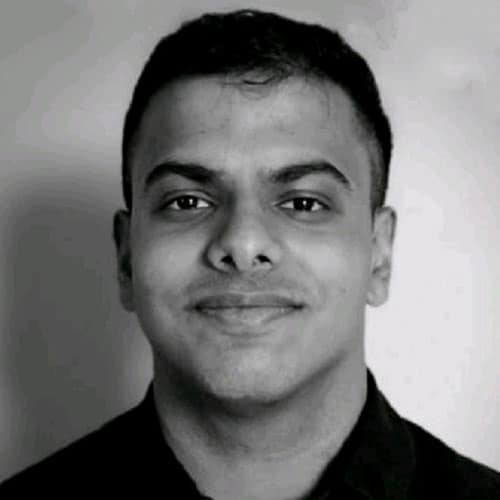
Dr Chirag Dhara delivers a talk at the European Geosciences Union (EGU) General Assembly 2025

Dr Chirag Dhara, Assistant Professor, Environmental Studies, SIAS delivered a virtual talk on 29 April 2025 at the European Geosciences Union (EGU) General Assembly 2025 in the session titled, ‘Towards net zero and beyond: remaining carbon budgets, negative emissions, mitigation pathways and implications for policy’. The work was led by Dr Dhara’s student Shrutee Jalan, PhD student at IISc, Bangalore. It was in collaboration with colleagues from IISc, Bangalore and BML Munjal University, Delhi NCR.

IFMR GSB Faculty members take part in the Teaching Cases Seminar at IIMB

Dr Vijaya C, Assistant Professor, Finance, IFMR Graduate School of Business (GSB) and Dr Jyoti Kumari, Assistant Professor, Finance, Accounting and Quantitative Finance, IFMR GSB attended the ‘Teaching Cases Seminar’ organised and facilitated by Harvard Business Publishing at Indian Institute of Management, Bangalore (IIMB) on 28 and 29 April 2025.

Facilitated by Professor V.G. Narayanan, Harvard Business School, the seminar was aimed at strengthening the case study pedagogy in business schools by sharpening the case teaching skills of management faculty across various institutes and disciplines. The seminar covered myriad dimensions of teaching cases, namely importance of case study pedagogy, designing a discussion plan, conducting, steering and evaluating classroom case discussions, as well as the different ways of using GenAI for case study pedagogy.

Professor Sumantra Bose discusses Kashmir’s evolving geopolitical landscape on Al Jazeera, BBC Sounds and The New York Times

Professor Sumantra Bose, Professor, International and Comparative Politics, SIAS, has recently drawn significant media attention for his insights into the shifting geopolitical dynamics between India and Pakistan.

On 25 April 2025, Professor Bose appeared on Inside Story on Al Jazeera, where he discussed the escalating tensions following the tragic Pahalgam attack in Jammu & Kashmir. He emphasised the deepening crisis and the potential for further destabilisation in the region. The episode explored the impact of the attack on bilateral relations and what it may signal for the future. Watch the full discussion here.

In a follow-up article published on 28 April 2025, titled ‘Burst balloon’: How Pahalgam attack shattered Modi’s Kashmir narrative, Professor Bose critically examined how the attack has disrupted the Indian government’s long-standing narrative of stability and normalcy in Kashmir, exposing key flaws in its approach. Read the full article here.

Most recently, on 1 May 2025, he featured on The Briefing Room on BBC Sounds in a BBC Radio 4 episode titled ‘Are India and Pakistan on the brink of war over Kashmir?’, offering expert commentary on the historical and current dimensions of the conflict. Listen to the episode here.

The same day, The New York Times featured a detailed report on the Pahalgam attack and its aftermath, titled India Blames Pakistan After Kashmir Attack Kills 25 Tourists. Professor Bose was among the key experts cited, offering a sobering assessment of the region’s volatility and the dangers of renewed escalation. He noted how such events reflect underlying tensions that have long remained unresolved and pointed to the urgent need for a more thoughtful, historically informed approach to regional peace. Read the full article here

A leading authority on South Asian politics, Professor Bose is the author of Kashmir at the Crossroads: Inside a 21st-Century Conflict (Yale, 2021; Picador India in the subcontinent, and updated Picador India paperback, 2024), which provides a compelling, deeply informed account of the Kashmir conflict from 1947 to the present.

His expertise continues to shape discourse on South Asian politics, providing nuanced perspectives on complex regional issues.

Before joining Krea University, Professor Bose held a Chair at the London School of Economics and Political Science (LSE), where he taught and conducted research for nearly two decades.

His acclaimed publications include:

  • Secular States, Religious Politics: India, Turkey, and the Future of Secularism (Cambridge University Press, 2018)
  • Transforming India: Challenges to the World’s Largest Democracy (Harvard University Press, 2013)

Professor Kai Easton presents Research Seminar at University of Pretoria

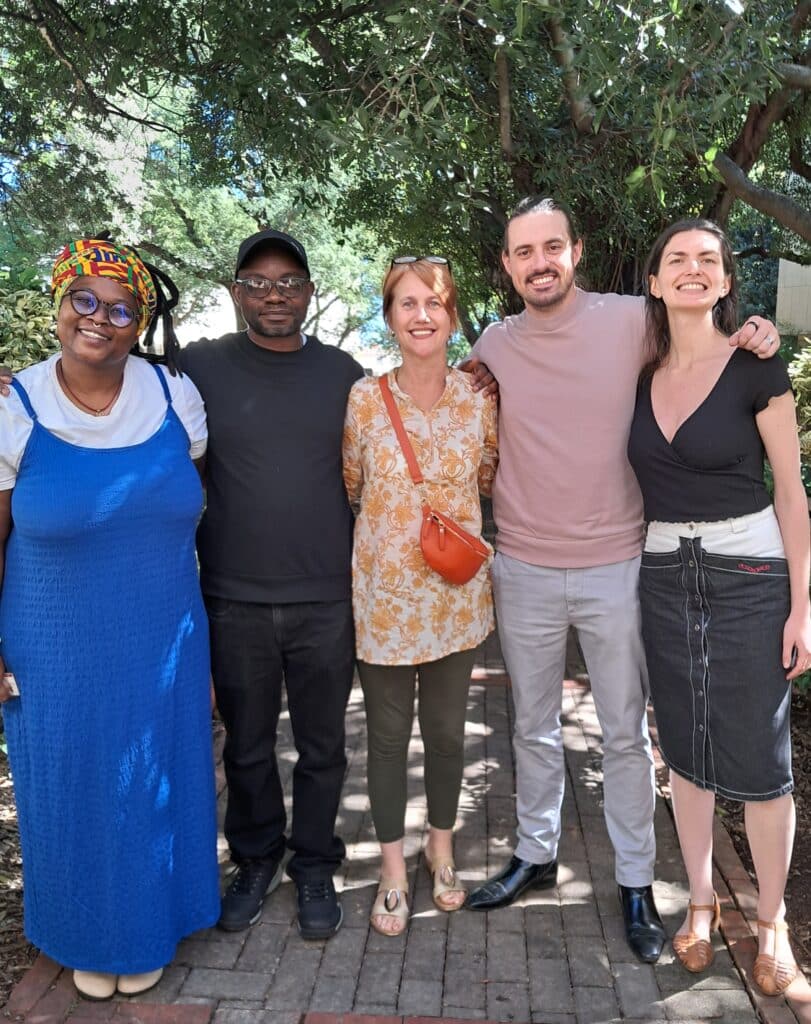
Professor Kai Easton, Professor, Literature & Visual Cultures, SIAS presented her research seminar ‘Scenes from the South’ on 10 April 2025 at the University of Pretoria, South Africa. Professor Easton has curated a travelling exhibition of the same name, focussing on J. M. Coetzee’s itineraries across continents.

Mabafokeng Hoeane (PhD Student at CAS, Centre for the Advancement of Scholarship); Isaac Ndlovu, Associate Professor of English; Kai Easton, Professor of Literature & Visual Cultures, SIAS; Jordan Stier, PhD student, Department of English and Eva Marik, PhD student, Department of English

Read More

Dr Sambaiah Gundimeda’s latest essay in the Frontline

An essay by Dr Sambaiah Gundimeda, Associate Professor, Politics, SIAS titled Ambedkar’s turn to Buddhism was not just rejection. It was revolution in the Frontline.

Read more

Summary of the essay

Conversion, a radical act of collective emancipation
Dr B.R. Ambedkar’s conversion to Buddhism in 1956 marked the culmination of a protracted and deliberate struggle against the caste system entrenched within Hinduism. His bold declaration at Yeola in 1935, to renounce Hinduism, represented a pivotal moment in both his political and spiritual odyssey. It stemmed from his growing realisation that Hinduism, built upon an immutable caste hierarchy, institutionalised social exclusion through its scriptures, rituals, and daily practices. For Dalits, it perpetuated a life of humiliation, subjugation, and indignity, offering no avenue for justice or true liberation.

Ambedkar firmly believed that religion should be a tool for individual empowerment, not a vehicle for oppression—a principle he found irreconcilable with Hinduism’s deeply entrenched caste structures. This harsh reality is evident even today, as illustrated by a recent incident in Tamil Nadu, where a Dalit youth was brutally attacked by caste Hindus merely for riding a Bullet motorcycle—an act seen as defying caste norms. Such incidents tragically confirm Ambedkar’s belief that Hinduism, inseparably tied to caste, is beyond reform and cannot deliver dignity or equality to Dalits.

In response to the systemic violence, subjugation, and humiliation inherent in Hinduism, Ambedkar called upon Dalits to embrace a new religious identity through conversion, viewing it as a path to genuine liberation. He found in Buddhism—with its core tenets of equality, compassion, and human dignity—a means for Dalits to reclaim their self-respect, freedom, and social recognition. For Ambedkar, conversion was not merely a spiritual act; it was a radical act of collective emancipation—a definitive break from a tradition that had long dehumanised and oppressed his people.

Yet, Ambedkar understood that conversion alone could not dismantle caste hierarchies, which persisted across religious boundaries. His vision remains profoundly relevant today, as the rise of anti-conversion laws not only threatens religious freedom but also entrenches caste-based oppression. Ambedkar’s unwavering demand for political power, economic justice, and legal protection continues to offer a critical framework for the ongoing struggle for Dalit liberation.
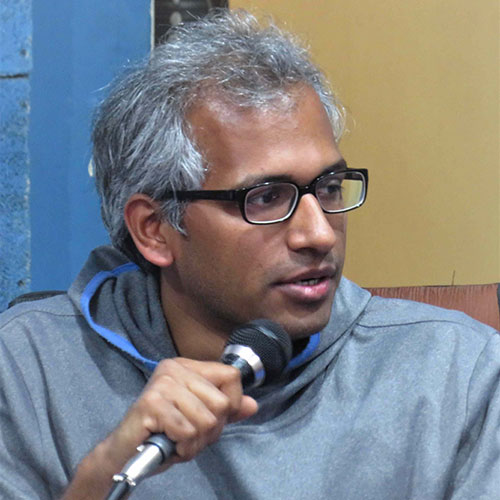
Dr Swarnamalya Ganesh speaks with Anuj Gurwara in his latest podcast

Dr Swarnamalya Ganesh, Assistant Professor of Practice and Discipline Coordinator – Global Arts, SIAS was a guest on one of the most recent episodes of the podcast, Speak with Anuj, hosted by Anuj Gurwara.

What if communication didn’t need words? In this conversation, Dr Ganesh joins Anuj as they explore how movement, breath, and stillness become tools of deep connection. They talk about the internal dialogues dancers navigate, the meditative nature of performance, and how vulnerability and empathy shape authentic communication – on stage and in life. From working with blind and deaf performers to navigating tradition in a modern world, Dr Ganesh shares stories that will change how you understand expression, silence, and presence. This episode is a masterclass in nonverbal communication, mindful performance, and the beauty of embracing imperfection.

View more

​Dr Chirag Dhara delivers a talk at IGIDR Mumbai

Dr Chirag Dhara, Assistant Professor, Environmental Studies, SIAS delivered a talk titled , ‘What levels of development can humanity sustainably aspire to?’ at Indira Gandhi Institute for Development Research (IGIDR) in Mumbai on 23 April 2025.

Abstract of the Talk :

What levels of development can the Global South sustainably aspire to? We argue that positioning Nordic countries as the leaders of “sustainable development”, as is often done, poses a serious dilemma: international adoption of their lifestyles risks severely breaching planetary biophysical limits, while non-adoption risks perpetuating developmental inequality. We introduce a revised conceptual framework for “sustainable development” emphasising scalability as a pivotal facet. Our results highlight Panama, Costa Rica, and Sri Lanka as having achieved high levels of social progress with low environmental pressures, representing a more realistic aspiration for the rest of humanity.

The talk was based on Dr Dhara’s recently published paper, co-authored with Dr Soumyajit Bhar, titled, A scalability-centric perspective on global human development within environmental limits.

Read more

​Dr Jyoti Kumari pens an opinion article in the Deccan Herald

​Dr Jyoti Kumari, Assistant Professor, Finance, Accounting and Quantitative Finance, IFMR GSB has penned an opinion article in the Deccan Herald titled, How decentralised credit enables SMEs, MSMEs.

The article discusses how decentralisation of credit and smart lending not only transforms the MSME sector but also contributes significantly to India’s economic growth.

Read more

Dr Swayam Sampurna Panigrahi, Tanisha Tayal and Daniel George pen an article in Telangana Today

Dr Swayam Sampurna Panigrahi, Assistant Professor, Operations and Area Chair – Operation, IFMR GSB and SIAS students Tanisha Tayal and Daniel George have co-written an article titled, Growing e-waste crisis in Telangana Today. Through the article they emphasise that e-waste is not just about disposal but about redefining technology, consumption and sustainability. 

Read more

Dr Sambaiah Gundimeda delivers a talk at Telangana University

​Dr Sambaiah Gundimeda, Associate Professor and Discipline Coordinator, Politics, SIAS was invited by Telangana University, Nizamabad, Telangana, to deliver a talk at a webinar held on 13 April 2025, marking the 134th birth anniversary of Dr B R Ambedkar. The webinar was titled “Relevance of Dr. B. R. Ambedkar’s Thoughts in the 21st Century.” In his address, ​Dr Gundimeda focused on three key aspects of reservations concerning the Dalit community: education, employment, and political representation. He argued that while reservations—particularly in education and employment—have contributed to the emergence of a small Dalit middle class, political reservations have largely failed to empower marginalised communities. Instead, he contended, they have led to the creation of what Kanshi Ram called “political slaves” or chamchas of the upper-caste leadership.

According to ​D​r Gundimeda, the voice of Dalits in caste- and religion-based political formations can only be meaningfully heard when Dalits have their own independent political entities. He also explored Ambedkar’s ideas on the annihilation of caste and religious conversion as means of social emancipation. ​Dr Gundimeda concluded by asserting that transforming India’s vertical social hierarchy into a horizontal one is possible only when the marginalised gain real political power.