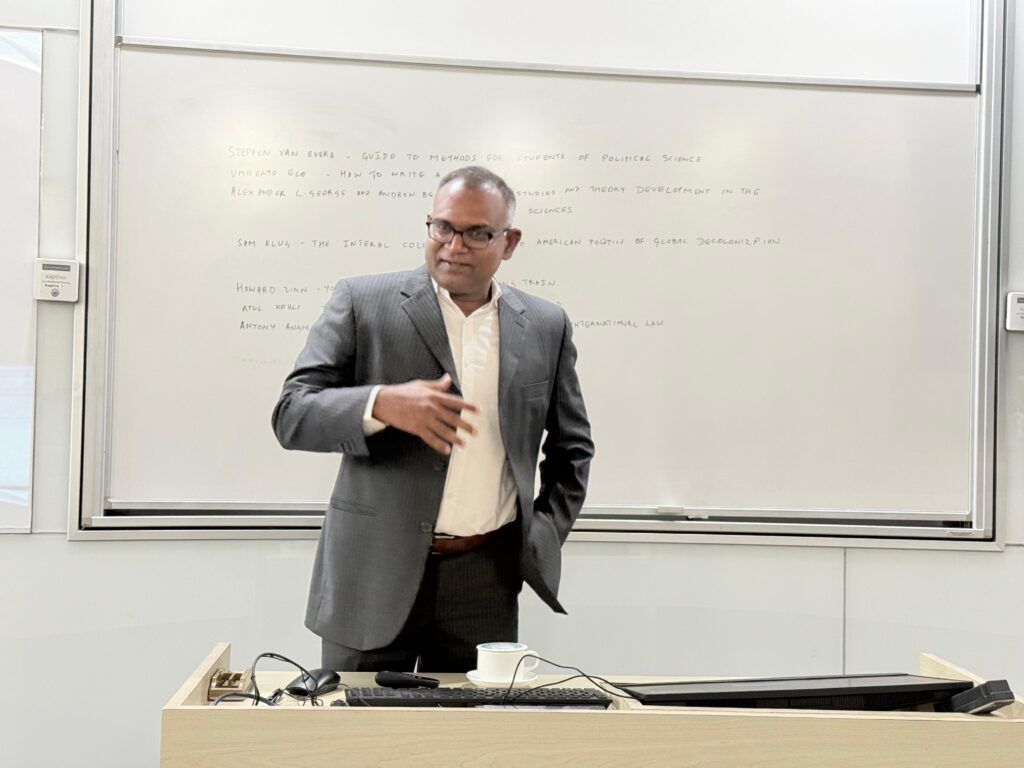
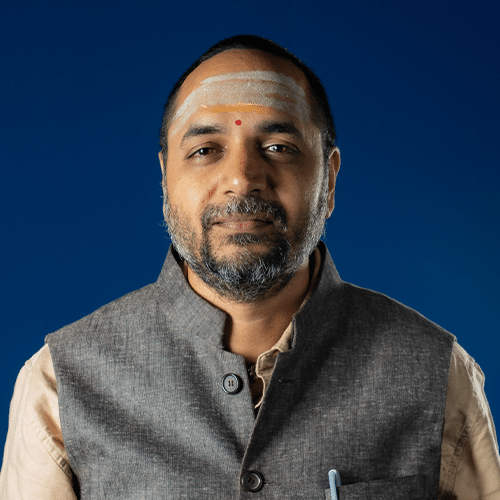
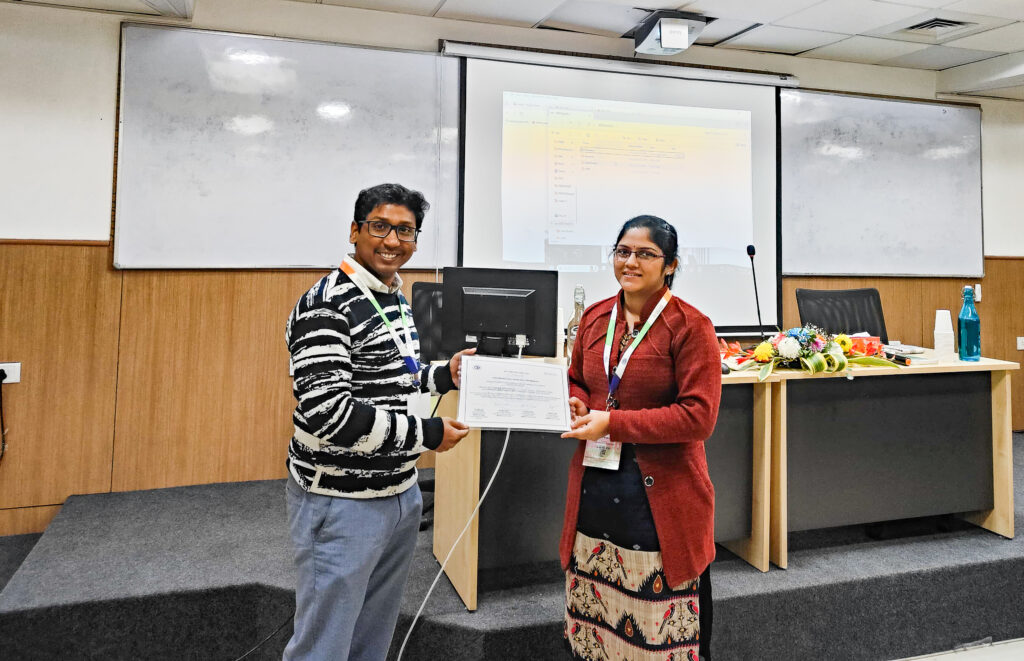
Dr Vivek Tewary delivers a lecture at discussion meeting on ‘Quantitative Theory of Homogenization’ at IIT Bombay 

Dr Vivek Tewary, Assistant Professor, Mathematics, SIAS recently delivered a lecture at a discussion meeting on ‘Quantitative Theory of Homogenization’ at IIT Bombay held from 17 to 22 February 2025. Dr Tewary’s lecture was titled, Schauder Estimates for Divergence-Form Systems’.

Schauder theory in regularity theory of PDEs is a perturbative method to transfer the regularity of coefficients to the solutions. These methods are classical and form a base for any and all questions of regularity such as those that pertain to homogenization where uniform estimates can be obtained.

The workshop is on multiscale methods in Mathematics particularly as they apply to questions of quantitative homogenization. Homogenization, loosely speaking, is the study of differential equations with rapidly oscillatory coefficients. The workshop showcased a collection of results (both old and new) dealing with convergence rates and uniform (with respect to a small parameter) regularity estimates. It featured lectures by Proffesor Christophe Prange of Cergy Paris Universite on Large Scale Regularity in Homogenization.

View lecture recordings, here 
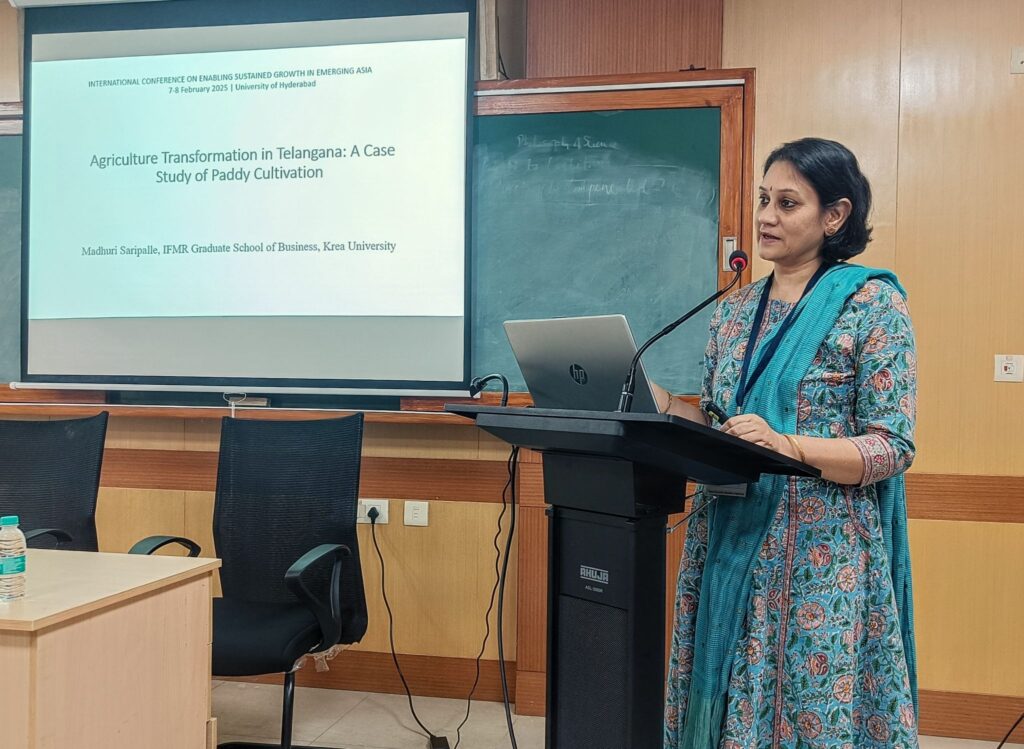
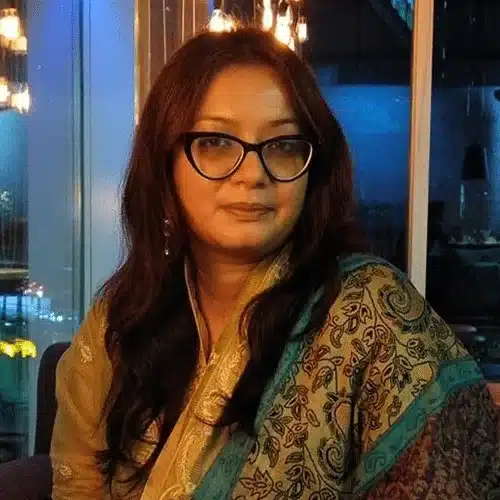
Professor Madhuri Saripalle presents at the International Conference on Enabling Sustained Growth in Emerging Asia

Professor Madhuri Saripalle, Professor, Economics and Chairperson – MBA Programme, IFMR GSB, participated in the International Conference on Enabling Sustained Growth in Emerging Asia, held on 7-8 February at the School of Economics, University of Hyderabad. She presented her paper titled Agricultural Transformation in Telangana: A Case Study of Paddy Cultivation, which is part of an ongoing project supported by the IFMR Fund for research in Humanities and Social Sciences.

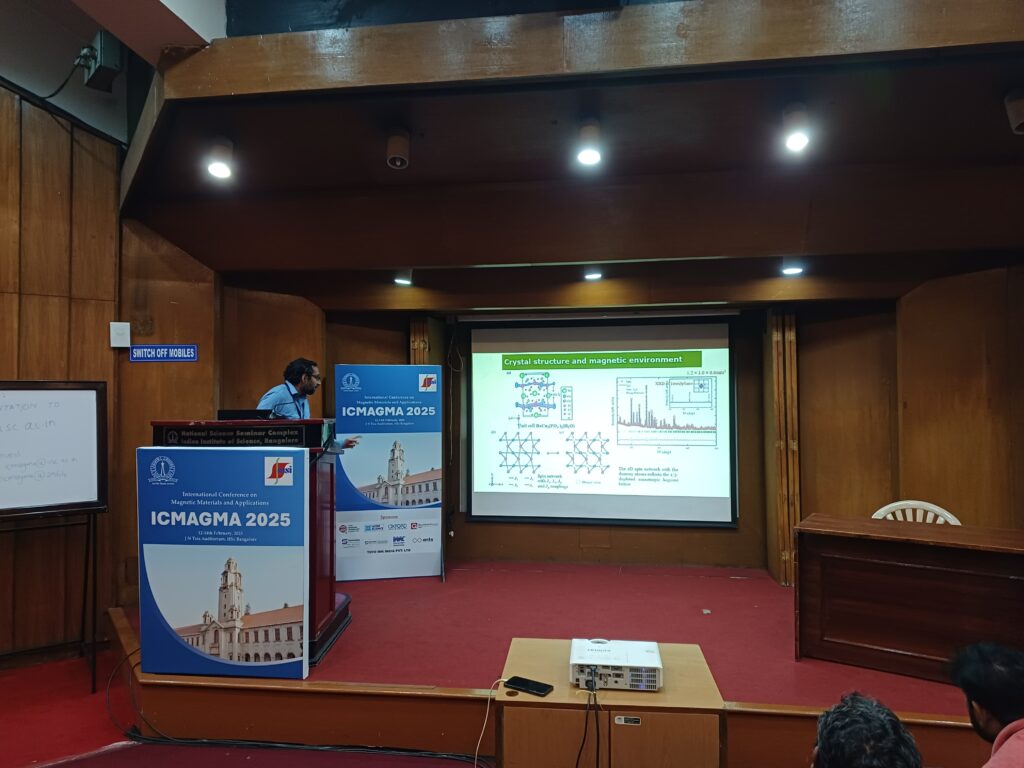
Dr Tanmoy Chakrabarty presented at ICMAGMA2025 organised by the Magnetics Society of India

Dr Tanmoy Chakrabarty, Assistant Professor, Physics, SIAS, gave an oral presentation about his research work at the International Conference on Magnetic Materials and Applications (ICMAGMA2025) organised by the Magnetics Society of India (MSI) in collaboration with the Indian Institute of Science (IISc), Bangalore. The conference was held from February 12-14, 2025, at the  IISc campus in Bengaluru, India. The title of Dr  Chakrabarty’s talk was , ‘31P NMR studies of the 1/3 depleted 2D kagomé lattice system’.


Abstract of the talk

Subtle interactions in low-D magnets often result in novel states in matter. In this work the team has carried on the bulk and 31P NMR measurements and (DFT+U) electronic structure calculations on the single crystals of Cu-based S=1/2 compound BaCu2(PO4)2(H2O). Based on the hopping parameters calculated from DFT, they find the spin network of the titled compound to be a 2D layer of 1/3-depleted anisotropic kagomé lattice with the magnetic couplings J1, J2, J3, and J4. They observe a broad maximum in the magnetic susceptibility however, the 31P NMR local probe measurements feature an additional sharp magnetic anomaly which confirms the presence of a magnetic transition at TN = 10.5 K. While 1/T1 falls very steeply with temperature below TN, it follows a sublinear power-law behaviour above TN, indicating the presence of dynamic short-range correlations. All these features confirm the complex 2D spin network in this compound.

Dr Sambaiah Gundimeda delivers lectures at Faculty Development Programme at GITAM University

Dr Sambaiah Gundimeda, Associate Professor, Politics, SIAS was invited as a resource person for the Faculty Development Programme at GITAM University, Visakhapatnam, Andhra Pradesh. The programme, held from 12 to 14 February 2025, featured Dr Gundimeda delivering two insightful lectures. His sessions focused on effective publication strategies and research proposal writing for securing funding.

The titles of his lectures were, ‘Unlocking the Secrets of Successful Publishing’ and ‘Crafting Comprehensive Budget Strategies’. 

Professor Jayaram Ramakrishnan presented on Cost Optimisation for MSMEs to ICAI members

Professor Jayaram Ramakrishnan, Professor of Practice, Finance, IFMR GSB, presented a webinar on ‘Cost Optimisation for MSMEs’ to members of ICAI on behalf of the MSME & Startup Promotion Board (MSPB) of The Institute of Cost Accountants of India on 7 February 2025. The session was attended by over 450 ICAI professionals and was presided over by the Chairman of the MSME Board and a Central Council member of ICAI.

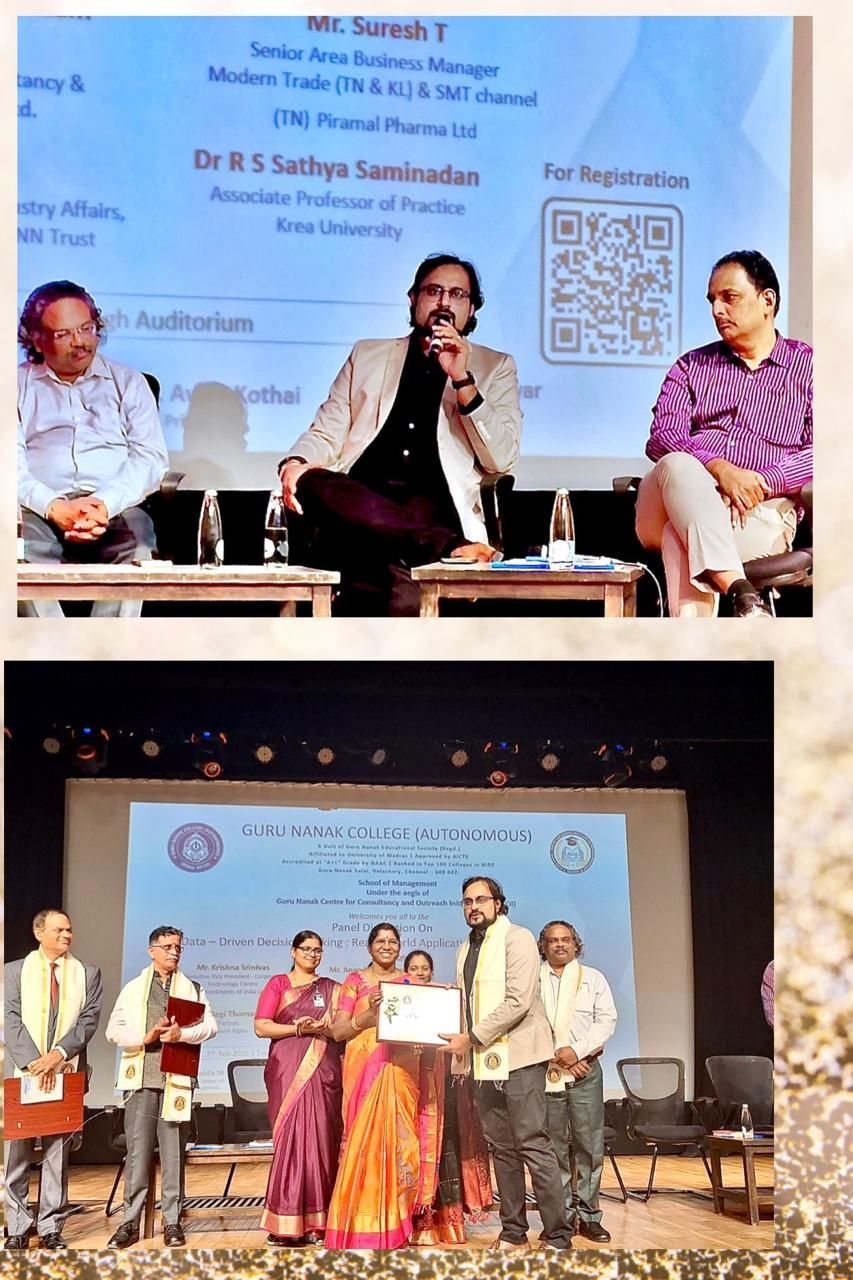
Dr Sharin Shajahan Naomi speaks at Guru Nanak College

Dr Sharin Shajahan Naomi, Post-Doctoral Fellow, Krea University was invited by the Humanities department ( Political Science Programme) of Guru Nanak College to present  on India’s foreign policy towards war-torn countries on 11 February 2025. Her presentation focused on India’s foreign  policy to countries like Ukraine, Palestine, Myanmar and historical humanitarian intervention in Bangladesh and Sri Lankan civil war. Dr Sharin Shajahan has given interviews on foreign policy to indian media before. 

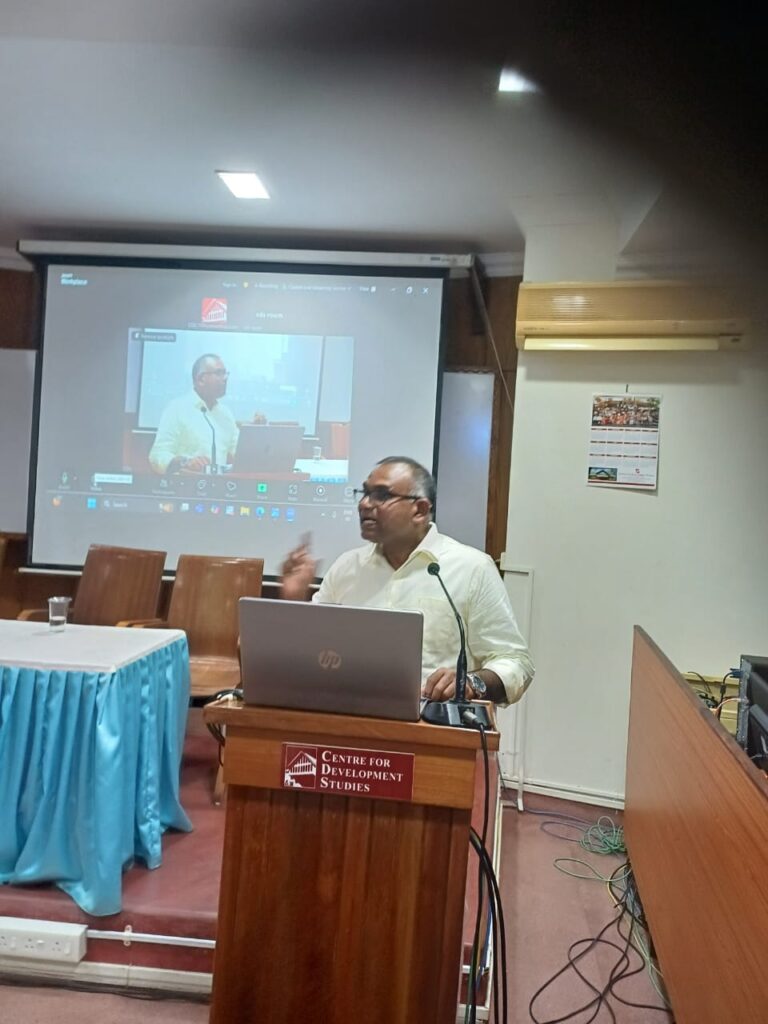
Dr Sambaiah Gundimeda delivers a talk at the Centre for Development Studies’ ICSSR-sponsored Capacity Building Programme

Dr Sambaiah Gundimeda, Associate Professor, Politics, SIAS was invited as a resource person by the Centre for Development Studies, Trivandrum, for its ICSSR-sponsored Capacity Building Programme, “Scheduled Castes and Scheduled Tribes – Sub-Plan and Sub-Classification” (6-7 February 2025). He delivered a talk titled “Justice at Last: Examining the Supreme Court’s Verdict on Sub-Classification.”

Dr Gundimeda highlighted how affirmative action has improved Dalit representation but has disproportionately benefited dominant SC sub-groups like Chamars, Mahars, and Malas, while marginalised groups like Madigas and Rellis remain excluded. This disparity led to demands for sub-categorisation, notably by the Madiga Reservation Porata Samithi (MRPS) in Andhra Pradesh.

The Supreme Court’s E.V. Chinnaiah (2004) ruling deemed SCs a homogeneous group, barring states from internal classification. However, Davinder Singh (2014) reopened the debate, culminating in the landmark 2024 ruling that allowed sub-classification based on empirical data. The judgment, reinforcing substantive equality, acknowledges intra-group disparities but raises concerns about implementation and political misuse.

Debates persist over introducing a “creamy layer” filter in SC/ST reservations to prevent monopolisation by privileged sections. Moving forward, a data-driven, equitable distribution framework is essential to uphold the principles of affirmative action while addressing internal inequities.

Dr Debankar Saha presents at Indian Academy of Management Conference

Dr Debankar Saha, Assistant Professor & Area Chair – Marketing, IFMR GSB recently presented a research paper, ‘Birdwatching and Ecotourism: Exploring the Motivations for Participation in Eco-Avitourism’, at the Indian Academy of Management (INDAM)  Conference held at IIFT, Kolkata. The conference brought together a diverse group of academicians, policymakers, and industry professionals, fostering a rich intellectual exchange.

Dr Saha explores the key factors that motivate individuals to participate in birdwatching tourism within an ecotourism framework, emphasising its alignment with sustainability principles and contribution to responsible tourism practices. The response to the presentation was overwhelmingly positive, sparking insightful discussions with both the panel and the audience.