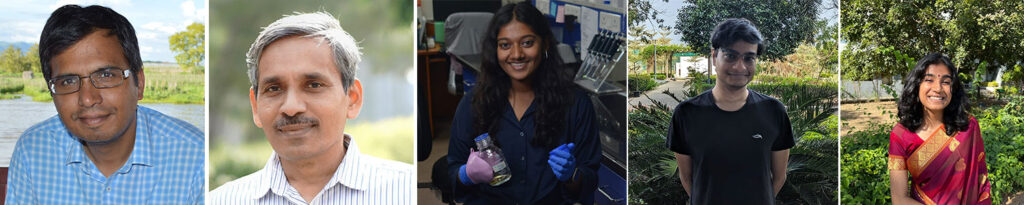
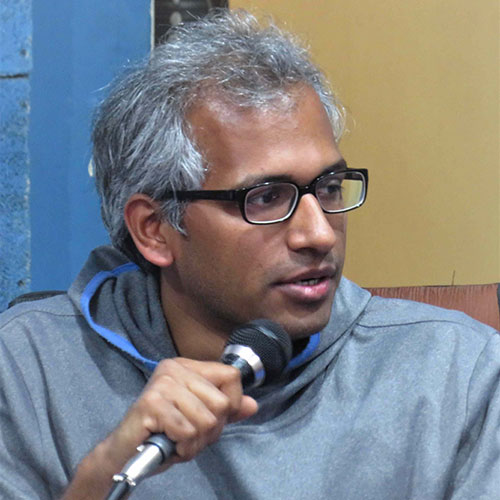
Dr Aejaz Ahmad Wani co-authors a paper published in Economic and Political Weekly

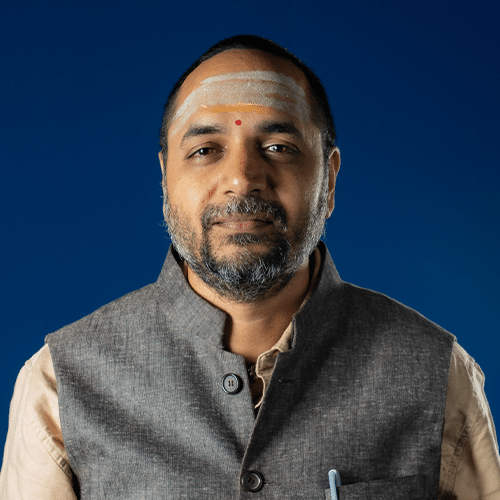
A paper co-authored by Dr Aejaz Ahmad Wani, Post-doctoral Fellow, Moturi Satyanarayana Centre of Advanced Study in the Humanities and Social Sciences, Krea University and Dr Ekta Shaikh, Assistant Professor, Dyal Singh Evening College, University of Delhi has been published in Economic and Political Weekly.

In the article titled Rethinking the Governance of Begging in India: Integrating Ethics, Law, and Policy, the authors argue that India’s proposed begging governance policy must work out a sensitive, rights-compliant framework that addresses intersecting vulnerabilities of individuals engaged in begging, especially women, children and persons with disabilities. Policymakers can draw lessons from comparative anti-begging jurisprudence to implement rehabilitative, rather than coercive, strategies to deal with the problem of begging, and work on enhancing the capabilities of individuals forced to beg on the streets. They further argue that its effectiveness will depend on how it integrates ethical, legal and policy imperatives in formulating a context-sensitive and rights-compliant framework.

Read more

Professor Chiranjib Sur’s publication bags ‘Distinguished Paper Award’ at the 32nd IEEE International Conference on High Performance Computing, Data, & Analytics

The latest publication co-authored by Professor Chiranjib Sur, Visiting Professor, Computer Science, SIAS titled Energy-Aware Runtime Resource Harmonizer for Co-running Applications has received the ‘Distinguished paper award’ at the 32nd IEEE International Conference on High Performance Computing, Data, & Analytics. The work is about developing a scheduler to harmonise the energy usage of any computing workload. The team (in collaboration with IIIT Delhi) have developed :

1. A profiler to measure the energy consumption of any compute workload (programming language agnostics) and
2. Developed a way about how to reduce the carbon footprint by scheduling/distributing the compute load in a shared memory system.

Know more

Dr Surajit Kayal and Dr Brijesh Kumar Mishra publish in ChemPhysChem

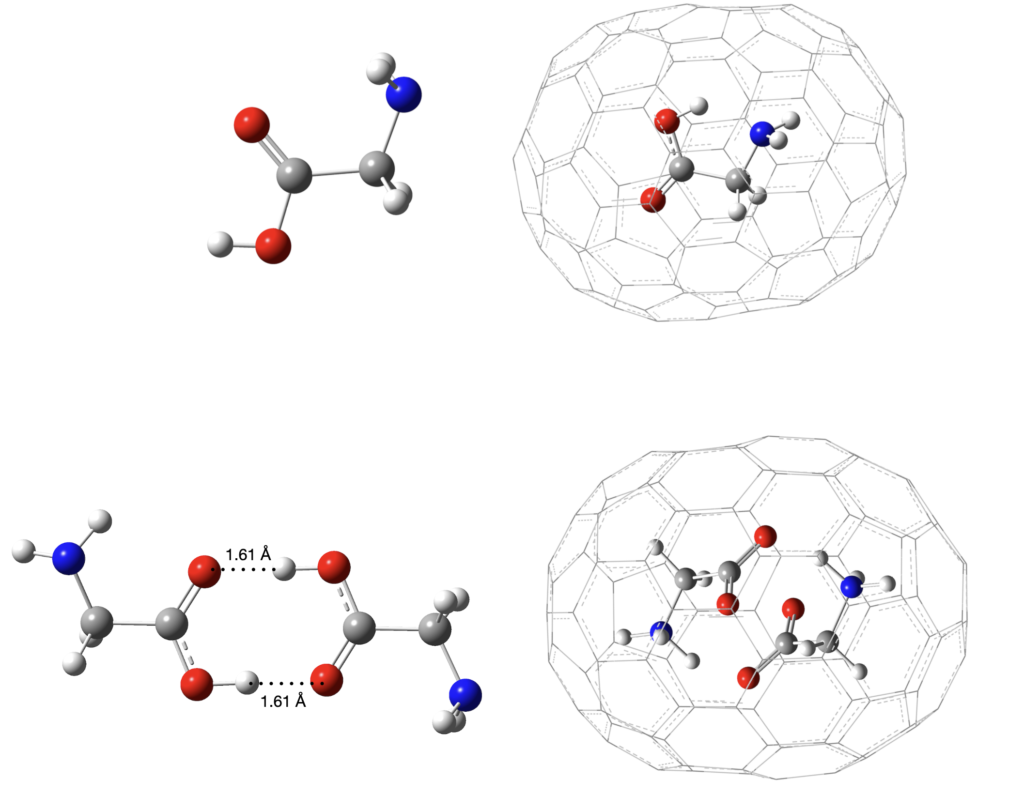
A research paper titled Amino Acids Trapped Inside C₁₀₀: A Computational Study, co-authored by Dr Surajit Kayal, Assistant Professor, Chemistry, SIAS, and Dr Brijesh Kumar Mishra, Associate Professor, Chemistry, SIAS, has recently been published in the scientific journal ChemPhysChem.

Abstract

The feasibility of the C₁₀₀ fullerene as a nanocontainer for glycine, alanine, and serine has been investigated using density functional theory (B3LYP-D3), second-order Møller–Plesset perturbation theory, and the domain-based local pair natural orbital–coupled cluster singles doubles and perturbative triples (DLPNO-CCSD(T)) method. The interaction energies for glycine@C₁₀₀, alanine@C₁₀₀, and serine@C₁₀₀ are calculated to be −47.8, −45.5, and −43.8 kcal mol−1, respectively, for their most stable conformers at the DLPNO-CCSD(T) level, indicating favourable host–guest interactions. Furthermore, encapsulation leads to substantial stabilisation of both the intramolecular hydrogen-bonded and non-hydrogen-bonded conformers of the amino acids. Vibrational frequency analysis shows a blueshift for most vibrational modes, indicative of restricted motion due to the confined space. However, the OH-stretch mode, especially for the intramolecular hydrogen-bonded conformers, exhibits a large redshift upon encapsulation, suggesting a strengthening of the hydrogen bond due to confinement. Dipole moment calculations reveal a significant reduction after encapsulation, indicating effective screening of the dipole by the C₁₀₀ cage. ¹H NMR chemical shift calculations show a large downfield shift, consistent with deshielding effects experienced by the encapsulated molecules due to the unique electronic environment within the fullerene cavity.

Read more

IFMR GSB faculty co-author article in The Management Accountant

An article titled ‘Cost Audit in the ERP Era – Configuring ERP to Enable Accurate Reporting of Costs’, co-authored by IFMR GSB faculty members, Professor Jayaram Ramakrishnan, Professor of Practice, Finance; Professor Balasubramanian G, Senior Professor, Finance, Accounting and Quantitative Finance, and Professor Srinivasan Kalyanasundaram, Professor of Practice, Finance, has been published in the December 2025 issue of The Management Accountant, the official magazine of the Institute of Cost Accountants of India.

Read more

Dr Rakesh Sengupta’s research paper publishes in proceedings of the 2025 ICICNCT

A research paper by Dr Rakesh Sengupta, Assistant Professor, Psychology, SIAS titled Synchronization in Hybrid Feedforward-Recurrent Neural Networks with Stochastic Temporal Modulation, has been published in the proceedings of the 2025 International Conference on Intelligent Communication Networks and Computational Techniques (ICICNCT). In this work, the researchers aim to bridge the gap between theoretical mathematics and practical neural network implementation. The study presents a comprehensive investigation into how hybrid feedforward-recurrent networks maintain stability and synchronization, even under stochastic modulation.

This research offers a deeper look into the temporal processing mechanisms that drive both artificial and biological neural systems.

Know more

Dr Chirag Dhara co-authors a research paper in PLOS Climate

Dr Chirag Dhara, Assistant Professor, Environmental Studies, SIAS has co-authored a research paper titled *A post-AR6 update on observed and projected climate change in India* published in *PLOS Climate*.

Know more

Dr Dhara was also part of a fireside chat session for the WCRP IITM Hub Workshop on “Leveraging Climate Research and Modeling for Action and Policy in the Indo-Pacific”, organised as a side event of the INTROMET 2025, on 21 November 2025 at IITM, Pune, India. The workshop aimed to strengthen the capacity of Early and Mid-Career Researchers (EMCRs) to engage effectively at the science–policy–community interface. The one-day event will feature interactive discussions, EMCR-led brainstorming sessions, and mentorship by domain experts, fostering actionable insights and collaborative learning.

Dr Brijesh Kumar Mishra co-authors a paper published in journal Langmuir

Dr Brijesh Kumar Mishra, Associate Professor, Chemistry, SIAS, co-authored a paper titled Consequences of Heterogeneity of Organic Molecules in Water: Enhanced Photodimerization of Olefins published recently in the scientific journal Langmuir by the American Chemical Society.

Abstract: Photodimerization of organic molecules such as indene and coumarin is dramatically enhanced in water compared to that in an organic solvent. In this study, we have probed the origin of this phenomenon through NMR spectroscopy, dynamic light scattering (DLS) experiments, quantum chemical calculations, and molecular dynamic simulations. Indene molecules are inferred to exist as an equilibrium mixture of monomers, noncovalent dimers, and small (NMR-detectable) and large (DLS-detectable) aggregates in water. This behavior is distinctly different from that observed in an organic solvent, where indene molecules remain homogeneously distributed as monomers. The enhancement of thermal bimolecular reactions such as the Diels–Alder reaction is analyzed in terms of “in-water”, “on-water”, and “on the surface of microdroplets”. The inhomogeneous distribution of small organic molecules identified in this study could be a reason for their enhanced photodimerization in water. The presence of small aggregates, detectable by their unusually sharp 1H NMR signals, rules out the need for diffusion, which is often slower than the decay rates of excited molecules. The results presented here demonstrate that the knowledge of reactions in organic solvents cannot be directly extended to those occurring in water.

Know more