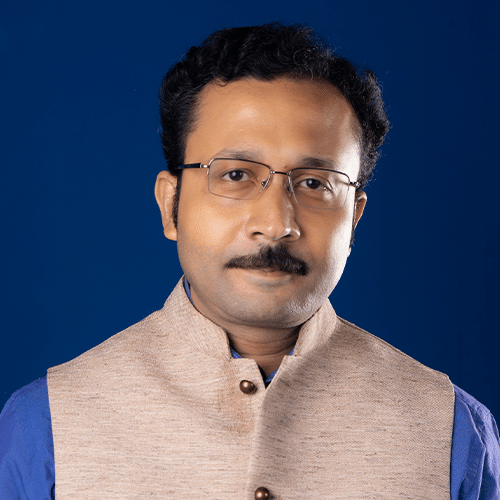
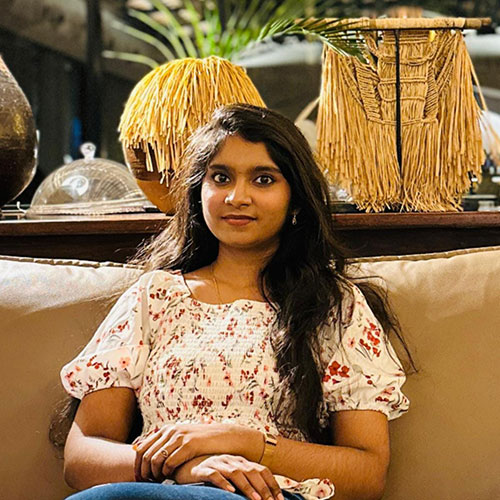
An article titled Empowerment Under Siege: Hidden Barriers Stall India’s Women, by Dr Jyoti Kumari, Assistant Professor, Finance, Accounting and Quantitative Finance, IFMR GSB, has been published in Deccan Herald.

An article titled Empowerment Under Siege: Hidden Barriers Stall India’s Women, by Dr Jyoti Kumari, Assistant Professor, Finance, Accounting and Quantitative Finance, IFMR GSB, has been published in Deccan Herald.

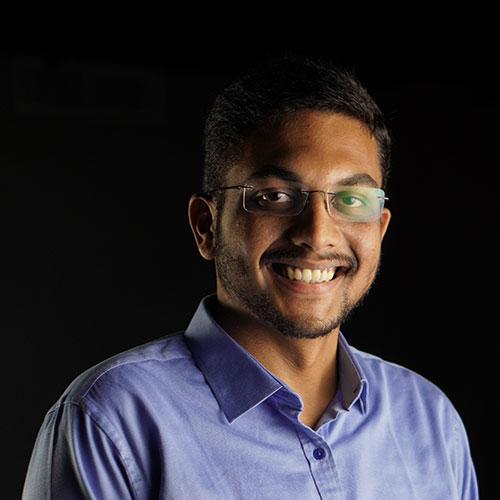
Sayantan Datta, Assistant Professor of Practice, Krea-CWP has authored a piece for The Hindu titled How safe AI is in healthcare depends on the humans of healthcare.
They have also penned a piece for The Hindu titled Yeast shows physics can give rise to multicellular life sans mutations.

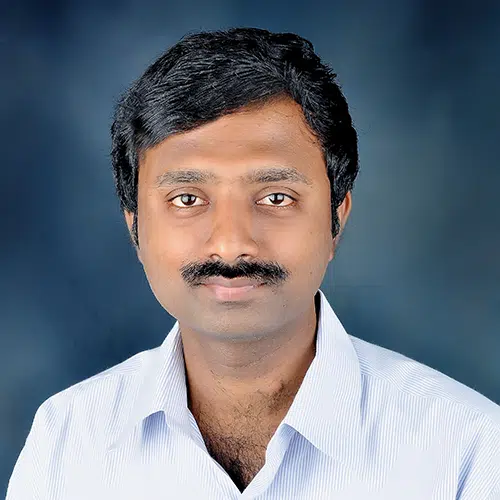
Dr I Iyyappan, Post-Doctoral Fellow, SIAS, presented his research on “Nonlinear Refrigerator with Finite-Sized Cold Bath” at the 10th Indian Statistical Physics Community Meeting, organised by the International Centre for Theoretical Sciences (ICTS), Bengaluru, from 23 to 25 April, 2025.

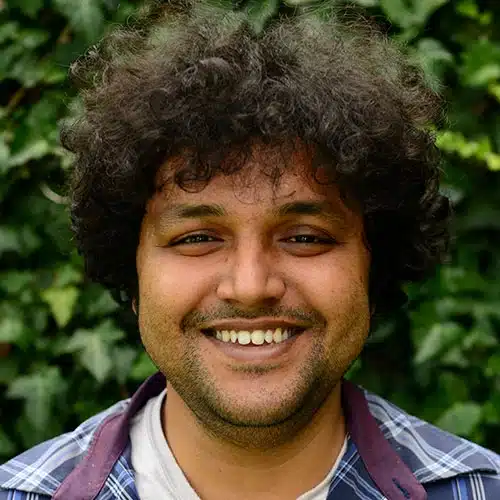
Dr Chirag Dhara, Assistant Professor, Environmental Studies, SIAS, has co-authored an article titled Who is Really Developed with Dr Soumyajit Bhar, Assistant Professor, School for Liberal Studies for Down to Earth. The authors challenge the conventional notions of development.

Dr Rakesh Sengupta, Assistant Professor, Psychology, SIAS, has published a paper titled Mapping additive recurrent neural networks to quantum neural networks. It is a work at the interface of quantum computing and neuroscience. In this work, the author maps classical OCOS RNN dynamics into a quantum Hamiltonian (with decay, activation, and tunable interactions) and study its open‑system behavior under amplitude‑damping and dephasing. Key findings include sustained oscillations in Pauli expectations, slow purity decay, and exploration of the dynamics that go beyond classical RNN fixed‑point behavior.

Krea University’s Convocation 2025 witnessed the graduation of 400 students from across undergraduate, masters and doctoral programme. Professor Ram Ramaswamy, Former Vice Chancellor, University of Hyderabad and Honorary Professor, Department of Physics, IIT Delhi was the Chief Guest at the ceremony.
On June 14, Krea University hosted its fourth Convocation ceremony at The Music Academy, Chennai. The event witnessed the graduation of the UG Cohort of School of Interwoven Arts and Sciences (SIAS) (2025), the 2-year MBA Cohort of IFMR Graduate School of Business (GSB) (2025), the 3-year L&T MBA Cohort of IFMR GSB (2025) and the PhD Cohort of IFMR GSB (2025).
Krea University’s Convocation 2025 also witnessed the conferral of the of the Doctor of Science, honoris causa (D.Sc.), upon Professor Vivek Borkar, Emeritus Fellow, IIT Bombay, and the Doctor of Letters, honoris causa (D.Litt.), upon Dr Geetanjali Shree, author and novelist.


The graduating students were conferred with degrees in the presence of Chancellor of Krea University, Lakshmi Narayanan along with members from the Governing Council and Board of Management at Krea such as Tara Thiagarajan, Roxana Daver, Paula Mariwala, Vidya Vencatesan, Amitava Saha, Kapil Viswanathan, S Mahalingam, and Rajeev Mecheri. Dean of SIAS, Dr Prithvi Datta Chandra Shobhi, Dean of Research, Professor Sivakumar Srinivasan and other faculty members were also present.


In his address to the graduates, Chancellor Lakshmi Narayanan said, “By the coming decade, we will see the liberal arts, the sciences and the management graduates at the forefront of industries that blend human intuition with technological prowess – where art meets algorithm, where creativity meets data science, and ethical reasoning grounds innovation. Whether in business, ecology, education, public service, the arts, or tech – you will be there, making a difference.”
Addressing the graduates, Professor Ram Ramaswamy said, “The value of a liberal education cannot be underestimated. When one lives a relatively long adulthood, fifty years or more for most of us here, one needs to be engaged with the world around us in an intense manner and one needs also to be equipped to respond to changes, and the longer one lives, the more drastic the changes tend to be. We have to be more than passengers.”


Professor Akhila Ramnarayan, Visiting Professor of Practice, Literature and the Arts, SIAS has penned a review essay on Robert Macfarlane’s new book, titled ‘Is a River Alive?’: Radical resistance and solidarity between humans and the natural world in Scroll.in.
Robert Macfarlane is internationally renowned for his writing on nature, people, and place. He is the Professor of Literature and the Environmental Humanities, and Fellow of Emmanuel College, at the University of Cambridge.

Dr Jayaram Ramakrishnan, Professor of Practice, IFMR GSB, has authored an article on Cost Management for manufacturing SMEs – A Framework. The same has been published in MSME Tidbits, the bi-monthly flagship journal of the MSME & Startup Promotion Board of the Institute of Cost Accountants of India (ICMAI), in their June edition.

Dr Swayam Sampura Panigrahi, Assistant Professor, Operations and Area Chair – Operations, IFMR GSB, has been awarded the Fulbright-Nehru Postdoctoral Research Fellowship. As a Fulbright-Nehru Postdoctoral Research fellow at the University of Connecticut, Storrs, CT, Dr Panigrahi’s research will uncover gross human rights violations. Her objective is to develop a generic framework to address these challenges through the exchange of best practices across the US and India.

A research article by Dr Tanmoy Chakrabarty, Assistant Professor and Discipline Coordinator, Physics, SIAS titled Normal state and superconducting state properties of high entropy Ta0.2Nb0.2V0.2Ti0.2X0.2 (X = Zr and Hf) has been published in Physical Review Materials (“Scopus Q1” journal). In this publication, Dr Chakrabarty is one of the three corresponding authors. In this work, the team has reported a detailed theoretical and experimental investigation of high-entropy alloy superconductors Ta0.2Nb0.2V0.2Ti0.2X0.2 (X = Zr and Hf). The study unveils that both the materials crystallise in a body-centered-cubic structure (space group: Im-3m) and exhibit bulk superconductivity with a superconducting onset temperature of 5 K for X = Hf and 6.19 K for X = Zr sample. The detailed analysis, including magnetisation, resistivity, heat capacity measurements, and density functional theory (DFT) calculations indicates moderately coupled isotropic s-wave superconductivity in these materials. With the dynamical stability of these alloys, excellent normal state metallic nature, high microhardness, and high upper critical field; these samples emerge as potential candidates for future applications in superconducting devices.