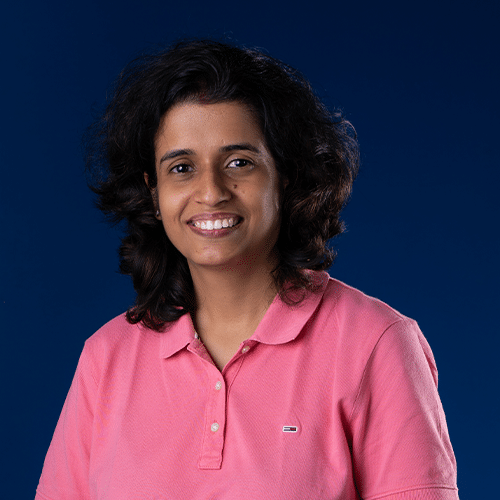
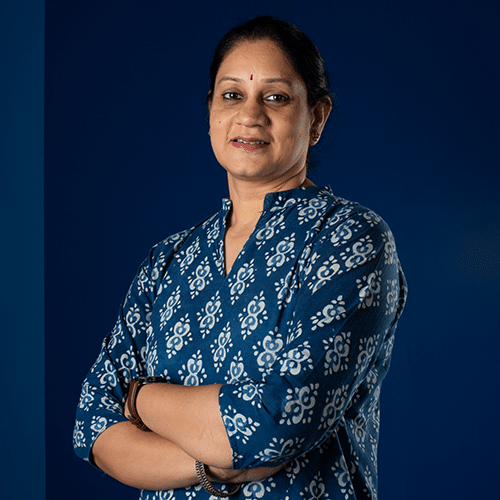
Dr Suresh Govindapuram and Christon Thomas present a paper at the 64th Annual Conference of the Indian Society of Labour Economics (ISLE)

Dr Suresh Govindapuram, Assistant Professor of Economics, IFMR GSB, Krea University and Christon Thomas, PhD Student, IFMR GSB, Krea University have presented a paper on Women’s Financial Inclusion and Economic Development: Evidence from India at the 64th Annual Conference of the Indian Society of Labour Economics (ISLE). The Conference was held on 29-31 March, 2024 at the University of Hyderabad, and was organised by the School of Economics, University of Hyderabad in collaboration with the Department of Liberal Arts, IIT Hyderabad, the Centre for Economic and Social Studies (CESS), Hyderabad and the Council for Social Development (CSD), Hyderabad. 

For more information on the ISLE conference, click here.

Read the Abstract here

Dr Pallavi Pandey wins a Best Paper Award at TIRCRPM, TAPMI Institute of Management 

Dr Pallavi Pandey, Assistant Professor, HR & OB, and Area Chair – OB & HR, IFMR GSB, Krea University has received the Best Paper Award for her research paper titled Employees Perception Of Work From Home: A Developing Nation Context at the TAPMI International Research Conference on Reimaginging People Management (TIRCRPM), hosted by the TAPMI Institute of Management held on 28 – 30 March, 2024. 

A New Publication by Sayantan Datta in the Community Development Journal (Oxford University Press)

A paper titled ‘It’s nice we can do that too’: investigating transgender persons’ negotiations with identity and community questions in Indian science institutions by Sayantan Datta, Assistant Professor of Practice, Centre for Writing and Pedagogy (CWP) at Krea University has been published in the Community Development Journal (Oxford University Press). 

In this paper, Datta draws upon the lived experiences of four interlocutors to delineate the ways in which proximal and distal networks of caste-class and gender shape transgender, gender non-conforming, and non-binary persons’ exclusion from and belonging in science collectivities. This paper is a part of the upcoming special issue on queer and trans community building in post-377 and post-NALSA India, edited by Pushpesh Kumar, Sayantan Datta, and Neha Mishra.

Link to access

Girl Power

Girl Power

The Women’s Football Team from Krea University has secured first place at Syminaret’24, hosted by Symbiosis Law School, Hyderabad. The winning team comprised Nanki Puri (Captain), Mishka Katyanyan, Shilpi Rani, Antim Khare, Aakansha Khetan, Nirjala Sharma, and Navya Holla. Congratulations!

Sathyanarayanan Ramachandran writes about the phenomenon of overtourism in The Hindu BusinessLine

Sathyanarayanan Ramachandran, Sundram Fasteners Associate Professor, Marketing, IFMR GSB, Krea University authored a guest article in The Hindu BusinessLine, titled Tourist boom-turned-bane. Trampled by overtourism. The article sheds light on the phenomenon of overtourism and emphasises the need for sustainable destination marketing. 

Read the article here. 

A paper co-authored by Dr Shyam Kumar Sudhakar and Kaustav Mehta published in the Brain Organoid and Systems Neuroscience Journal

A paper titled Charting Paths to Recovery: Navigating Traumatic Brain Injury Comorbidities through Graph Theory–Exploring Benefits and Challenges, co-authored byDr Shyam Kumar Sudhakar, Assistant Professor of Biological Sciences, SIAS, Krea University and Kaustav Mehta, a Biological Sciences student, SIAS PG Batch of 2023-24 has been published in the Brain Organoid and Systems Neuroscience Journal

Traumatic brain injuries (TBIs) are characterized by widespread complications that exert a debilitating effect on the well-being of the affected individual. TBIs are associated with a multitude of psychiatric and medical comorbidities over the long term. Furthermore, no medications prevent secondary injuries associated with a primary insult. In this perspective article, the authors propose applying graph theory via the construction of disease comorbidity networks to identify high-risk patient groups, offer preventive care to affected populations, and reduce the disease burden. They describe the challenges associated with monitoring the development of comorbidities in TBI subjects and explain how disease comorbidity networks can reduce disease burden by preventing disease-related complications. They further discuss the various methods used to construct disease comorbidity networks and explain how features derived from a network can help identify subjects who might be at risk of developing post-traumatic comorbidities. Lastly, they address the potential challenges of using graph theory to successfully manage comorbidities following a TBI.

Read the article here. 

On the Face of It: From Monumental Images to Collective Actions – A Paper Presentation by Dr Rakshi Rath and Dr Srajana Kaikini


Dr Rakshi Rath, Assistant Professor of Psychology, SIAS, Krea University, and Dr Srajana Kaikini, Assistant Professor of Philosophy, SIAS, Krea University co-presented their paper titled On the Face of It: from Monumental Images to Collective Actions at the Workshop Seminar Twenty-First Century Media? Affective Bodies, Crowds, and Collectives, organised by ICAS:MP TM 7 module, in collaboration with CSDS and Sarai, on 21-23 March, 2024. 

This international workshop was focused on site-specific contributions mapping 21st-century media, addressing material and environmental questions for media and political aesthetics. The paper brings theories of Philosophy and Psychology in critical conversation with each other around social ontology, media aesthetics, and political psychology in an attempt to forge new interdisciplinary frameworks for social action.

Exploring Purpose, Permanence, and Sustainability: Sathyanarayanan Ramachandran Delivers a Talk at the NBS Global Webinar

Sathyanarayanan Ramachandran, Sundram Fasteners Associate Professor of Marketing at IFMR GSB, Krea University, gave a talk on his Purpose, Permanence and Sustainability teaching intervention in the Product and Brand Management elective course of IFMR GSB’s MBA programme during the NBS Global webinar held on 19 March, 2024. 

He was invited by the Network for Business Sustainability (NBS), powered by the Centre for Building Sustainable Value at the Ivey Business School at Western University, to present this as a part of their Teaching Climate Change in Business Schools Virtual Event Series.

In this module on Teaching Climate Policy and Negotiations in Business Schools, he described his practice of a sensitisation workshop incorporating the idea of the economy of permanence of the Gandhian economist J C Kumarappa and the deep purpose continuum of the Harvard Business School Professor Ranjay Gulati, followed by the hands-on ENROADS climate action simulation of Climate Interactive and MIT Management Sustainability Initiative. The ideas were well received and appreciated by the audience.

Dr Shyam Kumar Sudhakar delivers a talk at IIIT Hyderabad

Dr Shyam Kumar Sudhakar, Assistant Professor of Biological Sciences, SIAS, Krea University delivered a talk titled Application of computational modeling and large-scale data analysis for identifying drugs and managing comorbidities after traumatic brain injuries at IIIT Hyderabad.

Abstract:

Traumatic brain injuries (TBI) constitute one of the biggest public health problems facing the world population. Physical trauma to the brain could lead to the damage and subsequent death of the affected neurons, and this could continue for extended periods, causing secondary brain injuries. As a consequence, TBI can cause long-term medical and psychiatric problems. No treatment options exist to date to prevent the cascade of secondary brain injuries.

When promising therapeutic options are unavailable to treat TBI, carefully crafted patient care programs and disease prevention strategies could lead to better patient experiences. The goal of my research program is twofold: Construct a detailed bio-simulation platform encompassing post-TBI changes at multiple spatial and temporal time scales to identify the most promising therapeutic agents for neuroprotection after TBI; Perform large-scale data analyses of multi-center patient databases to understand the unique pattern of post-traumatic comorbidities as a function of different injury parameters (sex, age, type and severity of injury, years post-injury, socioeconomic status). In this talk, I will illustrate my recent research results pertaining to computational modeling and large-scale mining of patient databases. I believe my dual approach of computational modeling and large-scale data analysis would lead to the discovery of novel drugs and drug combinations to treat the disease and devise vital patient care programs.