​A paper co-authored by Dr Suresh Govindapuram published in the Energy Nexus journal.

​A paper co-authored by Dr Suresh Govindapuram, Assistant Professor of Economics, IFMR GSB titled Assessing Energy Efficiency of Indian Chemical Industry: Examine the Role of Innovation and Regional Heterogeneity has been published in the Energy Nexus journal.

This study aims to measure energy efficiency levels and the impact of technological innovation and regional heterogeneity on energy efficiency. Hence, the team uses Indian chemical industry data covering 85 firms from 2003-04 to 2018-19. First, they employ the stochastic frontier analysis (SFA) to measure total factor energy efficiency (TFEE). Second, they use truncated regression to assess the effect of innovation and other factors. Their time-varying TFEE has a mean level of 0.84. Most firms can improve their energy efficiency by 15%. Hence, a substantial energy-saving opportunity exists in the case of the chemical industry in India. The second-stage results suggest that firms’ innovative capability accumulates over time, enabling them to achieve higher energy efficiency. Additionally, older firms perform better than younger ones in terms of TFEE. However, having facilities at different locations reduces energy efficiency, while the number of products produced does not significantly impact energy efficiency. The study emphasises the need to consider regional heterogeneity and technological gaps when developing strategies to enhance energy efficiency at the firm level. The findings have significant implications for regulating the manufacturing sector, providing insights for policymakers and industry practitioners to design effective strategies to promote energy efficiency.

Read more

Dr Vivek Tewary and Sayantan Datta have been awarded the “Small Research Grant” by FAST India towards development of their upcoming book

Dr Vivek Tewary, Assistant Professor of Mathematics, SIAS and Sayantan Datta, Assistant Professor of Practice, Krea-CWP, have been awarded a ‘Small Research Grant’ by the Foundation for Advancement of Science & Technology (FAST) India under their India Science Book Fellowship scheme. The award will support the duo in writing their popular science book tentatively titled Equations of Life: How the Living World Speaks Mathematics, and Why We Should Learn to Listen. 

About Equations of Life: Equations of Life invites readers to wonder at the world of mathematical biology by focusing on the story of five mathematical equations that changed the course of biology, mathematics – and, at times, the world. These equations describe various biological phenomena at different scales: from molecular interactions within a single cell to movement of a large number of organisms in response to a signal. This book asks readers to consider an uncomfortable proposition: that the language of mathematics – artificial in many ways, and carefully crafted into abstraction by human beings – might be, at times, our best chance at uncovering the mysteries of the living world, a messy but beautiful marvel of nature.

About the India Science Book Fellowship: FAST-India’s India Science Book Fellowship is an incredibly competitive fellowship that seeks to support the writing of non-fiction popular science books by scientists, science writers, and communicators.

Dr Rakesh Sengupta authors article in Scientific Reports (Nature).

Dr Rakesh Sengupta, Assistant Professor, Psychology, SIAS, has authored an article titled Modeling Visual Working Memory Using Recurrent On‑Center Off‑Surround Neural Network with Distance‑Dependent Inhibition and it has been published in Scientific Reports (Nature). In this work, the author introduces a hierarchical model of visual working memory (VWM) that mimics the architectural and dynamic complexity of the visual system.The network combines top-down feedback, recurrent on-center/off-surround dynamics, and distance-dependent inhibition to simulate how feature specificity evolves—from coarse object-level representation all the way down to detailed feature encoding.

Read more

IFMR GSB Teaching Fellows publish a research article in IPE Journal of Management

A research article by Vidhya S, Teaching Fellow, OB &​ HR, ​I​FMR GSB and Naveen M​, Teaching Fellow​, Marketing, ​IFMR GSB has been published in the IPE Journal of Management (Volume 14, No. 2, July–December 2024), a UGC-CARE listed journal. The research article is titled The Dynamics of Employee Engagement: Investigating Its Influence on Job Satisfaction in the Workplace.

Read more

​​Dr Rakesh Sengupta publishes a paper at the interface of quantum computing and neuroscience

Dr Rakesh Sengupta, Assistant Professor, Psychology, SIAS, has published a paper titled Mapping additive recurrent neural networks to quantum neural networks. It is a work at the interface of quantum computing and neuroscience. In this work, the author maps classical OCOS RNN dynamics into a quantum Hamiltonian (with decay, activation, and tunable interactions) and study its open‑system behavior under amplitude‑damping and dephasing. Key findings include sustained oscillations in Pauli expectations, slow purity decay, and exploration of the dynamics that go beyond classical RNN fixed‑point behavior.

Read more

​Dr Swayam Sampura Panigrahi awarded the Fulbright-Nehru Postdoctoral Research Fellowship

​Dr Swayam Sampura Panigrahi, Assistant Professor, Operations and Area Chair – Operations, IFMR GSB, has been awarded the Fulbright-Nehru Postdoctoral Research Fellowship. As a Fulbright-Nehru Postdoctoral Research fellow at the University of Connecticut, Storrs, CT, Dr Panigrahi’s research will uncover gross human rights violations. Her objective is to develop a generic framework to address these challenges through the exchange of best practices across the US and India.

Dr Tanmoy Chakrabarty publishes in Physical Review Materials (“Scopus Q1” journal)

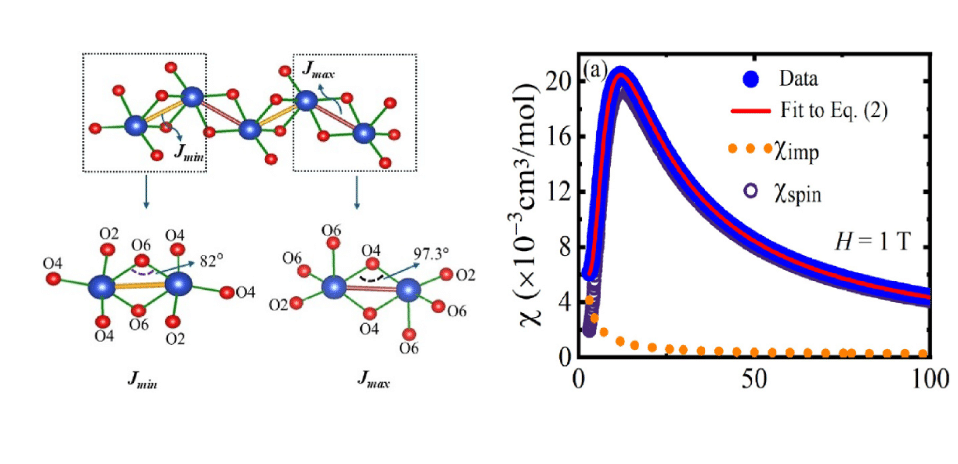
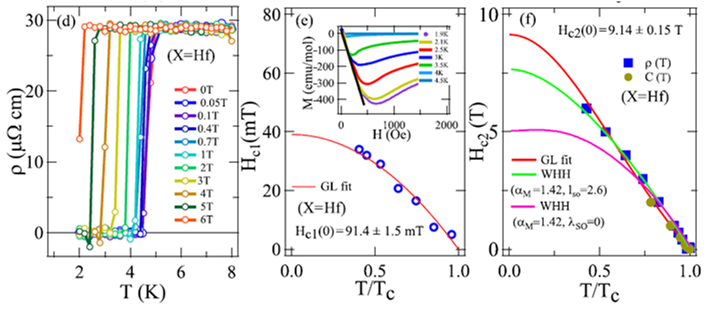
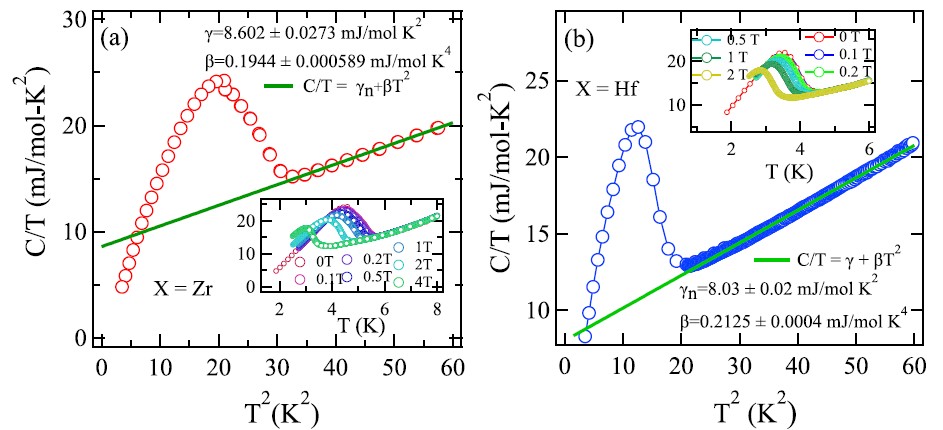
A research article by Dr Tanmoy Chakrabarty, Assistant Professor and Discipline Coordinator, Physics, SIAS titled Normal state and superconducting state properties of high entropy Ta0.2Nb0.2V0.2Ti0.2X0.2 (X = Zr and Hf) has been published in Physical Review Materials (“Scopus Q1” journal). In this publication, Dr Chakrabarty is one of the three corresponding authors. In this work, the team has reported a detailed theoretical and experimental investigation of high-entropy alloy superconductors Ta0.2Nb0.2V0.2Ti0.2X0.2 (X = Zr and Hf). The study unveils that both the materials crystallise in a body-centered-cubic structure (space group: Im-3m) and exhibit bulk superconductivity with a superconducting onset temperature of 5 K for X = Hf and 6.19 K for X = Zr sample. The detailed analysis, including magnetisation, resistivity, heat capacity measurements, and density functional theory (DFT) calculations indicates moderately coupled isotropic s-wave superconductivity in these materials. With the dynamical stability of these alloys, excellent normal state metallic nature, high microhardness, and high upper critical field; these samples emerge as potential candidates for future applications in superconducting devices.

Read more

Dr Preeti Gulati co-authors a book with veteran historians Romila Thapar and Kumkum Roy

Professor Romila Thapar, Professor Kumkum Roy and Dr Preeti Gulati,Discipline Coordinator – History​ and Assistant Professor, History​, SIAS have co-authored the book Women Writing History: Three Generations​ published by Zubaan Books. Three historians from three generations reflecting on their lives and their engagement with one of the most demanding, and most crucial, disciplines of our times.

Know more

Dr Chirag Dhara co-authors a research paper published in Frontiers in Climate

A research paper ​c​o-authored by Dr Chirag Dhara, Assistant Professor, Environmental Studies​, SIAS titled Bridging Climate Science, Policy, and Communities: Collaborative Pathways for Climate Resilience in the Indo-Pacific ​has been published in Frontiers in Climate​, Volume 7-2025. This study was performed under the aegis of the World Climate Research Programme (WCRP)’s “My Climate Risk Lighthouse Activity” that aims to develop and mainstream a ‘bottom-up’ approach to regional climate risk.

Read more