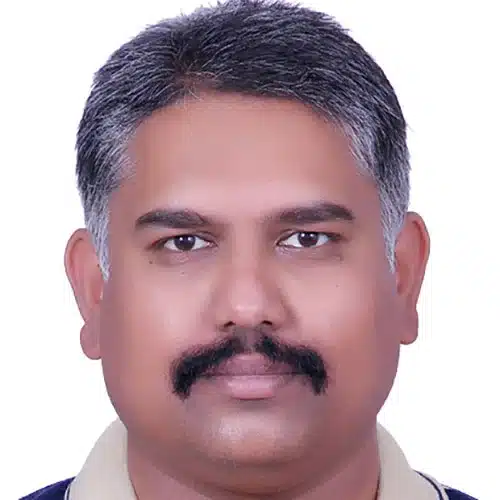
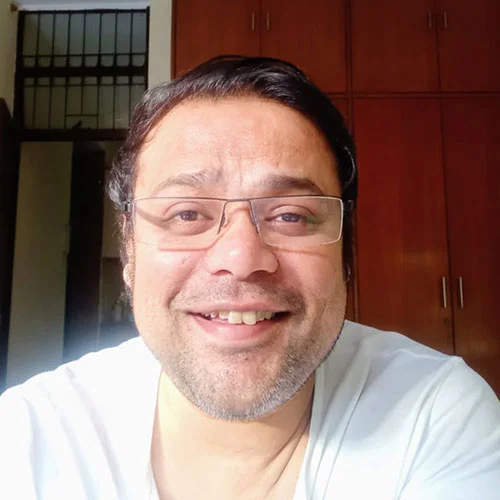
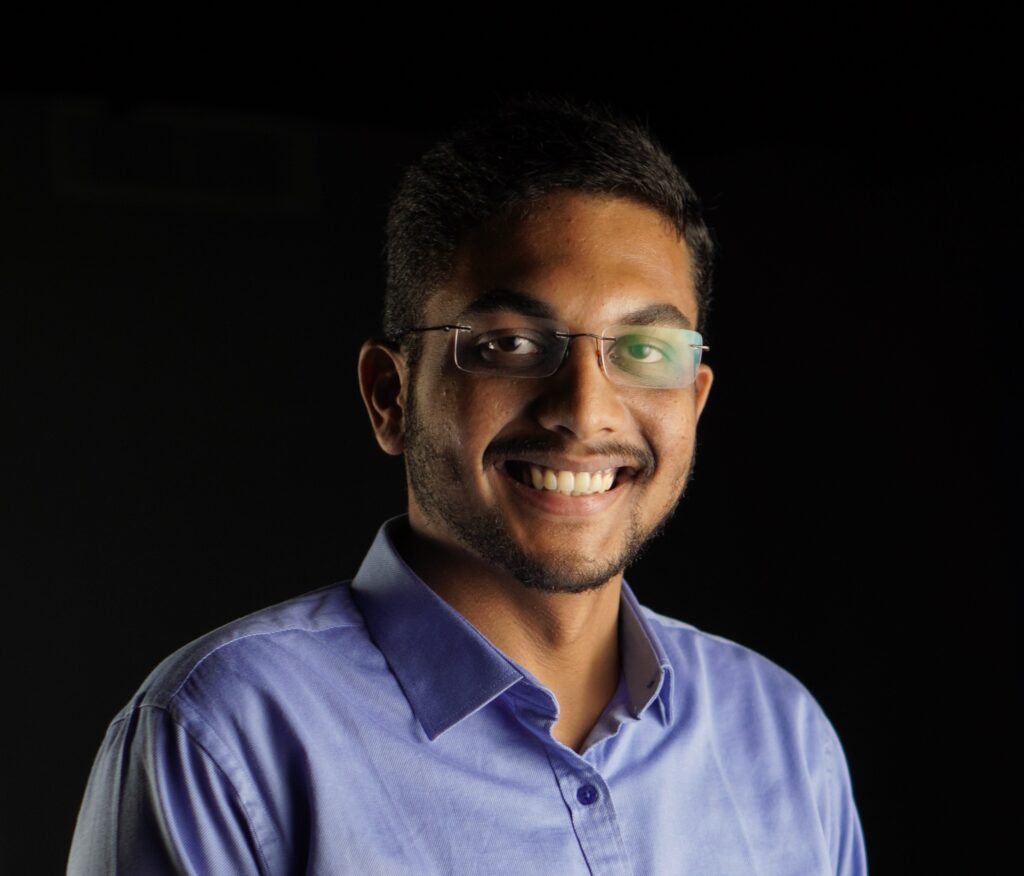
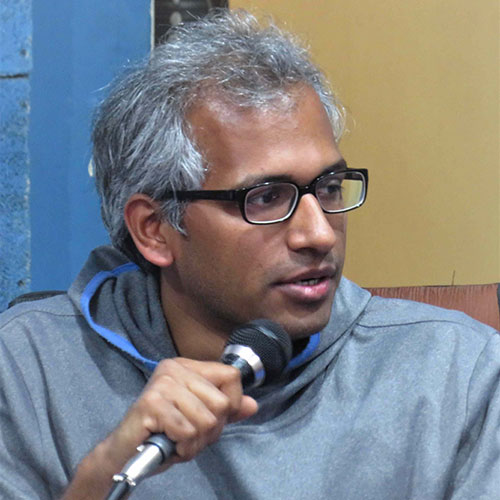
​Dr Vasupradha Srikrishna pens a book chapter

​Dr Vasupradha Srikrishna, Assistant Professor, Communications​, IFMR GSB has contributed a Book Chapter titled “Pixels and Pedagogy: A Case Study of Experiential Learning by Media Students in Tamil Nadu During the Covid-19 Pandemic” in the book Digital Inequalities in Media Education in South Asia: Context and Consequences of the Covid-19 Pandemic – A Routledge Publication.

Know more

​Dr Vasupradha Srikrishna at a key learning event on Positive Deviance in Tanzania

​Dr Vasupradha Srikrishna, Assistant Professor, Communications​, IFMR GSB was recently invited to contribute to a key learning event on Positive Deviance, organised by SNV and led by Professor. Arvind Ainghal (Samuel Shirley and Edna Holt Marston Endowed Professor, The University of Texas at El Paso) in Dar es Salaam, Tanzania, running from 29 September to 3 October 2025. She also conducted further research on positive deviance during the visit. The workshop successfully mobilised 70 participants from 15+ countries and 25+ organisations. They focused on exploring community-led solutions, highlighting how local efforts are transforming lives across crucial sectors like gender, health, education, nutrition, and agriculture.

Sayantan Datta co-authors a paper in Indian Journal of Gender Studies

Sayantan Datta, Assistant Professor of Practice, Krea-CWP has co-authored a paper titled ‘We Will Keep Clapping till the End’: Hijra Narratives on Their Taali published in the latest issue of the prestigious Indian Journal of Gender Studies.​ The paper is co-authored with ​Professor Pushpesh Kumar​, Professor of Sociology, University of Hyderabad​.

In a first of its kind attempt, the authors counter the commonsensical notions of the taali (clap), a quintessential marker of the hijras, a south asian gender-transgressive community. To do so, they draw upon years of fieldwork and in-depth interviews with members of the hijra subculture. Focusing on how the taali is deployed to both cement hijra belongingness and as a mode of protest, the authors trace the acoustic underpinnings of what it means to be a hijra in contemporary India.

Know more

Dr Chirag Dhara speaks at the Universitat Autònoma de Barcelona

On October 1 2025, Dr Chirag Dhara, Assistant Professor, Environmental Studies, SIAS presented a talk as part of our monthly public seminar series on “A new development classification for the 21st century” at Institute of Environmental Science and Technology (ICTA-UAB), Universitat Autònoma de Barcelona.

About the Talk
Nordic countries are frequently positioned as the leaders of “sustainable development” but their high per capita resource use presents a significant challenge. We propose a refined conceptual framework for sustainable development centering “universalizability” – the capacity for a development trajectory to have be globally adopted without overshooting biophysical limits. Our analysis identifies Panama, Costa Rica, and Sri Lanka as having achieved the highest levels of scalable social progress.

Dr Dhara and team leverage this framework to propose a new equity-oriented development classification that aligns with current research on environmental limits. This framework offers an alternative to the prevailing conception of a “developed country”, and enables the identification of replicable development models. Its goal is to offer policymakers guidance toward more equitable and sustainable progress in the 21st century.

Installation of a multifrequency Global Navigation Satellite System at Krea Campus

On 25 and 26 September 2025 Krea University successfully installed a multifrequency Global Navigation Satellite System receiver at the Sri City campus. The instrument is a calibrated state of the art GNSS receiver which can be operated as a reference system. This will be measuring multiple L-band radio frequencies emitted by different global satellite based positioning and timing systems such as GPS, GLONASS, Galileo, Beidou, NAVIC and QZSS. From the measurements, total electron content of the ionosphere can be estimated as a routine 24/7 data product.

This will boost the ongoing space research activities in Krea University and also at a regional level in the Indian longitude sector. The data will be immensely helpful to study the low latitude ionospheric disturbances that affect radio communications and navigation capabilities. The instrument is purchased from the financial support of ANRF through Early career grant to Dr Lakshmi Narayanan, Assistant Professor, Environmental Studies, SIAS.

Dr Shriddha Shah speaks at the HRSC Talk Series at IIIT Hyderabad

Dr Shriddha Shah, Assistant Professor of Philosophy, SIAS delivered a talk on ‘Animal Laborans to Homo Faber: Rethinking Labour and Work Through Arendt and Marx’ at Human Sciences Research Centre, IIIT, Hyderabad​ on 1 October 2025.

About the Talk

The concept of labour with its various implications is central to the structuring of the modern political economy. It is also the cornerstone of Karl Marx’s assessment of the capitalist political economy. Hannah Arendt, in The Human Condition, offers a critique of Marx’s thesis on labour, and thereby his ensuing assessment of society and politics. This paper argues that there is a significant change in the conceptualisation of labour, as discussed by Hannah Arendt, particularly in her examination of the distinction between the concepts of labour and work.

Marx in his thesis makes no distinction between work and labour. However, for Arendt the lack of this distinction is a critical component of her criticism of Marx’s thesis on labour. This paper addresses this issue and argues that Arendt’s thesis rests on presuppositions of metaphysical and methodological dualism, in contrast to those of Marx, and the changed conception of labour is not contingent or a matter of oversight but is based on commitments to different points of view. The paper further argues that this change also influences subsequent formulations of labour and its issues, in contemporary assessments of the political economy.

SIAS Students and Faculty publish a research paper

SIAS students Aishani Tewari, Gayatri Tendulkar, and SIAS faculty members Professor S Sivakumar, Dean – Research and Professor, Physics and Dr Kalyan Chakrabarti, Associate Dean (Students) and Associate Professor, Biological Sciences and Chemistry along with Apurva Phale and Ranabir Das from National Center for Biological Sciences, Bangalore have published a paper titled, Analyzing sub-millisecond timescale protein dynamics using eCPMG experiments. The team has designed experiments to measure fast motion in proteins.

How to measure protein motion at 50,000 per second or faster? How much information can we get from the measurements? Extreme Carr-Purcell-Meiboom-Gill (eCPMG) experiments can provide such information, but there are practical considerations. The team has designed a safe and practical measurement scheme. The knowledge of the motion of protein molecules might provide clues about a wide range of diseases, from Cancer to Alzheimer’s.

Read more