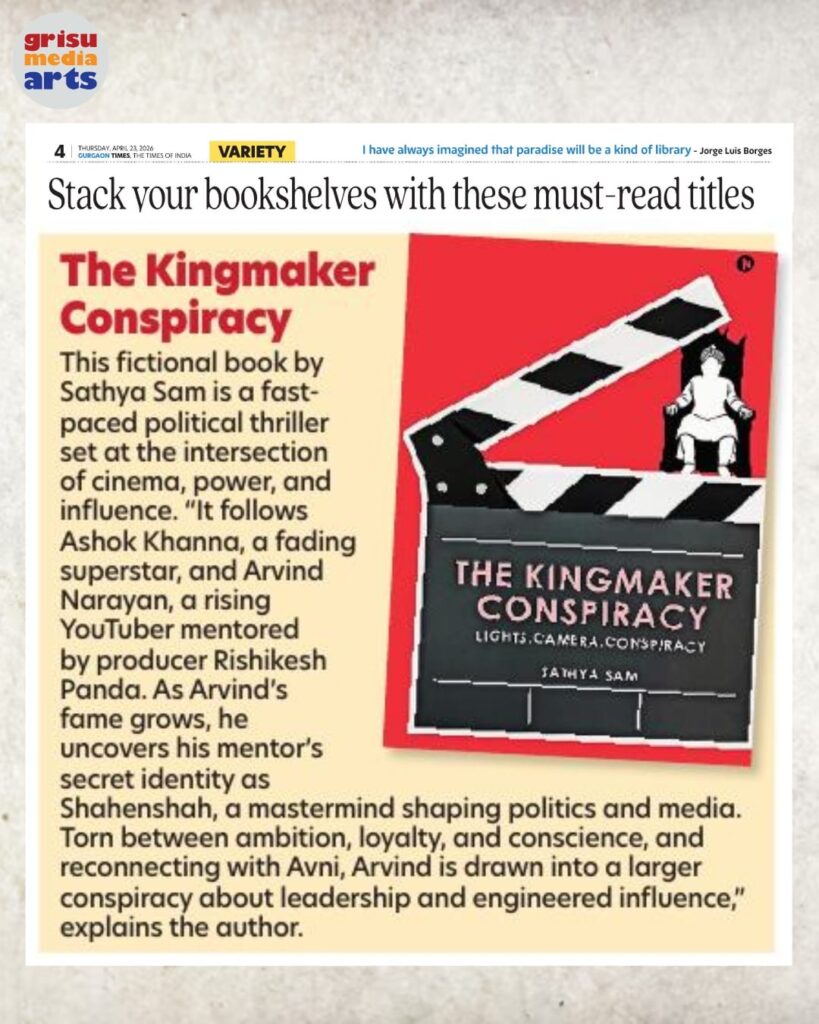
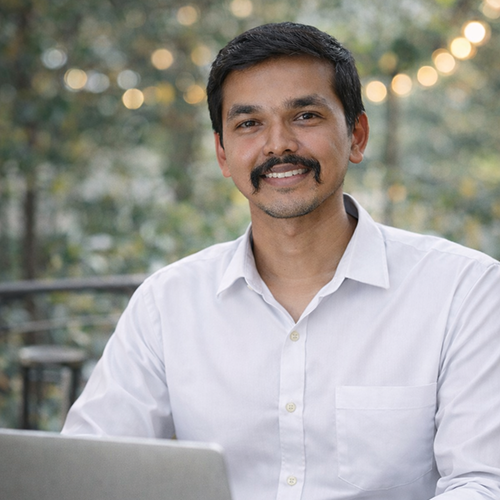
The latest novel by Dr R S Sathya Saminadan, Associate Professor of Practice, Marketing, IFMR GSB named The Kingmaker Conspiracy, has been featured in Gurgaon Times ( part of The Times of India) as part of their World Book Day special highlighting must-read titles.
On 28 April 2026, Dr Sambaiah Gundimeda, Associate Professor, Politics, SIAS delivered an online talk for the Bahujan Students Front at the University of Hyderabad titled ‘Educate, Agitate, Organize: Dalit and Black Visions of Liberation’. The lecture offered a comparative reflection on the Black civil rights movement and Dalit struggles for equality, highlighting how both traditions challenged systems of inherited hierarchy through ideas, protest, and collective organisation. It examined the contributions of thinkers such as B R Ambedkar, Jyotirao Phule, W E B Du Bois, Martin Luther King Jr, and Angela Davis, while exploring themes of dignity, democracy, representation, and student responsibility. The talk concluded by emphasising the continuing relevance of education, agitation, and solidarity in confronting contemporary forms of exclusion and injustice.
Sayantan Datta, Assistant Professor of Practice, Krea-CWP was a panellist for a panel discussion titled ‘Between Risk and Care: Building Safety in Turbulent Times’, organised by Izaar Circle, New Delhi on 18 April 2026. The discussion revolved around risk, precarity and care in the aftermath of the recently passed Transgender Persons (Protection of Rights) Amendment Act 2026.
Dr Joya John, Assistant Professor, Literature, SIAS has penned an article in The Wire titled For the Love of Infrastructure: Music, Protest and the Politics of Care in Iran and India.
In Iran, citizens gather around key infrastructure—often using music—to protect it amid threats, reframing it as a site of collective care and survival. The piece briefly contrasts this with India, where infrastructure is more often contested.
Sayantan Datta, Assistant Professor of Practice, Krea-CWP delivered a talk on ‘Science as Storytelling’, in a live podcast hosted by The Scicomm Synapse on 19 April 2026. Focused on students and aspiring communicators, the conversation dived into building a career in science journalism, crafting impactful narratives, and why storytelling might just be the most underrated scientific tool of our time
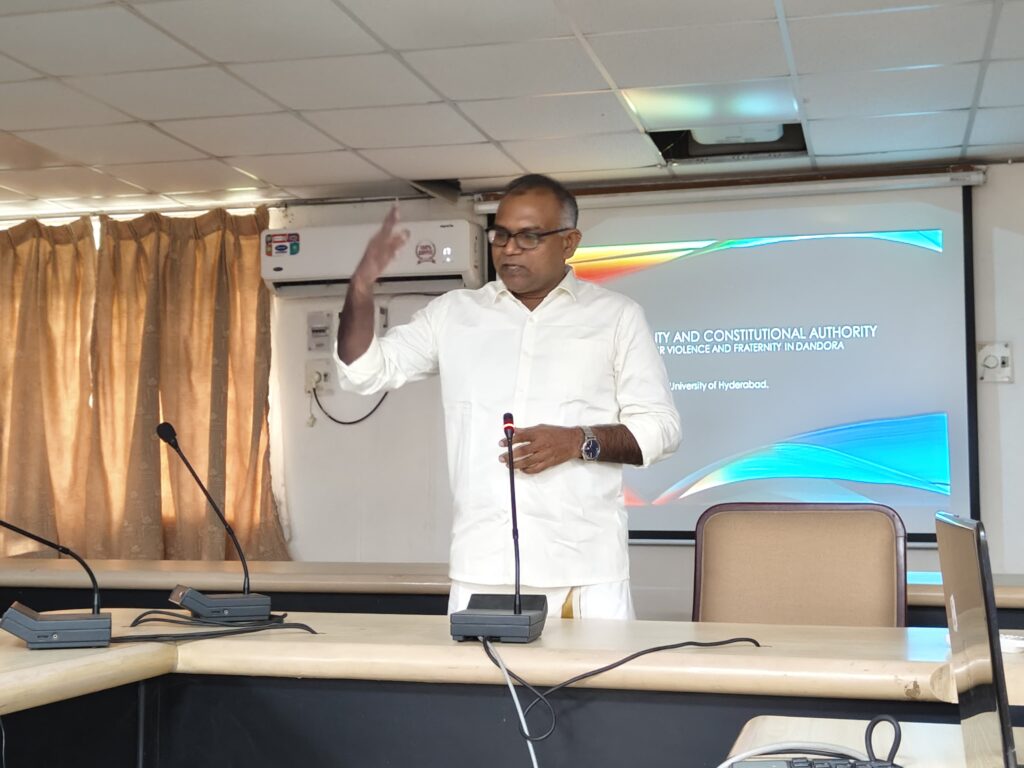
Dr Sambaiah Gundimeda, Associate Professor, Politics, SIAS delivered a talk titled ‘Caste Sovereignty and Constitutional Authority: Intimacy, Honour Violence and Fraternity in Dandora’ at the Department of Sociology, University of Hyderabad, on 22 April 2026.
About the Talk: The talk developed the concept of caste sovereignty to understand caste as a socially organised claim to authority within India’s constitutional democracy. Moving beyond approaches that treat caste solely as hierarchy or identity, it examined caste as a non-state power regulating intimacy, honour, punishment, and belonging through extra-legal mechanisms. Using an interpretive reading of Dandora, it showed how inter-caste love is framed by dominant castes as a violation of endogamous order, often provoking collective violence. The subsequent prosecution under the SC/ST Atrocities Act highlighted the conflict between caste authority and constitutional law. The talk concluded that law alone cannot dismantle caste power, and that fraternity remains a fragile and uneven democratic aspiration.
A paper by Professor Madhuri Saripalle, Professor of Economics, IFMR GSB titled Economic analysis of Organic inputs and Biostimulants: Adoption and crop yield in South India has been accepted for publication in Sustainable Futures, Elsevier (Scopus Q1, SJR 0.9).
Gogireddy Naga Malleswara Reddy, IFMR GSB PhD Scholar, presented a research paper titled ‘Contemporary Trends and Policy Dilemmas in Rooftop Solar Adoption in Kerala’ at the International Conference on Reinventing Business Practices, Start-ups, and Sustainability (ICRBSS 2026).The paper was co-authored with Professor Chandrasekaran Nagarajan, Professor, Operations and Strategy, IFMR GSB.
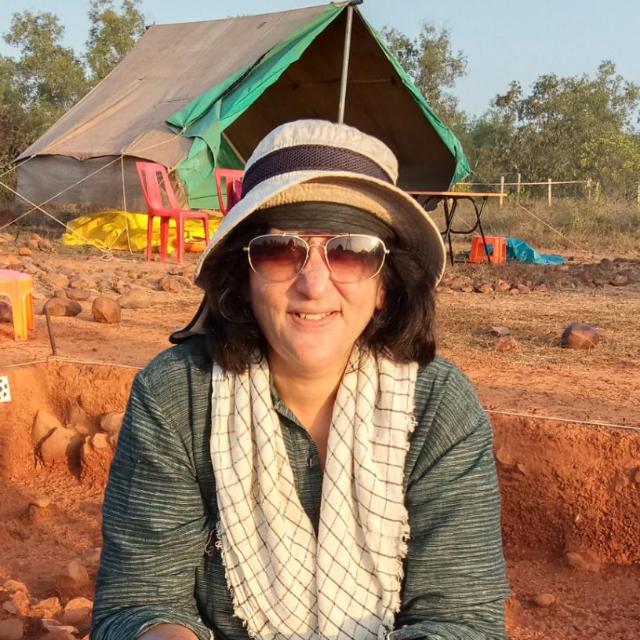
Professor Shanti Pappu, Adjunct Professor, Archeology and History, SIAS has recently co-authored two articles. Grinding stones from the neolithic “Ashmound” site of Budihal, India has been published in ScienceDirect. And proceeds of a conference in What Is the Acheulean? in Evolutionary Anthropology: Issues, News, and Reviews35 (2026).
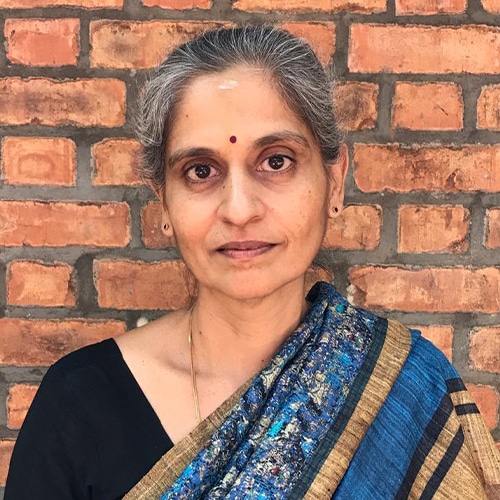
Dr Sumitra Ranganathan, Associate Professor, Musics, SIAS participated in a 2-hour roundtable at the British Forum of Ethnomusicology Annual Conference on 9 April 2026. Titled ‘Entangling Past and Present: Connecting India’s Hidden Musical Histories to Ethnomusicology Today’, the five member hybrid roundtable featured work on neglected or erased fragments of North India’s musical story ranging from historically marginalised Muslim hereditary artisans, tawa’if performers and their ability to navigate multiple spaces, counter-narratives of Dhrupad music in regional courts, the neglected history of the Qawwal Bacche and its links to khayal, and the hidden figure of the cross-dressed male dancer in North India. The panel engaged questions of how digital methods can connect past with present, how today’s oral histories can be reconciled with past accounts, and crucially, the value of entangled, plural and ‘messy’ histories to counter ongoing marginalisation, intolerance, and majoritarian domination.