
London Calling: A Krea Student’s Journey to the Financial Times
A summer internship at the FT offered Anika Varughese, a student at the School of Interwoven Arts and Sciences (SIAS), Krea University, a closer look at global journalism, financial inclusion, and the impact of perseverance.
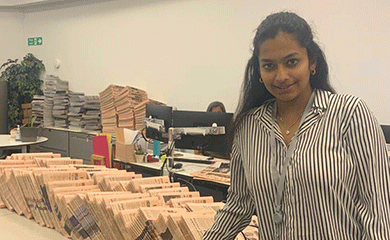
When Anika, a second-year undergraduate student majoring in Data Science with a minor in Math at SIAS, first walked through the historic Bracken House, the Financial Times’ iconic headquarters in central London, she could hardly believe she was there. “I really didn’t expect a response,” she said, recalling the simple email she sent that led to a summer internship many journalism students can only dream of. “But sometimes things work out.”
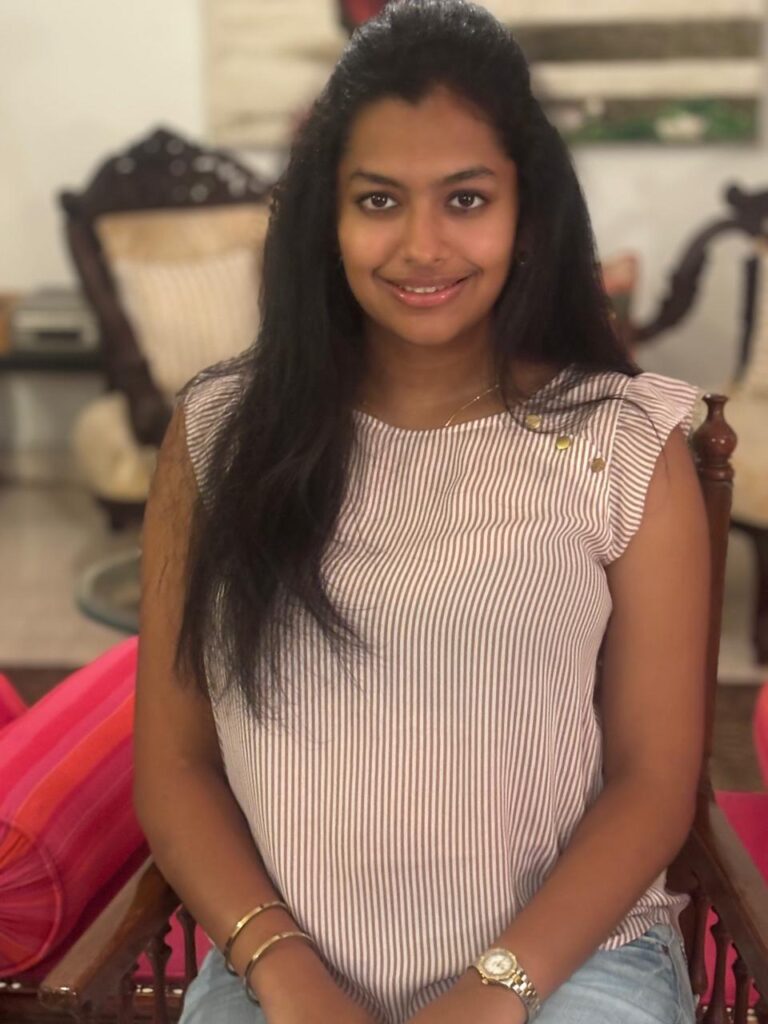
Anika’s journey from the university campus in Sri City to one of the world’s most influential newsrooms is a story of curiosity, determination, and an education that encourages exploration and initiative.
She had just completed an internship at the Hindustan Times in Delhi when she decided to explore something more global. “It was a technical field,” she said. “And I started to wonder if I wanted something more focussed on people and events.” The FT felt like a long shot. Yet, a few months later, she found herself in the heart of one of the world’s most respected news media groups, working with journalists and strategists who “regularly shape the financial and political conversations of the day.”
“The Financial Times was like winning a lottery. I was so impressed by how it sits at the intersection of business, politics, and society.”
A Global Step
At SIAS, students are encouraged to think beyond the obvious and pursue opportunities that challenge convention. For Anika, this environment—rooted in liberal arts, data science, and real-world learning—gave her the confidence to reach out to one of the world’s most respected news organisations. “I didn’t come through a traditional path,” she said, “but SIAS taught me to take initiative. I think just having a little bit of a data science background also helped me understand AI better, especially when I discussed strategy at the FT.
Thoughtful Mentoring
“Krea students have a huge opportunity to explore charities in this area and contribute… We’re guided by thinkers like Nobel laureates Abhijit Banerjee and Dr Esther Duflo, and former RBI Governor Dr Raghuram Rajan. That’s incredible.”
Her academic foundation enabled Anika to work on projects at FTLive, the events vertical of the FT, which hosts high-level discussions between global CEOs and senior editors. Shadowing the Head of Strategy, she attended meetings on AI, event planning, and vendor partnerships. She also worked on a detailed research project analysing India’s events and conference market, as well as a report on asset-backed securities for a Hong Kong event. “I wasn’t just observing but was contributing. The mentoring was thoughtful and very encouraging.”
Bridging the Financial Literacy Gap
According to Anika, India has seen better financial inclusion through initiatives like Jan Dhan Yojana and the rapid adoption of digital payments. Yet, she believes financial education is key to lasting development.
“The FT sees financial education as a tool of development. That really struck me,” she said. “Right now, they’re running projects in places like Aurangabad and Lucknow. There are enormous possibilities.” In fact, she even wrote to Professor Rajan, an FT contributor himself, suggesting he write a column on liberal arts education.
FT FLIC in India
Anika’s interaction with the FT’s Financial Literacy and Inclusion Campaign (FT FLIC), a new initiative in India launched with the education non-profit Pratham, stood out most. The campaign promotes financial knowledge and inclusion among underserved populations in cities like Aurangabad and Lucknow.
“I was lucky enough to interview Mr Patrick Jenkins, the Deputy Editor and Chair of the FT FLIC,” she said. “He was genuinely excited about India and saw a strong link between financial education and development.” That message resonated with her, and she believes students like her can play a role in contributing to that change.
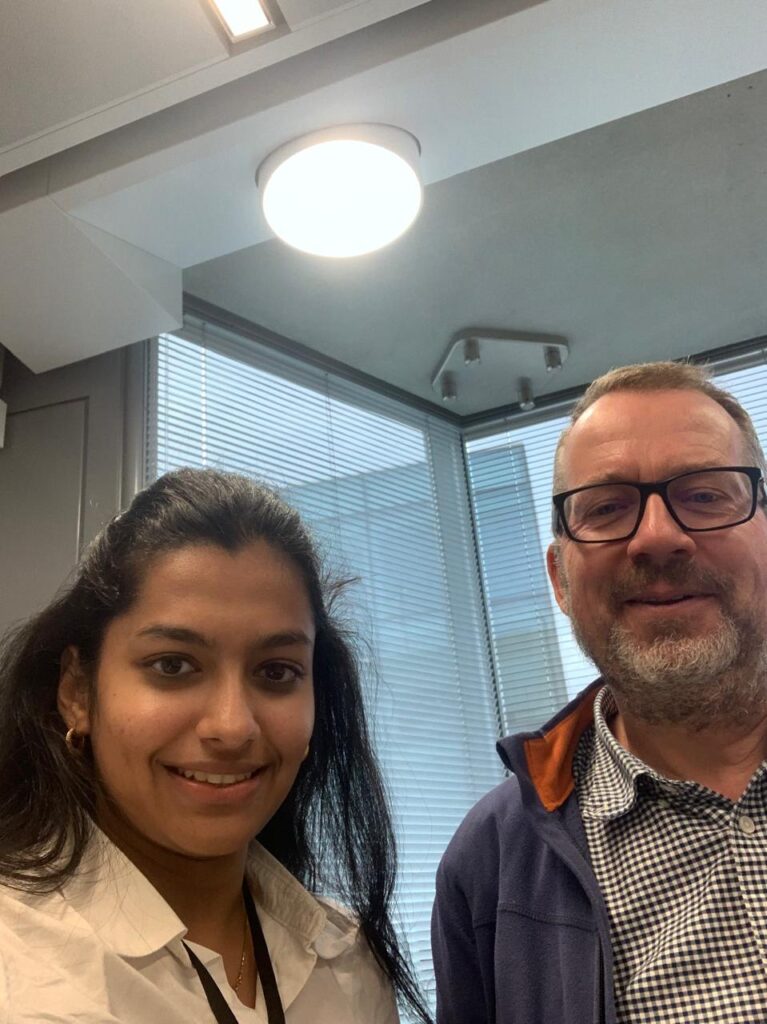
Anika with Patrick Jenkins, the Deputy Editor and Chair of the FT FLIC
Lessons in Persistence
The road to London wasn’t straightforward. There was no formal application, no structured pathway. “I just kept writing emails,” she said. “Persistence matters. Many companies tie up with specific universities. So, when you’re outside that network, you have to try harder.”
This self-driven approach is something SIAS encourages. Summer internships are built into the curriculum, and faculty provide consistent encouragement through workshops and guidance.
“Everyone at the university was supportive. My peers also really motivated me. They were doing great things with their internships and projects, which made me want to push myself too.”
Still Exploring, Still Curious
At this point in her academic journey, Anika isn’t entirely sure what direction she’ll take, though experiences like this have provided clarity. “Data is going to shape every field. I think the degree I’m pursuing will prepare me for an evolving world.”
And when she’s not diving into datasets or discussing AI strategy, you might find her on a run around the campus or at a beginner-friendly dance workshop at Mudra, one of Krea’s student clubs. “I used to swim competitively when I was younger,” she said. “Now, I try to stay physically active, which helps clear my mind.”
Her time in London gave her “perspective”, which is more than just an internship.“Bracken House even has a museum in the basement about FT’s history,” she said. “Every building in London seemed to tell a story. And now, I have my own story from there too.”
By Seena Raveendran, Deputy Manager – Communications, Krea University