Dr Sambaiah Gundimeda’s article published by the Indian Law Review

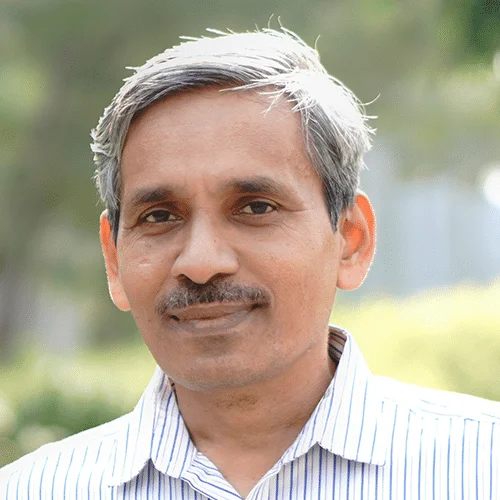
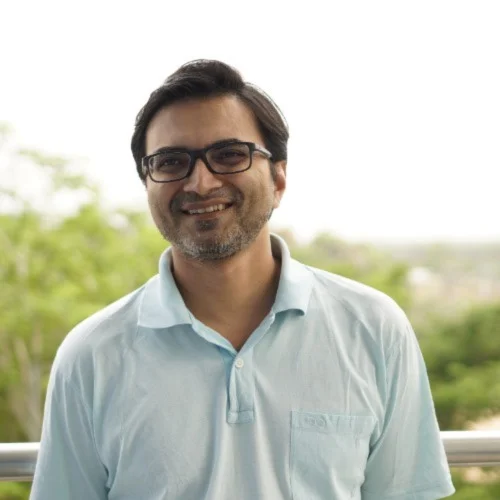
Dr Sambaiah Gundimeda, Associate Professor, Politics, SIAS recently penned an article titled Debating Uniform Civil Code: the making of Article 44 in the Constituent Assembly of India published by Indian Law Review.

Abstract

Should a secular state accommodate personal laws in a religiously diverse society? Must legislation reforming personal and cultural practices rest on the consent of affected groups? These questions animated the Constituent Assembly’s deliberations on the Uniform Civil Code (UCC). Initially conceived as a mechanism to harmonize personal laws, the UCC soon became a site of constitutional contestation over secularism, gender justice, and cultural autonomy. Proponents advanced it as essential to civic equality and national integration, while critics warned of majoritarian homogenization and emphasized the need for preserving plural legal traditions and community assent. The Constituent Assembly ultimately located the UCC within the non-justiciable Directive Principles, signalling a compromise between legal uniformity and pluralist accommodation. Revisiting these debates, this article argues that the democratic legitimacy of personal law reform rests not on equality or uniformity alone, but on inclusive deliberation, negotiated consent, and institutional patience within a plural constitutional order.
Know more

Read the pdf

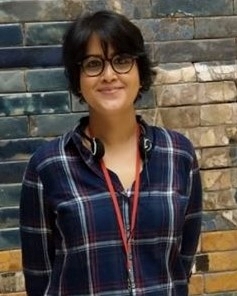
​Dr Vasupradha Srikrishna pens a book chapter

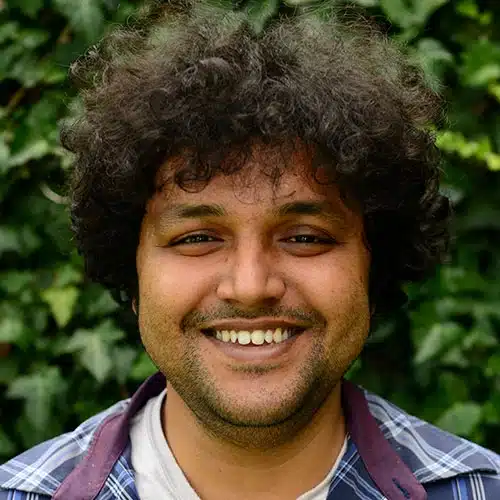
​Dr Vasupradha Srikrishna, Assistant Professor, Communications​, IFMR GSB has contributed a Book Chapter titled “Pixels and Pedagogy: A Case Study of Experiential Learning by Media Students in Tamil Nadu During the Covid-19 Pandemic” in the book Digital Inequalities in Media Education in South Asia: Context and Consequences of the Covid-19 Pandemic – A Routledge Publication.

Know more

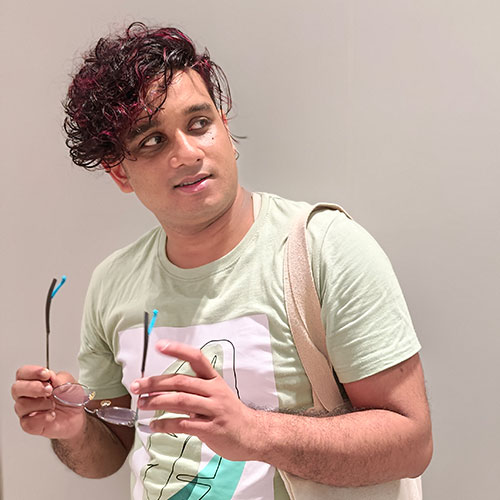
Sayantan Datta co-authors a paper in Indian Journal of Gender Studies

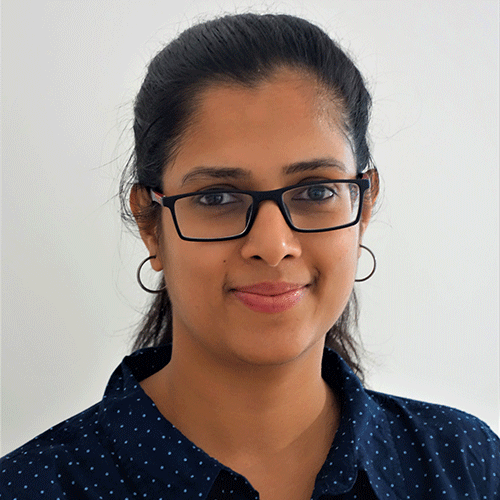
Sayantan Datta, Assistant Professor of Practice, Krea-CWP has co-authored a paper titled ‘We Will Keep Clapping till the End’: Hijra Narratives on Their Taali published in the latest issue of the prestigious Indian Journal of Gender Studies.​ The paper is co-authored with ​Professor Pushpesh Kumar​, Professor of Sociology, University of Hyderabad​.

In a first of its kind attempt, the authors counter the commonsensical notions of the taali (clap), a quintessential marker of the hijras, a south asian gender-transgressive community. To do so, they draw upon years of fieldwork and in-depth interviews with members of the hijra subculture. Focusing on how the taali is deployed to both cement hijra belongingness and as a mode of protest, the authors trace the acoustic underpinnings of what it means to be a hijra in contemporary India.

Know more

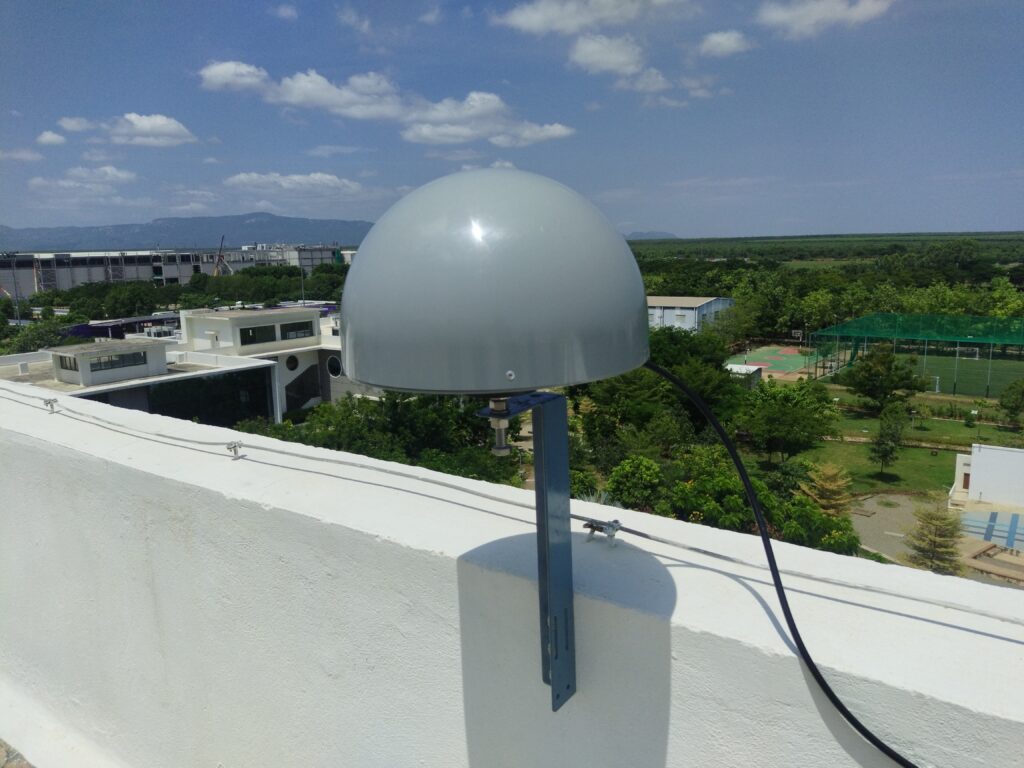
Installation of a multifrequency Global Navigation Satellite System at Krea Campus

On 25 and 26 September 2025 Krea University successfully installed a multifrequency Global Navigation Satellite System receiver at the Sri City campus. The instrument is a calibrated state of the art GNSS receiver which can be operated as a reference system. This will be measuring multiple L-band radio frequencies emitted by different global satellite based positioning and timing systems such as GPS, GLONASS, Galileo, Beidou, NAVIC and QZSS. From the measurements, total electron content of the ionosphere can be estimated as a routine 24/7 data product.

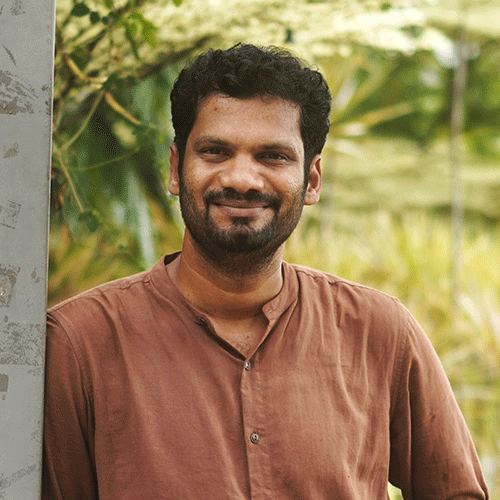
This will boost the ongoing space research activities in Krea University and also at a regional level in the Indian longitude sector. The data will be immensely helpful to study the low latitude ionospheric disturbances that affect radio communications and navigation capabilities. The instrument is purchased from the financial support of ANRF through Early career grant to Dr Lakshmi Narayanan, Assistant Professor, Environmental Studies, SIAS.

SIAS Students and Faculty publish a research paper

SIAS students Aishani Tewari, Gayatri Tendulkar, and SIAS faculty members Professor S Sivakumar, Dean – Research and Professor, Physics and Dr Kalyan Chakrabarti, Associate Dean (Students) and Associate Professor, Biological Sciences and Chemistry along with Apurva Phale and Ranabir Das from National Center for Biological Sciences, Bangalore have published a paper titled, Analyzing sub-millisecond timescale protein dynamics using eCPMG experiments. The team has designed experiments to measure fast motion in proteins.

How to measure protein motion at 50,000 per second or faster? How much information can we get from the measurements? Extreme Carr-Purcell-Meiboom-Gill (eCPMG) experiments can provide such information, but there are practical considerations. The team has designed a safe and practical measurement scheme. The knowledge of the motion of protein molecules might provide clues about a wide range of diseases, from Cancer to Alzheimer’s.

Read more

Dr Dhanya Radhakrishnan and Dr Venkata Srinu Bhadram, Assistant Professor of Physics publish a collaborative paper in Journal of Applied Physics

Dr Dhanya Radhakrishnan, Lab Manager, Physics and Chemistry Labs and Dr Venkata Srinu Bhadram, Assistant Professor of Physics, SIAS have published a collaborative paper titled High-pressure structural stability of compositionally complex pyrochlore oxides in Journal of Applied Physics. It’s a collaborative work involving researchers at IIT Madras, Elettra (Italy), and Vinca Institute of Nuclear Sciences (Serbia). In this work, ​t​he researchers complex oxide ceramics remain structurally stable under extreme pressures of up to 20 gigapascals. This remarkable stability makes it promising for applications in harsh environments, such as nuclear waste immobilization, high-performance fuel cells, and heat-resistant coatings.

Read more

Dr Lakshmi Narayanan’s proposal approved under ISRO RESPOND programme

A project by Dr ​​Lakshmi Narayanan, Assistant Professor, Environmental Studies, SIAS has been approved under the prestigious ISRO RESPOND programme. The project proposal is titled ‘Large and small-scale ionospheric plasma irregularities using airglow imaging and GNSS TEC measurements’.This will be a two year project in collaboration with Physical Research Laboratory, Ahmedabad. The support is approximately Rs. 28,00,000/- and manpower at the level of Project Associate. In this project Dr Narayanan will develop a low cost instrument to study oxygen airglow at 630 nm wavelength emanating from 200 – 300 km above the surface of the earth. He will also develop software to efficiently analyse the voluminous datasets involving machine learning and artificial intelligence algorithms.