
CWP Faculty
Dr Anannya Dasgupta
Dr Dipanjali Deka
Neha Mishra
Sayantan Datta
Vikas Kumar Choudhary
Dr. Anakshi Pal
Surabhi Goel
Rahul Pillai
Meghna Bohidar
Nangsel Sherpa
Dr Anannya Dasgupta
PhD, Rutgers University
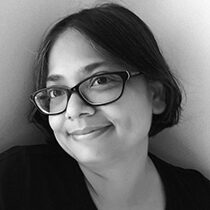
Dr Anannya Dasgupta directs the Centre for Writing and Pedagogy at Krea University and is Associate Professor in the Division of Literature and the Arts, SIAS. In her dual role she teaches, develops curriculum and writes in both her areas of interests that took shape during her doctoral work at Rutgers University (New Jersey) where she was also a teaching assistant at the Writing Programme. Since 2012 she has been setting up writing centres at various universities in India, developing writing pedagogies especially in academic writing, and training faculty in teaching writing. Her teaching and research interest in literature are in the areas of the British Renaissance drama, Poetry, and Indian Literature in English. She is also a poet, photographer and artist, and often brings these to bear in her writing and teaching. Some of her publications include an academic monograph: Magical Epistemologies: Forms of Knowledge in Renaissance Drama, a collection of co-edited essays on academic writing: Writing in Academia, a collection of poetry: Between Sure Places, and among other anthologised essays, poetry and short stories, the following essay on Shakespeare’s sonnets and the rhetoric of quarrelling: Finding Quarrel in a Straw.
Dr Dipanjali Deka
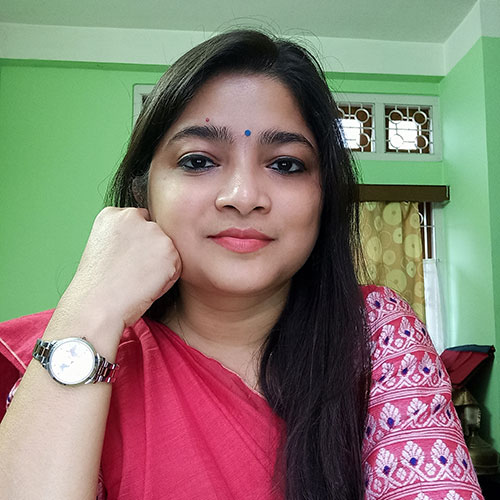
Dr Dipanjali Deka is a Visiting Assistant Professor at the Centre for Writing Pedagogy, Krea University. She has worked at the Archive and Research Centre of Ethnomusicology, American Institute of Indian Studies. Dr Deka holds a PhD from the Department of Theatre and Performance Studies, School of Arts and Aesthetics, Jawaharlal Nehru University. In her doctoral thesis, she interweaves the pluralities of nirguna bhakti through the oral song and poetry traditions of Lal Ded, Kabir and Azan Fakir. Her broader research interests include music and religion, music and politics, devotional poetic literature and orality, ethnomusicology, performance studies, cultural studies, and Indian aesthetic theory. Dr Deka is a multilingual practitioner of Bhakti –Sufi music, a trained Hindustani Classical vocalist, and an All India Radio (AIR) singer.
Neha Mishra
MPhil English, Delhi University
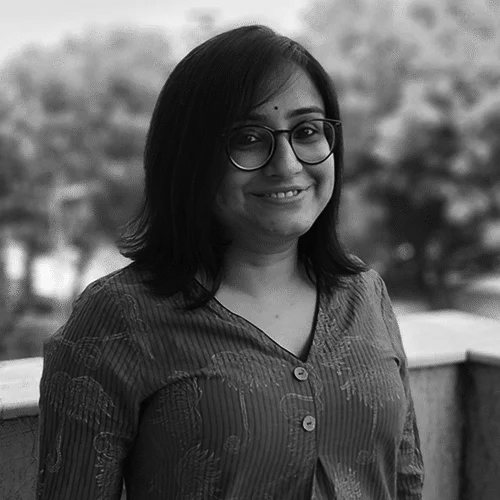
Neha Mishra is a faculty at the Centre for Writing and Pedagogy, Krea University. She is also the tutoring coordinator for the two tutoring programmes offered by the CWP – Peer Tutoring and WRITE. Before joining Krea-CWP, Neha worked as an editor at the Global Editions division of Pearson Education, NOIDA, where she edited higher education books like Woolfolk’s Educational Psychology 14e, Creswell’s Educational Research 6e, Leedy’s Practical Research 12e, among others. A literature scholar by training, she has received BA(H) in English from Lady Shri Ram College for Women, MA in English from Shiv Nadar University, Greater NOIDA, and MPhil in English from the Department of English, Faculty of Arts, Delhi University. Her research interests include violence against women, women’s writings, literary theory, and feminist theory.
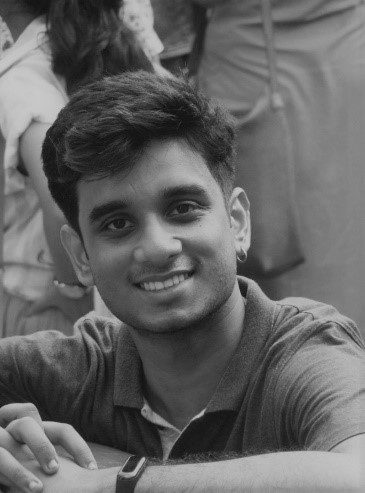
Sayantan Datta
MSc, University of Hyderabad
Sayantan Datta (they/them) is an Assistant Professor of Practice at the Centre for Writing and Pedagogy, Krea University, and an award-winning science journalist. Originally trained as a neuroscientist, their research and writing interests now lie at the intersections of science, gender, sexuality, caste, and health. They write two columns periodically: one with The Wire (Science) on Science and Gender and another with The News Minute (called The Next Wave) that focuses on contemporary debates around gender and sexuality.
The thematic focuses of Sayantan’s research are gender and sexuality, science education, and science journalism practice. They are particularly interested in documenting and understanding the experiences of gender- and sexually marginalized groups in the Indian science ecosystem.
For their report on gendered hostels in Indian science institutions, Sayantan was awarded the 13th Laadli Media & Advertising Awards for Gender Sensitivity in 2023. Further, their children’s book, The Plant Whisperer (Pratham Books), was featured in Tata Trusts’ Parag Honour List 2023 and shortlisted for the Green Literature Festival Honour List (Category: Children’s Books) 2023.
Sayantan’s work has been supported previously by the National Association for Science Writers, USA, the Transforming Education for Sustainable Futures-India project, and the G3: Genderalities and Work grant from the reFrame Institute of Art and Expression.
Vikas Kumar Choudhary
Vikas Choudhary has recently submitted his PhD thesis, which is situated in the post-2014 political landscape of India and examines the politics of memory. By employing phenomenological perspective, the thesis theorises how experiences of privilege and oppression shape the constitutive structures of individual memory. His research and teaching interests include caste politics, politics of memory and phenomenology.
Vikas has presented his work at various universities, including the Centre for Subjectivity Research at Copenhagen University and King’s College London, where he was awarded the Best Paper Award in 2023 for one of his thesis chapters. His plan is to develop a course on the ‘Hard Problems’ in Politics, focusing on pre-linguistic phenomena such as judgement, memory, and prejudice that continue to shape political discourse in the 21st century.
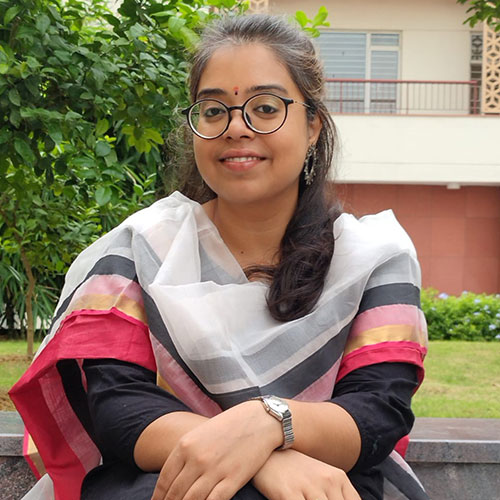
Dr. Anakshi Pal
Dr. Anakshi Pal completed her PhD from the Department of Sociology, South Asian University [A University Established by SAARC Nations], New Delhi in 2023. Her doctoral research is situated at the intersections of death and dying, emotions and everyday life in South Asia. Prior to joining CWP–KREA, she worked with the Council for Social Development (CSD), New Delhi from December 2023 till June 2025, as Managing Editor for Social Change––the Council’s journal, published by SAGE India––and as CSD’s Communication Advisor, where she occupied a pivotal role within the journal’s Editorial Team, especially. She has worked as Editorial Assistant (General Administration and Correspondence) for the journal Society and Culture in South Asia, co-published by the Department of Sociology (SAU) and SAGE, and as Editorial Assistant for the Report on the Status of Women in Media in South Asia (Volumes I and II) released in March 2020 as part of the UNESCO-SWAN project ‘Women for Change: Building a Gendered Media in South Asia’. She has also worked briefly as a Consultant with Child Rights and You (CRY) in 2023. Her academic writings in the form of book chapters in edited volumes have been published by Bloomsbury and Palgrave Macmillan. Her other writings, drawing from reflections on academic life and personal interactions, have featured in the digital publication platform LiveWire published by The Wire.
Surabhi Goel
Surabhi Goel holds an M.Phil. in English from the University of Delhi. Her M.Phil. dissertation was titled ‘Apocalypse Dreams: American Frontier Myths in the Anthropocene’. She is broadly interested in literary theory, critical animal studies, psychoanalysis and literature, and the medical humanities. Before joining the Centre for Writing and Pedagogy at Krea University, Surabhi taught at undergraduate colleges affiliated with the University of Delhi. In her spare time, she embroiders, cross-stitches, and translates.
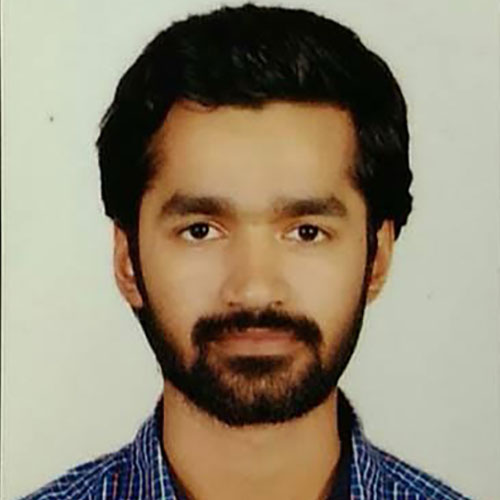
Rahul Pillai
Rahul Pillai is a doctoral scholar at IIT Madras, where he works in the field of environmental anthropology. In his dissertation, titled “Seeking Sustainability: An Ethnographic Study of Two Farms in South India”, he looks at sustainability as an everyday practice grafted onto projects of artisanal agriculture. In this, he is broadly interested in the conceptualisation of sustainability as an ethical practice in the time of the Anthropocene climate crisis. His research interests also include economic anthropology, postwork futurism, and critical theory.
Rahul holds a postgraduate degree in Literature from the University of Hyderabad and an undergraduate degree in English, Journalism, and Psychology from St. Joseph’s University, Bangalore. His publications include both academic and journalistic articles. Among the latter, his piece titled, “The Two-Finger Test Doesn’t Work? No One Told The Medical Colleges” earned him the Priyanka Dahale award for Young Journalists by Laadli Media. His professional experience includes work as an Instructional Designer at Deloitte USI and an Assistant Professor of English Language and Literature at Kristu Jayanti College, Bangalore.
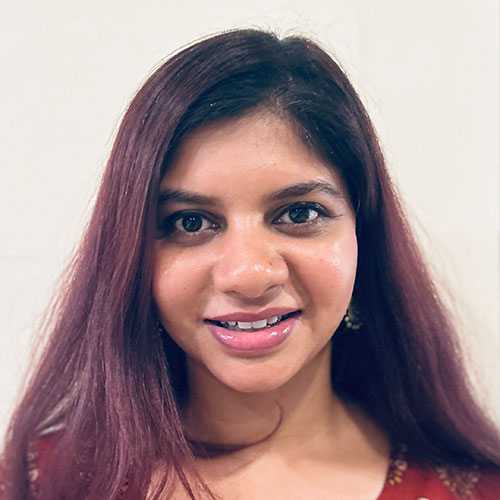
Meghna Bohidar
Meghna Bohidar holds an undergraduate degree in Psychology from Indraprastha College, Delhi University and a postgraduate degree in Psychology from Ambedkar University, Delhi. She is completing her PhD from the Department of Sociology, University of Delhi. Her doctoral thesis entitled “Performances of Romance: Exploring ‘Love’ in Public Spaces” is an ethnographic study (2018 to 2020) of young unmarried heterosexual couples in Delhi. The thesis approaches romance as a visible spatialized performance and how diverse city spaces like parks, malls, metro stations and the university campus shape the possibility of romance and how couples tactically transform these spaces through bodily presence, movement and affective claims.
Her publications include two chapters: “Performances of ‘Reel’ and ‘Real’ Life: Negotiating Public Romance in Urban India” in The Routledge Companion to Romantic Love (2021) and “Public Romance in India and its Transgressive Potential” Love and the Politics of Care (Bloomsbury, 2022). She is a member of the International Association for the Study of Popular Romance and has regularly participated in their international conferences held biennially since 2018, where she has presented her doctoral work. Her other research interests include sociology of emotions, cinema studies, urban studies and critical psychology.
She has taught as a Guest Lecturer in Lady Irwin College, Delhi University and as a Humanities Editor for Cactus Communications.
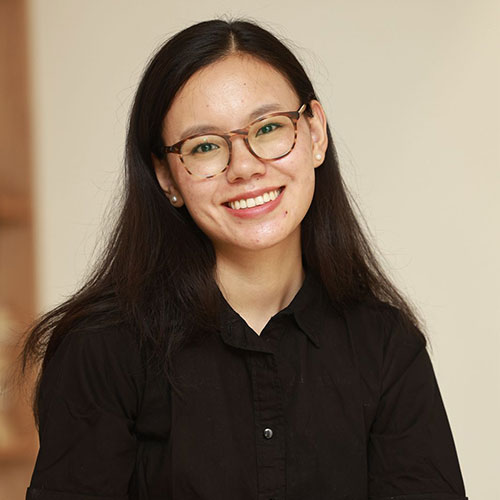
Nangsel Sherpa
Nangsel Sherpa (she/her) has recently submitted her M.Phil thesis at the Department of Sociology, Delhi School of Economics, University of Delhi. Her research focuses on the Tibetan community in exile in India, examining how ideas of citizenship, nationalism, and gender are being reimagined and transformed across generations. Prior to this, she completed her Master’s in Political Science from the Centre for Political Studies at Jawaharlal Nehru University, New Delhi.
With a strong interest in interdisciplinary and regionally grounded scholarship, her academic and creative practice often intersects, with a focus on gender, migration, borders, and minority rights. Nangsel is also the co-founder and editor of The Pomelo: Exploring Himalayan Voices, a digital platform that curates stories, essays, and cultural narratives from the Himalayan region.
Nangsel has received several prestigious fellowships and research grants, including from The Confluence Collective (supported by the India Foundation for the Arts), Zubaan Publishers, Asia Pacific Forum on Women, Law and Development (APWLD), and CREA. Through these projects, she has conducted independent research and storytelling initiatives on themes such as women’s mobility, queer identity, ecological transformation, and exile narratives. Her writings have been published in The Citizen, The Wire, Himal Southasian, and The Third Eye.