Economics

Degrees Awarded

BA - 3 Years

BA (Honours) - 4 Years

Programme overview

Economics at Krea begins with a fundamental question: How do people make choices? From this foundation, the discipline expands to examine how individuals, communities, and societies allocate scarce resources, organise production, and navigate the trade-offs that shape economic outcomes.

The programme connects economic thinking with psychology, politics, history, culture, and technology, exploring how these forces interact to create the world we see today. Students learn to analyse not just markets and policies, but the deeper patterns that drive human behaviour and social change.

The curriculum builds both quantitative rigour and critical judgment, combining classroom theory with hands-on experiences through internships, field projects, and research. The programme provides a versatile toolkit, enabling students to meaningfully engage with the questions that drive them – whether in climate policy, financial markets, inequality, or development.

What makes

Economics at Krea unique

The Economics major at Krea combines theoretical rigour with empirical applications. Students develop fluency with mathematical models while learning to deploy statistical methods and computational tools to analyse economic data.

The curriculum explores diverse intellectual traditions within Economics, examining how different schools of thought approach markets, institutions, and economic change. By engaging with both established and alternative frameworks, students learn to evaluate problems from multiple perspectives and select the right analytical tools for any context.

The pedagogical approach emphasises active, hands-on learning. Coursework challenges students to apply economic theory to real-world contexts and test predictions using data. Through applied exercises, students build a deep understanding of research methods, proficiency in coding and statistics, and the crucial skill of interpreting results and assessing their limitations.

Students benefit from faculty who bring diverse professional experiences into the classroom, and the programme also draws on research expertise from Krea-affiliated research centres, including LEAD at Krea University. These experiences are complemented by opportunities for in-depth research, such as through the capstone project.

Internship opportunities span leading corporations, start-ups, non-profits, government agencies, and research centres including J-PAL South Asia and Inclusion Economics India Centre. The programme’s blend of theory and practice, emphasis on both abstract reasoning and empirical application, and opportunities for hands-on research prepares students for varied career trajectories in business, analytics, development, policy, and research.

Programme Structure

Learning Outcomes

Reasoning from Fundamentals: Students cultivate the ability to decompose complex problems into their core components and build understanding from foundational principles. Rather than accepting conventional models uncritically, they learn to interrogate the underlying logic, identify key assumptions, and trace their implications. This approach enables students to evaluate theories against evidence, recognise when established models are inadequate, and construct more robust frameworks. This skill is invaluable for assessing policy proposals, designing empirical research, and analysing market dynamics.

Analytical and Quantitative Foundations: The programme builds students’ capacity for rigorous analysis through a strong foundation in calculus, linear algebra, and statistics. Students learn to deploy these tools to identify patterns in data, test hypotheses, and understand causal mechanisms in economic systems. This quantitative training enables students to move seamlessly between abstract modelling and concrete empirical application, applying mathematical precision to real-world economic questions.

Empirical Research and Communication: Students develop hands-on research capabilities, learning to collect and analyse data using statistical methods and programming tools including R, Stata, and Python. The curriculum integrates perspectives from multiple disciplines, helping students appreciate how economic questions intersect with psychology, politics, history, and technology. The coursework emphasises collaborative work, as well as the clear communication of complex ideas to diverse audiences, preparing students to engage effectively in research, policy, or professional contexts.

Assessment Methods

To help students develop a wide range of competencies, the Economics programme’s assessments employ multiple formats, including:

  • Problem Sets to build technical facility with quantitative methods and economic modelling.
  • Research Projects that require students to formulate questions, design empirical strategies, analyse data, and defend conclusions.
  • Essays and Case Analyses to develop the ability to construct rigorous arguments and apply theoretical frameworks to concrete situations.
  • Field Work (where applicable) to connect classroom concepts to economic realities.
  • Presentations to build the capacity to explain complex ideas clearly to varied audiences.

Students in the four-year programme also undertake a Capstone Research Project. This capstone requires students to work closely with a faculty advisor to produce original analysis on a topic of their choosing, synthesising the analytical, empirical, and communication skills developed throughout the curriculum.

Graduation Requirements

Economics graduation requirements for the three-year and four-year degree programmes:

Credit Requirements Summary

Credits needed to earn a
Single Major in Economics
Credits needed to earn a
Double Major in Economics
Credits needed to earn a
Minor in Economics
Credits needed to earn a
Concentration in Economics
3-Year Programme 60 48 24 16
4-Year Programme 80 64 32 16

Detailed Credit Breakdown

Single Major Double Major Minor Concentration
Required Elective Required Elective Required Elective Required Elective
3-Year Programme 44 16*** 40 8*** 24 0 16 0
4-Year Programme 60 20* 52 12** 32 0 16 0

* 20 credits from 5 electives (4 credits each) OR 2 electives (4 credits each) + 12-credit Capstone. 

** These credits can be earned by taking elective courses or additional required courses offered under the 4-year single/double major. 

*** These credits can be earned by taking elective courses or additional required courses offered under the 3-year or 4-year single/double major. 

To earn an Economics Major, Minor, or Concentration, students must complete the required and elective credits in Economics courses as indicated above.

Note: Economics is a hierarchical discipline. Prerequisites must be completed before enrolling in advanced courses. With instructor and Discipline Coordinator permission, co-requisite enrollment may be possible in certain circumstances. 

Career and Study Opportunities

Krea’s Economics programme prepares students for diverse professional pathways by blending quantitative training and research experience with an emphasis on clear reasoning and communication. Graduates are prepared for roles across a wide range of professional domains:

  • Corporate Sector: Roles in big tech, big data, consulting, and financial services that require strong analytical and data skills.
  • Start-ups and Entrepreneurship: Identifying market opportunities and shaping business strategy.
  • Academia & Research: Pursuing graduate studies (Master’s/PhD) and/or contributing to research at universities and think tanks.
  • Public Policy and Governance: Analysing and informing policy questions at think tanks, non-profits, and civil society/advocacy groups.
  • Civil Services: Bringing rigorous economic analysis to public sector challenges.
  • Data and Communications: Translating complex economic data and ideas for broader audiences.
  • Social Impact and Development: Addressing complex social and economic challenges at non-profits and development organisations.

Higher Education Pathways: 

MSc/MA/PhD in Economics, Applied Economics, Quantitative Economics, Financial Economics/Econometrics, Data Analytics, Big Data & Data Mining, Public Policy and International Development, Finance, MBA and Management programmes, Related interdisciplinary programmes.

Job roles: 

Business Analyst, Data Analyst, Research Associate, Policy Analyst/Advisor, Economic Consultant, Programme Manager and more.

Partnerships

Krea University has partnerships with leading universities in India and abroad, offering students pathways for higher education and research. These collaborations create opportunities for postgraduate study, academic exchange, and continued learning across disciplines. Know more

Faculty

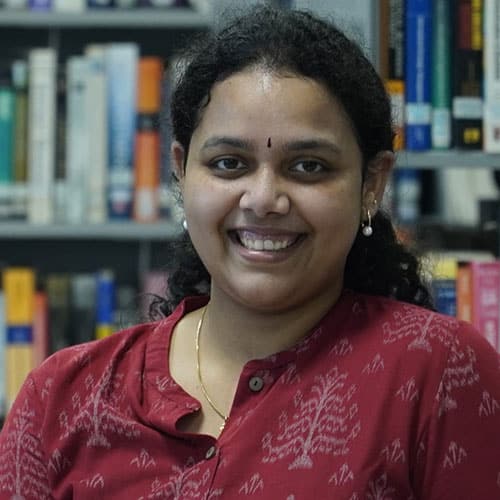
Dr Vidya Bharathi Rajkumar

Assistant Professor, Economics

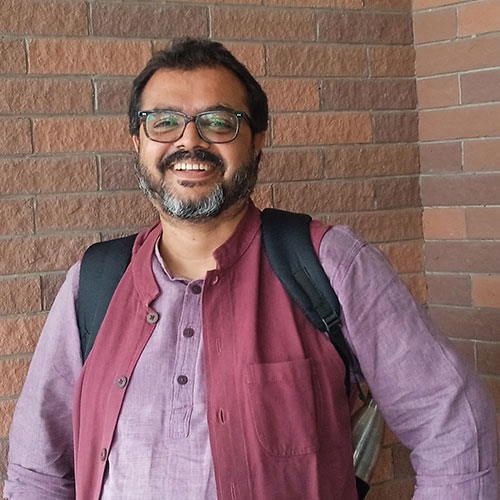
Dr Rohan Ravindra Gudibande

Assistant Professor, Economics

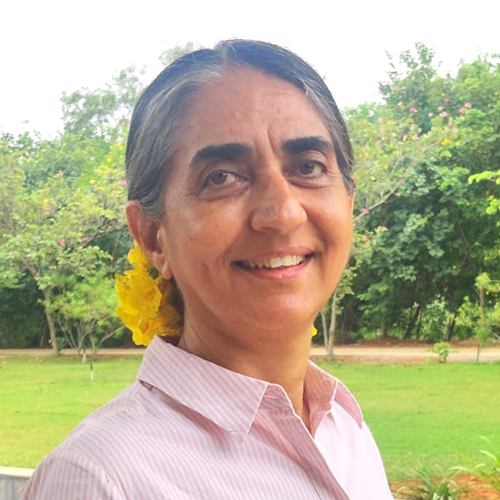
Dr Anwesha Chakrabarti

Assistant Professor, Economics

Dr Sarabjeet Natesan

Associate Professor, Economics

Dr Suchika Chopra

Assistant Professor, Economics

Professor Albert Jodhimani

Visiting Professor, Economics

Professor Debdulal Thakur

Visiting Professor, Economics

Professor Pulapre Balakrishnan

Visiting Professor, Economics

Dr Vidya Bharathi Rajkumar

Assistant Professor, Economics

Dr Rohan Ravindra Gudibande

Assistant Professor, Economics

Dr Anwesha Chakrabarti

Assistant Professor, Economics

Dr Sarabjeet Natesan

Associate Professor, Economics

Dr Suchika Chopra

Assistant Professor, Economics

Discover how Aditya Neerukonda selected his Economics major, what makes this discipline unique, the key lessons he learned, his future aspirations, and his words of wisdom for freshers.

“As a fresher at Krea, I was drawn to Economics — one of the university’s most sought-after majors. The programme blends strong theory with practical tools like R and Excel, making learning deeply application-oriented. Krea’s Economics faculty encourage analytical thinking, real-world problem-solving, and offer constant academic and professional support. With diverse electives ranging from Public Policy to International Trade, and the freedom to combine Economics with disciplines like Business or Politics, the interwoven approach truly gives Krea students an edge.”

Madhumitha Mohan

Cohort of 2021-24, SIAS