Politics

Duration

BA - 3 Years

BA (Honours) - 4 Years

Programme overview

The study of politics engages with the foundational questions of collective human existence, examining how communities envision, institutionalise, and contest the terms of their shared life through ideas, values, interests, and structures of authority. It seeks to illuminate power in its multiple embodiments—as discourse, as material capability, and as socio-institutional practice—across groups, castes, genders, classes, and between citizens and the state. Students encounter politics across several analytical registers, from the local and national to the regional and global. Our curriculum equips students with the intellectual tools necessary to produce rigorous, historically informed, and methodologically self-conscious analyses of political processes, ideological formations, and the ethical demands of collective action.

At Krea, we employ the term politics rather than government or political science to signify the expansive conceptual and empirical field within which political life unfolds, as well as the indispensability of multidisciplinary inquiry for understanding its complexity. Politics extends far beyond formal institutions and governmental domains; it permeates the social, cultural, economic, and affective dimensions of human life, requiring insights drawn from the wider social sciences and the humanities. We hold that the study of politics cultivates students who are not merely literate in political phenomena but are critically attuned, normatively reflective, and publicly engaged, capable of contributing thoughtfully to the evolving demands of democratic life.

What makes

Politics at Krea Unique

civic action, social movements, populism, power, law and justice, the state, international relations and globalisation, spatiality and marginality, and the many forms of violence that shape political life. We draw on political theory, philosophy, comparative politics, Indian politics, public policy, political economy, and international politics, while placing these fields in active conversation with anthropology, sociology, history, economics, literature, and the environmental and digital humanities. This approach allows students to engage political ideas through multiple intellectual lenses, with particular attention to the histories, vocabularies, and experiences of the Global South. Indian democratic thought and practice remain a special focus throughout the programme.

In a world marked by ecological crisis, pandemics, digital transformation, and widening inequalities, the nature of politics itself is changing in profound ways. The Politics major at Krea equips students to navigate these complexities by combining conceptual rigour with ethical reflection and interdisciplinary insight. Students graduate with the capacity to interpret contemporary political challenges with clarity and depth, and to participate thoughtfully in shaping the societies they inhabit.

Programme Structure

Learning Outcomes

The Politics curriculum at Krea University equips students with a strong, interdisciplinary understanding of how political systems work—both in theory and in practice. Through engagement with classic texts, contemporary research, and real-world political debates, students explore key ideas, including the state, nation, power, democracy, identity, and nationalism. They develop essential skills in critical reading, analysis, and interpretation.

Courses examine how countries around the world manage diversity, conflict, and populism, while also analysing why political tensions arise and how peace and governance can be strengthened. Students learn to compare regions, interpret political discourses, and understand their effects on democracy, economy, and society.

Through the study of the Indian state and Constitution, students trace the evolution of political institutions, engage with the framers’ debates on rights and justice, and reflect on the purposes and responsibilities of the modern democratic state. Additional courses in Indian foreign policy and global affairs broaden students’ perspectives on international relations and contemporary world politics.

Overall, the programme helps students connect big political ideas with everyday experience, preparing them to engage thoughtfully, responsibly, and ethically with public life.

Assessment Methods

The Politics courses at Krea University employ a diverse and thoughtfully designed set of assessment methods that cultivate analytical rigour, interpretive depth, and applied political understanding. A consistent emphasis across the curriculum is placed on participation and seminar engagement, encouraging students to think critically, pose informed questions, and contribute substantively to collective inquiry. This sustained interaction not only enriches the classroom environment but also nurtures habits of reflective and dialogic learning.

Writing-intensive assessments constitute another pedagogical strength. Many courses require multiple short in-term papers of roughly 1,000 words, enabling students to craft concise arguments and engage regularly with political texts and debates. These assignments are complemented by more substantial final essays of approximately 2,000 words, which demand deeper theoretical synthesis and sustained analysis at the end of the term.

The programmes also integrate innovative and alternative formats—reading reflections, book or film reviews, creative essays, and reflective quizzes—which prompt students to connect political concepts to contemporary issues and diverse media. Such varied modes of writing broaden interpretive flexibility and encourage intellectual experimentation.

Collaborative learning is further strengthened through group projects, group presentations, and peer discussions, all of which foster teamwork, deliberative reasoning, and the capacity to construct and defend structured arguments. Experiential components such as foreign policy simulations, SWOT analyses, annotated bibliographies, and issue-based case studies add additional layers of applied engagement.

Collectively, these assessment practices cultivate a holistic learning ecosystem that blends knowledge production with creativity, collaboration, and critical inquiry—embodying Krea University’s interdisciplinary and participatory educational philosophy.

Graduation Requirements

Politics graduation requirements for the three-year and four-year degree programmes:

Credits needed to earn a
Single Major in Politics
Credits needed to earn a
Double Major in Politics
Credits needed to earn a
Minor in Politics
Credits needed to earn a
Concentration in Politics
3-Year Programme 60 96 24 16
4-Year Programme 80 128 32 16

Politics graduation requirements for the three-year and four-year degree programmes:

Single Major Minor Single Major Minor
Required Elective Required Elective Required Elective Required Elective
3-Year Programme 36 credits 24 credits 32 credits 16 credits 16 credits 8 credits 8 credits 8 credits
4-Year Programme 40 credits 40 credits 40   credits
(Includes optional
Capstone Project)
24 credits
(Includes optional
Capstone Project)
16 credits 16 credits 8 credits 8 credits

To earn an Politics Major, Minor, or Concentration, students must complete the required and elective credits in Politics courses as indicated above.

Career and Study Opportunities

Krea Politics provides a solid ground on which they can pursue their careers in government, civil service, not-for-profit institutions, international organisations, and media. It also provides a foundation for undertaking further studies in specialised areas such as law and governance, urban politics, public policy, and international studies. 

Partnerships

Krea University has partnerships with leading universities in India and abroad that offer students pathways for higher education and research. These collaborations create opportunities for postgraduate study, academic exchange, and continued learning across disciplines. Know more

Higher Education Pathways: MA/PhD in Political Science, International Relations, Public Policy, Development Studies, Political Economy, Human Rights and more.

Job roles: Policy Analyst, Researcher, Journalist, NGO Professional and more.

Faculty

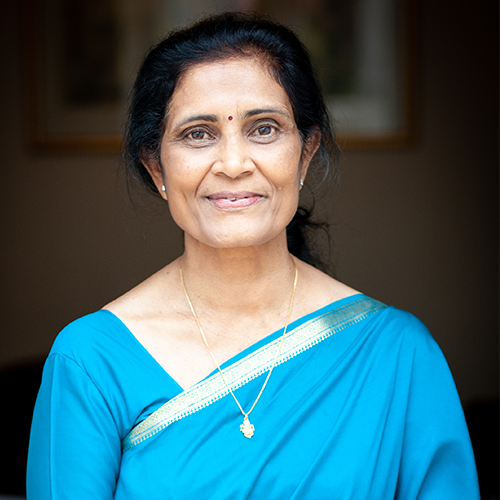
Professor Nirmala Rao

Professor, Politics and Vice Chancellor

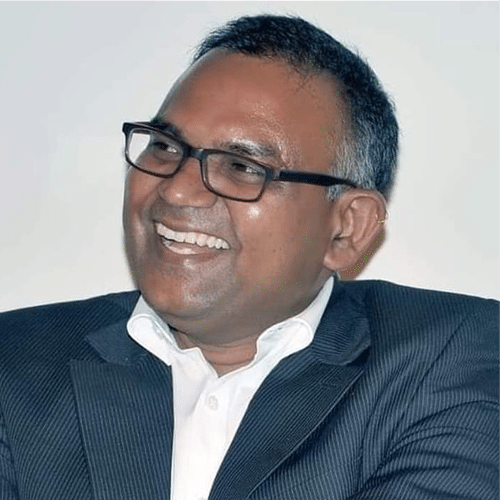
Dr Sambaiah Gundimeda

Associate Professor, Politics

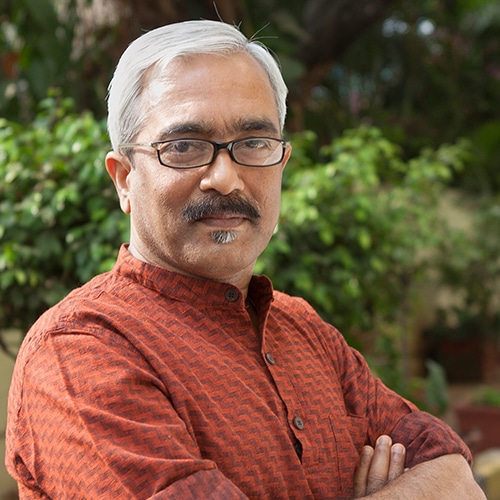
Professor Bishnu Mohapatra

Professor, Politics

Dr Dyotana Banerjee

Assistant Professor, Politics

Dr Geeti Das

Assistant Professor, Politics

Dr Proma Raychaudhury

Assistant Professor, Politics

Dr Shilpi Singh

Assistant Professor, Politics

Professor Sumantra Bose

Professor, International and Comparative Politics

Professor Swarna Rajagopalan

Visiting Professor, Politics