Interwoven Learning: An experience

Interwoven Learning: An experience

How does Interwoven Learning open up minds to disciplines that are conventionally considered unrelated to the subject of your choice? How does exploring a subject through the lens of another help unravel strands of thought that are no longer in silos and go beyond the classroom?

At Krea we are developing a view of the future through rigorous and interdisciplinary research and education that continuously feeds the design of Interwoven Learning. A rigorous process weaving together academics with experiential learning, broad based learning experience with a deep dive into specialisations and creating well rounded minds, adept at problem solving in a change driven future.

This article is one in a series, an attempt at discovering the experience of the Interwoven Learning at Krea through the lens of a Krea student and how over the years the distinct
pedagogy at Krea enables them to explore pathways that are uncharted and novel.

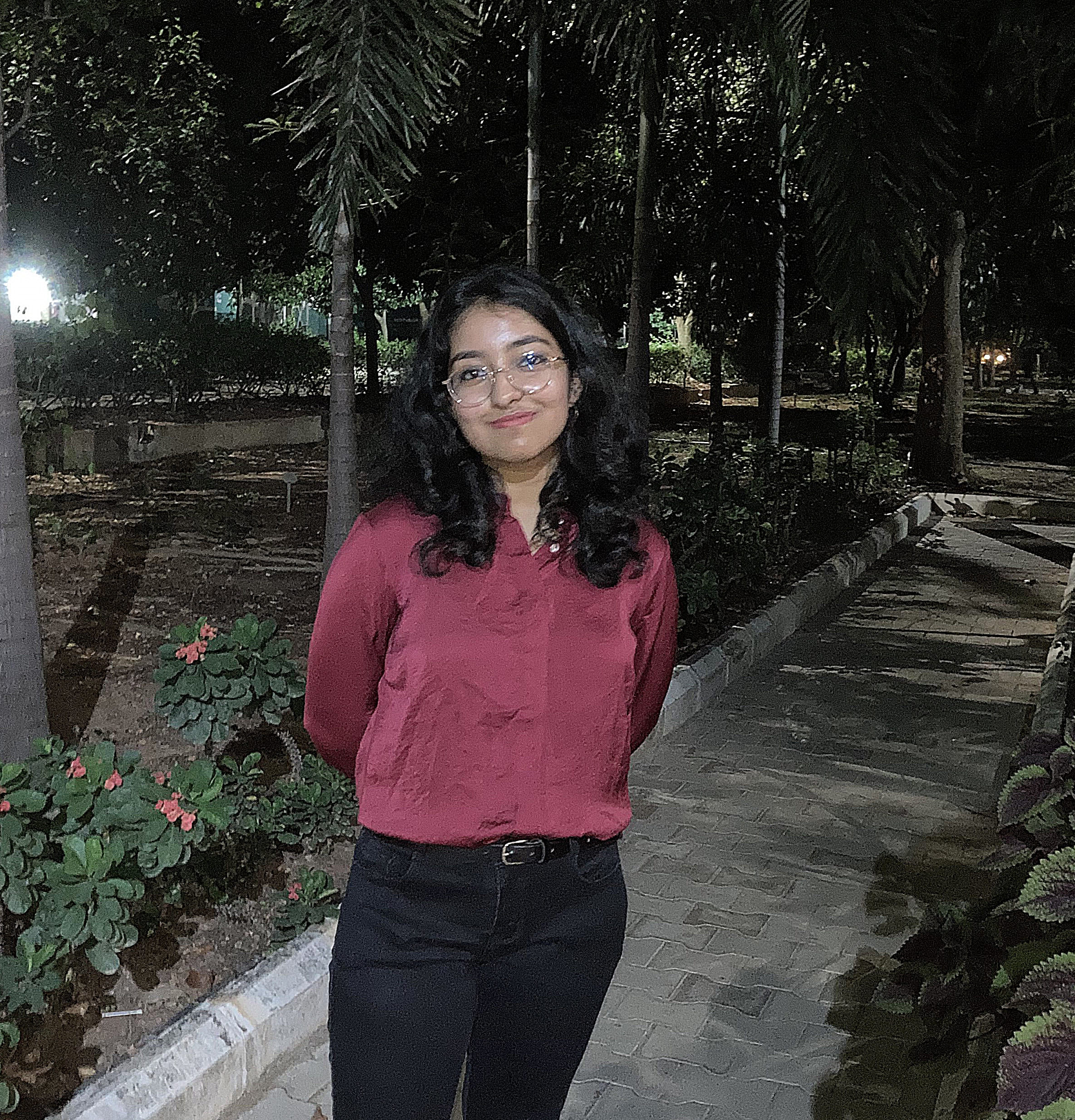
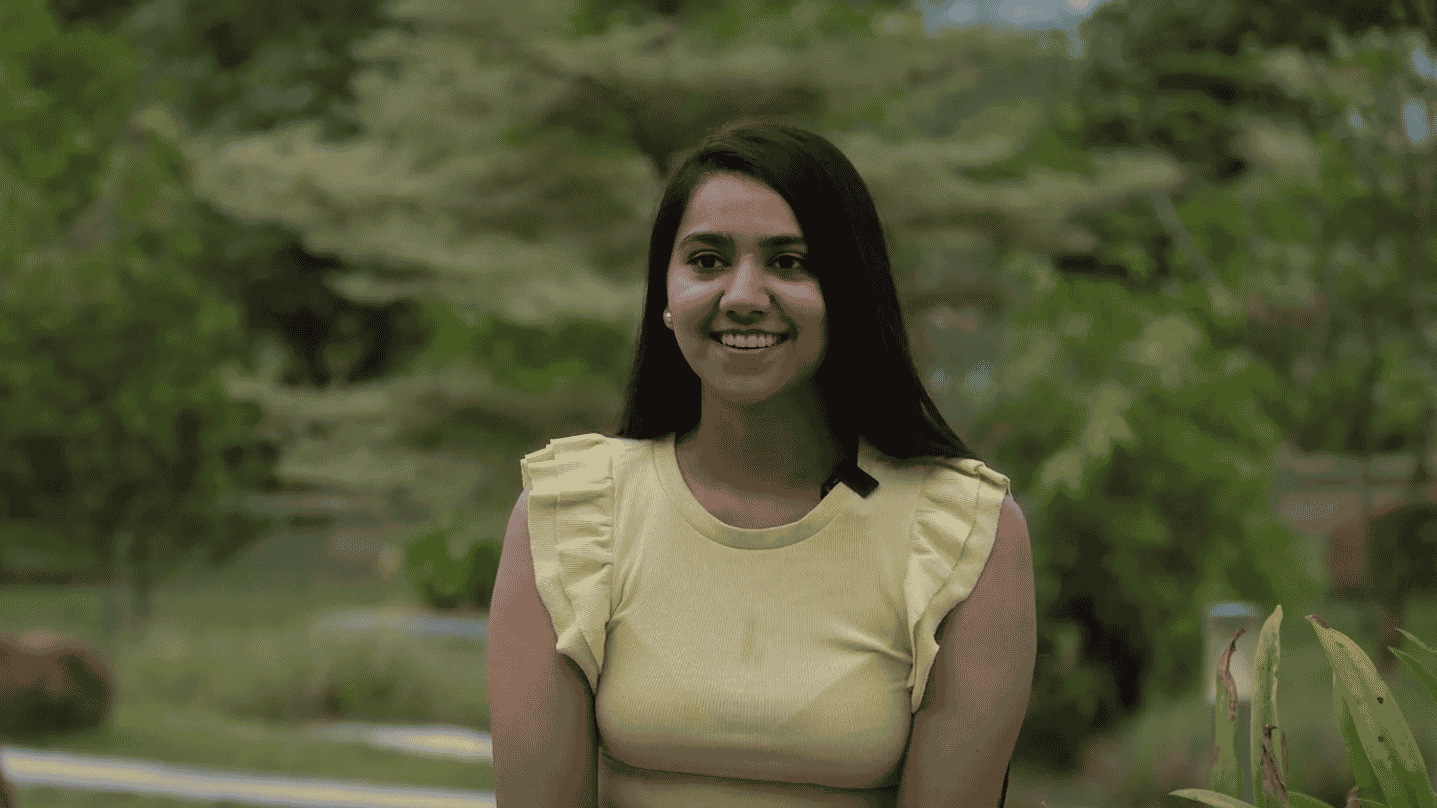
Hear from Priyanka Kuruganti.

I grew up in a setting where learning was limited to silos. For example, if I was learning Social Studies, my understanding was limited to learning a particular topic in the subject with near to zero experience from the real world. Coming from such an environment, I was trained to look at a given subject and not look at it from varied perspectives. Looking at the world from various standpoints was something I couldn’t imagine myself doing, and questioning everything around me was something I had never done. It was only during my first experience with Krea that things started to change. 

My first experience with Interwoven Learning happened during my Krea Immersion Day (KIC), where we walked around different areas in Bangalore and were asked to observe our surroundings. During this time, my professor, who was accompanying us, asked us to observe a hotel that had a self-watering outdoor planter, and a water tanker was providing water to the hotel. And then, explained the relationship between growth and environmental impact on society. This intersection of various subjects, in this case, economics and environmental studies, is what had surprised me because I had previously looked at these elements as separate entities and didn’t think much about the intersection between these aspects. This is my first experience in Interwoven Learning and the most memorable one because little did, I know that my future would be all about exploring more such intersections. 

During my first year at Krea, I was exposed to various core and skill courses. What was unique about the first year was that these core and skills courses were extremely different. For instance, I was doing a course on Social and Historical perspectives, but at the same time, I was doing a course in Scientific Reasoning. While the two domains were parallelly different, I found it interesting how the same concept and ideology could mean a whole new story and different interpretations across various subjects. This was not only looking across subjects but also within subjects. For instance, as a part of the Data Analytics course, my group looked at the crime datasets and analysed them. One more thing which stood out to me during this time was the idea that anyone could study anything they liked and not be limited by the subjects a student had chosen during high school. For instance, a couple of my friends did not take science in grades 11 and 12 and yet, they had the flexibility to try these courses at their undergraduate level as they had fulfilled the requirement of Scientific Reasoning. This form of Interwoven Learning had no boundaries, and it helped us understand our true interest zones by not looking at our previous education as a prerequisite for future education. 

The pandemic was a changing moment because all our learning to date was now shifted to an online platform. However, this cycle of Interwoven Learning did not stop as we came up with a design thinking idea on how to solve campus issues in a post-pandemic situation. Interwoven Learning had now shifted as we began looking at a new normal by looking at the past and trying to see what techniques could be integrated in the future. With the onset of my major, I was now able to see how economics was related to various fields. For instance, in my Development Economics course, we began looking at resources such as Dollar Street to understand how the poor live by making use of the SPENT simulation to look at the very idea of poverty from a new perspective. 

For me, Interwoven Learning as a process of learning as a student is one which is based on the idea of questioning things around me. The very process often involved looking at a given issue from various standpoints of view and not limiting it to a single domain. Through the group projects, you not only get to learn about the various perspectives but, at the same time, identify yourself. The entire process of Interwoven Learning was all about finding my identity and extending my learning capacities to new levels by challenging myself at various levels.

Interwovenness: The fabric of exploration

Interwovenness: The fabric of exploration

How does Interwoven Learning open up minds to disciplines that are conventionally considered unrelated to the subject of your choice? How does exploring a subject through the lens of another help unravel strands of thought that are no longer in silos and go beyond the classroom?

At Krea we are developing a view of the future through rigorous and interdisciplinary research and education that continuously feeds the design of Interwoven Learning. A rigorous process weaving together academics with experiential learning, broad based learning experience with a deep dive into specialisations and creating well rounded minds, adept at problem solving in a change driven future.

This article is one in a series, an attempt at discovering the experience of the Interwoven Learning at Krea through the lens of a Krea student and how over the years the distinct
pedagogy at Krea enables them to explore pathways that are uncharted and novel.

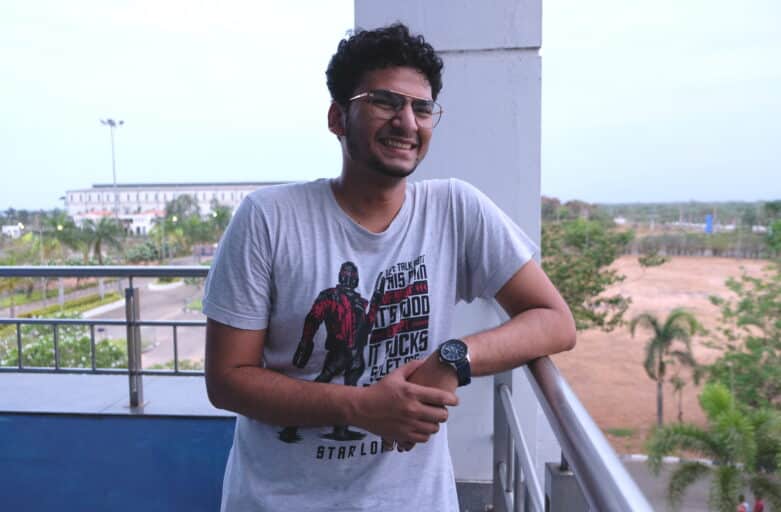
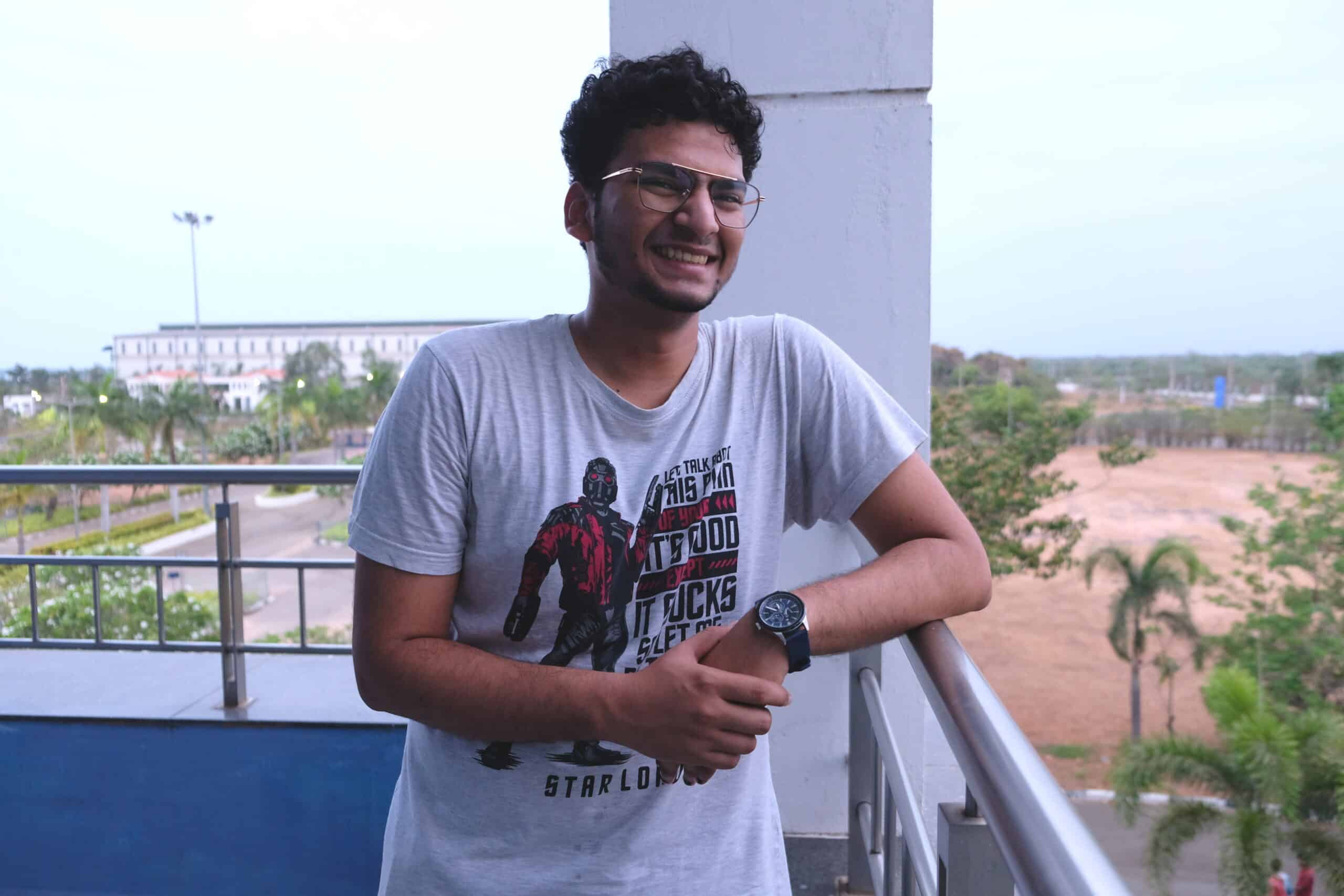
Hear from Kathan Pandya

Interwoven Learning – the first time I heard about this concept at Krea University, I only thought of its meaning to be that of having spatial knowledge on a range of subjects. However, after two years of experience, I have now realised the immense depth at which the weaving of knowledge, ideas, questions and perspectives take place as well as how much of an impact it can have on a person. My own journey shows how my idea of the concept changed and how I was able to apply the same to traverse through my curiosities.

After the first year of core skill courses, I decided to pursue a major in Biological Sciences. With no decided minor or concentration, I had the flexibility to choose courses from other subjects based on my interests. I used this opportunity to take up courses in Psychology, Computer science and Literature – all of which have helped me explore the limits of what I can do. The course of ‘Brain and Behavior’ in Psychology crossed paths with one of my favorite topics in Biology: Neuroscience. The course in programming, albeit challenging, showed me the power of computational thinking. The patience and skills I developed in this course, in addition to the Introduction to Computational thinking and Data Analytics course in the first year, have all blended into my newfound interest in computational biology. This has led me to take up elective courses in areas of Biostatistics and Molecular Biophysics. Even my summer internship is focused on drug designing using computational methods. I have to admit that I struggled a lot in the Computer Science course, but it opened up new doors for me in my chosen major. In fact, I could directly apply the knowledge in one of the workshops on Bioinformatics where we had to use Ubuntu and Python to work on phylogenetic trees. I am now keen on gaining some experience in the field of computational neuroscience as well.

The interwovenness has not only steered my learning, it has revealed new aspects of my personality. In the past, I never considered myself as a creative or an artistic person. This belief held me back from trying to pursue or approach anything in that field. Nevertheless, the Creative Expressions course shattered this as I worked on bringing my poetry to life by making a stop-motion video and composing the instrumentals for the same myself. This project then inspired me to compose and write a rap song in the Scientific Reasoning course. Absurd to use music in a scientific course, isn’t it? We performed a rap to present the main arguments from one of the plays on Galileo and heliocentrism. The same creative spirit and confidence compelled me to be part of the Light and Sound team in organising a play. A few months later, I got the opportunity to be part of a Light and Camera workshop conducted for an Arts course. All of this has now equipped me to handle microscopes better with a side note of being able to take better pictures through the microscope in the biology lab or a clearer picture through the telescope during our night sky-gazing events. I eventually found a new skill and area of interest in optics and creative video-making to sustain my artistic side. That’s the fun about Interwoven Learning – one never knows what new pattern will be woven out of the varied intersections. Even my professors often bring in connections from different courses and subject areas to light up the stage of what we are learning with different spotlights. If I was asked 2-3 years back, if I would have been interested in computational biology or even learning about lighting and cameras, my answer would have been a big ‘NO’. But it is interwovenness that has helped me tread new territories and create new pathways for myself. At Krea, the liberty to learn from diverse courses as well as try out new activities, with the liberty to be bad at it, provided me the confidence to pursue them further and develop myself into a more holistic person. In the future, I believe that Interwoven Learning will be imperative to solve impending problems and shape career pathways in the maze of options present for students.

Interwoven Learning: Through the Lens of a First Year Student at Krea

Interwoven Learning: Through the Lens of a First Year Student at Krea

How does Interwoven Learning open up minds to disciplines that are conventionally considered unrelated to the subject of your choice? How does exploring a subject through the lens of another help unravel strands of thought that are no longer in silos and go beyond the classroom?

At Krea we are developing a view of the future through rigorous and interdisciplinary research and education that continuously feeds the design of Interwoven Learning.  A rigorous process weaving together academics with experiential learning, broad based learning experience with a deep dive into specialisations and creating well rounded minds, adept at problem solving in a change driven future.

This article is one in a series, an attempt at discovering the experience of the Interwoven Learning at Krea through the lens of a Krea student and how over the years the distinct pedagogy at Krea enables them to explore pathways that are uncharted and novel.

Hear from Urvi Bhatia

“Interwoven”; a word that you may or may not be fully familiar with, but are most likely to have come across, especially in the context of the evolution of the education system in the past few years. The idea behind the interwoven style of learning, that is growing to be more popular amongst high school students, is to combine knowledge from various disciplines and to learn a certain discipline from the lens of another.

As someone who spent the entirety of her school life learning under the conventional education system, coming across the concept of Interwoven Learning seemed to be strange at first. The division of subjects into just three streams; Science, Commerce and Arts or Humanities, was deep rooted into my mind and thus even the possibility of being able to study a subject like Philosophy along with Mathematics felt too good to be true. I remember finishing my tenth-grade exams and immediately starting classes for the eleventh-grade Science stream. And although Biology is something I am deeply interested in, being forced to take Physics along with it really took away all the joy from learning. But that changed completely as college started. I loved the idea of being able to choose my own courses, and literally paving my own path throughout the entire duration of the degree. Classes in college, both virtual and offline feel more like discussions. Almost all courses and assignments, especially those offered in the first year are structured to be interactive and encourage students to form their own opinions. We are allowed to express ourselves in classes and most importantly, even allowed to disagree with the opinion of a peer or the professor. The fact that we are allowed to have healthy debates is something that was new to me, and it took me quite some time to unlearn and relearn the fact that disagreeing with someone is not equivalent to disrespecting them, as we are often taught in school.

The foundation year at Krea includes 11 mandatory core and skill courses ranging from ‘Creative Expressions’ to ‘Introduction to Computational Thinking’ and ‘Design Thinking’. At first, I did wonder what was the need to study a Mathematics course if I had no interest to pursue it in any form at all? But it was only after finishing the courses that I realised logic, reasoning and even basic statistics are important for anyone, even an aspiring Psychology or Biology major like me. Similarly, the writing and pedagogy course played a massive role in making me adept in not just academic writing but oral communication as well. I also know that after completing the first year, a lot of my peers with undecided majors now have a better understanding of their interests and what they want to opt for next year. But out of all the first-year courses i have studied in my first year, a course called ‘Ethics’ remains my favourite. The weekly modules spread across the course interweaved ethics with different areas such as Artificial Intelligence, Politics, Biology, Ecology and even Sociology. This taught me that no matter which field I choose to make a career in, as a good leader or just a responsible citizen, ethics will always come into the picture while making decisions. Moreover, the fact that I have been exposed to concepts such as Sociology, basics of Philosophy and ethics while learning Mathematical Reasoning and Data Analytics at the same time has provided me with an immense number of opportunities to gain knowledge, not just from all the brilliant professors I am fortunate to have, but also from my peer interactions. These peer interactions, whether during group discussions or just a quick lunch time conversation in the dining hall, have helped me broaden my horizons in ways that I had never imagined.

This freedom and flexibility is something that I am still getting used to. Though i am now certain that the interdisciplinary style of learning was the best choice for me, not only because it has opened up various avenues for me to study further and build a career but also because it focuses on the bigger picture, the holistic development of individuals. It allows me to equip myself with skills such as oral and written communication, critical thinking and problem solving, all of which are essential for a 21st century. The amount of exposure I have had in the last nine months has been incredible and it makes me incredibly eager to find out what lies in the store for me in the next two years!

Interwovenness at Krea

Interwovenness at Krea

How does Interwoven Learning open up minds to disciplines that are conventionally considered unrelated to the subject of your choice? How does exploring a subject through the lens of another help unravel strands of thought that are no longer in silos and go beyond the classroom?

At Krea we are developing a view of the future through rigorous and interdisciplinary research and education that continuously feeds the design of Interwoven Learning.  A rigorous process weaving together academics with experiential learning, broad based learning experience with a deep dive into specialisations and creating well rounded minds, adept at problem solving in a change driven future.

This article is one in a series, an attempt at discovering the experience of the Interwoven Learning at Krea through the lens of a Krea student and how over the years the distinct pedagogy at Krea enables them to explore pathways that are uncharted and novel.

Hear from Arya Lovekar

This term, I will complete my undergraduate degree at SIAS, Krea University. At the start of term, I made a spreadsheet to count all the credits I’ve got so far, just to make sure I had enough for my major and minor. Those boxes got ticked, no issues. But I found something surprising – I had also taken enough courses in a third subject I was interested in, and so I’d unwittingly also completed a concentration, or a half minor. Beyond this, I had taken courses here and there that didn’t contribute to either my major, minor, or concentration, but I had had the opportunity to take them anyway, just because I had found them interesting. It would have been impossible to do this at a more traditional university.

All of us here have interests beyond the major we’re doing. In most terms, I made sure to take at least one course that’s outside my major and minor, a small peek into another discipline. We’re given the chance to put these types of courses in conversation with our required courses. Projects and end-term papers for any class can draw upon things we learned in other classes. For a social studies and history course, I submitted a research design for historical literary research. We’re encouraged to bring in other interests too. As part of an assignment in a course on postcolonial literature and arts, I once submitted a picture of an embroidery project I was doing in my free time. No one else has the exact degree I will get, even if we shared the same major. Although we get a framework of required courses, we put the rest of it together ourselves, with some help from faculty and our peers.

Courses can be cross-listed under very different disciplines – literature and psychology, math and history, environmental studies and literature. When a course is cross-listed, it can count towards any of the disciplines it’s under, so the course brings together something from each of those disciplines. For example, in the course under literature and psychology, we read a lot of fiction through a specific psychological lens, balanced out with theory texts. Cross-listed courses are usually a great place to swap notes with people taking a different major than I am, because they always have perspectives I might not have been able to pick up otherwise.

Literature courses very often have links to other topics, even beyond cross-listed courses. There is always something to be learned about the history of what we’re reading, the psyche of the characters, the sociological and political aspects of the text.

Every week, the whole cohort gets invites to guest lectures from a range of fields. Even if a lecture isn’t in your field, it might be interesting to you. These lectures usually start from basics, and so even if you know nothing about the topic, you may have something to gain. In such guest lectures I’ve learned about things like black holes, ethnography, genetics, and translation.

Interwoven learning happens outside the classroom too. Walking around campus or sitting in the dining hall and other student spaces, I’ve talked to students doing projects in disciplines far away from mine, and I’ve learned something new each time. We’ve had star-gazing sessions where a professor pointed out specific stars and told us their names; I went back to my laptop later and read about the mythology behind those names, and how that’s linked to where they’re positioned in the sky. We’ve had workshops teaching pottery, and lighting for photography. Student-led clubs hold quizzes on literature, theatre, math, history, general knowledge – you name it.

Many of us come from schools where each subject was taught in isolation, but once you see the links between the different things you can choose to learn about, it’s increasingly easy to make those links yourself. It takes a bit of work at the start, but weaving together ideas from different disciplines can make each of those disciplines more interesting, and give you new ideas for a project, paper, or informal conversation with a professor or peer.

August at Krea: An Ode to Friendships

August at Krea: An Ode to Friendships

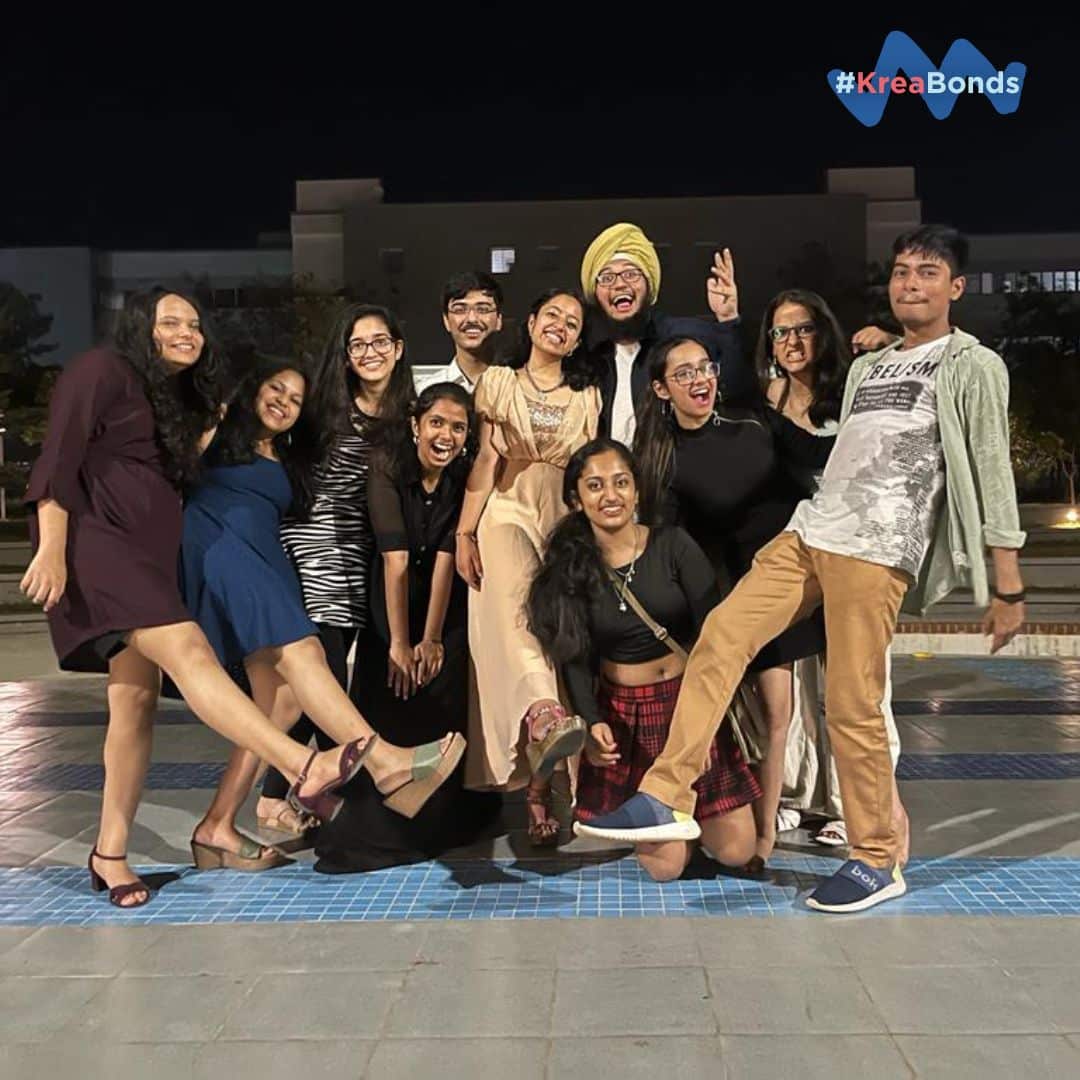
While charting the journey through University (and life), we meet fellow travellers along the way, through laughter and tears, amid wisdom and comic remedies, amongst rough patches and blissful reinforcements, we coin them ‘friends for life’. This August, we at Krea are celebrating the power of friendship, of shared sentiments that bring people together while rejoicing in their uniqueness.

Khadeejah Khandker from the SIAS Cohort of 2024 recounts a memory among hundreds that define the word ‘friendship’ for her. First in a series of a month of celebration, as Kreators co-create this space together, and definite friendship, their way.

I woke up early, resolute to try something new. Still feeling heavy headed from last night’s incident, I started to dress up, thinking donning on pretty clothes might help me cheer up a little. 

Last night, still fresh in my mind, I was in disbelief of what I had heard over the phone. “They must still be sleeping. I would have called them by now for breakfast” I thought to myself but, strong willed as I was, I decided to give them their space. After all, they had called me “Annoying & Weird”. 

My friends were indeed asleep, however, it was not that they were tired or cozy, it seemed they were trying to escape reality through sleeping. Yesterday’s night still flashing before their eyes perhaps more clearly than it did for me. 

Another one of my closest friends, my roommate, had told them the previous night that she would do something about it, that she would explain to me that they had mis-dialed the phone and I wasn’t supposed to hear what I heard and it was all one huge misunderstanding. 

The next day both of them in the hopes of finding me in a class or alley searched the entire campus but I guess I know how to sneak away. Later I learnt that none of them ate that day and barely even smiled, that they were just feeling awful, just like I was. 

As fate would have it, this day was important to all of us four. It was the day we were supposed to go to a pottery event together. I finally broke my silence and asked them to come to the venue.  They rushed over and after a long silent standoff during the event. I started slowly giving up on my resolution; it was hard not talking to my best friends. 

I could see that they honestly felt bad and that I wasn’t even giving them a chance to explain themselves. Finally, I held out my pinky finger to one of them, and though I was still very angry, I knew we four would always hold hands. His face finally lit up with joy after what felt like an eternity. He knew I was still not convinced, but that I too had broken out into a faint smile. 

After a while, we gathered in the dining hall, and after a short quarrel we four again went back to being what we were “friends”. Laughter was again heard from our table, the constant chatter began, the waves of conversation and discussion continued till the whistles started, sending them to their rooms, to get ready for the freshers’ party. 

So, what does friendship mean to you? We invite you to send us any of the following:

– A picture of you and your friends that means a lot to you

– A video that has a collage of your favourite moments with your friends

– Your favourite video memory of your friends

– Short write-up or a poem expressing what friendship means to you

Or even something different and unique – your own way of defining friendship.

If you want to feature your friendships within Krea Bonds, You can respond with your entries to Anisha Vijayan:

[email protected]

Do not forget to include a title and a short description of your entry.

Dreaming big and aiming for the sky, from Krea to Vayana Network: Akshaya Shankar

Dreaming big and aiming for the sky, from Krea to Vayana Network: Akshaya Shankar

Akshaya Shankar is on a quest, of leaving a mark in the world of marketing and setting her best foot forward on a path that could well be trail blazing. Her dreams are ambitious and fearless, one of the top goals being attaining leadership roles and becoming a CEO of a large, global organisation. For this young Krea graduate, even the sky is no limit.

The Opportunity

Akshaya joins as Management Trainee with Vayana Network, India’s largest network for trade financing. She is also one among the three at Krea who at the time of writing this article had been offered the highest compensation package for the year.

 “I received the flyer for the opportunity through the Career Services Office (CSO) at Krea and the entire process was smooth and fast. We had two rounds, the second being with the CEO of the organisation. The podcasts I worked on at Krea, the writing samples and the articles I had written, all of them came in handy in showcasing my portfolio that eventually landed me the offer.”

At Vayana, Akshaya will be involved with various initiatives that revolve around marketing, strategy and content. Vayana Network aims to accelerate the GDP growth of supply chains by unlocking affordable and easily accessible trade credit for every member of the supply chain.

Mission Marketing

When asked about a goal that Akshaya wishes to achieve down the road, she responds, “At the moment it probably seems far-fetched but I hope to be the CEO of a stellar agency, I want to leave a mark in the marketing industry and do it as early as I can.”

While Marketing has been Akshaya’s core interest, the intent of choosing Psychology as a Major was out of sheer interest and so was choosing Literature as a Minor, all these choices today have aligned to lead her the road ahead. Akshaya believes all the subjects have equipped her with creative and analytical thinking and not just that, they have also trained her to combine each of the skills obtained at ease with technology, extremely critical for the world of today.

The Interwoven Adventure that’s Krea

“The Krea journey has been extremely helpful. The faculty at Krea are world class and their constant feedback and encouragement has been significant contributors to where I stand today.”

Akshaya emphasies on how each time a paper is turned, or a reading is prescribed or research methodologies are instructed, each step helps hone skills and improve. Every day gradually building in an exercise in evolving and advancing.

“I hadn’t given much thought to the term Interwoven Learning and even though I experienced it through the days at Krea it’s when I was having the first conversation at Vayana and I spoke about Interwoven Learning at length that I realised how important it really was for the 21st century. The team at Vayana were amazed at how a student with Majors in Psychology knew History, Philosophy, Data Analysis and Literature too, some of them which conventionally had no relation to my subject.”

Akshaya believes that the skills she picked up at Krea are essential for the corporate pathway. “I know how I stepped into Krea and how I am leaving, the evolution. Just the amount of knowledge I have gained is unparalleled. Beyond the classroom setting too the faculty at Krea have guided and enabled me to make career decisions, they are approachable and supportive in so many ways.”

The Evolution

“I am so much more comfortable in my own skin and more confident. I don’t need to pretend to be anyone, I know that I can speak out, speak what’s going on in my mind,  present confidently and not be stressed, take questions and not hesitate or be awkward while receiving feedback.”

Akshaya says that carrying out so much of reading, writing and all the creative assignments is something she wasn’t prepared for but has empowered her with different skill sets.

“Many skills we pick up are not just from classrooms but from outside, from our peers who are doing Majors distinct from our own.” Not just those, from editing someone’s paper, giving them feedback, working from leadership positions in clubs and committees and playing a role in building Krea from scratch as the founding cohort has definitely added few lessons to the kitty.

“I was the club representative for the Recreation Club and was actively involved with the Outreach and Admissions team too. Three of my closest friends and I brought ‘Her Campus’ to Krea, reporting to a team at Boston and managing our team in India; these experiences were all different, unique and yet pivotal.”

Akshaya affirms that all of these experiences in one way or the other have finally fallen into place like fitting into a jigsaw, and have culminated into the career pathway she is set to explore.

Of memories and moments

“There are so many incidents, each different from the other but one that I really hold close to my heart is an activity in the Creative Expression course, where we spray painted a wall. And not to forget, the perimeter walks with my friends as we sat to have Maggi during the day, and watched the sun fade away at dusk.”

Though the sunset may be one of her favourite memories from campus, Akshaya is ready to seize the day and carve her niche in the chosen career path. Mission Marketing calling.

In pursuit of a dream, from Krea to Karkinos Healthcare: Pooja Basutkar

In pursuit of a dream, from Krea to Karkinos Healthcare: Pooja Basutkar

“Krea has given me the confidence and courage to face the world, to make the change I want to see.”

Pooja Basutkar is a believer of dreams, of spreading out wings and soaring high. An aspiring entrepreneur and an author in the making, Pooja enjoys penning down pieces of poetry and verse, and looks forward to publishing a manuscript of her own in the future. 

This School of Interwoven Arts and Sciences (SIAS) graduate is now gearing up for her professional journey as she joins Karkinos Healthcare as an Associate – Business Development. When we reached out to Pooja to have a conversation on this new chapter of her life, Pooja was bubbling with enthusiasm and therein unravelled Pooja’s journey at Krea, a journey interwoven with experiences, revelations and achievements.

The Road Ahead

“I am extremely excited,” says Pooja who is raring to go and is exhilarated at the path she has chosen for career progression. Being a start-up and a pioneer in the field, Pooja is confident of the experience she is set to receive at Karkinos.  Karkinos Healthcare is a purpose- driven technology-led oncology platform focused on designing and delivering bespoke solutions for cancer care. Led by a blend of globally acclaimed medical professionals and technologists, Karkinos aims to create ‘cancer centers without walls’ with a primary aim of addressing the accessibility or affordability gaps in cancer care.

“I will be part of the planning and outreach team, involved in advertisements, partnerships with various collaborators, supporting in building a plan and implementing them. We are also working on taking Karkinos to the global platform.”

The Opportunity

“The process was very smooth and was facilitated by the Career Services Office (CSO) at Krea. I was really scared and nervous but realised later on, there was no need to.”

Pooja adds that Karkinos was well aware of Krea’s pedagogy and Interwoven Learning methodology. Following an an in-depth assignment and two rounds of interviews, Pooja was offered the opportunity at Karkinos Healthcare“Each subject I explored at Krea aligns with the career I have chosen, from report writing to behavioural economics. Psychology has trained me to interact with diverse stakeholders and I look forward to translating these learnings at Karkinos Healthcare,” Pooja says.

It All Began at Krea

A Psychology Major, Literature Minor and with a concentration in Economics, Pooja believes that the Krea experience has transformed her and she owes it much to the academic rigor and multiculturalism. “I think everything I did in Krea was a stepping stone which led me to this opportunity. Even my first internship with School Initiative for Mental Health Advocacy (SIMHA), a mental health institute in Mumbai, allowed me to deep dive into every function involved – from outreach, social media, content creation, to partnerships. All these experiences have built me and I know whatever I will be doing in the future, it will be something I may have done in the past, and even if it’s a new situation I can still learn and do it. Krea has made me confident of my own abilities and skills. The Pooja that entered Krea was very naïve. I was just out of school. Krea has made me confident, made me creative, it has made me dream the impossible.”

Activities which didn’t seem significant at that point now take the form of building blocks. Pooja adds that in retrospect, being a writer and director for Nukkad Natak, performing in plays, reciting poetry on stage, each of them helped her translate her confidence into interviews and assignments.

In Pursuit of a Dream

“My end goal is to do something significant in the mental health and medical system landscape of India. I want to start an initiative that focuses on introducing mental health support facilities to the underprivileged in schools.”

The pandemic showed us how broken the healthcare system in India, especially the awareness around mental health. Pooja firmly believes her experience with a startup such as Karkinos Healthcare will provide her insights into how start-ups work and how a vision is built from scratch.

Of Moments and Memories

“ There is so much from Krea which I will keep close to my heart, but a memory does stand out. For a literature class I had written a short story during the 2nd year. The next year when the next cohort was doing the course, our faculty who I admire so much remembered my story and showcased it as a reference to them, emphasising on the storyline and other aspects. When my juniors approached me in the dining hall to discuss the story, I was pleasantly surprised. It was a proud moment to be appreciated by a mentor who I look up to and who motivates me to write. This was very special.”

We look forward to Pooja’s journey as she pursues her dreams and strengthens her vision, and very soon we hope to pick a book off the shelves that’s authored by Pooja Basutkar.

In Conversation With Vani Jain, SIAS Student and Entrepreneur

In Conversation With Vani Jain, SIAS Student and Entrepreneur

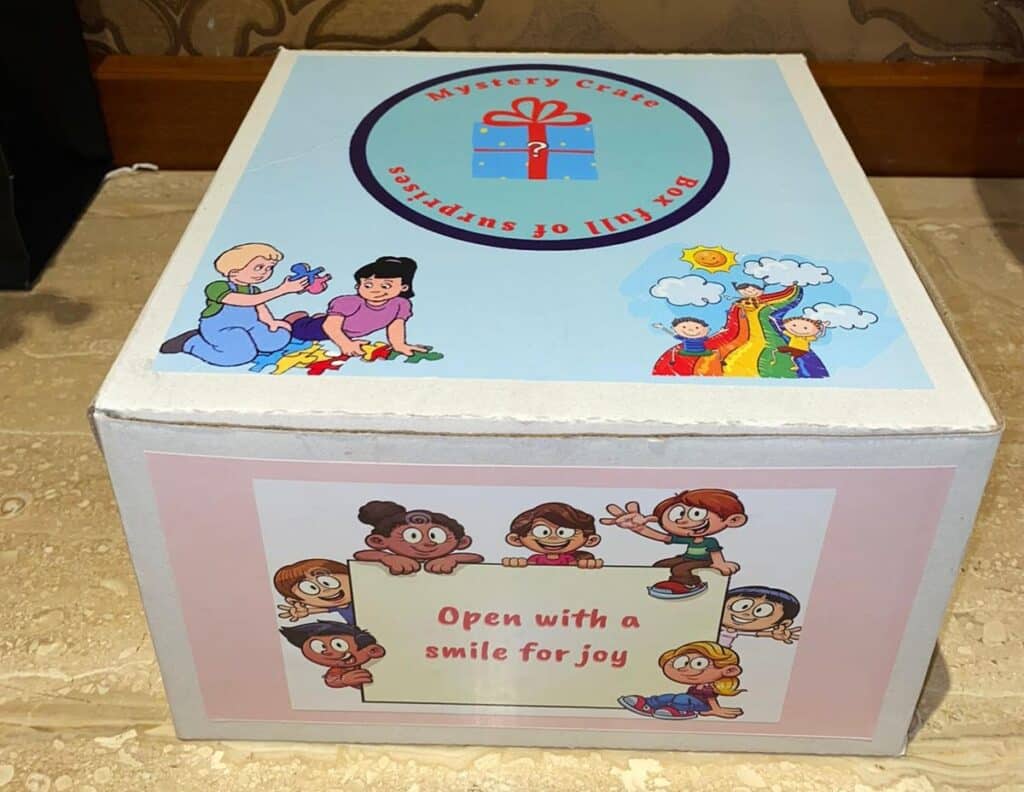
Vani Jain is a student at SIAS, Krea University, the Cohort of 2024. A young entrepreneur with passion for economics and business studies, Vani launched her own product called the Mystery Crate. With a goal to provide an engaging and entertaining digital detox to children, the design of the Mystery Crate also supports the development of cognitive, creative and problem solving skills. 

We asked Vani to take us through her entrepreneurial journey, from the genesis of her business idea, through both her ups and downs, to the most important lessons learnt. We found her propensity to create something new, entrepreneurial mindset, and a charming combination of hard work and optimism, truly inspiring. 

Vani, what motivated you to become an entrepreneur?

I always had the urge to do something on my own, instead of working for someone else. Besides, I was always fascinated by entrepreneurs around me. 

What is Mystery Crate, and how was the idea conceived?

Mystery Crate is a subscription product for 2–9 years old, where children receive a box every month with different activities. I saw my brother spending excessive amount of time online, and I was worried about its side effects on his health. So, I thought of taking away my mother’s worries by helping her and parents like her through creating a business module for children of this age category.  

What makes the Mystery Crate such a unique product?

Each box has 3–4 fun learning activities which keep the child engaged and create excitement while unboxing. The boxes are customised according to the age group and gender, which allows me to create specific boxes for the customers. Every crate is planned in such a way that it makes the kid think and develop one or more of skills such as critical thinking, cognitive, creative, adaptive and problem solving.

What makes the Mystery Crate such a unique product?

How do you manage your time between being a student and an entrepreneur?

I have created a schedule that prioritises college work on weekdays, with 30–60 minutes of business work. This enables me to dedicate my weekends completely to my Mystery Crate product. I make sure to not procrastinate, and I stick to my deadlines. And sometimes I work beforehand, to be prepared for any sudden large orders that I might receive. 

What are some of the challenges you have faced as a young entrepreneur?

There can be hurdles at each and every stage, starting from finding the right supplier and manufacturer, getting deliveries on time and bargaining for the right price. Elders initially treated me as a child and were not serious enough while working, but gradually I convinced them through my consistent orders. Finalising the exact box size and stickers for the box took me weeks, which delayed my launching date. However, the overall journey taught me business skills such as how to handle people with patience and respect, and it improved my designing skills and decision making. 

Who has supported you most in your entrepreneurial journey?

I joined the Young Entrepreneurship Academy, where I was assigned two mentors who taught me various components of a business and helped me formulate my business idea and execute it. 

Was there a particular moment of success that boosted your confidence in your venture?

Once I started my business, it took me a while to get my first order, and I started to loose my confidence. But when I got my first order, I felt like the happiest person on Earth. This boosted my confidence tremendously. Secondly, winning the 2nd position at the Investor’s Panel was an unbelievable experience for me — I believed in my business, and so did the investors. This strengthened my trust in my venture. 

What would you say to other young people who have a drive to start their own venture but do not know how?

You should choose a business that you are passionate about, so that even if you are tired and exhausted, you would still want to work on it at the end of the day. The excitement and joy that the business of your choice will bring to you are unparalleled. There is no restrain as to when you can start a business — if you want to be an entrepreneur, you should work on it every day and spend some time building your thoughts. You can begin by reading a few books or watching motivational videos. Just believe in yourself and your idea. It may take time to build it up, but if you are confident enough, then it will happen sooner or later. 

To connect with this young entrepreneur and to learn more about her product, the Mystery Crate, you can visit her Instagram page

With a vision to interweave policy making with digital well being, Amartya Sinha heads to Harris School of Public Policy

student work

Amartya Sinha hopes to remedy the complex challenges within the world of today that rally around digital wellbeing and data privacy. He aims to design policies, create awareness and encourage dialogue in relevance, a vision that has led him to the Master of Public Policy Programme at Harris School of Public Policy, University of Chicago.

When the acceptance offer came knocking

Amartya received the acceptance call from the School in April and for the first few minutes he couldn’t believe the news. “The feeling, in a single word, was ‘exhilarating’. I had finally gotten accepted to the top school of my choice and I didn’t need to worry. Once it sunk in, I started working on scholarships and other funding choices for the programme.”

Amartya had applied only to the colleges that ranked high in his list of choice and while he doesn’t recommend others to do the same, his efforts and judgment have paid him well. 

When asked on what he would suggest to future aspirants of higher studies, Amartya adds, “Start off by identifying what you exactly want to do. Figure out that career path, the right job and then retrace, and pick the right course as a means to that path. It’s okay to be confused and work towards clarity. I myself didn’t have much of a clue until the presentation that started it all.”

The session that started it all

“It all started with the presentation from Harris School of Public Policy, organised by the Career Service Office (CSO) at Krea in September.” Amartya believes that the session offered clarity and opened up his mind to the various options available that he could pursue. Amartya had applied and was accepted to multiple top universities and chose Harris School of Public Policy.

The vision for the future

Amartya aims to increase awareness about data privacy and design policies which are effective for digital wellbeing. He emphasises on how following his foray into the field and with the learnings gathered, he is much more conscious of his presence online and is careful about data sharing. While they may seem innocuous, our digital footprint can often lead to compromise of personal information. “We should be in control of our digital presence and wellbeing –  not the other way around.”

The Krea Journey

“Krea has been instrumental for my development and growth. I joined Krea because I wasn’t sure what I wanted to do, and had an open mind to pick and choose everything.” Amartya’s path through Krea has been truly exploratory, meandering through various streams of study before zeroing in on what he really wished to focus on. He also believes that if he hadn’t been given this large choice of subjects and rare combinations to choose from, he wouldn’t be where he is today.

“The process to choose the Major and Minor was very interesting. I explored everything, and even tried Literature though I quit after four classes. I then took up Economics as Major which was my default choice, and Social Studies as Minor; but later realised that I would like to do more on the Social Studies side with Economics as a Minor, along with a concentration in Politics.” 

Amartya tried and tested multiple choices before landing on the one he really wished to pursue, very true to the ethos that Krea academics is rooted in.

Assignments that steered the vision

The internships and assignments at Krea also helped Amartya foresee what his future goals would be. In the second year, Amartya worked as a Data Analyst for Prof John Mathew, with Kaustav Mehta and Ananya Raju on a research project focusing on impacts of SARS-CoV-2 in India using Spark NLP to make language detection pipelines for big data. “I hadn’t done any CS courses but I did programming for the project and it made me aware of the scope and reach of technology.”

Amartya has handled various initiatives over time that firmly hit home the fact that Krea is diverse, inclusive and the experience; holistic. He was the Tech Support for the Online KICs (Krea Immersion Case) and a Conversation Partner who helped freshers build proficiency in the English language. He also worked with the Admissions Team and prepared guides for the Tech Literacy Bridge Program aimed at helping students transition to basic online learning and tools.

“I believe Krea teaches you that you don’t necessarily need to have the skills to come in, you need to have the passion and then you take the path onwards.”

Amartya was also part of the Constituent Assembly, and was an Indoor Sports Representative for the Sports Committee. He also helped host three tournaments in Table Tennis, Foosball and Chess in the first year before the world evolved in response to COVID-19. He has also imparted Table Tennis lessons to fellow peers.

Faculty like friends

“The faculty at Krea form a fundamental part of the Krea experience. Professors are more like friends; you can just walk into their office and have a dialogue.” Amartya firmly believes that the bond shared between faculty and students at Krea is respectful and more of equity than coming from a place of authority. Amartya also shares gratitude towards a number of faculty members who helped him through the learning journey, including the clarity on the choice of Major and Minor, various assignments and internships and overall, in just being great mentors.

The Nostalgia Moment

Amartya has had various memorable moments interspersing his Krea journey but one of the most memorable highlights is his joining the choir in the first year.  “I always wanted to sing but knowing that I am not a good singer, this was my free ticket to saying I am one.”  Amartya was a bass singer and thanked Prof John for insisting that he join the choir. He has both performed and directed for the choir. 

How did Krea happen?

Amartya hails from Nalanda but has spent most of his life in Navi Mumbai. He believes he was a confused young man ( and still is) albeit powered with curiosity.  “If an idea pops up in my mind, I latch on to it and figure it out and this has led me to do various things like programming, video audio editing, photography, mountain biking and so on.”

Amartya found Krea in the year of the University’s inception and the KIC along with the holistic admissions process won him over to make the choice to choose Krea over other Liberal Education Schools and that’s where it all started.

Fuelled by passion for education and social impact, Aishwarya’s journey to Harris School of Public Policy

Fuelled by passion for education and social impact, Aishwarya’s journey to Harris School of Public Policy

Aishwarya Sivaramakrishnan, SIAS cohort of 2022 has secured an early action round acceptance to pursue a Master’s in Public Policy (MPP) from the Harris School of Public Policy in the University of Chicago, along with a Harris Merit scholarship. Driven by her passion for education, social impact and effective policy making, Aishwarya intends on putting policy into practice and working with the government or NGOs in the field of education.

Aishwarya reflects on her journey through Krea and the vision she holds for the future.

The Call to the Future

“The call was a shock in itself; it was unexpected and exhilarating.” The acceptance news took Aishwarya by surprise, it was like a bolt out of the blue but definitely one that held immense joy.

“The MPP programme at Harris School of Public Policy has always been my top choice due to the heavy focus on data analysis and the multidisciplinary approach towards tackling real-world issues, similar to my undergraduate experience at Krea University.”

Aishwarya has also secured a Harris Merit scholarship and believes her summer internship experiences and externships at Teach for India, Centre for Policy Research, Rhapsody Music, and Aureolis Ventures have helped her expand interests and skills and laid down the path for where she is today.

The Vision, Passion and Determination

In the past three years, Aishwarya has had the opportunity to volunteer and pursue her internship with various policy advocacy groups that lobby for grassroots-level change in state-sponsored educational institutions.

“Since then, education policy and child rights have become my passion project, and I have worked extensively in the education space in India. This has given me an insight into the ground realities of primary education facilities, opening my eyes to the pressing need for changes in both curricula and infrastructure available to school-going children, especially in semi-urban and rural areas. Some of my most cherished, valuable experiences and life lessons are from this period of working with children and individuals from all walks of life, and they have shaped the person I am today.”

On completion of her studies, Aishwarya intends on putting policy into practice and working with the government or NGOs in the field of education.

The Krea Journey

Aishwarya fondly remembers her journey at Krea with a memory from day one, something that continues to stick with her even today.

“It was the first day and I was in my room and so was my roommate and so were our families, the entire area was abuzz with hellos and greetings, people were coming in and stepping out and it all felt comforting and familiar. It just felt right and Krea truly felt like home. It remains one of my most heartening experiences till date.”

Aishwarya has always been passionate about education, teaching and training, thanks to her mother who is a teacher. Though she also remarks that before stepping into Krea, she wasn’t so sure on her path forward and there was a huge possibility that she would have headed into the family run business.

Aishwarya ran for the position of Finance and Resources Representative in the first year at Krea and was part of the first student government. It being the very first year of Krea University also helped her play an instrumental role in building the student government and pushed her to try new things, meet new people, and make the most of her newfound independence.

When asked for a piece of advice to other Masters’ aspirants, Aishwarya adds, “I applied to the Harris School of Public Policy in October close to the deadline. And though I didn’t really plan much and got admitted to the very first school I applied; planning does help. There are times when we may not feel too confident and second guess our choices, but the key is to believe in oneself.” Aishwarya does believe firmly in taking chances.

An Economics major, while she believes that she was passionate about her vision, Krea opened up her mind and the various experiences helped her pave the way forward. The Interwoven Learning aspect helped her figure out her other interests, and how she could pair them best with Economics.

When it all clicked Her passion for impactful education was turned into a more determined drive in the first year and the internship, especially the one with Teach of India, was significant in the process. Over her UG years, Aishwarya has done various internships and online training stints which only helped her passion evolve further.

It was in the 2nd year and through a session hosted by the Career Services Office(CSO) for Harris School of Public Policy that helped Aishwarya zero in on her dream institution.

Interestingly, Harris School of Public Policy was her first and only college application and it all fell into place. “I applied during the Early Action round and this was helpful since I was able to get an early decision and plan ahead when it came to academics at Krea and moving to Chicago.”

While the undergraduate experience at SIAS, Krea University and the upcoming Masters at Harris School of Public Policy are pivotal milestones, they are only steps into the impactful journey that this young changemaker has embarked on.