Two Haiga by Dr Anannya Dasgupta, Associate Professor, Literature and Arts, SIAS and Director, Krea-CWP has been published in the Contemporary Haibun Online in the 21.3 edition of the Haiga Gallery.

Two Haiga by Dr Anannya Dasgupta, Associate Professor, Literature and Arts, SIAS and Director, Krea-CWP has been published in the Contemporary Haibun Online in the 21.3 edition of the Haiga Gallery.
Dr Chirag Dhara, Assistant Professor, Environmental Studies, SIAS has co-authored an op-ed piece based on the recently published paper in The Times of India. In the piece the authors argue that regionally tailored adaptation is the essential need of the hour, and therefore the importance of the “Global Goal on Adaptation” at COP 30.
Read the paper, here
Prajwal Parajuly, Assistant Professor of Practice, Creative Writing SIAS has penned a new piece for The Hindu titled Why Michelin thinks India has only 36 hotels worth a Key.
Parajuly discusses how Michelin’s first India Key list names just 36 hotels, including The Leela Palace Chennai, The Leela Delhi and The Imperial, while skipping heavyweights like The Oberoi in Delhi and Mumbai and how this mix of surprises and snubs has sparked instant debate.

A research paper by Dr Rakesh Sengupta, Assistant Professor, Psychology, SIAS titled Synchronization in Hybrid Feedforward-Recurrent Neural Networks with Stochastic Temporal Modulation, has been published in the proceedings of the 2025 International Conference on Intelligent Communication Networks and Computational Techniques (ICICNCT). In this work, the researchers aim to bridge the gap between theoretical mathematics and practical neural network implementation. The study presents a comprehensive investigation into how hybrid feedforward-recurrent networks maintain stability and synchronization, even under stochastic modulation.
This research offers a deeper look into the temporal processing mechanisms that drive both artificial and biological neural systems.
Dr Chirag Dhara, Assistant Professor, Environmental Studies, SIAS has co-authored a research paper titled *A post-AR6 update on observed and projected climate change in India* published in *PLOS Climate*.
Dr Dhara was also part of a fireside chat session for the WCRP IITM Hub Workshop on “Leveraging Climate Research and Modeling for Action and Policy in the Indo-Pacific”, organised as a side event of the INTROMET 2025, on 21 November 2025 at IITM, Pune, India. The workshop aimed to strengthen the capacity of Early and Mid-Career Researchers (EMCRs) to engage effectively at the science–policy–community interface. The one-day event will feature interactive discussions, EMCR-led brainstorming sessions, and mentorship by domain experts, fostering actionable insights and collaborative learning.
Dr Brijesh Kumar Mishra, Associate Professor, Chemistry, SIAS, co-authored a paper titled Consequences of Heterogeneity of Organic Molecules in Water: Enhanced Photodimerization of Olefins published recently in the scientific journal Langmuir by the American Chemical Society.
Abstract: Photodimerization of organic molecules such as indene and coumarin is dramatically enhanced in water compared to that in an organic solvent. In this study, we have probed the origin of this phenomenon through NMR spectroscopy, dynamic light scattering (DLS) experiments, quantum chemical calculations, and molecular dynamic simulations. Indene molecules are inferred to exist as an equilibrium mixture of monomers, noncovalent dimers, and small (NMR-detectable) and large (DLS-detectable) aggregates in water. This behavior is distinctly different from that observed in an organic solvent, where indene molecules remain homogeneously distributed as monomers. The enhancement of thermal bimolecular reactions such as the Diels–Alder reaction is analyzed in terms of “in-water”, “on-water”, and “on the surface of microdroplets”. The inhomogeneous distribution of small organic molecules identified in this study could be a reason for their enhanced photodimerization in water. The presence of small aggregates, detectable by their unusually sharp 1H NMR signals, rules out the need for diffusion, which is often slower than the decay rates of excited molecules. The results presented here demonstrate that the knowledge of reactions in organic solvents cannot be directly extended to those occurring in water.
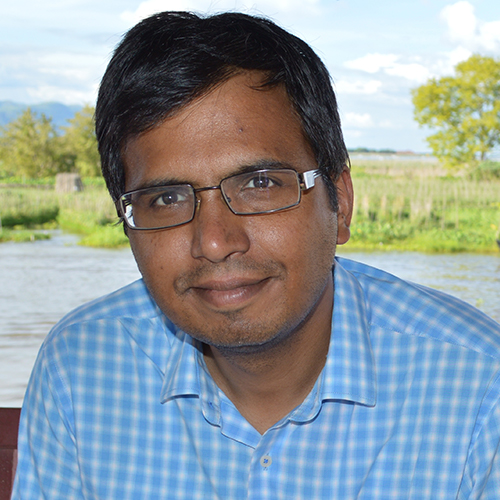
Jaideep Hardikar, Visiting Professor of Practice, Environmental Studies, School of Interwoven Arts and Sciences (SIAS) has been awarded the maiden Ramoji Excellence Award in the Journalism category. After a rigorous selection process, Jaideep was chosen for his exceptional body of work documenting rural India and the agrarian crisis.
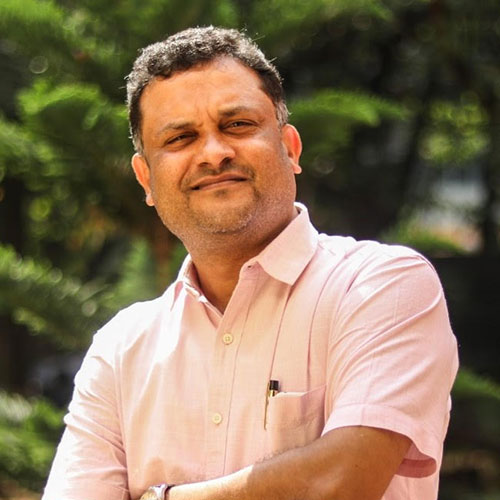
A research article co-authored by Dr Debajit Maiti, Assistant Professor, Chemistry, SIAS titled Electrooxidative Divergent Halocyclizations of Ambident Amides has been published in Angewandte Chemie International Edition.
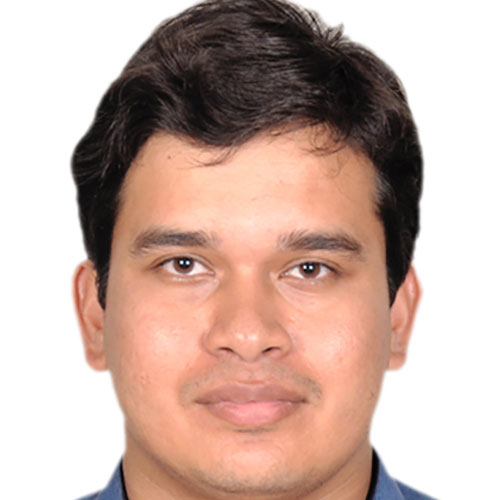
Dr Shimna Kannoth, Post-Doctoral Fellow, Environmental Studies, SIAS has co-authored a paper published in Space Weather titled Impact of the Gannon Superstorm on the Equatorial Ionization Anomaly Dynamics During Its Recovery Phase on 11 May 2024. The present study, for the first time, reveals the combined influence of geomagnetic storm-induced modifications in equatorial electrodynamics, meridional wind circulation, and substantial compositional changes during the recovery phase of a superstorm on the ionospheric plasma distribution. The integration of observational evidence with model simulations provides strong corroborative support, thereby offering new insights into the complex coupling processes governing ionospheric responses during extreme geomagnetic disturbances.
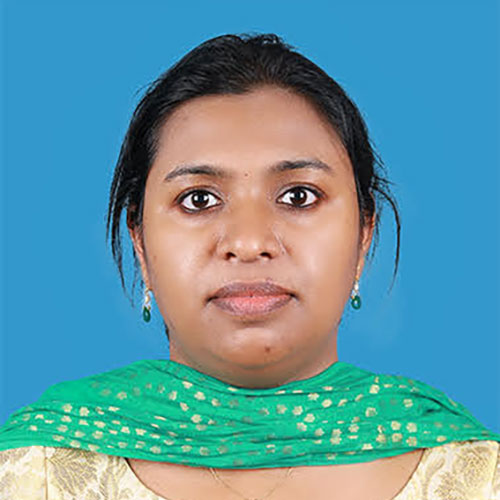
Tejas Rao, a Double Major in Data Science and Biological Sciences, UG Cohort of 2023-27, School of Interwoven Arts and Sciences (SIAS), has been selected as a LINC fellow. As part of the scholarship, he will be working at the LINC center on cutting-edge neuroscience projects.