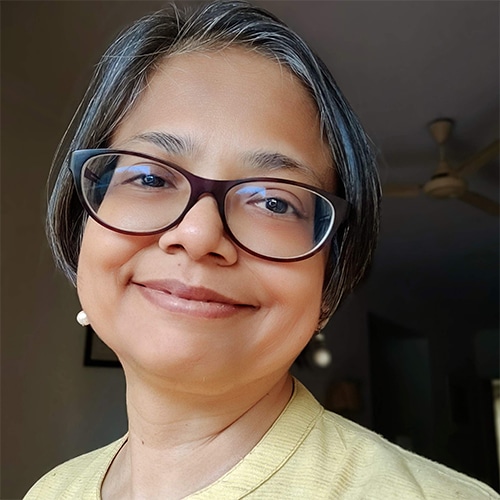
Dr Anannya Dasgupta delivers keynote at Azim Premji University symposium on student support in higher education

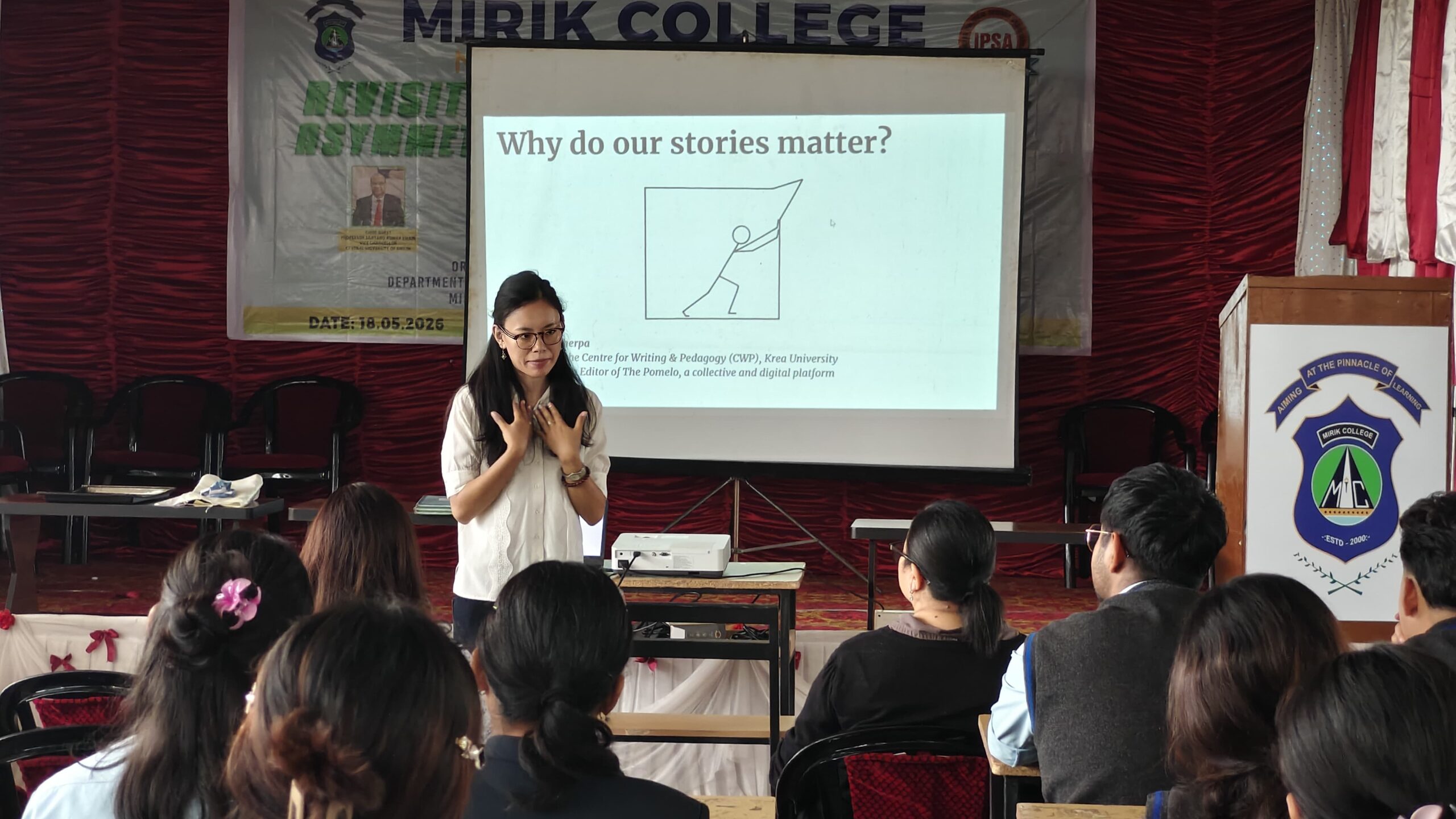
Dr Anannya Dasgupta, Director, Centre for Writing & Pedagogy and Associate Professor, Literature, SIAS, delivered the keynote address at the symposium Beyond Access: A Symposium on Reimagining Student Support in Indian Higher Education, organised by Azim Premji University, Bengaluru, on 27–28 March 2026. Her lecture was titled ‘Effective Writing Support in an Unequal Playing Field’.

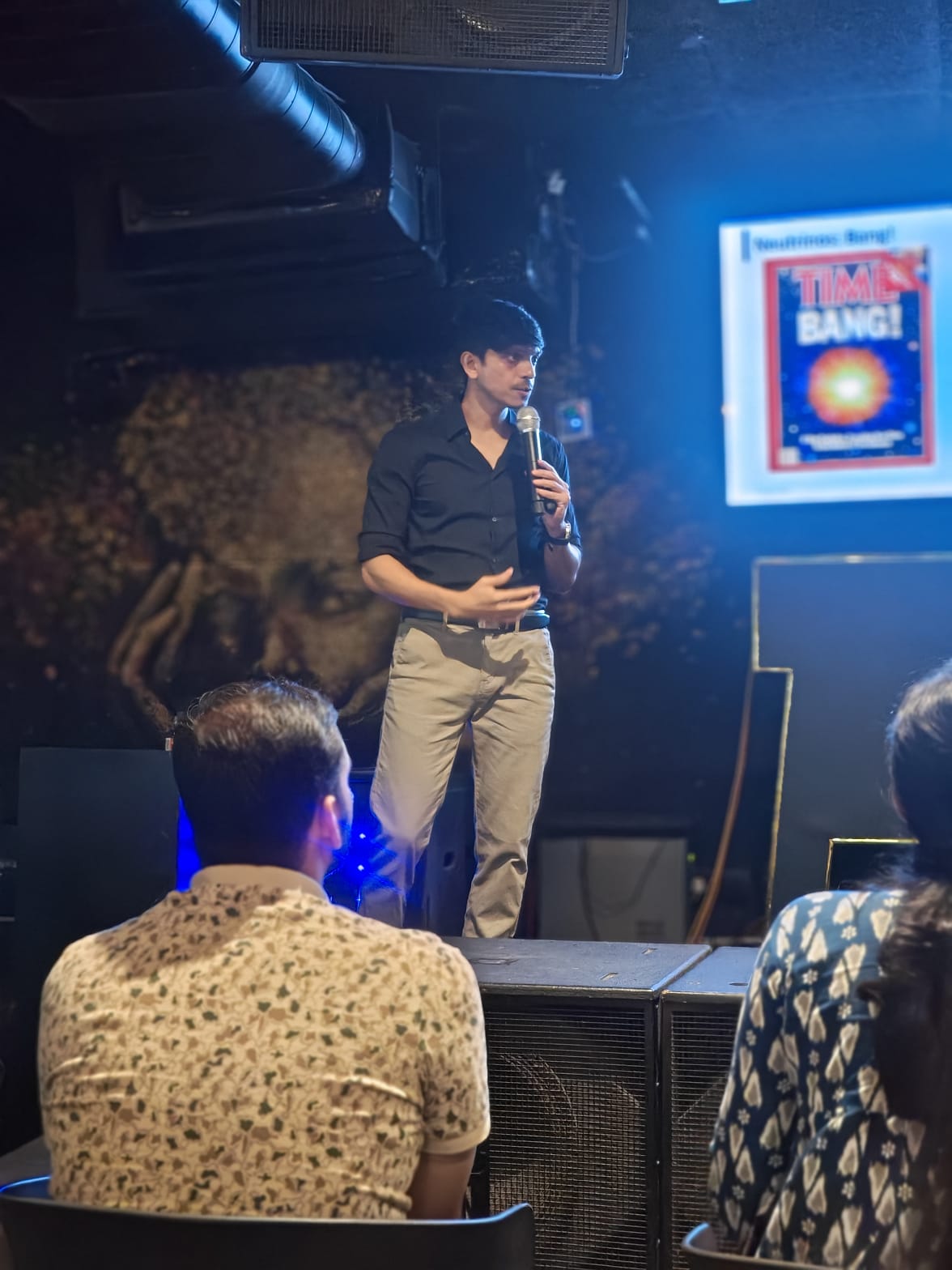
Research article by Dr Tanmoy Chakrabarty published in Physical Review B

A research article by Dr Tanmoy Chakrabarty, Assistant Professor, Physics, SIAS titled CaFe2O(PO4)2: A compound with S=5/2 corner sharing triangular saw-tooth chains has been published in Physical Review B. In this publication, Dr Chakrabarty is one of the two corresponding authors.

Geometric frustration and one-dimensional magnetism boost quantum fluctuations and leads to unusual states of quantum matter. To explore these effects, we used solid state nuclear magnetic resonance (SSNMR), which is a strong local probe to extract the true spin susceptibility and the spin network of a magnetic system.

Here we studied the magnetic behaviour of a well-separated S = 5/2 saw-tooth spin chain compound CaFe2O(PO4)2, which has two different 31P sites in the unit cell. Magnetic susceptibility, heat capacity, and 31P NMR measurements show evidence of strong magnetic frustration (with a frustration parameter ≈ |θCW|/TN) about 70) in CFPO. The major finding of our work came from the NMR measurements which show a broad maximum near 70 K , reflecting the low-dimensional nature and presence of short-range correlations. It is important to note that such a broad maximum feature is not seen in the bulk χ(T) or in heat capacity. Further investigating this broad maximum feature, we conclude that CFPO represents an interesting realization of a frustrated S = 5/2 sawtooth spin-chain.


(a) local environment of P1 and P2 in CFPO.  (b) (T) vs. T at various magnetic fields. (c) Plot of T-dependence of the normalized 31P NMR spectra measured as a function of frequency

Read more

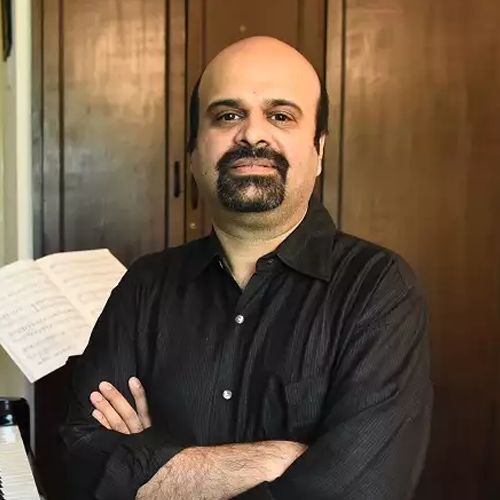
Krea faculty co-author research article published in the Journal of Data Science and Intelligent Systems

A research article titled Modeling Markers for Detection of Psychiatric Disorders Using EEG Signals has been co-authored by Dr Lakshman Varanasi, Assistant Professor, Biological Sciences, SIAS; Varun Viswanathan, Visiting Assistant Professor, Psychology, SIAS; Dr Debasish Mishra, Assistant Professor, Data Science and Information Systems, IFMR GSB; and Steven Chris, Teaching Fellow, Data Science and Information Systems, IFMR GSB. The paper has been published in the Journal of Data Science and Intelligent Systems.

Abstract

The diagnosis of mental (psychiatric) disorders is challenging, and there is a lack of consensus on objective diagnostic criteria that are based on definitive signs that accompany the disorder. There is a need, therefore, to develop objective tools for the examination of these disorders. We present here a novel machine learning (ML) approach that accurately identifies disorders. The approach uses electroencephalography (EEG) signals for diagnosis, which are processed to extract novel region based markers that are found to contain key information about the types of disorders. Subsequently, a support vector machine (SVM) classifier is modeled, integrated with sequential feature (marker) selection (SFS), which identifies optimal and compact marker subsets for disorder detection. The proposed system has been validated using a publicly available dataset. The developed model was benchmarked against existing models and was shown to perform superior to the models it was extensively compared with; it demonstrated a 98.33% accuracy in detecting obsessive-compulsive disorder (OCD). Our findings indicate that an accurate psychiatric diagnosis system can be achieved using EEG signals with significantly fewer, and more interpretable markers. This simpler and transparent approach improves the practicality and trustworthiness of AI/ML-driven diagnostic tools, making them more suitable for real-world clinical integration and understanding by medical professionals.

Read more

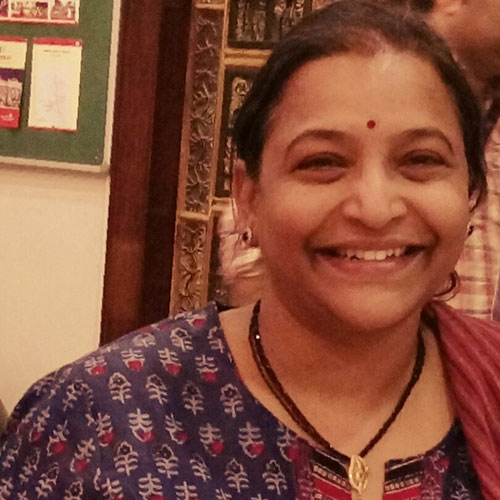
Dr Rakesh Sengupta’s paper published in the ACOIT 2025 proceedings

A paper by Dr Rakesh Sengupta, Assistant Professor, Psychology, SIAS, titled ‘Evaluating Continuous-Time Recurrent Neural Networks for State-Dependent EEG Forecasting’ has been published in the proceedings of the 2025 2nd Asian Conference on Intelligent Technologies (ACOIT).

About the Research
The paper explores how short-term brain activity (EEG signals) can be more accurately predicted using lightweight AI models. Such forecasting is critical for real-time neurotechnologies, including Brain-Computer Interfaces (BCIs) and neurofeedback systems. The study benchmarks a Continuous-Time Recurrent Neural Network (CTRNN) against both classical methods and complex deep learning models. It finds that even a compact, highly interpretable CTRNN can effectively capture the non-linear dynamics of human brain activity, offering a competitive alternative to “black-box” AI models in real-time BCI applications.

Read more

Dr Suchika Chopra Dr Sabah Siddiqui author an opinion piece in The Hindu

Dr Suchika Chopra, Assistant Professor, Economics, SIAS, and Dr Sabah Siddiqui, Assistant Professor, Psychology, SIAS, have authored an opinion piece in The Hindu titled ‘India must use the AYUSH opportunity’. The article argues that India should strategically scale AYUSH globally by leveraging policy momentum and trade opportunities, while strengthening scientific validation, regulation, and credibility for sustained global acceptance.

Read more

Read here

Dr Sayandeb Chowdhury presents paper and chairs session at international conference

Dr Sayandeb Chowdhury, Senior Assistant Professor, Literature, SIAS, participated in South Asia Literature, Culture & Politics, an international conference organised by Janki Devi Memorial College, University of Delhi, at the India International Centre on 17–18 March 2026. He presented a paper on propaganda cinema titled ‘Statecraft as Pulp Fiction’. He also served as a Chair for a session on Literary Culture, Translation, and Intellectual Practice.

SIAS UG Cohort Present Research at FLAME Undergraduate Research Day 2026

On March 14, 2026, two groups of undergraduate students from SIAS had their abstracts selected for presentation at the second iteration of FLAME Undergraduate Research Day 2026, held at FLAME University, Pune.

The first group, comprising Amandeep Singh (2023–27), Arush Menon (2024–28), Priyam Deorah (2023–27), Ria Vahab (2022–26), and Yashasvini Raj (2023–27), presented under the theme ‘Society, Law, and Education’ with their paper titled ‘Spaces That Remember: Labour, Gender, and Conditional Belonging in Liberal Arts Universities.’

The second group, consisting of Jharna Bamel and Tanushree Jain (2023–27), presented under the theme ‘Clinical, Developmental, and Social Psychology’ with their paper titled ‘The Negotiations of Dialogic Self: Transitioning from High School Environment to a Residential University.’

Dr Chirag Dhara authors an opinion piece in Scroll.in

Dr Chirag Dhara, Assistant Professor, Environmental Studies, SIAS, has authored an opinion piece in Scroll.in titled ‘India’s summer forecast is a warning that extreme heat can affect democracy’.

In the article, he highlights the risk of what he terms “inequitable climate disenfranchisement,” pointing to how intense heatwaves during upcoming Assembly elections could impact voter participation.

Read more

Dr Ramadas N publishes a research paper in Physical Review A

Dr Ramadas N, Post-Doctoral Fellow, Physics, Division of Sciences, SIAS, published a research paper titled Minimal decomposition entropy and optimal representations of absolutely maximally entangled states in Physical Review A.

Abstract

Understanding and classifying multipartite entanglement is fundamental to quantum information processing. This work focuses on absolutely maximally entangled (AME) states, a class of highly entangled states characterized by their maximal entanglement across any bipartitions. To analyze and classify AME states, we employ the minimal decomposition entropy, defined as the minimum R\'{e}nyi entropy $S_q$ associated with the state’s decomposition over all local product bases. This quantity identifies the product bases in which the state is maximally localized, thereby yielding optimal representations for analyzing properties of AME states.

The team develops an efficient algorithm for computing the minimal decomposition entropy for finite $q>1$ and compare AME and Haar-random states for ( q = 2 ) and ( q = \infty ) in qubit, qutrit, and ququad systems. For ( q = 2 ), AME states of four qutrits and ququads show lower minimal entropy than generic states, indicating sparser optimal forms. For ( q = \infty ) – related to the geometric measure ofentanglement – AME states exhibit higher entanglement. The algorithm also simplifies known AME states into sparser representations, aiding in distinguishing genuinely quantum AME states from those constructible from classical combinatorial designs. The results advance the classification of AME states and demonstrate the utility of minimal decomposition entropy as both a local unitary invariant and a tool for state simplification.

Know more