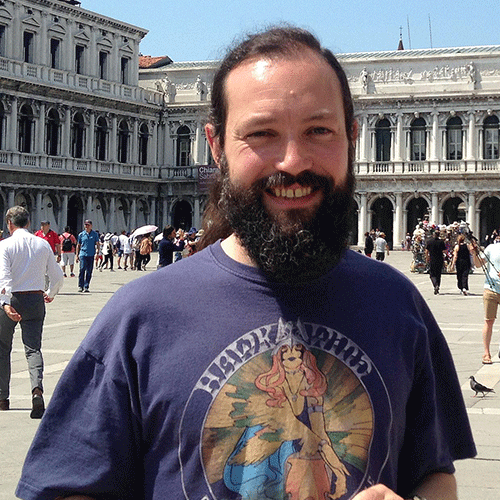
Dr Jonathan’s academic career began at Cambridge, UK, where he developed a specialism in the cultures and governments of the first millennium CE. This interest has taken him further and further from home: his undergraduate dissertation, on London, was followed by an M Phil. Thesis on the Picts in Scotland, also at Cambridge, and then a PhD. thesis on power and the frontier in what is now Catalonia (Spain), at Birkbeck, University of London. That thesis became his first book, published by the Royal Historical Society in London in competition for their Gladstone Prize, and he continues to publish in this area to this day.
After his doctoral study, he worked for five years for the Fitzwilliam Museum Cambridge, in their Department of Coins and Medals, acquiring competencies in numismatics, digital imaging, HTML and databases, and public exhibitions. This broadened his research into areas of material culture, money and economics, and he has carried these interests ever since.
By that time, Dr Jonathan was already teaching at university level. He began with sessional teaching in various parts of the University of London, but in 2010 he left the Fitzwilliam for the University of Oxford, to become a Departmental Lecturer in Medieval History. From there he moved to the University of Birmingham, where the department was consciously embracing the ‘global turn’. This encouragement to learn from cultures beyond his European comfort zone was tremendously formative and continues to drive him to understand his period of study at its fullest extent. After one year managing the coin collection of the Barber Institute of Fine Arts, adding the Byzantine Empire to his research competencies, he moved to the University of Leeds as Lecturer, and then Associate Professor, of Early Medieval History. His ten years at Leeds allowed him to further broaden his teaching competencies and conclude much of his earlier work, but it became clear that to go further, he had to go further, and this brought him to Krea! The future remains to be written, but he has many plans for it.
HIST346 Diversity and Unity in Medieval Europe 500-1500 (elective)
HIST347 West Asia and the Mediterranean 200-700 CE: Empires, Religions and
Replacement