Entrepreneurship Special Track

Degrees Awarded

BA - 3 Years

BA (Honours) - 4 Years

Programme overview

The Entrepreneurship Special Track at Krea University is a practice-oriented, interdisciplinary pathway housed within the School of Interwoven Arts and Sciences (SIAS). The Centre for Entrepreneurship (CfE) plays a central role in the training, mentoring, and support of students enrolled in the track. Open to students from all disciplines, the programme complements majors in the humanities, social sciences, sciences, and technology by fostering entrepreneurial thinking across diverse career paths—whether as venture founders, innovators within established organisations, or leaders in the social sector.

The track equips students with the mindset, skills, and hands-on experience required to identify opportunities, design innovative solutions, and build scalable ventures. Students receive training in opportunity recognition, customer discovery, business modelling, entrepreneurial finance, legal frameworks, government regulations, and venture execution. The programme also emphasises working under uncertainty, ethical decision-making, teamwork, and real-world problem-solving.

Courses are taught by faculty drawn from both academia and industry, with a strong focus on applied learning and venture development. A distinctive feature of the track is the capstone Startup Launch Project, which enables students to conceptualise, validate, and launch a venture or venture-ready prototype. Through this project, students often engage with external mentors, investors, and industry partners, gaining first-hand experience in the entrepreneurial ecosystem.

What makes

Business Studies and Finance at Krea Unique

A distinctive feature of the major is the Entrepreneurship Track, open to students across the School of Interwoven Arts and Sciences (SIAS). The track introduces the fundamentals of entrepreneurship and innovation, while providing mentoring and access to financial and institutional resources to support the design, launch, and growth of entrepreneurial projects.

Courses are led by faculty from the IFMR Graduate School of Business (GSB), who bring extensive experience in finance and management, as well as by SIAS faculty, who contribute an interdisciplinary perspective. Together, this draws on a strong legacy of teaching, research, and industry engagement in management and finance. This integration ensures that students benefit from both academic rigour and real-world relevance.

Programme Structure

Total Courses: 6

Credits per Course: 4

Total Credits: 24

Mandatory Experiential Component: 8-credit Startup Launch Project

Concentration in Entrepreneurship: Upon completion of the four courses, students will be eligible to earn a concentration in Entrepreneurship. 

Required Courses 

The Entrepreneurship Track equips undergraduates with the knowledge, skills, and practical experience to ideate, launch, and scale ventures in the Indian context.

The curriculum blends foundational courses, applied projects, and incubation opportunities through Catalyst.

Objectives 

  • Develop entrepreneurial mindset and opportunity recognition. 
  • Understand India’s startup ecosystem and policy environment. 
  • Learn from case studies of Indian entrepreneurs. 

Table of Contents 

  • Defining Entrepreneurship in India 
  • Opportunity Identification & Market Gaps 
  • Startup Ecosystem in India (Startup India, incubators, accelerators) 
  • Entrepreneurial Leadership & Ethics 
  • Case Studies: Flipkart, Byju’s, Zerodha 

Deliverables 

  • Opportunity mapping exercise in local communities. 
  • Case study analysis of an Indian startup. 
  • Reflection journal on entrepreneurial mindset. 

Indicative References 

  • Nandan Nilekani, Imagining India 
  • Gopalakrishnan, The Case of the Bonsai Manager 
  • NASSCOM Startup Ecosystem Reports 

Objectives 

  • Learn startup financial structures and valuation. 
  • Understand venture capital economics in India. 
  • Apply concepts to SMEs and startups. 

Table of Contents 

  • Basics of Financial Accounting for Startups 
  • Sources of Capital: Angel, VC, PE, Government Schemes 
  • Valuation Methods (DCF, multiples, comparables) 
  • Unit Economics & ARPU in Indian startups 
  • Exit Strategies: IPOs, acquisitions 

Deliverables 

  • Financial model for a hypothetical startup. 
  • Pitch deck with valuation and funding strategy. 
  • Group project analysing a recent Indian IPO. 

Indicative References 

  • Aswath Damodaran, The Little Book of Valuation 
  • IIM Ahmedabad case studies on venture finance 
  • RBI & SEBI reports on SME financing

Objectives 

  • Explore AI applications in entrepreneurship. 
  • Apply design thinking to innovation. 
  • Analyse India’s digital transformation (UPI, Aadhaar, ONDC). 

Table of Contents 

  • AI & Emerging Tech in Indian Startups 
  • Design Thinking for Social and Commercial Innovation 
  • Sectoral Analyses: EdTech, FinTech, AgriTech, HealthTech 
  • Digital Public Infrastructure in India 
  • Ethical AI and Responsible Innovation 

Deliverables 

  • Prototype using AI/tech tools. 
  • Sectoral analysis report (e.g., AgriTech in Tamil Nadu). 
  • Design sprint presentation. 

Indicative References 

  • Tim Brown, Change by Design 
  • NITI Aayog reports on AI in India 
  • Case studies: Paytm, Ola Electric, Agri startups

Objectives 

  • Understand legal frameworks for startups. 
  • Learn corporate governance in India. 
  • Explore international trade and data protection laws. 

Table of Contents Deliverables 

  • Compliance checklist for a startup. 
  • Mock legal contract drafting. 
  • Policy brief on data protection for startups. 

Indicative References 

  • Avtar Singh, Company Law 
  • Ministry of Corporate Affairs guidelines 
  • DPDP Act, 2023 

A two-course, year-long immersive project in which students launch a startup or venture-ready initiative individually or in teams. Students are mentored by faculty and external entrepreneurs, and assessment is based on process, learning, execution, and reflection rather than commercial success alone.

Course 5 – Startup Project 1 

Objectives 

  • Apply entrepreneurial concepts to a real-world project. 
  • Develop a prototype or MVP. 
  • Engage with mentors and industry stakeholders. 

Table of Contents 

  • Ideation & Problem Identification 
  • Market Research & Customer Discovery 
  • Business Model Canvas Development 
  • Prototype/MVP Creation 
  • Pitch Preparation 

Deliverables 

  • MVP or prototype. 
  • Business model canvas. 
  • Pitch presentation to faculty/industry panel. 

Indicative References 

  • Alexander Osterwalder, Business Model Generation 
  • Eric Ries, The Lean Startup 
  • Startup India toolkit 

Course 6 – Startup Project 2 

Objectives 

  • Scale and refine the startup project. 
  • Prepare for incubation and funding opportunities. 
  • Engage with Catalyst and external investors. 

Table of Contents 

  • Scaling Strategies & Growth Hacking 
  • Advanced Financial Planning & Investor Readiness 
  • Legal & Compliance Deep Dive 
  • Marketing & Customer Acquisition in India 
  • Preparing for Catalyst/Incubator Funding 

Deliverables 

  • Investor-ready pitch deck. 
  • Detailed financial plan. 
  • Final presentation to Catalyst/industry mentors. 

Indicative References 

  • Guy Kawasaki, The Art of the Start 
  • IIMA Ventures guidelines 
  • Case studies of Indian startups that scaled successfully 

Suggested Track Flow 

  • Foundations of Entrepreneurship (Second Years onwards) 
  • Finance & Venture Economics (Second Years onwards) 
  • Technology, AI & Design (Second Years onwards) 
  • Corporate/International/Data Law (Third Years) 
  • Startup Project 1 (Second Year Summer Onwards) 
  • Startup Project 2 (Third Year Summers/Fourth Years) 
  • Catalyst Funding & Incubation Opportunities (Third Year Summers/Fourth Years)

Learning Outcomes

On successful completion of the Entrepreneurship Special Track, students will be able to:
  • Demonstrate entrepreneurial thinking by identifying opportunities, evaluating risks, and acting creatively under conditions of uncertainty.
  • Apply design thinking and customer discovery methods to develop solutions that address real-world problems.
  • Develop and evaluate business models that  articulate value creation, delivery, and capture.
  • Apply financial and legal principles relevant to early-stage ventures including budgeting, funding, and compliance.
  • Launch and manage a startup or venture project progressing from idea to validated prototype or operational venture.
  • Work effectively in entrepreneurial teams demonstrating leadership, collaboration, and ethical responsibility.
  • Communicate entrepreneurial ideas persuasively through written plans, financial models, and oral pitches to diverse audiences.
  • Reflect critically on failure, learning, and impact using feedback to improve entrepreneurial outcomes.
  •  


Faculty

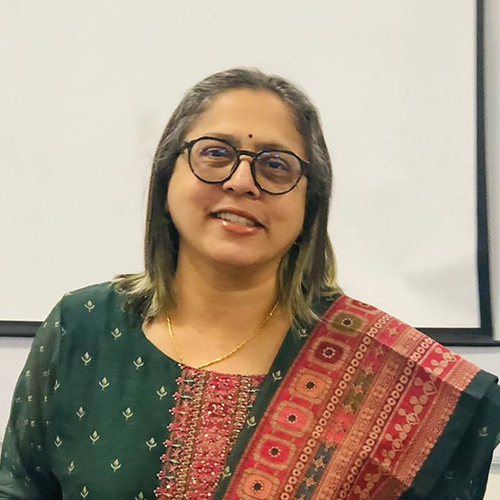
Professor Lakshmi Kumar

Professor, Economics and Dean – IFMR Graduate School of Business

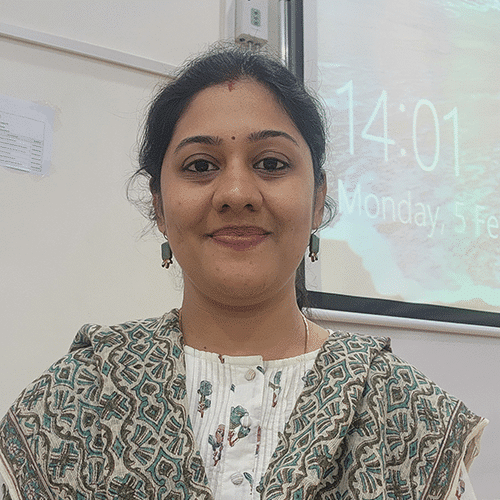
Dr Aishwarya Krishnaswamy

Adjunct Assistant Professor, Finance

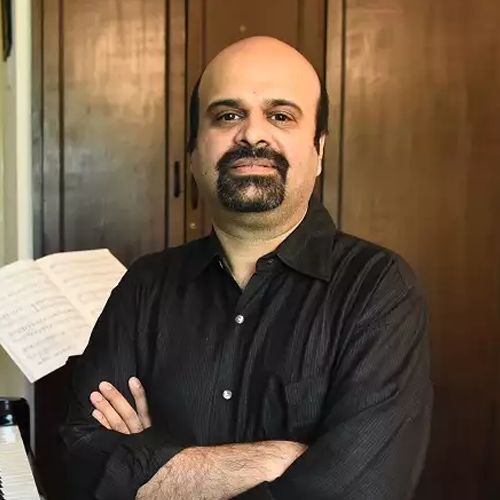
Professor Anil Srinivasan

Visiting Professor of Practice, Literature & the Arts

Faculty

Professor Lakshmi Kumar

Professor, Economics and Dean - IFMR Graduate School of Business

Adjunct Faculty

Dr Aishwarya Krishnaswamy

Adjunct Assistant Professor, Finance

Visiting Faculty

Professor Anil Srinivasan

Visiting Professor of Practice, Literature & the Arts