Dr Srajana Kaikini, Assistant Professor of Philosophy, SIAS reviewed A Phenomenology by Nicolle Zapien and Susi Ferrarello (2019) in Ethical Perspectives (September 2022) and authored a research essay titled Adyar’s Cosmopolitanisms: Notes from the Adyar Archive (July 2022) in Critical Collectives, commissioned by them for their Art History Project
Dr John Mathew, Associate Professor of History of Science, SIAS and Dr Karthick Narayanan, Post-Doctoral Fellow, Moturi Satyanarayana Centre for Advanced Study in the Humanities and Social Sciences at Krea University are co-organisers of NilgiriScapes, a conference lined towards the bio-culturally sustainable future of the Nilgiris, to be held in Ooty, on 18 – 20 August 2023. This conference is a collaboration between Krea University, Keystone Foundation, Make Ooty Beautiful, Clean Coonoor, ATREE and NNHS NilgiriScapes
(Re)Constituting a South Asian Environmental Humanities co-organised by Dr Kalpita Bhar Paul, Assistant Professor of Philosophy, SIAS; Dr Joya John, Assistant Professor of Literature, SIAS and Megnaa Mehtta, ICAS:MP and UCL will be held on 3 and 4 August at the India International Centre (IIC), New Delhi
Dr Sumitra Ranganathan, Senior Assistant Professor of Music, Literature & the Arts and Humanities & Social Sciences, SIAS delivered an invited lecture titled Creative Visualization for Imaginative Classrooms at a day-long event Unleash your creative potential: Community Canvas, conducted by TREE and Dakshinachitra, on 21 July 2023, attended by over 60 teachers and counsellors from schools in and outside Chennai
Prof (retd) T R Govindarajan, Institute of Mathematical Sciences, Chennai, and Visiting Professor of Physics at SIAS recently penned a review on Christopher Nolan’s Oppenheimer. The review talks about the hits and misses in the movie and acknowledges that the movie is brilliantly made and worth watching for the truthfulness of the presentation of historic events with details of emotions, and empathy of scientists who made it possible
Dr Chirag Dhara, Assistant Professor of Environmental Studies at SIAS and Dr Roxy Mathew Koll from the Indian Institute of Tropical Meteorology co-authored an article titled, What will an El Niño bring next to India? The article explores the impacts of El Niño events on India’s monsoon and emphasises the need for adaptation strategies. The article has also been republished in The India Forum, and Down to Earth.
Prof S Sivakumar, Dean of Research and Professor of Physics at SIAS, and Dr Vikash Pandey, Assistant Professor of Math Modeling and Physics at SIAS, provided a comprehensive analysis of ISRO’s lunar missions. Their article published in The Hindu delves into the significance and far-reaching effects of Chandrayaan-3 for both India and the global community. The article discusses India’s lunar mission, Chandrayaan-3, which aims to further explore the Moon and demonstrate the country’s capabilities for safe landing and roving on the lunar surface. Chandrayaan-3 aims to learn from the lessons of its predecessor, Chandrayaan-2, which encountered challenges during its landing attempt.
Each image is a storyteller and what better way than images from the field to catch a glimpse of the deeply impactful work that Krea Research Centres carry out on the field, every day. Presenting, a collection of photographs unpacking few episodes in a series of instrumental work done by some of our research centres interweaving high quality research with impactful solutions on the ground.
Krea University’s ecosystem is built on exchange of knowledge, ideas, insights and meaningful collaborations and Krea prides itself in its ever growing network of Research Centres synonymous with ‘research for impact’. From solving complex development challenges to enhance socio-economic prosperity, nurturing a support ecosystem for tech innovations for underserved communities, developing and supporting digital innovations for social impact, ensuring economic justice, social opportunity and environmental protection, poverty reduction through policy development informed by scientific evidence, conducting advanced research across the humanities and social sciences to spearheading research and learning related to the human brain and mind, the Krea Research Centres create deep impact across diverse fields.
For this edition of The Krea Communique, here is a glimpse of the pivotal work the Centres carry out on the field through images contributed by some of our Research Centres.
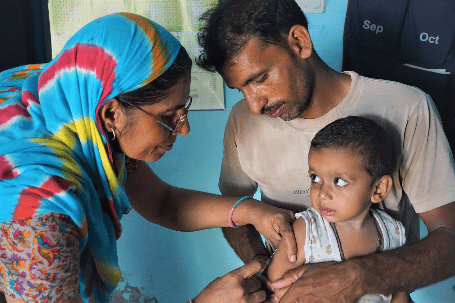
A child receiving a vaccination at the control site of a project exploring ways to boost immunisation demand in Haryana. 2017. Photo Credit: Shobhini Mukerji, J-PAL SA
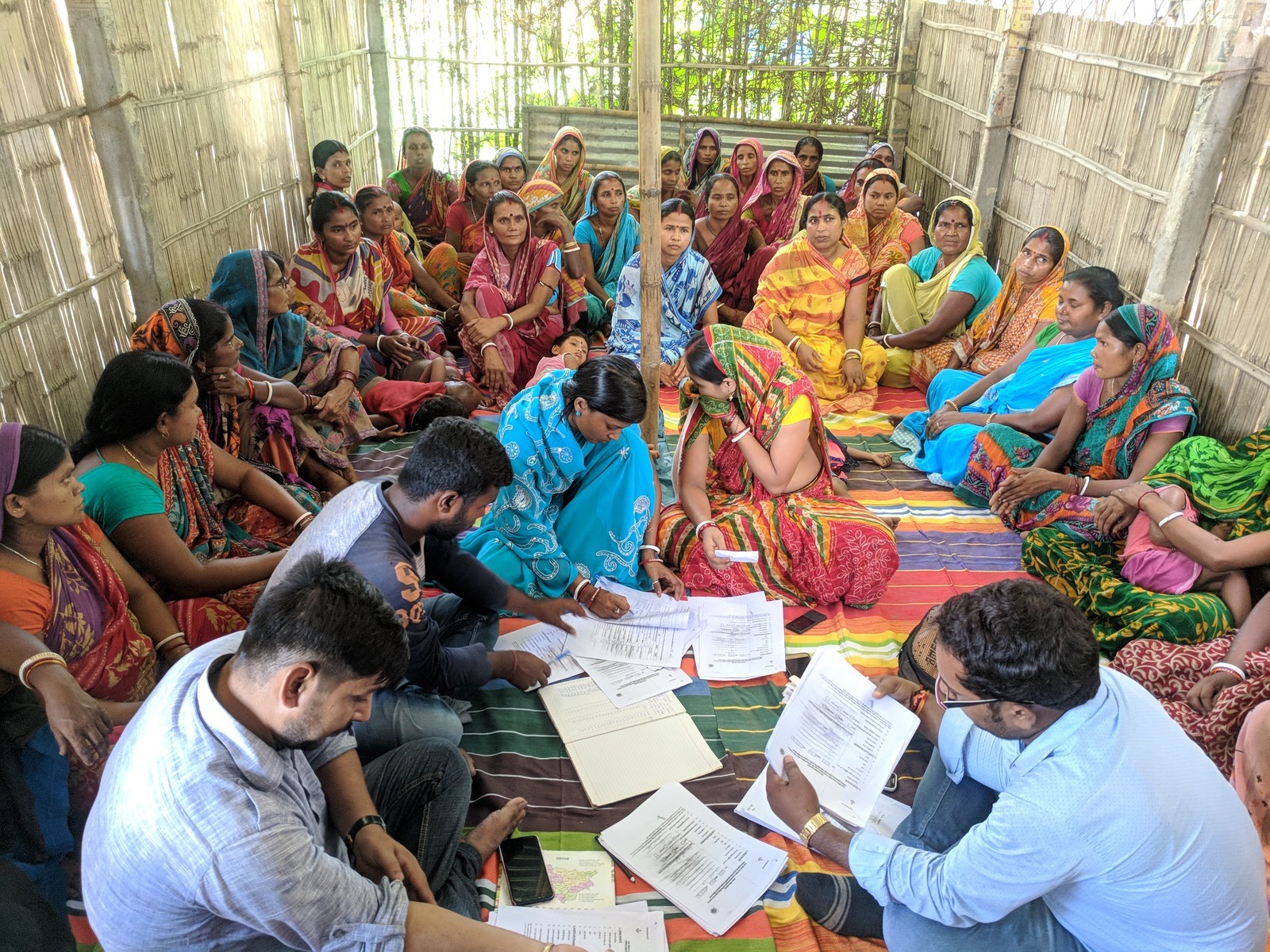
Scaling up the Graduation Approach in Bihar, India. 2019. Photo Credit: Gautam Patel, J-PAL SA
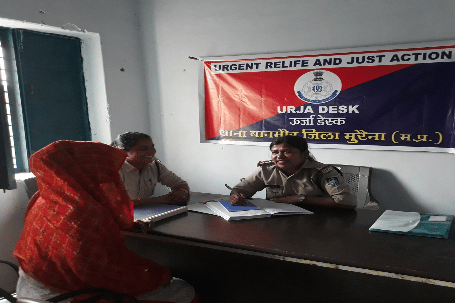
A female police officer with a complainant at a police station in Morena, Madhya Pradesh as a part of a study evaluating the impact of introducing women’s help desks across police stations on the registration of cases of violence against women. 2019. Photo Credit: Suddhasatwa Bhattacharya, J-PAL SA
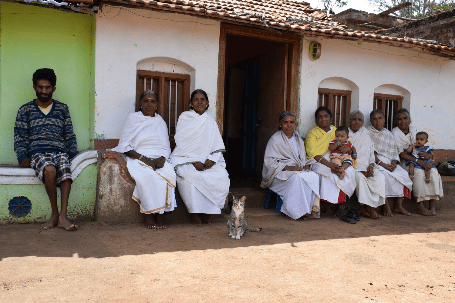
Women of Menad or Kunda Kotagiri village of the Kota Tribe. From Left to Right- Ponvelan, Seetha, Lalli, Baby, Anchana, Mathi, Malli, and Manjula. And the cat is “pees”. Photo Credit: Dr Karthick Narayanan, Moturi Satyanarayana Centre for Advanced Study in the Humanities and Social Sciences
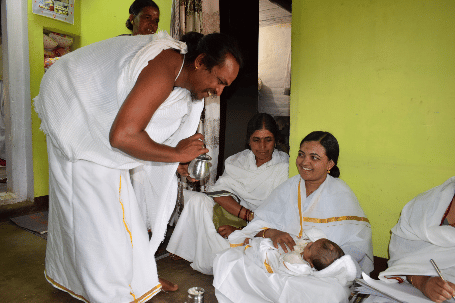
Kota name giving ceremony in the Thiruchikady village, Kotagiri. Shalini (holding the baby in her lap) and Prem Kumar’s baby is being named. On this occasion, Hari (feeding the child), one of the priests of the Kilkotagiri Village, blessed the baby. Photo Credit: Dr Karthick Narayanan, Moturi Satyanarayana Centre for Advanced Study in the Humanities and Social Sciences
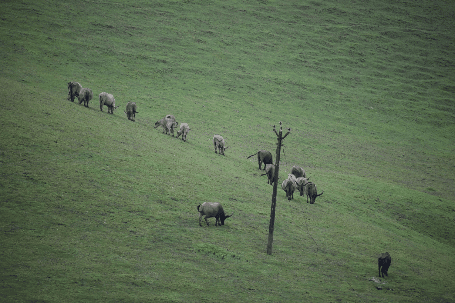
A herd of Bubalus bubalis, commonly known as Toda buffaloes, grazing in the meadows of Nilgiris. Among the Asian water Buffaloes, the Toda buffaloes are a genetically isolated breed of buffaloes endemic to the Nilgiri hills. These buffaloes are central to the culture and the livelihood of the Toda of Nilgiris. Photo Credit: Dr Karthick Narayanan, Moturi Satyanarayana Centre for Advanced Study in the Humanities and Social Sciences
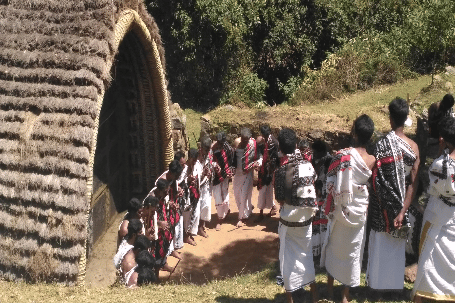
This is a photo from the Konniesht recital at the Morthkyodr clan’s sacred diary in Karikadu Mandu, Ithalar, Nilgiri. Konniesht is a form of dance recital in which only men participate. The photo shows that the men form a circle facing inward by locking their elbows. The circle then rotates in a counterclockwise direction, with each man taking a measured tread matching the chanting of the song that begins with ‘O hau hau’.
Photo Credit: Dr Karthick Narayanan, Moturi Satyanarayana Centre for Advanced Study in the Humanities and Social Sciences
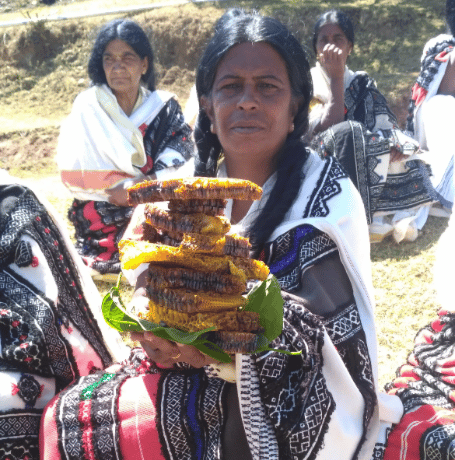
Rubavathi holding the honey collected for the salt feeding ceremony to the buffaloes at Karikadu Mandu, Ithalar, Nilgiri. The men of the Morthkyodr clan collected this honey for the sacred occasion from a cavity blocked with stone in the sirfs: ancestral trees handed down from father to son. Plains cerana, a member of the Apis cerana bee family, establishes its colonies in the cavity of these trees. Todas collect their honey without damaging the brood. Their honey collection is well known for this unique practice as they do not use fire or smoke to drive the bees away. But instead, they gently blow into the cavity to move the bee away. Photo Credit: Dr Karthick Narayanan, Moturi Satyanarayana Centre for Advanced Study in the Humanities and Social Sciences
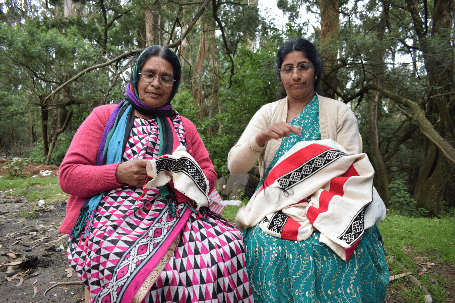
Radha (left) and Rajakilli (right), members of the Toda women’s self-help group producing the famed Toda embroidery shawl and cushion cover. Toda embroidery produced by the Toda women is one of the main sources of income for many Toda families today. Photo Credit: Dr Karthick Narayanan, Moturi Satyanarayana Centre for Advanced Study in the Humanities and Social Sciences
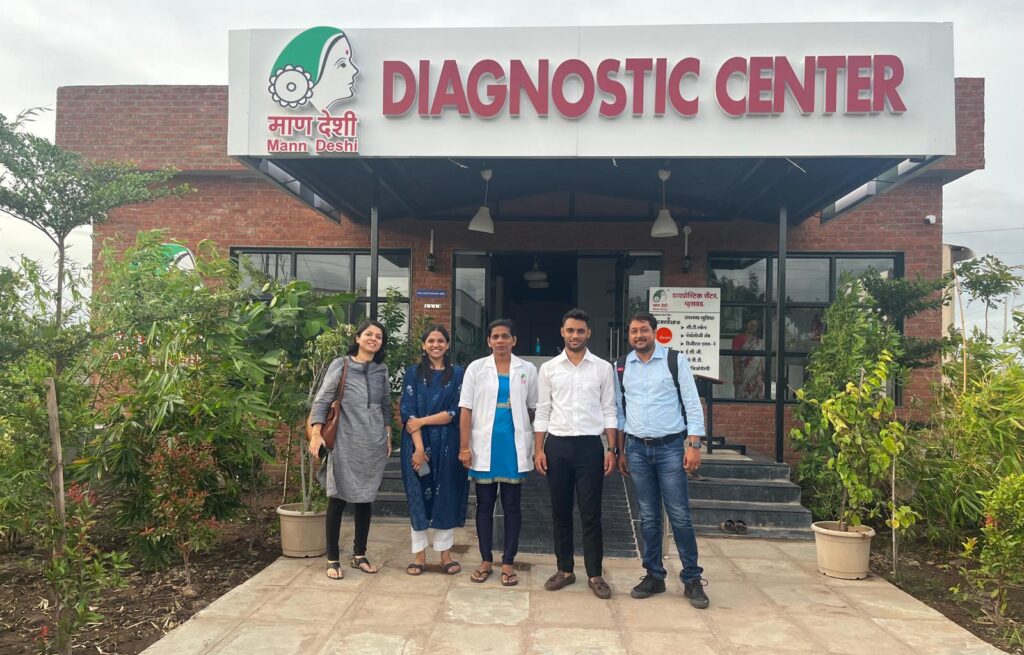
LEAD at Krea University’s team recently visited Mann Deshi Foundation’s head office in Mhasvad, Satara. Photo Credit : LEAD at Krea University
LEAD is collaborating with Mann Deshi Foundation on a community health needs assessment and the field visit helped contextualise findings from LEAD’s survey. Photo Credit : LEAD at Krea University
“It made me realise the power of different voices. Until then, I had an understanding that the quantitative field survey was the culmination of our efforts in obtaining data. However, after witnessing the flow of ideas under the framework that the survey provided, I learned that it was the starting point to a much deeper conversation filled with opportunities for further work.” added Sumiran Ardhapure, Research Associate, LEAD at Krea University. Photo Credit : LEAD at Krea University
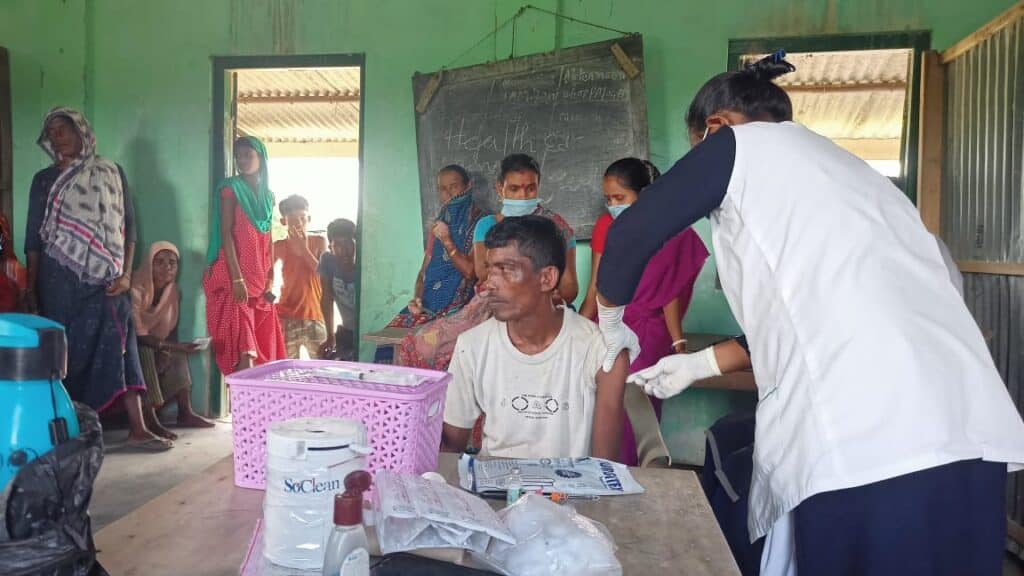
ANM providing vaccination services during our field visit for Time and Motion study of ANMs. Photo Credit: CDFI
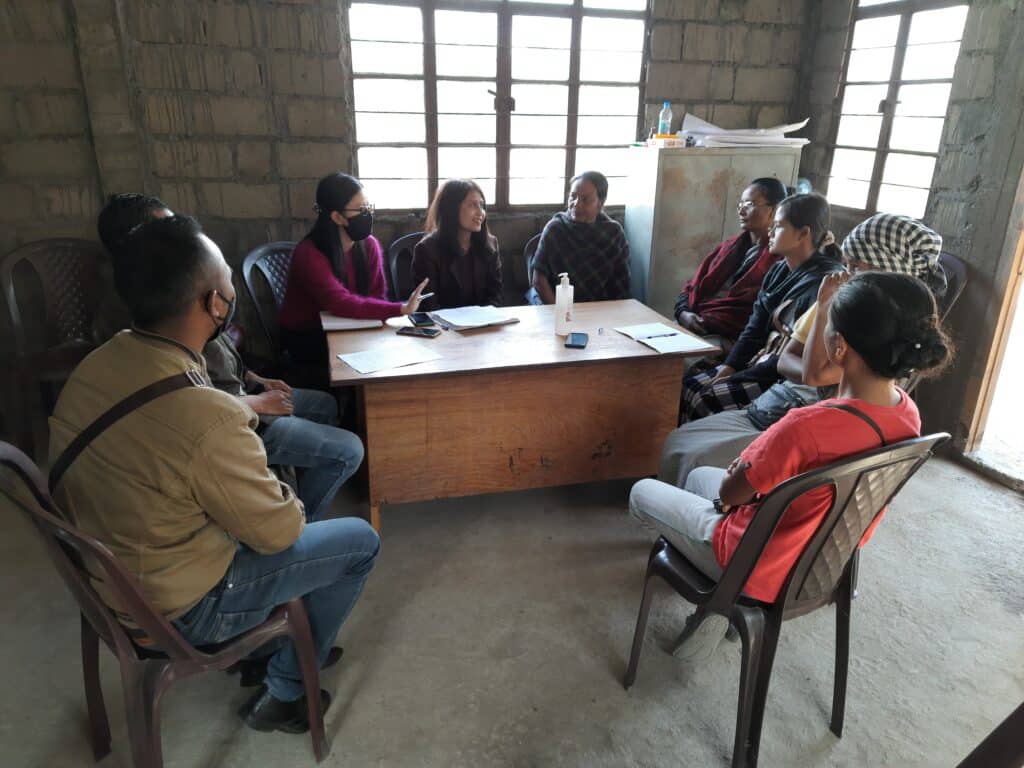
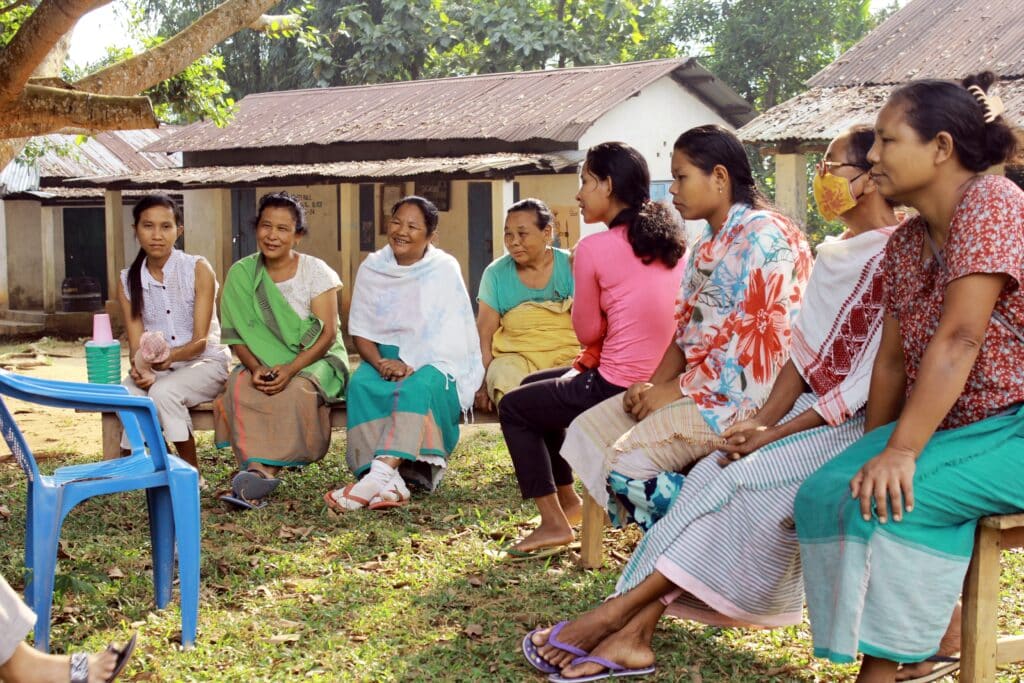
Women SHG members responding during an FGD conducted for impact of SHG program on livelihood. Photo Credit: CDFI
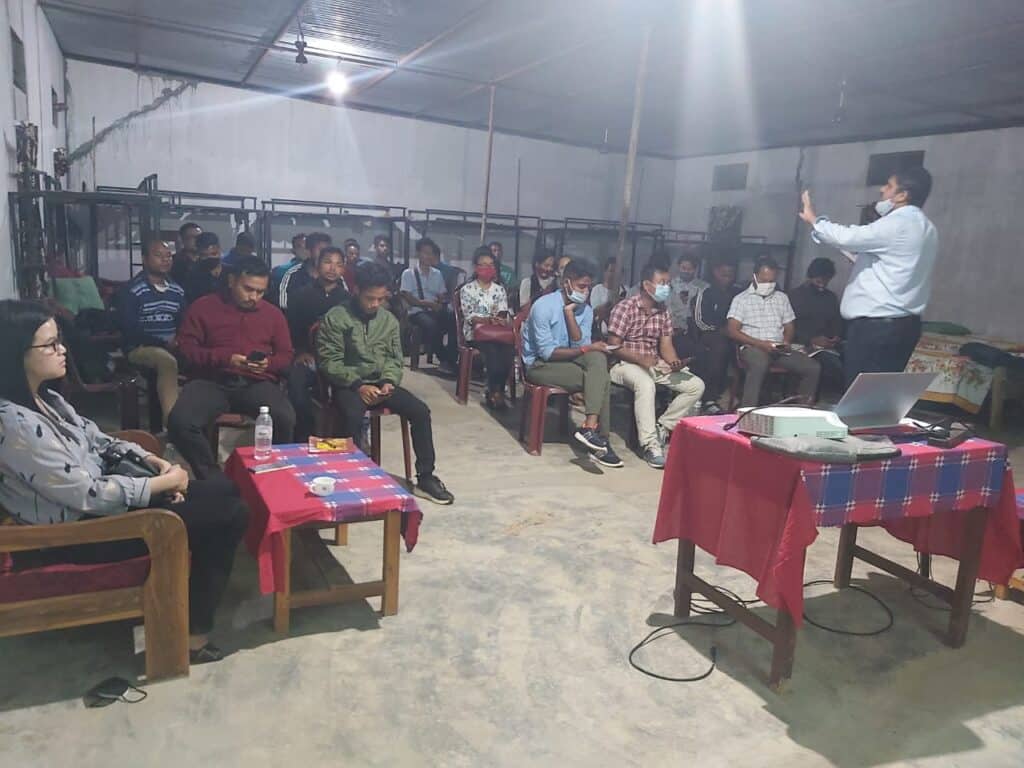
Training session for the team of enumerators for data collection in Khasi Hills of Meghalaya. Photo Credit: CDFI
Conducting an FGD with the SHG to gather insights on the impact of Covid 19. Photo Credit: CDFI
They are inquisitive in their pursuit for answers, meticulous in their approach to data, and tenacious in their adherence to the principles of scientific reasoning. Krea faculty are educators, institution builders and passionate researchers. We asked some of them about their take on research – their inspiration, focus and approach to the process of discovering new knowledge. Through a series of short snippets, we present to you their insights into the fascinating world of methodological and systematic research.
Theory, evidence, analysis.
What are the three words that you think of when you hear the word “research”?
Q: Why research – what inspires & motivates you to do research?
A: To understand phenomena better, to influence their outcomes (if possible).
Q: What is the focus area of your research?
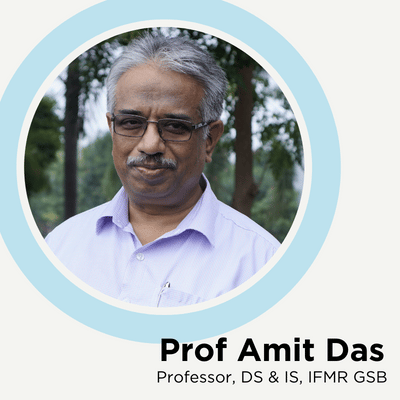
A: Use of information systems to improve individual and organisational performance.
Q: What, in your opinion, are the key features of a research mindset / research mentality?
A: Well-read (broad and deep), analytic mindset, clear communication.
Q: Your piece of advice to young researchers: how to succeed at research?
What are the three words that you think of when you hear the word “research”?
Q: What are the three words that you think of when you hear the word “research”?
A: Interesting, Important, Insightful.
Q: Why research – what inspires & motivates you to do research?
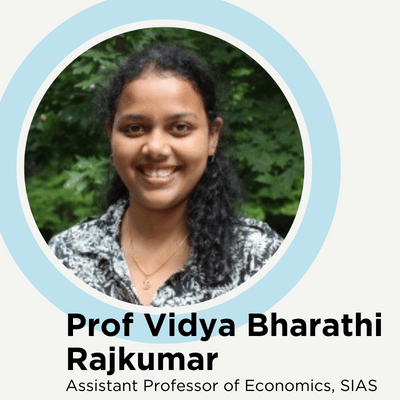
My decision to pursue academic research simultaneously meets two personal goals: engage in an intellectually fulfilling career that is a good match with my skills and interests, and use my analytical strengths to work on important and real problems that I deeply care about. I find the economic way of thinking to be natural and intuitive, and I am inspired by the idea of applying economic principles to understand and improve the lives of disadvantaged people.
Q: What is the focus area of your research?
A: I am an applied development economist, and I study topics at the intersection of gender, development and public policy. I am particularly interested in questions that explore the role of gender norms and women’s autonomy in different realms of the society.
Q: What, in your opinion, are the key features of a research mindset / research mentality?
A: Commitment to a life-time of intellectual curiosity and continuous learning, the ability to stay thorough and consistent while always keeping the big picture in sight, and most importantly, patience and perseverance.
Q: Your piece of advice to young researchers: how to succeed at research?
A: Always remember your ‘why’, the reason you decided to take up research in the first place. Learn to enjoy the process – research is highly non-linear, be prepared to welcome the highs and lows. Show up every day, and work on questions that truly matter to you!
Fascination, challenge, and excitement.
What are the three words that you think of when you hear the word “research”?
Q: Why research – what inspires & motivates you to do research?
A: The chance to think about some very beautiful ideas. The challenge of tackling interesting problems. The excitement of better understanding phenomena that you initially found initially mysterious, and learning about and discovering new ideas.
Q: What is the focus area of your research?
A: I am a pure mathematician, with primary research interests in algebra.
Q: What, in your opinion, are the key features of a research mindset / research mentality?
A: As obvious as it sounds, you should be curious about and fascinated by what you are hoping to better understand. You need to be motivated, persistent, and willing to work very hard. You should have a fundamental openness to new ideas, to sharing ideas, and to reconsidering your own perspectives in light of new information. This includes speaking with other researchers about their and your work, reading what others have written, and understanding connections between your work and the work of others.
Q: Your piece of advice to young researchers: how to succeed at research?
A: When you’re young (defined broadly as the first ten or so years after you begin your undergraduate degree, say) try to read, listen, and understand as much about your chosen discipline, in both the broad and narrow sense, as you can. Really invest your time in building a broad, deep, solid foundation. Of course, as an academic you should never stop learning or exposing yourself to new ideas, but you will really benefit from hard-wiring yourself with the fundamental ideas, vocabularies, and intuitions of your discipline at a young age. Invest your time in building connections and working with other researchers, both young and experienced. Develop the habit of attending seminars, colloquia, and talks, even if they are hard to understand at first. Choose the initial research problems you work on with care, and under the advisement of those with experience. And have fun!
Meaningful, Rigorous, and Valuable contributions to society.
What are the three words that you think of when you hear the word “research”?
Q: Why research – what inspires & motivates you to do research?
A: Research gives me the opportunity to solve society’s real problems. With those intentions, if my work gets published, it brings immense satisfaction to me. It is a reflection of how I am using my knowledge for the betterment of society. It has also taught me a few virtues of life; the importance of patience, dealing with rejections, and time management. I consider it as my life transformation tool.
Q: What is the focus area of your research?
A: My research interest concerns employee discrimination, diversity and inclusion issues, and happiness in the workplace.
Q: What, in your opinion, are the key features of a research mindset/research mentality?
A: A mindset of creating a positive impact, a mindset of hard work, a mindset of right intention, right effort, and right concentration.
Q: Your piece of advice to young researchers: how to succeed at research?
A: Succeeding in research has the following conditions:
– Spend a great deal of time understanding the problem statement. This will entail what research approach to follow.
– Talk to the experts in the field and other stakeholders (actors) from the beginning till the end. They are valuable data sources. Discuss your findings or opinions with them; this will ensure a holistic understanding of your field.
– Research is one of the fields where shortcuts never work; there are no quick fixes; therefore, one should not compromise on their effort.
– Get into the habit of reading and writing. Scientific knowledge comes from various sources; limiting yourself to one stream or area will make you an average researcher.
– Most notably, aspire to live an extraordinary life! Discipline and hard work are essential mantras of succeeding in research.
Papers, Chai and Patience.
What are the three words that you think of when you hear the word “research”?
Q: Why research – what inspires & motivates you to do research?
A: Even before my first thought of pursuing an academic career, research had a pull factor for me. I wanted to do a PhD to give a decent closure to my academic journey and also advance my training in the subject of Physics. But it was during my PhD studies that the idea of a full-time academic career matured. This happened for two main reasons. Firstly, I liked the subject and wanted to learn more about it. Secondly, research as a career gives one a chance to develop one’s own learning curve at a pace one is comfortable with, and keep growing in the process. There may or may not be celebratory milestones, but if you keep at it, every day you add on to your value as a professional.
Q: What is the focus area of your research?
A: My research focuses on searching for hints of new physics at high energy particle collision experiments like the Large Hadron Collider at CERN. The idea is that we already have a widely accepted and standard framework of how the various fundamental particles are expected to behave when they interact with each other. But there are various experimental observations and theoretical issues that hint towards the fact that this framework, known as the Standard Model, may be incomplete. So the task at hand is to study the behaviour of these particles in very high energy collisions and try to quantify the deviations from the expected patterns of interactions in such experiments.
Q: What, in your opinion, are the key features of a research mindset / research mentality?
A: I think the most important quality of a research mindset is being more process oriented than result oriented. This is because in research, more often than not, one does not know if the line of inquiry or the method used is correct or not. The only way to make progress is to take the next step and course-correct oneself along the way. Another important element that helps is to always be ready to learn new skills, be open to new ideas etc. Today, the landscape of any discipline changes at a very fast pace, and we need to keep ourselves updated in terms of the know-how of the field.
Q: Your piece of advice to young researchers: how to succeed at research?
A: My advice would be to constantly keep adding to your skill sets, keep getting better and better at what you do, and let this be an attitude that you carry till a much later stage in your career. Another helpful thing would be to keep interacting with colleagues from other areas or subjects and learn about what they are doing. This will help you better contextualise your own research, and you will not feel like an island.
Understanding the world (field) better.
What are the three words that you think of when you hear the word “research”?
Q: Why research – what inspires & motivates you to do research?
A: I research to understand the field better.
Q: What is the focus area of your research?
A: Corporate Investments and Credit Rating Agencies.
Q: What, in your opinion, are the key features of a research mindset / research mentality?
A: Passion, patience and hard work.
Q: Your piece of advice to young researchers: how to succeed at research?
A: The qualities (passion, patience and handwork) increase the probability of success, and nothing is guaranteed. I don’t think there is a defined path to success. It is like entrepreneurship; we have to take risks and sometimes we succeed.
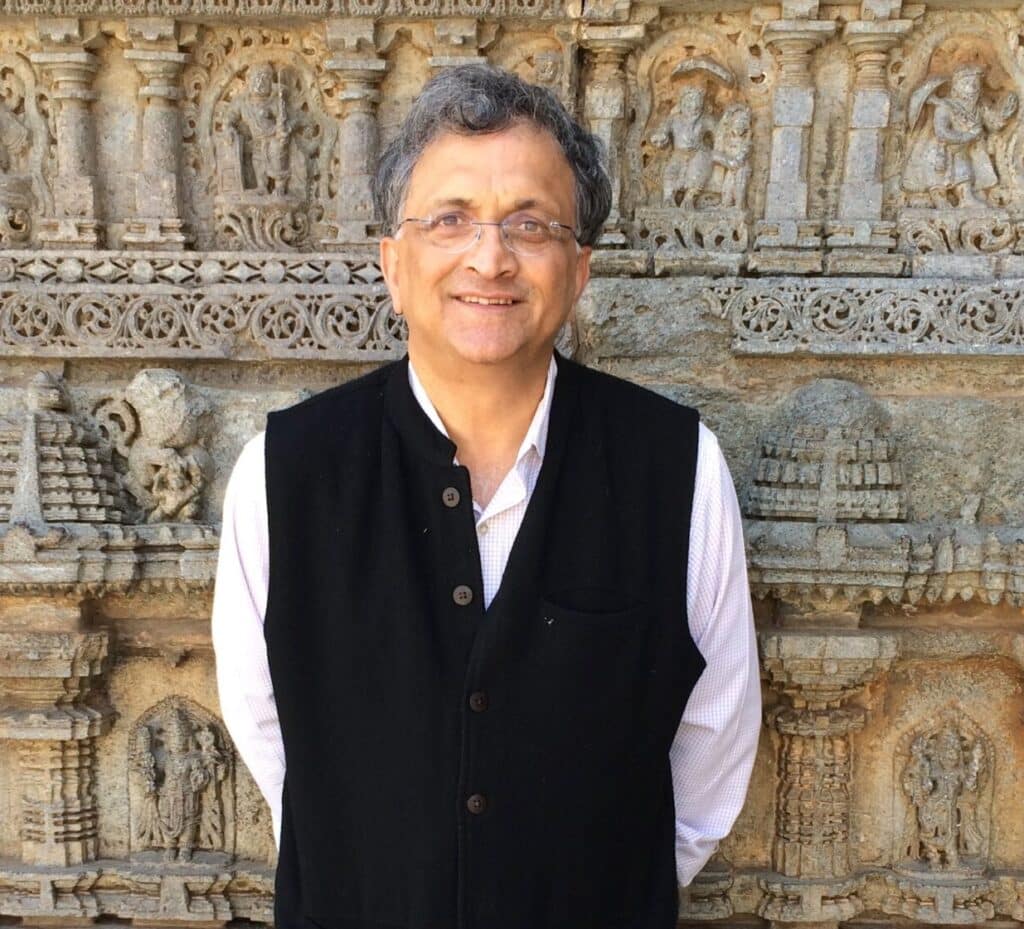
In an edition anchored on the theme of research and its critical role In the world of academics and the very act of learning itself, it only felt right to invite one of the most renowned historians in India and the globe to share his insights on the ‘history of research’ in the context of Indian universities. In an exclusive piece for The Krea Communique, Prof Ramachandra Guha navigates us through the history of research across natural sciences and the social sciences in one-hundred-and-sixty-five years since the first modern universities in India were founded. Prof Guha sheds light on how Indian universities have failed to perform as creditably as might have been expected but not everything is lost as the recent decades witnessed corrective steps taken by the public university system; and how a whole new generation of private universities will further and deepen this process. Prof Guha emphasises, “In the Indian context, the university must be conceived of as a theatre of intellectual innovation as well as of social emancipation”.
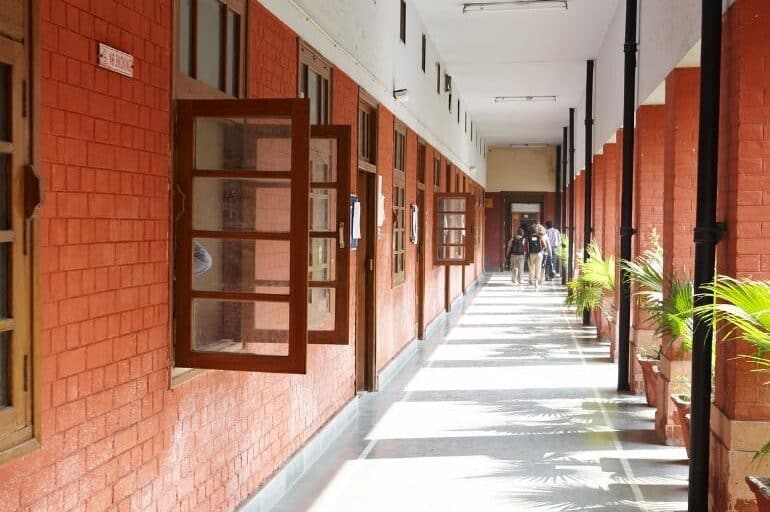
In the year 1857, the universities of Bombay, Calcutta, and Madras were founded. In subsequent decades, these were followed by the founding of the universities of Aligarh, Allahabad, Banaras, Osmania, Mysore, Punjab and Delhi. Although established by a colonial regime, these universities helped serve as a crucible of modernity in India. As the sociologist André Béteille has written, these founding universities ‘opened new horizons both intellectually and institutionally in a society that had stood still in a conservative and hierarchical mould for centuries’. Indeed, these universities, says Béteille, were ‘among the first open and secular institutions in a society that was governed largely by the rules of kinship, caste and religion’. Men and women, upper caste and lower caste, Hindu, Muslim, Christian, Sikh and Parsi, all met and mingled together as colleagues and peers, in a manner previously inconceivable in a segmented and stratified society.
These colonial-era universities were focused on teaching and the awarding of degrees, rather than on research. Nonetheless, some of the first great Indian scientists taught and did their pioneering research in these universities. They included the physicists C. V. Raman, Satyen Bose, K. S. Krishnan and Meghnad Saha, and the chemists T. R. Seshadri and K. Venkataraman. In colonial times, there were also some world-class humanities scholars working in Indian universities, such as the historians Radhakumud Mookerjee and Jadunath Sarkar, the economists Radhakamal Mukherjee and V. K. R. V. Rao, and the sociologists Radhakamal Mukherjee, G. S. Ghurye and Irawati Karve.
After Independence, however, the Government of India chose not to build on this legacy of university-based research. Rather, the state established a chain of laboratories under the rubric of the Council for Scientific and Industrial Research, which operated entirely outside the university system. In subsequent decades, some (but by no means all, and perhaps not even a majority) of these CSIR labs did good work in their designated fields. However, in retrospect perhaps the country would have been better served if scientific research had been more firmly located within the university system, as was the case for example in the United States. In the American system, research was strongly interwoven with teaching, while scholars in a particular scientific discipline always had the opportunity to interact with those in another scientific discipline. Working in the same university structure also encouraged scientists and humanists to understand one another and their work.
Through the 1950s and 1960s, Indian universities continued to produce first-rate scholarship in disciplines such as economics, sociology, and history. However, so far as the natural sciences were concerned, Indian universities were largely concerned with teaching alone. In later decades, some belated, and modest, attempts, were made to atone for these missteps. Thus Hyderabad University and Jawaharlal Nehru University, both founded in the 1970s, encouraged original research in the sciences as well as the social sciences. However, both these universities were funded by the Union Government; meanwhile, the overwhelming majority of Indian universities, run by State Governments, had little or no interest in scientific research.
What then of higher education in the private sector? This has thus far been dominated by engineering and medical colleges, run on commercial lines, and with no interest in research at all. Only in the last decade or so have we witnessed the founding of private universities offering a broader range of courses and disciplines, and with larger intellectual ambitions. I have in mind here institutions such as Ahmedabad University, Ashoka University, Azim Premji University, Jindal Global University, Krea University, and Shiv Nadar University. These universities all conceive of themselves as much more than teaching shops. They all hope to become centres of research as well.
It is now one-hundred-and-sixty-five years since the first modern universities in India were founded. As I have argued, they have opened up spaces where people previously segregated by caste, class, gender, language and religion could meet with one another as independent human beings. However, on the intellectual and especially research front the Indian university has not performed as creditably as might have been expected. This was partly the result of conscious government policy, which took scientific research out of the university system into self-enclosed laboratories shut off from society. Some corrective steps have been taken in recent decades in the public university system; and we may hope that the new generation of private universities shall further and deepen this process. In the Indian context, the university must be conceived of as a theatre of intellectual innovation as well as of social emancipation.
Padma Bhushan awardee Prof Ramachandra Guha Is a renowned historian, biographer and journalist. He Is also a Distinguished University Professor at Krea University.