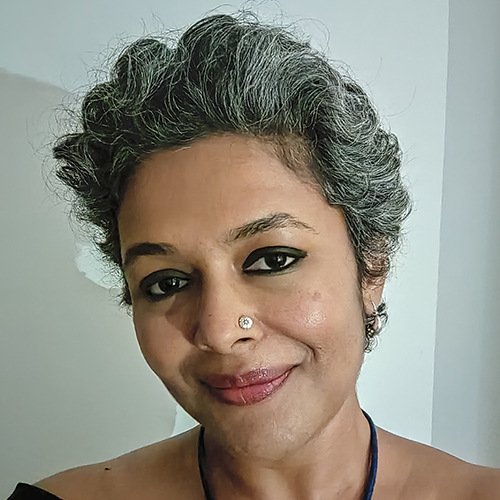
Dr Sayantan Mandal and Dr Rakesh Sengupta deliver special lectures at EFL University

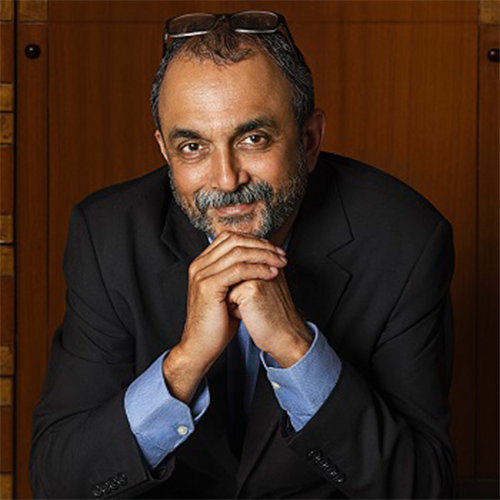
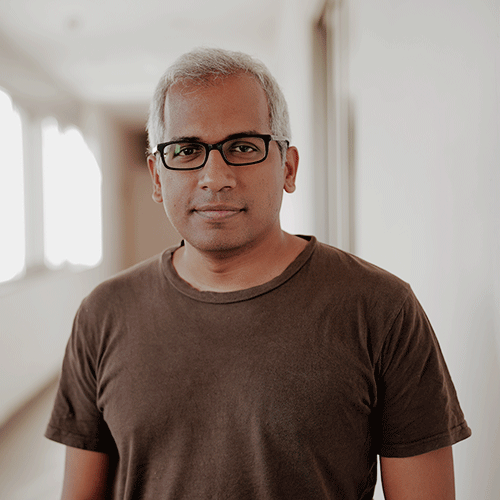
SIAS faculty members, Dr Sayantan Mandal, Assistant Professor, Psychology and Dr Rakesh Sengupta, Assistant Professor, Psychology were invited to deliver two special guest lectures representing Krea University at EFL University, Hyderabad. In addition to the talks, they had the opportunity to discuss the state of Cognitive Science in India and showcase the research being done here at Krea with the EFLU faculty and student body.

An investigative report co-authored by Sayantan Datta longlisted for prestigious One World Media Awards 2026

An investigative report co-authored by Sayantan Datta, Assistant Professor of Practice, Krea-CWP has been longlisted in the prestigious One World Media Awards 2026 (Print category). Last year, Sayantan and queerbeat staff reporter Ekta Sonawane investigated what happens to transgender people in India after their deaths. The duo’s investigation, which lasted for about six months, revealed the mechanisms through which transgender people are denied dignity in death. The report was published in queerbeat in October 2025 to wide critical acclaim. The report is titled A trans person’s struggle for dignity doesn’t stop even when they die.
Now, the report has been longlisted for the One World Media Awards 2026 in the Print category, becoming the only entry from India in the category. The UK-based One World Media Awards recognises the best media coverage from and about the global south. This year, the Awards received over 500 submissions from 140 countries.

Read Article

View Longlist

Krea-CWP faculty invited by University of Kashmir to conduct reading-writing workshop

Krea-CWP faculty members, Meghna Bohidar, Faculty Teaching Associate; Neha Mishra, Assistant Professor of Practice; and Sayantan Datta, Assistant Professor of Practice were invited by the Department of English, University of Kashmir, to conduct a week-long reading-writing workshop for their MA students and PhD scholars. The workshop was titled ‘Developing Communication Skills in the Age of AI’ and was held from 30 March to 3 April 2026.
About the Workshop
Especially now, in the age of AI, it is important for students to strengthen their abilities that will make their work distinctive and enjoyable. Addressing largely students of literature and the social sciences, this hands-on workshop invites you to read different types of texts attentively and to get into the nitty gritty of some essential aspects of research and its communication, both within academia and in the fields of publishing and journalism.

Dr Anannya Dasgupta delivers keynote at Azim Premji University symposium on student support in higher education

Dr Anannya Dasgupta, Director, Centre for Writing & Pedagogy and Associate Professor, Literature, SIAS, delivered the keynote address at the symposium Beyond Access: A Symposium on Reimagining Student Support in Indian Higher Education, organised by Azim Premji University, Bengaluru, on 27–28 March 2026. Her lecture was titled ‘Effective Writing Support in an Unequal Playing Field’.

Research article by Dr Tanmoy Chakrabarty published in Physical Review B

A research article by Dr Tanmoy Chakrabarty, Assistant Professor, Physics, SIAS titled CaFe2O(PO4)2: A compound with S=5/2 corner sharing triangular saw-tooth chains has been published in Physical Review B. In this publication, Dr Chakrabarty is one of the two corresponding authors.

Geometric frustration and one-dimensional magnetism boost quantum fluctuations and leads to unusual states of quantum matter. To explore these effects, we used solid state nuclear magnetic resonance (SSNMR), which is a strong local probe to extract the true spin susceptibility and the spin network of a magnetic system.

Here we studied the magnetic behaviour of a well-separated S = 5/2 saw-tooth spin chain compound CaFe2O(PO4)2, which has two different 31P sites in the unit cell. Magnetic susceptibility, heat capacity, and 31P NMR measurements show evidence of strong magnetic frustration (with a frustration parameter ≈ |θCW|/TN) about 70) in CFPO. The major finding of our work came from the NMR measurements which show a broad maximum near 70 K , reflecting the low-dimensional nature and presence of short-range correlations. It is important to note that such a broad maximum feature is not seen in the bulk χ(T) or in heat capacity. Further investigating this broad maximum feature, we conclude that CFPO represents an interesting realization of a frustrated S = 5/2 sawtooth spin-chain.


(a) local environment of P1 and P2 in CFPO.  (b) (T) vs. T at various magnetic fields. (c) Plot of T-dependence of the normalized 31P NMR spectra measured as a function of frequency

Read more

Krea faculty co-author research article published in the Journal of Data Science and Intelligent Systems

A research article titled Modeling Markers for Detection of Psychiatric Disorders Using EEG Signals has been co-authored by Dr Lakshman Varanasi, Assistant Professor, Biological Sciences, SIAS; Varun Viswanathan, Visiting Assistant Professor, Psychology, SIAS; Dr Debasish Mishra, Assistant Professor, Data Science and Information Systems, IFMR GSB; and Steven Chris, Teaching Fellow, Data Science and Information Systems, IFMR GSB. The paper has been published in the Journal of Data Science and Intelligent Systems.

Abstract

The diagnosis of mental (psychiatric) disorders is challenging, and there is a lack of consensus on objective diagnostic criteria that are based on definitive signs that accompany the disorder. There is a need, therefore, to develop objective tools for the examination of these disorders. We present here a novel machine learning (ML) approach that accurately identifies disorders. The approach uses electroencephalography (EEG) signals for diagnosis, which are processed to extract novel region based markers that are found to contain key information about the types of disorders. Subsequently, a support vector machine (SVM) classifier is modeled, integrated with sequential feature (marker) selection (SFS), which identifies optimal and compact marker subsets for disorder detection. The proposed system has been validated using a publicly available dataset. The developed model was benchmarked against existing models and was shown to perform superior to the models it was extensively compared with; it demonstrated a 98.33% accuracy in detecting obsessive-compulsive disorder (OCD). Our findings indicate that an accurate psychiatric diagnosis system can be achieved using EEG signals with significantly fewer, and more interpretable markers. This simpler and transparent approach improves the practicality and trustworthiness of AI/ML-driven diagnostic tools, making them more suitable for real-world clinical integration and understanding by medical professionals.

Read more

Dr Rakesh Sengupta’s paper published in the ACOIT 2025 proceedings

A paper by Dr Rakesh Sengupta, Assistant Professor, Psychology, SIAS, titled ‘Evaluating Continuous-Time Recurrent Neural Networks for State-Dependent EEG Forecasting’ has been published in the proceedings of the 2025 2nd Asian Conference on Intelligent Technologies (ACOIT).

About the Research
The paper explores how short-term brain activity (EEG signals) can be more accurately predicted using lightweight AI models. Such forecasting is critical for real-time neurotechnologies, including Brain-Computer Interfaces (BCIs) and neurofeedback systems. The study benchmarks a Continuous-Time Recurrent Neural Network (CTRNN) against both classical methods and complex deep learning models. It finds that even a compact, highly interpretable CTRNN can effectively capture the non-linear dynamics of human brain activity, offering a competitive alternative to “black-box” AI models in real-time BCI applications.

Read more

Dr Suchika Chopra Dr Sabah Siddiqui author an opinion piece in The Hindu

Dr Suchika Chopra, Assistant Professor, Economics, SIAS, and Dr Sabah Siddiqui, Assistant Professor, Psychology, SIAS, have authored an opinion piece in The Hindu titled ‘India must use the AYUSH opportunity’. The article argues that India should strategically scale AYUSH globally by leveraging policy momentum and trade opportunities, while strengthening scientific validation, regulation, and credibility for sustained global acceptance.

Read more

Read here

Dr Sayandeb Chowdhury presents paper and chairs session at international conference

Dr Sayandeb Chowdhury, Senior Assistant Professor, Literature, SIAS, participated in South Asia Literature, Culture & Politics, an international conference organised by Janki Devi Memorial College, University of Delhi, at the India International Centre on 17–18 March 2026. He presented a paper on propaganda cinema titled ‘Statecraft as Pulp Fiction’. He also served as a Chair for a session on Literary Culture, Translation, and Intellectual Practice.