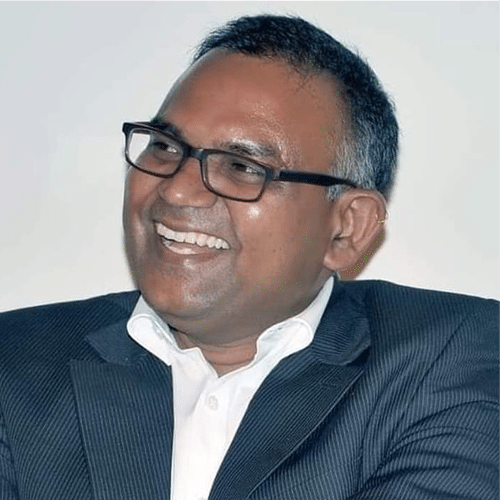
Professor Kai Easton presents Research Seminar at University of Pretoria

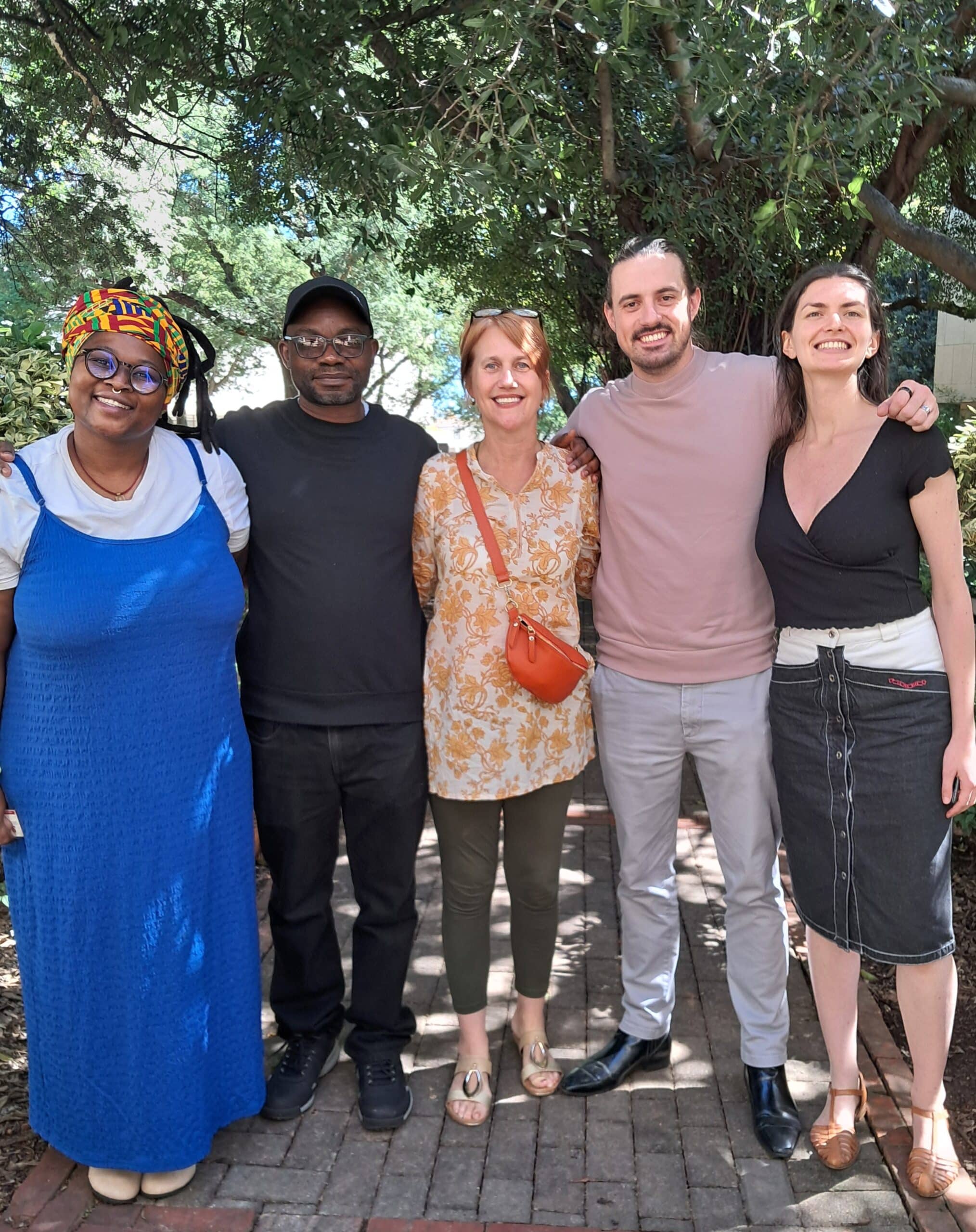
Professor Kai Easton, Professor, Literature & Visual Cultures, SIAS presented her research seminar ‘Scenes from the South’ on 10 April 2025 at the University of Pretoria, South Africa. Professor Easton has curated a travelling exhibition of the same name, focussing on J. M. Coetzee’s itineraries across continents.

Mabafokeng Hoeane (PhD Student at CAS, Centre for the Advancement of Scholarship); Isaac Ndlovu, Associate Professor of English; Kai Easton, Professor of Literature & Visual Cultures, SIAS; Jordan Stier, PhD student, Department of English and Eva Marik, PhD student, Department of English

Read more

Dr Sambaiah Gundimeda’s latest essay in the Frontline

An essay by Dr Sambaiah Gundimeda, Associate Professor, Politics, SIAS titled Ambedkar’s turn to Buddhism was not just rejection. It was revolution in the Frontline.

Read more

Summary of the essay

Conversion, a radical act of collective emancipation
Dr B.R. Ambedkar’s conversion to Buddhism in 1956 marked the culmination of a protracted and deliberate struggle against the caste system entrenched within Hinduism. His bold declaration at Yeola in 1935, to renounce Hinduism, represented a pivotal moment in both his political and spiritual odyssey. It stemmed from his growing realisation that Hinduism, built upon an immutable caste hierarchy, institutionalised social exclusion through its scriptures, rituals, and daily practices. For Dalits, it perpetuated a life of humiliation, subjugation, and indignity, offering no avenue for justice or true liberation.

Ambedkar firmly believed that religion should be a tool for individual empowerment, not a vehicle for oppression—a principle he found irreconcilable with Hinduism’s deeply entrenched caste structures. This harsh reality is evident even today, as illustrated by a recent incident in Tamil Nadu, where a Dalit youth was brutally attacked by caste Hindus merely for riding a Bullet motorcycle—an act seen as defying caste norms. Such incidents tragically confirm Ambedkar’s belief that Hinduism, inseparably tied to caste, is beyond reform and cannot deliver dignity or equality to Dalits.

In response to the systemic violence, subjugation, and humiliation inherent in Hinduism, Ambedkar called upon Dalits to embrace a new religious identity through conversion, viewing it as a path to genuine liberation. He found in Buddhism—with its core tenets of equality, compassion, and human dignity—a means for Dalits to reclaim their self-respect, freedom, and social recognition. For Ambedkar, conversion was not merely a spiritual act; it was a radical act of collective emancipation—a definitive break from a tradition that had long dehumanised and oppressed his people.

Yet, Ambedkar understood that conversion alone could not dismantle caste hierarchies, which persisted across religious boundaries. His vision remains profoundly relevant today, as the rise of anti-conversion laws not only threatens religious freedom but also entrenches caste-based oppression. Ambedkar’s unwavering demand for political power, economic justice, and legal protection continues to offer a critical framework for the ongoing struggle for Dalit liberation.
Dr Swarnamalya Ganesh speaks with Anuj Gurwara in his latest podcast

Dr Swarnamalya Ganesh, Assistant Professor of Practice and Discipline Coordinator – Global Arts, SIAS was a guest on one of the most recent episodes of the podcast, Speak with Anuj, hosted by Anuj Gurwara.

What if communication didn’t need words? In this conversation, Dr Ganesh joins Anuj as they explore how movement, breath, and stillness become tools of deep connection. They talk about the internal dialogues dancers navigate, the meditative nature of performance, and how vulnerability and empathy shape authentic communication – on stage and in life. From working with blind and deaf performers to navigating tradition in a modern world, Dr Ganesh shares stories that will change how you understand expression, silence, and presence. This episode is a masterclass in nonverbal communication, mindful performance, and the beauty of embracing imperfection.

View more

​Dr Chirag Dhara delivers a talk at IGIDR Mumbai

Dr Chirag Dhara, Assistant Professor, Environmental Studies, SIAS delivered a talk titled , ‘What levels of development can humanity sustainably aspire to?’ at Indira Gandhi Institute for Development Research (IGIDR) in Mumbai on 23 April 2025.

Abstract of the Talk :

What levels of development can the Global South sustainably aspire to? We argue that positioning Nordic countries as the leaders of “sustainable development”, as is often done, poses a serious dilemma: international adoption of their lifestyles risks severely breaching planetary biophysical limits, while non-adoption risks perpetuating developmental inequality. We introduce a revised conceptual framework for “sustainable development” emphasising scalability as a pivotal facet. Our results highlight Panama, Costa Rica, and Sri Lanka as having achieved high levels of social progress with low environmental pressures, representing a more realistic aspiration for the rest of humanity.

The talk was based on Dr Dhara’s recently published paper, co-authored with Dr Soumyajit Bhar, titled, A scalability-centric perspective on global human development within environmental limits.

Read more

Dr Sambaiah Gundimeda delivers a talk at Telangana University

​Dr Sambaiah Gundimeda, Associate Professor and Discipline Coordinator, Politics, SIAS was invited by Telangana University, Nizamabad, Telangana, to deliver a talk at a webinar held on 13 April 2025, marking the 134th birth anniversary of Dr B R Ambedkar. The webinar was titled “Relevance of Dr. B. R. Ambedkar’s Thoughts in the 21st Century.” In his address, ​Dr Gundimeda focused on three key aspects of reservations concerning the Dalit community: education, employment, and political representation. He argued that while reservations—particularly in education and employment—have contributed to the emergence of a small Dalit middle class, political reservations have largely failed to empower marginalised communities. Instead, he contended, they have led to the creation of what Kanshi Ram called “political slaves” or chamchas of the upper-caste leadership.

According to ​D​r Gundimeda, the voice of Dalits in caste- and religion-based political formations can only be meaningfully heard when Dalits have their own independent political entities. He also explored Ambedkar’s ideas on the annihilation of caste and religious conversion as means of social emancipation. ​Dr Gundimeda concluded by asserting that transforming India’s vertical social hierarchy into a horizontal one is possible only when the marginalised gain real political power.

Dr Dipanjali Deka presented a lecture-demonstration on ‘The Art of Dying – Songs and Dohas of Kabir and other Nirguni Poets’.

Dr Dipanjali Deka, Visiting Assistant Professor, Centre for Writing and Pedagogy presented a lecture-demonstration in Jindal Global University on 8 April 2025 titled ‘The Art of Dying – Songs and Dohas of Kabir and other Nirguni Poets’. In the presentation, Dr Deka examined the questions of orality, memory, fluidity and relevance in the living tradition of Kabir, through the themes of social and religious criticism, death and impermanence, non-duality and love in Kabir’s philosophy.

​Dr Chirag Dhara co-authors an article in 360info

An article co-authored by Dr Chirag Dhara, Assistant Professor, Environmental Studies and Dr Soumyajit Bhar, BML Munjal University, titled Why sustainable development ought to look more like Costa Rica, less like Norway has been recently published in 360info. The article deep dives into the question, “which countries have achieved decent living standards in a way that could be scaled worldwide without severely breaking planetary limits?”

Read more

Dr Sambaiah Gundimeda speaks as a panellist at NALSAR University of Law

Dr Sambaiah Gundimeda, Associate Professor, Politics, SIAS was invited to speak on the panel “Caste and Equality” at NALSAR University of Law, Hyderabad, during its annual conference on “The Courts and the Constitution”, held from 29-30 March 2025. Dr Gundimeda discussed a recent Supreme Court verdict on the sub-classification of Scheduled Caste reservations in Davinder Singh v State of Punjab, 2024.

Dr Gundimeda, in his discussion, critiqued Justice Bela Trivedi’s dissenting opinion, which asserts that Scheduled Castes (SCs) should be treated as a homogeneous group without internal divisions in reservations. He countered this by emphasising the diversity within SCs, the dominance of certain Dalit sub-castes in availing reservation benefits, and the structural inequalities that necessitate sub-classification.

He argued that true justice is not merely about treating all SCs as equals but about ensuring that the most marginalised within the category receive the support they need. Additionally, he addressed broader themes of structural injustice, representation, and systemic barriers that hinder equitable access to opportunities for the most disadvantaged SC sub-groups.

Dr Suchika Chopra presents at the 17th Annual Conference of the German Association of Health Economics at the University of Paderborn

Dr Suchika Chopra, Assistant Professor, Economics, SIAS presented her research paper, titled ‘Home and Community-Based Services: A Strategy to Decrease Nursing Home Use?’ at the 17th Annual Conference of the German Association of Health Economics at the University of Paderborn on 25 March 2025. The paper explores the impact of Home and Community-Based Services (HCBS) on nursing home utilisation by looking at county-level changes in HCBS establishments and their employees.

Decoding India’s landmark climate ruling

Abhayraj Naik, Visiting Associate Professor of Practice, Environmental Studies, SIAS, recently co-authored an analysis essay with Parul Kumar, PhD candidate, KU Leuven and Deputy Executive Director, EPICO KlimaInnovation titled Endangered Birds, Renewable Energy, and India’s New Constitutional Climate Right, published in the Journal of Environmental Law (Oxford University Press). This essay examines India’s first major climate litigation ruling — the Supreme Court’s 2024 judgment in M.K. Ranjitsinh and Others v. Union of India and Others.

Read more