Rahul Bose and Three Lessons from Cinema, Service and Sports

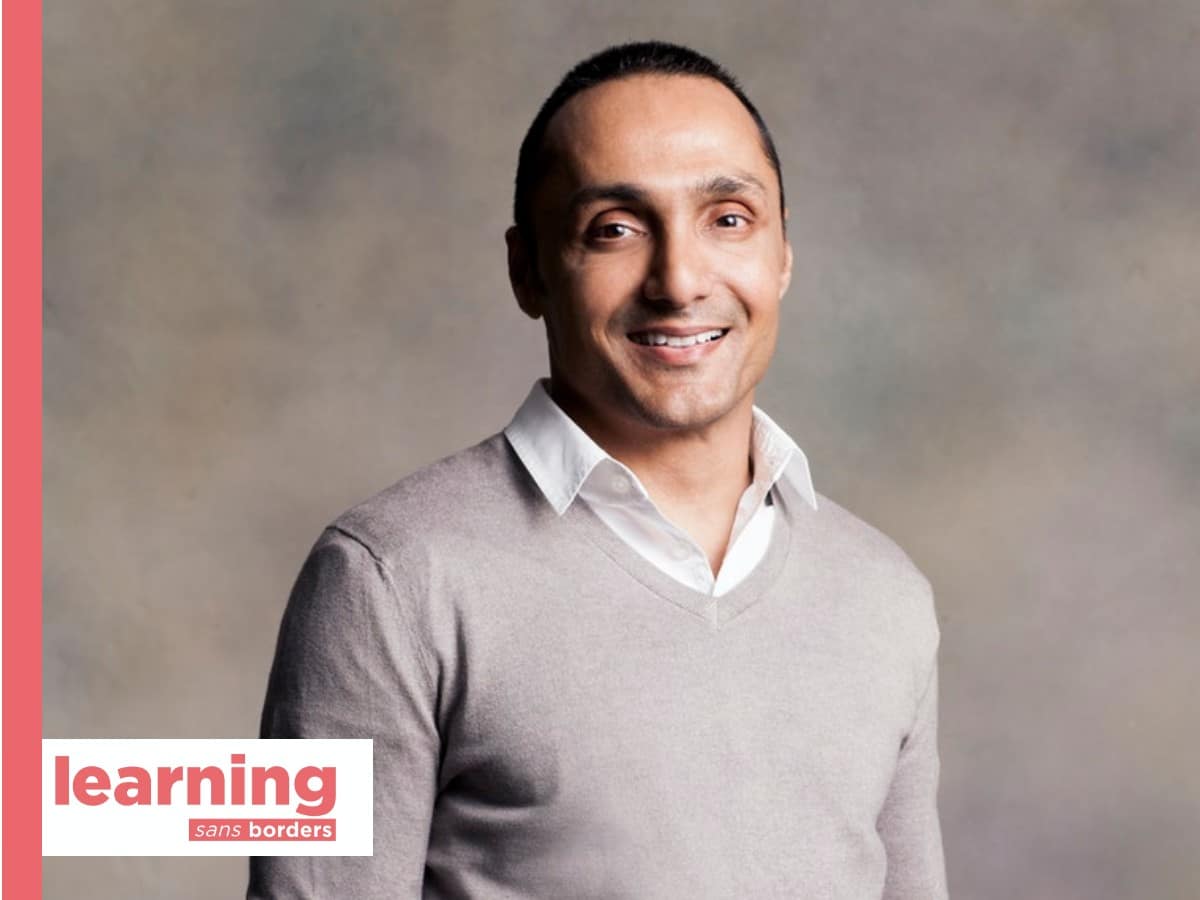
May 5, 2020:…In an evening punctuated with inspiring anecdotes, actor, sportsman and active citizen, Rahul Bose engaged with the students at Krea and imparted lessons from his life in cinema, sports and service.

The evening started with reflections from a long summer day swathed in dust, shooting in Narsipatnam, a small town in Andhra Pradesh. Through the next one-hour, Rahul Bose took the students through three thought provoking episodes from his life across movies, rugby and social service.

Bose navigated the audience through raw and honest experiences that traversed over decades of his multi-dimensional life. From his debut days in cinema, his extensive work in the social sector or his impressive long sting in the international rugby scene, each leg of life came laced with profound learnings.

“When everyone is doubting you, rely on your instincts, that’s the best chance you have or walk away with your head held high, hit or miss.” Speaking of experiences from cinema, he encouraged students to trust their gut instincts, especially when the situation feels daunting.

His second lesson took us through his work in the social sector at the frontlines, where he stressed the need for young adults to follow the rules if they are humane but protest against them if they are misused or turn discriminatory.

Reminiscing his last few years as a rugby player, Bose spoke about the need to answer failure by coming back better. “There will be times when you are treated unfairly and overlooked, you have to become so good that the next time, it’s impossible for them to overlook you.”

In answer to curious questions about his choices in life, he asked students to choose what they love and not what’s popular. Emphasising on choosing desire over ambition, he spoke on how that can turn life into an absolute joy.

Having been moved by the student movements in the past, he expressed the need for them to dismantle feudalism, work towards gender equality and be more resilient to failure. Speaking of coping with the present epidemiological crisis, he added, “In life whenever something happens, accept and prepare for the worst-case scenario. Anything that happens less, will be an absolute bonus.”

Apart from being an artist par excellence, Rahul Bose has represented India as an international rugby player for eleven years. Rahul also runs two NGOs, ‘The Foundation’ – dedicated to the equalisation of opportunity through the education of children and HEAL – dedicated to the prevention of child sexual abuse.

DEF- Linking Remote India with Opportunities, Digitally

21 April, 2020:…In an inspiring interaction with Krea students, Osama Manzar shared his experiences of working on the frontlines of COVID-19.

With 10000 foot soldiers spread across 130 districts in 25 states, Digital Empowerment Foundation’s (DEF) on-going Covid-19 Digital Emergency Relief Programme uses digital connectivity and assets to link people in the most rural parts of India with opportunities in the new reality.

Osama Manzar, Founder- Director, DEF brought out the top down disparity in understanding ‘digital’. While the metropolitans are densely connected, DEF works at connecting last mile communities. He added that as urban India speaks of misinformation, privacy and safety security issues pertaining to digital, it’s a critical component in most remote areas of India aiding in education, better access to health, skills and livelihood. The organization also collects data from the ground to facilitate research, policy making and advocacy.

Commenting on the existing crisis, Osama explained how DEF volunteers have adapted to the situation in making it enterprisingly relevant, planning for new opportunities and challenges. They are structured as entrepreneurs and not paid employees of DEF and trained to use the digital assets for connectivity. This in turn has shaped their risk-taking skills. Using digital power intelligently, they have been conducting imperative activities, some as simple as delivering money from banks to houses during the lockdown.

Citing the example of a migrant worker who walked from Delhi to Bundelkhand and was stranded in a jungle, wanting not food but mobile talk time to stay connected with his family, Osama explains, “Value of connectivity and digital assets is not in its globalization, it is in localization.” It’s about how it allows one to connect in a local, geographical and linguist peer group, allowing efficient communication. He also spoke about the importance of local infrastructure and supply chain amid the restricted situations of the now.

He emphasised the need for education to hone leadership qualities, and critical thinking.

Click here to watch the full session

Modelling an Evolving Pandemic – Dr. Gautam Menon Speaks

April 11, 2020:…Dr. Gautam Menon interacted with the Krea Community to help comprehend the obscurities of COVID-19 through disease modelling.

“All of us model all the time with what lies around. We attempt predicting situations through mental perspectives. These are mental models.”

Dr. Gautam Menon kick-started an evening which simplified the complexities that surround modelling of infectious diseases. As he navigated through the interaction, he explained the art and science of disease modelling.

Addressing the students, faculty and staff at Krea University, Dr. Menon spoke as a part of VENI- The Ideas Place’s ‘Where Critical Thinking Meets Creativity’ series. The session was hosted by Dr. Akhila Ramnarayan, Divisional Chair of Literature and Arts at Krea and curator of programming at VENI and moderated by Dr.Anand Sahasranaman, Assistant Professor of Mathematics, Division of Sciences, Krea University.

Dr. Menon is currently Professor of Physics and Biology at Ashoka University and Adjunct Professor at Tata Institute of Fundamental Research. He is on leave from the Institute of Mathematical Sciences, Chennai, where he is a Professor in its Theoretical Physics and Computational Biology groups.

Dr. Menon began by introducing us to his work on mathematically modelling infectious diseases, and spoke about how the modelling perspective is enriched at the intersection of disciplines. He recounted his experience in physics and his journey into biology, which he termed would be the science of the 21st century. He stressed on the importance of models in bridging the gap between problems and effective policies. On epidemic models, he held that they helped predict the likely path of an epidemic and hence enabled preparation for any upcoming crisis.

Taking us through an entire gamut of terms and simplifying it for the audience, Dr. Menon explained how what we think of diseases has changed over the years. He then introduced the SIR model originated by Kermack and McKendrick in the 1920s, explaining how the model divides the population into three compartments- Susceptible, Infected and Recovered. Tracing the evolution of the model, he spoke of varied versions of the model guided by the same essential principles, and their usage over time to ask different sets of questions, as is the case with COVID-19. Dr. Menon said that every successive model builds on a previous model and that there were dynamic changes in response to information from the ground, and hence the need for constant recalibration. On being asked about the impact of SIR type models in actually predicting the evolution of a disease, he cited the example of the use of the model in the UK during the Foot and Mouth Disease outbreak, where it helped control the extent of damage. He also introduced the Basic Reproduction Number (R0), which is simply the expected number of infections caused by a single case in a population, and a critical parameter used to understand the spread of diseases.

Reflecting on the old story of the sage who asked the king to give him one grain of rice on the first square of a chessboard, and then double the quantity in every square till all squares were exhausted, he explained the nature of exponential rise in numbers in an infectious disease. COVID-19, with its easy transmissibility even from asymptomatic cases, was proving to be a classic case of exponential growth.

When the discussion turned to the question of data, Dr. Menon said, “Models are only as useful as the data you put into them”, and stressed the need for accurate numbers from the authorities. He discussed the need for testing, identification, isolation, concentration on hotspots, and need for robust healthcare systems in the context of flattening the curve in India, and emphasised that while the current lockdown is important, it is optimally useful when backed with resourceful testing.

Click here to watch the full session

Global Financial Crisis from the Frontline – with Abhinav Ramnarayan, Reuters, London

April 04, 2020:…Abhinav Ramnarayan interacts with the students and faculty on the challenge of financial reportage in times of global crisis.

VENI – The Ideas Place at Krea University launched its first digital edition for the students of SIAS (School of Interwoven Arts and Sciences) and IFMR GSB (Graduate School of Business) as part of the talk series “Where Creativity meets Critical Thinking.”

In a session titled ‘Now and Then,’ London-based Abhinav Ramnarayan, Capital Markets Correspondent, Reuters, talked to Krea students and faculty about the similarities and disparities between the global financial crisis of 2008 and the crisis induced by the Covid-19 outbreak on capital markets today.

Abhinav recalled his rookie days as a financial journalist in the UK, how he joined The Guardian a day after the collapse of Lehman Brothers in 2008. Twelve years later, he is no stranger to capital markets and the British banking sector. Governments and policy makers in Europe have been quick to react today to the Covid crisis, but that wasn’t the case in 2008, he said.

Abhinav also provided an in-depth commentary on the existing economic landscape, Italian government bonds, the woes of the healthcare sector in the midst of the pandemic, the future of the EU, Brexit and India’s response to the crisis. He spoke of surprises afforded by an unpredictable stock market, pet care industry stocks, for instance, soaring like never before.

On a more sobering note, he said, “In a sense, the world has changed forever. There is an emotional toll to reporting today, more so than in 2008. People are dying.” He himself is learning how to cope. “Take a break during the day and read that book. Listen to music as you go to grab a sandwich for lunch. Switching off for a while makes a huge difference.”

Abhinav identified his own style of lifelong learning through various streams of knowledge, something he said resonates with Krea University’s model of interwoven learning. He explained how a love of reading during his early days in literary studies has stood him in good stead as a finance journalist specialising in a niche area today. Abhinav emphasised having a nose for a story – implying both the power and depth of effective storytelling and the need for stories to translate to a wider audience. Even an article on corporate bonds must be carefully researched and constructed as a narrative with a beginning, middle and end, he said.

Coming back to the post-Covid present, Abhinav offered some hope despite an unpredictable future and the possibility of a “W” shaped recovery. “The underlying systems are strong and so recovery may be faster as compared to 2008. Business as usual may be tough, but I can see that the world is moving towards being more environmentally conscious.”

The session was hosted by Dr. Akhila Ramnarayan, Divisional Chair of Literature and Arts at Krea and curator of programming at VENI, and moderated by Dr. Kalyan Chakrabarti, Assistant Professor of Biological Sciences and Chemistry.

With its first digital edition, VENI- The Ideas Place is re-imagining the confluence of different knowledge streams, opening up a new chapter of global commentary with voices spanning the globe.

Click here to watch the full session
A Narrative of Repair, Reforms and Resilience – Dr. Raghuram Rajan on Lives Beyond COVID-19

April 08, 2020:…We witnessed one of the most important narratives of the new reality, as Dr.Raghuram Rajan interacted with the Krea community on the world beyond COVID-19.

What lies in the future? Where do we go from here? What are the numerous possible scenarios? Are these the right questions to ask?

Guiding us as we sought these answers, Dr.Raghuram Rajan addressed the students, faculty and staff at Krea University on the unprecedented challenge of COVID-19 combined with the task that lies ahead. The narrative traversed over the role of an individual, nation and the entire world in confronting the crisis.

Speaking to the Krea community who have been away from the campus since the lockdown yet actively adapting to the new expressions in learning, Dr.Rajan spoke about the importance of lockdown, it’s effect on bending the curve, need for ramping up the healthcare systems and urgency to test, track and quarantine.

Tracing the segmented journey of the virus from disrupting China, its movement into industrial economies, and into emerging markets, Dr. Rajan firmly called upon the need to place collective societal incentives over individual suffering. He stressed on the need for countries to stand together and help each other, repairing globalization.

When asked about India’s response in the wider economic context, Dr. Rajan recommended, “Prioritize and focus on the poor and needy.”

He suggested targeting resources to aid viable MSMEs while also supporting sustenance of larger firms in turn preventing possible mass unemployment in the near future. Observing the needs for major economic reforms in the country, debt targets and fiscal councils being among them, Dr. Rajan emphasised, “We should spend to keep people safe, on necessary healthcare and shrink unnecessary expenditure while putting in place stronger systems.”

Responding to a curious student’s query on whether life in higher education would ever return to normal, Dr.Rajan expressed, that though human interaction is immensely valuable, these times have helped us re-imagine education beyond the walls of the classrooms. He felt that the new modules have brought into action the fabled ‘inversion of classroom’, flipping the design of conventional learning. While traditional education encourages classroom lectures and promotes assignments to be done at home. Here, the knowledge lessons have moved to homes where students can learn at their own pace and prep themselves. This assists them in going back to the classrooms and practicing the concepts with a deeper understanding, through debates and discussions.

Speaking to hundreds of students logged in from across geographies, Dr. Rajan concluded with this remark in optimism. “We have been able to adapt to what the world has thrown at us. Let’s count our blessings and once we get back, cherish and rebuild friendships and also learn how great University life is.”

WEAVENINGS at Krea- Building the Ethos of Community in the ‘New Now’

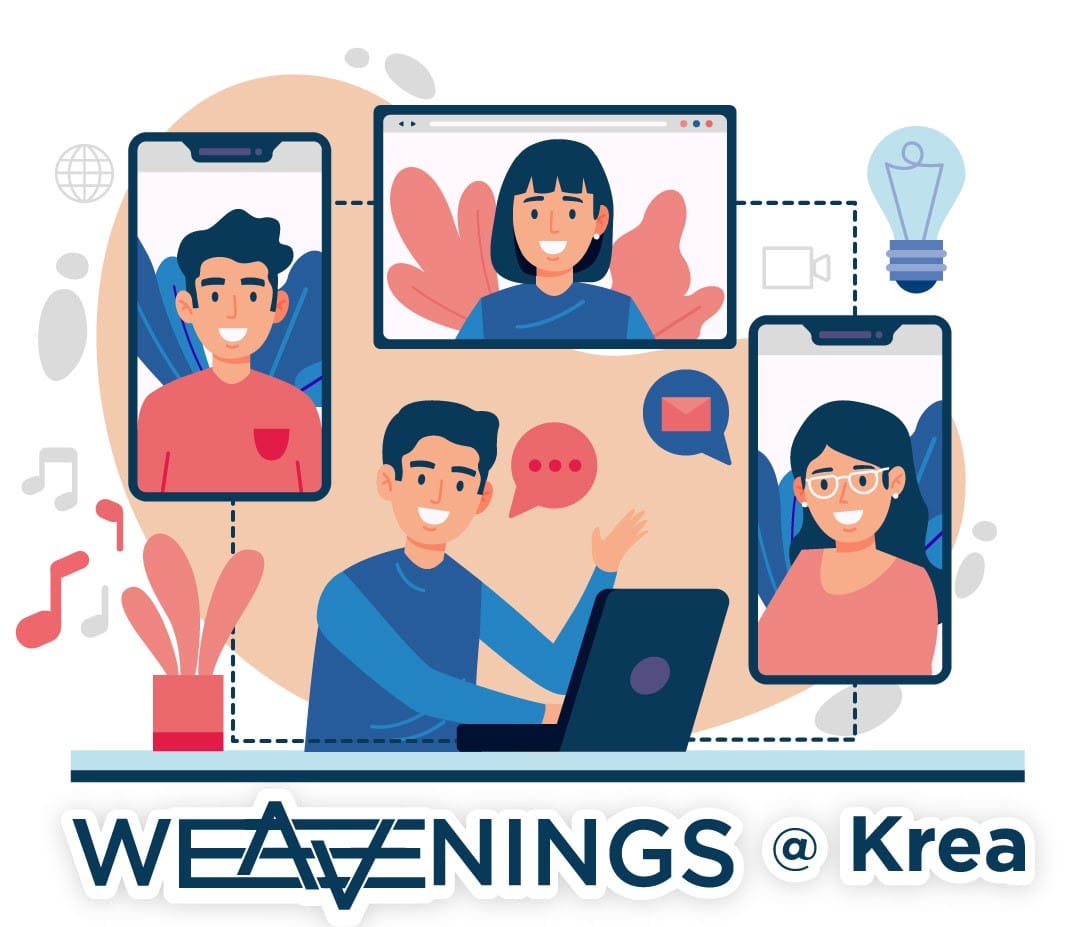
April 03, 2020:…In what will be the first of many, the Krea family had a virtual evening of engagement and thoughts titled – Weavenings.

“I wish it need not have happened in my time,” said Frodo. “So do I,” said Gandalf, “and so do all who live to see such times. But that is not for them to decide. All we have to decide is what to do with the time that is given to us.”

– J.R.R. Tolkien – The Fellowship of the Ring

Dr Akhila Ramnarayan, Divisional Chair of Literature and Arts at Krea, channelled her inner Frodo and ushered in buoyancy into the first session of Weavenings at Krea University. Times are unpredictable, but dialogue and sharing brings hope and optimism no matter what lies ahead. The evening saw immersive discussion, suggestions, learnings and even a mention of Sherlock Holmes! Even as the Krea community misses intense ideation, tea break conversations and healthy battles of wits afforded by face-to-face interaction in the physical realm, ‘Weavenings’ aims to bring us back together, albeit virtually. This effort was orchestrated by the Communications team at Krea, who will present fortnightly editions of Weavenings, knitting together various strands of the Krea fabric.

Dr. Sunder Ramaswamy, Vice-Chancellor, Krea University, introduced the session, remarking that when stepping into unpredictable times, a sense of community is paramount.

Punctuated with camaraderie, the ensuing discussion between Dr. Ramnarayan and Dr. John Mathew, Associate Professor of History of Science, Humanities & Social Sciences and Sciences, Krea University, explored how conversation can create community. Dr. Mathew took the audience, who signed in from various parts of the country, through episodes of historical crisis, connecting them to the pandemic wave of today.

“How do we react in times of uncertainty?” With this question, Dr. Mathew introduced the anthology Empires of Panic: Epidemics and Colonial Anxieties (edited by Robert Peckham, 2015) and discussed the origin of the Epidemic Act. Using historical instances such as the Spanish Flu and the Mumbai plague, Dr. Mathew offered clarity of perspective on the present pandemic and public reactions to it. Albert Camus’s modern-day classic The Plague (1947) has never seemed more relevant, he said.

“We have to invoke an expression of gratitude here. Our minds have been opened up to conversations we wouldn’t even have dreamt of having three months prior,” Dr. Mathew said.

Quoting the Tolkien passage above, Dr. Ramnarayan added,” Many things may divide us. But we should welcome differences, as they reflect how diverse we are. We need to find stories that bring us together at this time as we embrace our diversity. “Dr. Ramnarayan finished with a rendition of “I Sing of Change,” a poem of hope and resilience by Nigerian poet Niyi Osundare.

Prof. Anil Srinivasan, renowned classical pianist and Associate Professor of Practice at Krea University brought the virtual curtains down with rhythm and USA for Africa’s ‘We Are the World’ on his piano. The audience hummed and sang along knowing that even a dark tomorrow calls for hope, strength and esprit de corps.

Krea University launches ‘VENI – The Ideas Place’ in Chennai

Chennai, February 2, 2020:…Krea University launched its new initiative ‘VENI- The Ideas Place’ in Chennai.

VENI (which stands for Visualise Explore Nurture Interweave) will be a platform to stage discussions, dialogue and debate relevant to academia, industry and community, aimed towards sustainable impactful solutions for the future.

The launch event on 01 February 2020, titled “Interweaving Ideas: Where Creativity Meets Critical Thinking”, had three distinguished speakers — legal practitioner Arundhati Katju, economist Reuben Abraham and arts performer Jacob Boehme.

In her address on ‘

“Students, Freedom and the Constitution,” Arundhati Katju, who litigated the Section 377 case at the Supreme Court and the Delhi High Court, said that people can have multiple identities but everyone must be given full and equal citizenship rights. “The future of the Constitution is in the hands of India’s youth, who constitute 65% of the population.”

Reuben Abraham, CEO of IDFC Institute, a policy think tank, in his talk on “India Lives in Her Cities,” called into question “rural” and “urban” definitional categories.

“We think that we must take jobs to our people, but it is better to take people to jobs, and the jobs are available more in cities. If you take Maharastra, its GDP is about USD 500 billion but its capital Mumbai alone accounts for more than half of its GDP. New York alone is a USD 1.5 trillion economy. Tokyo’s economy is bigger than countries like Canada, Turkey, Iran. Around 70% of the world’s GDP comes just from 40 urban centres,” he pointed out.

Taking part in the interactive session, Jacob Boehme, an aboriginal artist, and activist from South Australia, spoke about “Arts and Activism in the 21st Century. “He said that the voice of aboriginals in mainstream discussions on social issues is still feeble and that puts them in a disadvantageous position.”

The event was attended by students, academia and members from the industry.

Dr Akhila Ramnarayan, Divisional Chair of Literature and Arts at Krea and curator of programming for Krea’s Chennai venue, articulated the vision of VENI, a meeting place for researchers, students, educators, practitioners, and industry professionals in which diverse strands of thinking interweave to generate impactful solutions and action. She shared the upcoming public events calendar of VENI, including talks, workshops, panels, film screenings, a book club, and conversation sessions.

The launch of VENI – The Ideas Place is a key initiative by Krea central to our interwoven learning approach, providing Krea faculty and students a means by which to interface with Chennai’s diverse constituencies”, she said.

Explaining the concept of interwoven learning at Krea, Dr. Sunder Ramaswamy, ViceChancellor, Krea University, said, “it is an approach that weaves together creativity and action, arts and sciences, theory and practice, Eastern and Western perspectives as also the learnings of the past with the readiness for the future.

“At Krea University, interwoven learning is beyond an academic concept. The theories are strongly internalised by immersive learning experiences of real-world projects. We bring together the arts with the sciences, we believe that even if you want to be a poet, you need to learn data science. Likewise, if you want to be a computer scientist, you still need to understand humanities from the point of view of aesthetics and art, and events like these give our students that exposure to this thought process” he said.

Krea University partners with Kauvery Hospital for campus health facilities

Krea University has inked a significant partnership with Kauvery Hospital, a reputed name in healthcare, to operate and maintain a health centre and pharmacy at Krea University campus in Sri City. The partnership also brings with it a bouquet of specialised health services, in line with the University’s focus on providing high quality support for the health and wellbeing of Krea students, faculty and staff.

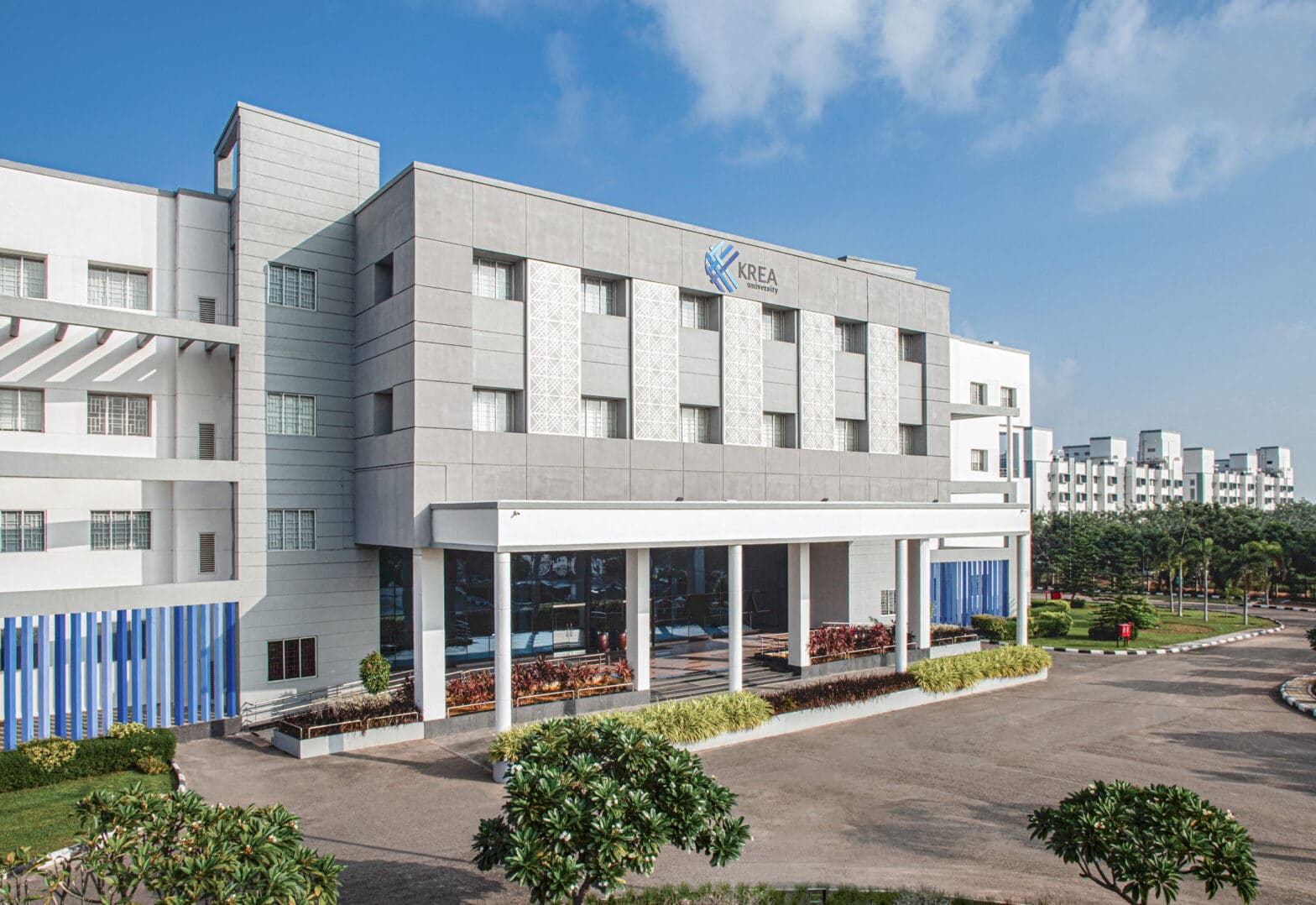
Krea University was set up with an aim to re-imagine education for the 21st century. The 40-acre campus stands about 60 kilometres north of Chennai in Sri City, Andhra Pradesh and is replete with state-of-the-art facilities, with special emphasis on the physical and mental health requirements of the students, faculty and staff.

“Krea University is proud to ink collaboration with Kauvery Hospital to provide 24 x 7 healthcare services for our Sri City campus to serve the needs of all our community members. Kauvery Hospital is a trusted and leading 1300 bed multispeciality hospital and well known in the healthcare sector for its ethical practices. Through this partnership we look forward to providing continuous and quality medical support to all Krea students and staff”, said Group Capt. Puthan Ramesh – Chief Administrative Officer of Krea University Campus.

The Krea campus health centre, managed by Kauvery Hospital will have a dedicated general practitioner and occupational health nurses on duty, with the doctor available over call 24×7, ensuring that all medical requests and emergencies are swiftly dealt with. The health centre will also have a BLS ambulance with round the clock service availability and routine first aid facilities. The onsite pharmacy will cater to the needs of the campus residents with well stocked inventory. Apart from dedicated case basis support and follow ups, there will also be routine check-ups and health promotion activities. From time to time, healthcare specialists will also be arranged to make campus visits.

The partnership also brings forth holistic healthcare management which could include Continuous Medical Education on a monthly basis, rendering professional advice to the campus administration in safety and hygiene practices- from maintenance of buildings, kitchen area, food and water testing to student dietary chart. Advise on COVID management protocols will also be contributed. The students and members of the staff at Krea shall be entitled to avail treatment for any diseases at any of the Kauvery Hospitals in Tamil Nadu including treatment for COVID-19.

Kauvery will also join forces with Krea University through the extension of its community campaigns.

Coronavirus and its Impact on the Economy: exploring threats and opportunities

Coronavirus and its Impact on the Economy: exploring threats and opportunities

Madhuri Saripalle, Associate Professor, Graduate School of Business, IFMR, Sricity.

The world economy is facing one of its worst crises since a century. Economies across the globe are seeing a sharp contraction in growth caused by the economic lockdown to control the spread of the virus. This has led to a supply shock, reduction in output, employment and consequently, demand. The Indian economy was already facing serious structural issues and facing a downturn, which probably have receded to the background with the more serious threat of the pandemic at hand. Two important questions are: a) when will the economy restart and what will be the sectoral response; b) what policy measures can speed up the recovery process? It is also a time to reset the economy by creating skills and improving productivity through innovation.

To address the first question, as economies restart, there will be varied response across various sectors. For example, industries such as essential goods and services such as drugs and pharmaceuticals, essential health and financial services such as insurance, production of essential foods such as pulses, etc, will see rapid growth, while industries and services which are based on discretionary spend like restaurants, entertainment, tourism will be hard hit. More detailed analysis can be read here and here. The impact of economic slowdown is widespread because almost every sector is dependent on trade and global supply chains. The pandemic is a double whammy on an already existing slowdown in the economy, which is a an area of much more serious concern.

In this article I will analyse the structural imbalances in our trade sector which have got further amplified with the pandemic and explore how these can be addressed.

Lack of diversity in Trade basket-opportunity or threat?

In our trade basket, if we exclude textiles, the exports and imports are concentrated in just a few products. The top 5 commodities constitute 60-70 percent of total exports and imports in India (table 1). It is time to create comparative advantage in labour intensive sectors such as leather, sports goods, automotive ancillaries to increase employment. The pandemic has given us an opportunity wherein supply chains will be re-routed from the manufacturing engine of the world-China to India so that we can prepare ourselves to skill our young workforce and increase productivity in export-oriented sectors.

Table 1: Diversity in Trade basket in India

S.no.Commodities% Share in Exports% Share in Imports
1Mineral Fuels, Oils and Products1432
2Gems and Jewelry1212
3Textiles101.4
4Electrical Machinery and Equipment511
5Nuclear Reactors, Boilers and parts79
6Organic Chemicals64
7Vehicles other than railway or tramway51.1
8Pharmaceutical Products50.5
 Total6371
 Source: EXIM database. Ministry of commerce, GOI

Decline in trade from November 2019: when will green shoots emerge?

The decline in exports and imports started from November 2019 onwards when sectors such as jewellery, textiles, ores and minerals registered fall in exports. Important sectors such as oil, coal, iron and steel, transport equipment and electronic goods declined as well reflecting decreased economic activity. During January-March 2020, with the exception of ore exports and transport equipment imports (mostly railway and locomotives, boats and floating structures), there has been a widespread decline in trade due to supply chain disruptions. As countries emerge from lockdown, there will be revival in economic activity and there should be enough policy measures both on the supply as well as demand side simultaneously for a balanced pick-up in economic activity.

The Call to Adventure

Call to adventure

The blog is written by Sameer Abraham Thomas. The Author is a Faculty Associate, Centre for Writing & Pedagogy at Krea University.

21 July 2020: I got up earlier than usual today. The sound of rain woke me up at half past six in the morning – or perhaps it was the cessation of the sound; my father told me it had started raining earlier and had abated a little by 6:30.

Waking up in the dark, some pale light shining through the one window in my room, I listened to the soft drumming of raindrops on some roof somewhere, possibly ours, as if it were an alarm, rousing me from my slumber and calling me to adventure.

It seems to me as I write this that every morning is a call to adventure in some ways. What is it that gets us out of our beds? An alarm, perhaps – some sudden sound; or perhaps the cessation or change of some white noise that had lulled us to sleep at night, or that had slipped seamlessly into our ears at some point after we had nodded off and only just now felt the impetus to leave.

Sometimes, we wake up because someone is calling us, and the reason they want us awake and not asleep is our call to adventure. Sometimes we ignore the call and stay in bed. Adventure calls to minds that are not ready to hearken to that call. They are not yet ready. But one day…

I remember long periods of time when my mind wasn’t ready. It was either too busy making itself anxious or curling up in a defensive ball, paralyzing me to protect me from the dangers posed by any and every adventure, no matter how small. Those were not happy days, but maybe they were necessary at the time. Shields do protect us, but they wear down over time, unless withdrawn to make way for a sudden spear. And a worn-out shield can protect you no more than can a mind, tired of defending itself against itself.

The shield falls and then there is nothing left to insulate ourselves from the call, but now we are too exhausted from the battering of our shields to be able to respond. We lie in bed and listen to the call resound like some song at a festival we know we might love but which we are terrified of losing ourselves in. It takes time and courage to realize that perhaps joy lies in letting ourselves get lost; the challenge of facing the unknown, the challenge of choosing the right path, the challenge of fighting the world and not ourselves, and then the challenge of finding our way home – perhaps it was this that our minds were preparing themselves for all along. It took time, but finally they were ready, and then they fell before us, the clang of the fallen shield beginning yet another call to adventure as the spear finally finds itself in our hands. The call to adventure – we didn’t recognize it then. But, if we persist… today, we might.