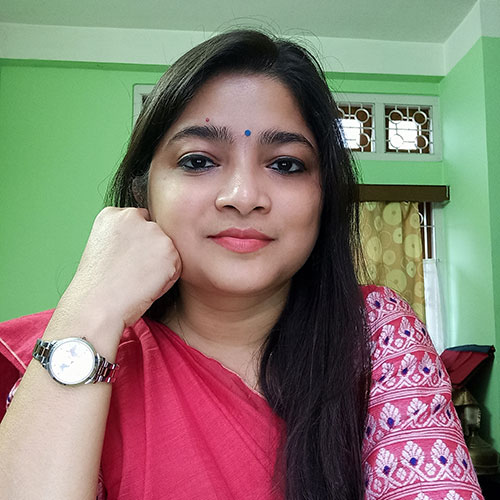
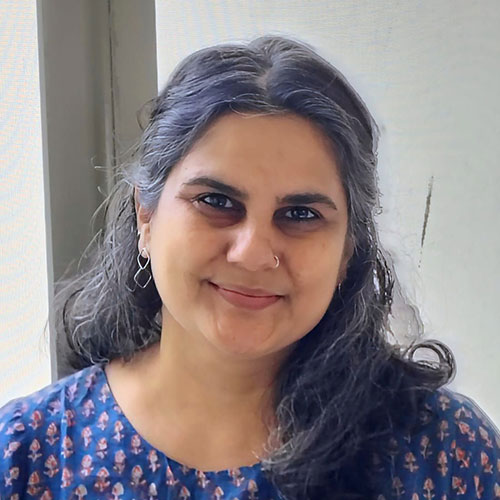
Dr Sharin Shajahan (Naomi), Post-Doctoral Fellow, SIAS, has published an article titled Artificial Intelligence and Anti-Feminist Backlash in Oxford Intersections: AI in Society. The article offers a conceptual understanding of the relationship between AI and anti-feminist backlash, drawing on a feminist approach to technology.
A project by Dr Lakshmi Narayanan, Assistant Professor, Environmental Studies, SIAS has been approved under the prestigious ISRO RESPOND programme. The project proposal is titled ‘Large and small-scale ionospheric plasma irregularities using airglow imaging and GNSS TEC measurements’.This will be a two year project in collaboration with Physical Research Laboratory, Ahmedabad. The support is approximately Rs. 28,00,000/- and manpower at the level of Project Associate. In this project Dr Narayanan will develop a low cost instrument to study oxygen airglow at 630 nm wavelength emanating from 200 – 300 km above the surface of the earth. He will also develop software to efficiently analyse the voluminous datasets involving machine learning and artificial intelligence algorithms.
Dr Lakshmi Narayanan, Assistant Professor, Environmental Studies, SIAS has been awarded the Krea Research Fellowship 2025-26 for a project entitled ‘Multi-wavelength Airglow Imaging with Low-cost cameras (MAIL)’ with a support of Rs 3,50,000/-. The previous year Dr Narayanan developed low-cost cameras to observe a broad band of near infrared emissions known as OH airglow. This is a sequel to that project. In the present project, the team will try to measure individual airglow spectral lines (contrary to the broad band emissions) from the edge of space.
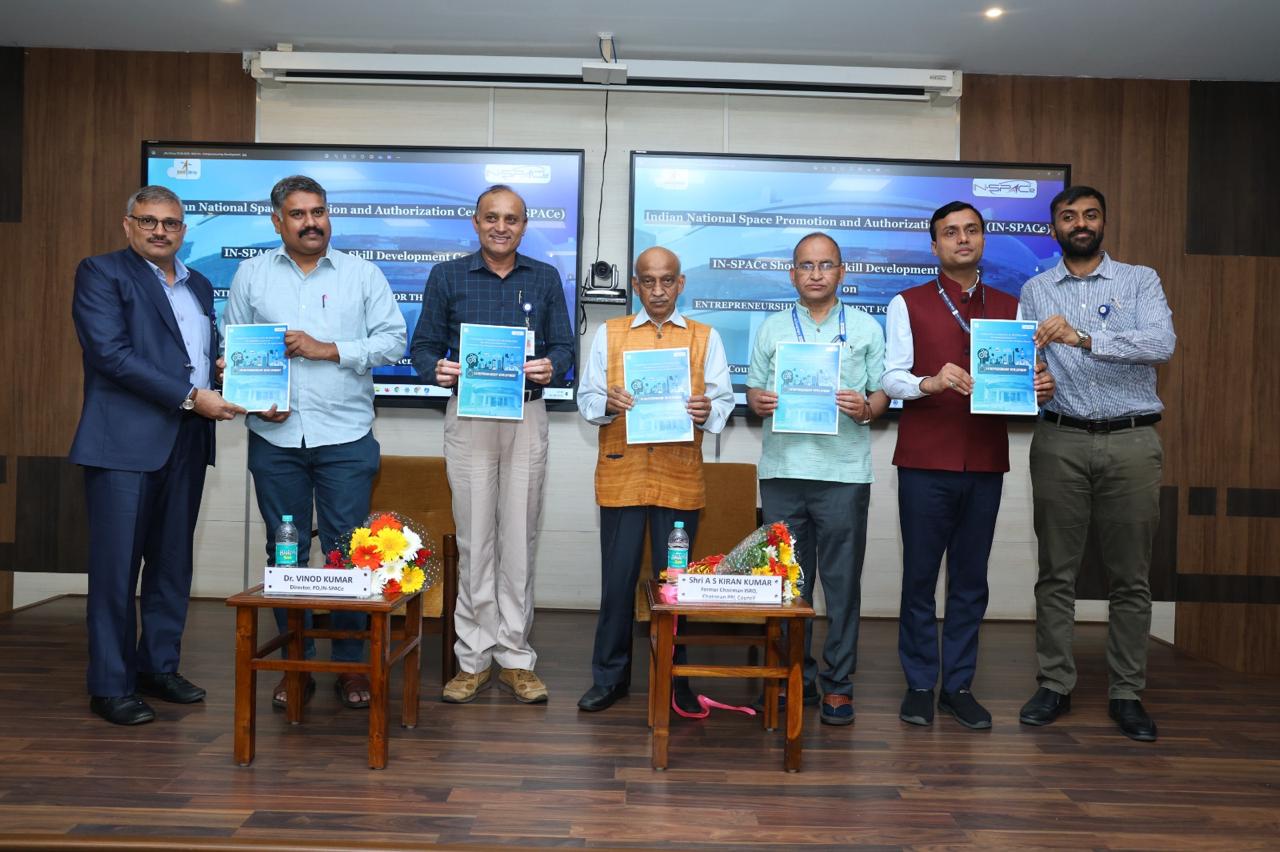
Dr Lakshmi Narayanan, Assistant Professor, Environmental Studies, SIAS delivered a lecture on 1 September 2025 upon invitation in the event conducted by IN-SPACe in connection with LEAD of Krea University. The event was IN-SPACe Short-term Skill Development Course on “Entrepreneurship Development for the Space Sector”. IN-SPACe is the newly created authorising agency under privatisation drive of Space Sector for approving space sector activities in India including that of ISRO. Other speakers from Krea included Professor Lakshmi Kumar, Dr Sathya Saminadan, Dr Aishwarya Krishnaswamy and Professor Vijayalakshmi. Dr Narayanan was present at the inauguration function of the event and was invited to release the abstract book along with Shri Kiran Kumar, Former Chairman ISRO, Dr Vinod Kumar, Director of IN-SPACe and other dignitaries.
An article titled Flow in The Living Tradition of Kabir in Malwa by Dr Dipanjali Deka has been published in the August Issue of Hakara bilingual online journal, centred on the theme of Flow. In the essay she examines flow, memory, and the question of “living” in the oral song tradition of Kabir, through the reading of a musical exchange between renowned folk singer Prahlad Singh Tipanya and his Guru, Chenaji Maru. हाकारा । hākārā (ISSN 2581-9976), a peer-reviewed journal, is included in the University Grants Commission (UGC) CARE-LIST.
Dr Sayandeb Chowdhury, Senior Assistant Professor, Literature, SIAS delivered the online public lecture ‘Uttam Kumar’s Last Laugh, Or a Talk Full of Ifs and Buts’, on the occasion of the centenary of the Bengali screen icon, organised by Manikchak College, Gour Banga University, Bengal.
Dr Swarnamalya Ganesh Associate Professor of Practice, Literature and Global Arts, SIAS was part of a session titled “Women and India-Pakistan Conflict”, organised by Noor e Emaan. The session reflected on recent and past conflicts between India and Pakistan through a feminist lens centering women, gender and marginalised groups.
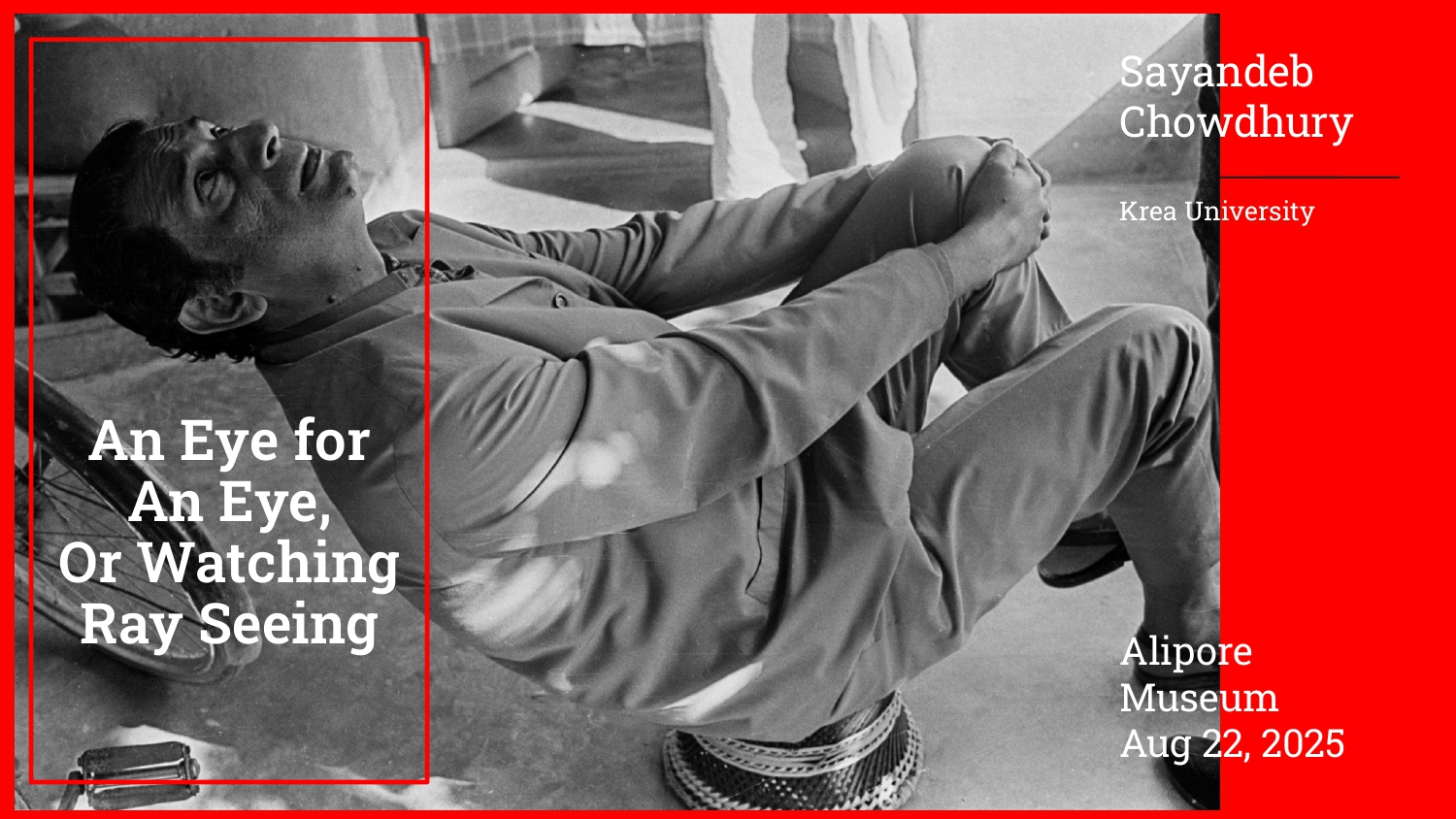
Dr Sayandeb Chowdhury, Senior Assistant Professor, Literature, SIAS, delivered a talk in Kolkata on 22 August at the invitation of DAG (formerly Delhi Art Gallery). The talk, on the idea of singularity in image tropes, was occasioned by the DAG exhibition Light and Shadow: Satyajit Ray Through Nemai Ghosh’s Lens and was titled ‘An Eye for an Eye, or Watching Ray Seeing’.
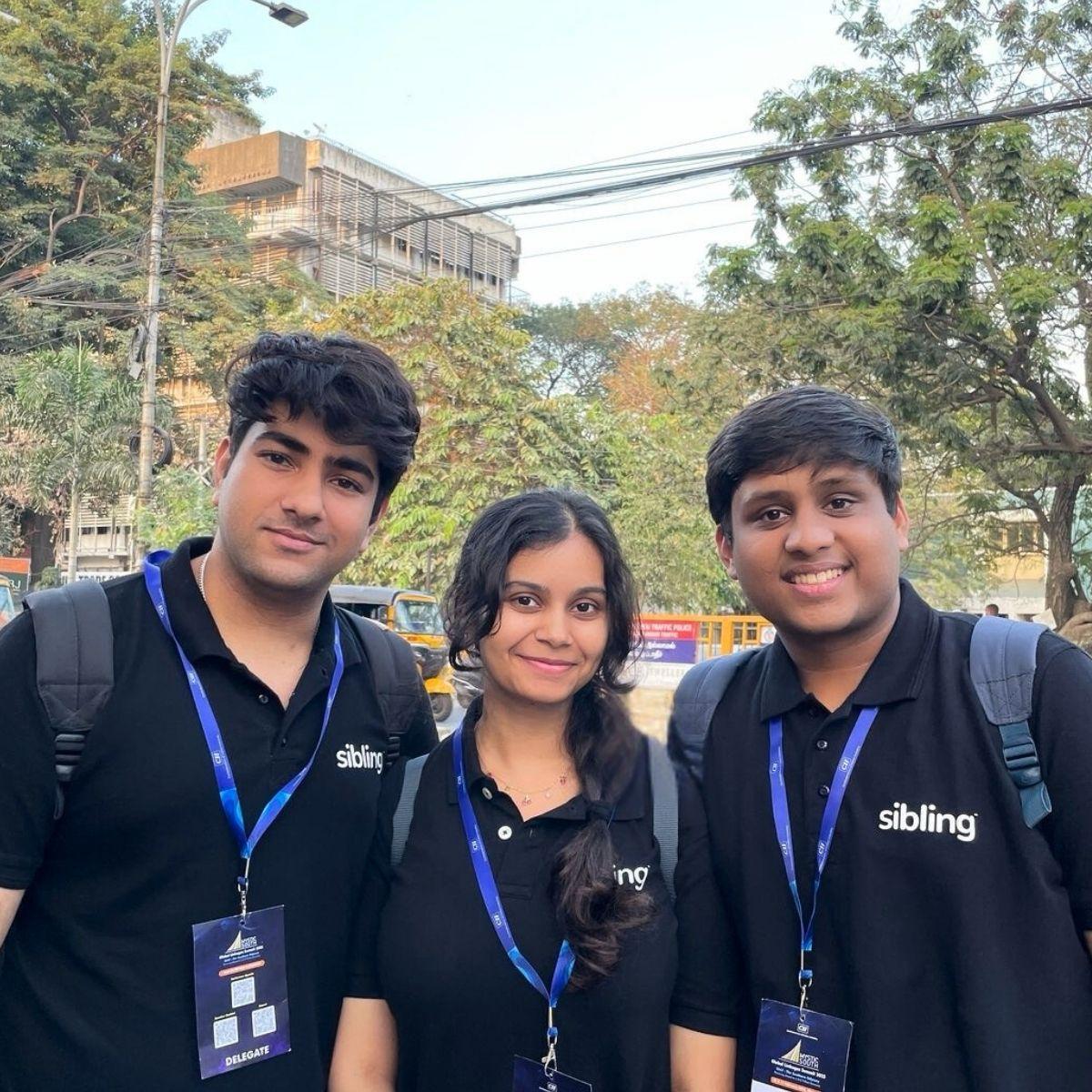
Sibling, co-founded by three kreators – Mitansh Aggarwal, Adwitiya Roy Viney Jain, was selected for Catalyst AIC (Supported by AIM, NITI Aayog)’s Startup School Innovation Challenge 2025. Sibling will be part of an intensive three-month incubation program designed for early-stage ventures with scalable ideas.
Program: 3-month incubation program (7th edition) run by Catalyst AIC under NITI Aayog’s Atal Innovation Mission.
Focus: Sector-agnostic, designed for early-stage ventures with scalable ideas or prototypes.
Structure: Expert-led sessions, mentorship office hours, and monthly milestone check-ins.
Outcome: Culminates in a Demo Day (Nov 2025) with 8 – 10 angel investors; opportunity for ₹5 lakh Startup India seed grants and access to Catalyst AIC’s equity fund.
Significance: Prestigious national-level incubation program providing visibility, mentorship, and funding opportunities.
About the start-up: Sibling is a digital mental health platform transforming how schools deliver student wellbeing. While many schools have counselors and resources, these services are often underutilised due to poor access, low visibility, and fragmented processes. Sibling bridges this gap through three integrated features: a Resource Hub offering curated content and interactive tools to build awareness; Near Peer Mentorship connecting students with trained college mentors for relatable support; and ReachOut, a confidential booking system that links students directly to school counselors with encrypted communication and case history tracking. By unifying education, mentorship, and professional care, Sibling makes mental health support accessible, stigma-free, and effective within schools.
Dr Preeti Sampat, Associate Professor, Sociology & Social Anthropology, SIAS was invited to deliver a session entitled ‘Compassionate Access to Land and it’s Affordances’ at a hybrid fellowship course “Compassionate Spaces”, developed by the Institute of Palliative Medicine, Calicut, Kerala and the Kerala chapter of the Indian Institute of Architects. The fellowship is an attempt to explore inner and outer spaces, and how to make them compassionate. Dr Sampat’s session discussed land and its more than human affordances through their historically particular material and social relationalities.