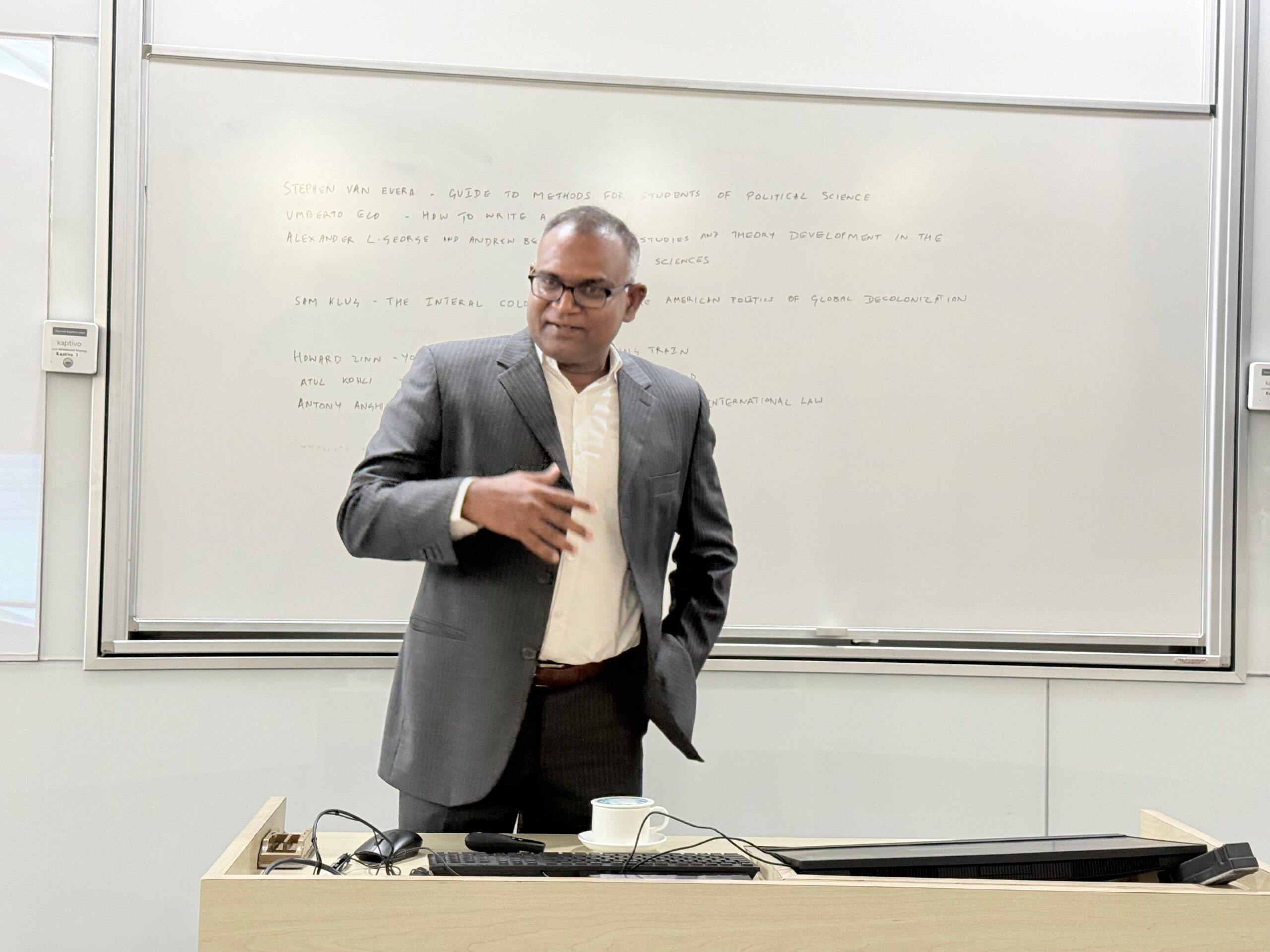
Dr Lakshmi Narayanan awarded PM Early Career Research Grant by Anusandhan National Research Foundation (ANRF)

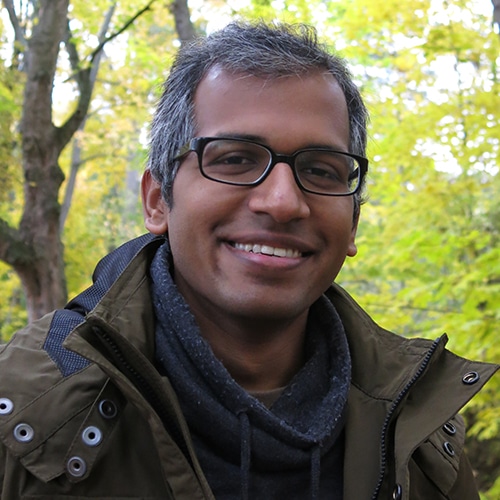
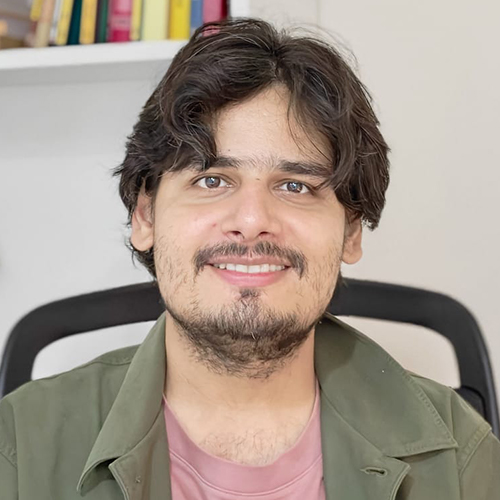
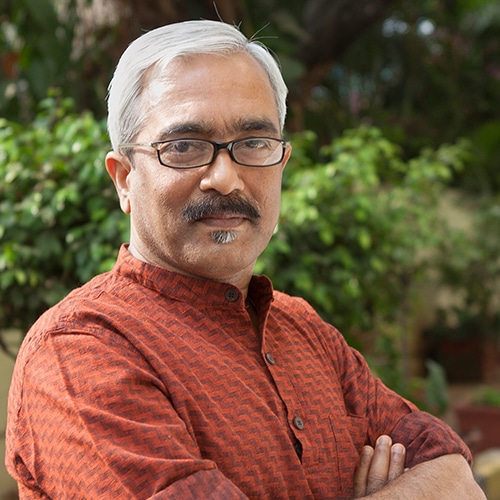
Dr Lakshmi Narayanan, Assistant Professor, Environmental Studies, SIAS has received funding for his proposal under the PM Early Career Research Grant scheme, awarded by Anusandhan National Research Foundation (ANRF) — a newly established initiative by the Government of India. The project, titled Early Morning Ionosphere-Thermosphere System (EMITS): Knowledge Gaps and Importance in the Low and Mid-Latitudes, aims to enhance our understanding of the outer reaches of the Earth’s atmosphere during the early morning hours.

As part of the project, a multi-frequency GNSS receiver will be installed on the Krea University campus. This instrument will track signals from navigation satellites such as GPS and NaVIC to study the state of the ionosphere. These radio signals, transmitted in the L and S bands from satellites in medium Earth and geosynchronous orbits, must propagate through the intervening ionosphere before reaching us. By analysing the minor refraction and scattering these signals undergo, researchers can gain valuable insights into the ionosphere. Additionally, archived satellite datasets will be utilised to investigate the early morning upper atmosphere and ionosphere.

The duration of the project is three years, with funding of approximately Rs 60 lakh.

Kashish Ramesh is nominated for Entrepreneurial Excellence at Founders Conference, Singapore 2026

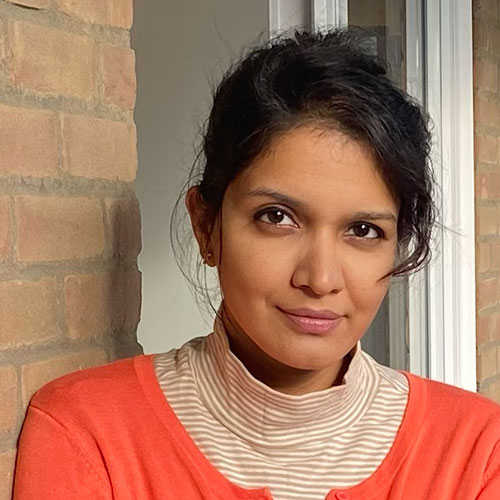
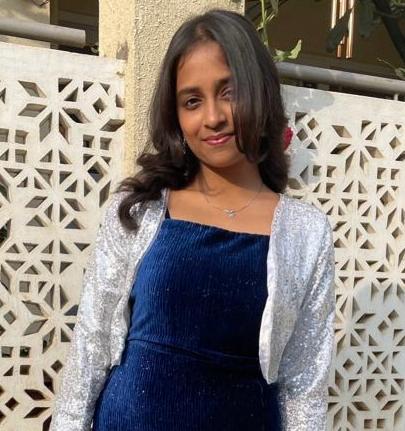
Kashish Ramesh, Cohort of 2023 – 2027, SIAS has been nominated for the Entrepreneurial Excellence Award at the Founders Conference in Marina Bay, Singapore (2026), becoming the youngest nominee in the event’s history.  

The nomination highlights her entrepreneurial initiatives, Quope and Cadet & Blu. Kashish founded Quope in 2021, a non-profit inspired by organisations like the Social Media Safety Organization in California, dedicated to combating social media addiction and promoting safer digital spaces. She also launched Cadet & Blu, an inbound consulting agency focused on writing-led strategies and supporting small and women-led businesses.  

Pursuing a double major in Economics and Data Science, Kashish leads the Business Club, where she encourages students to pursue their ideas and fosters entrepreneurial spirit within the campus community.  

For more details about the conference: https://www.founders2conf.com/
Kashish has also authored a book that can be purchased here

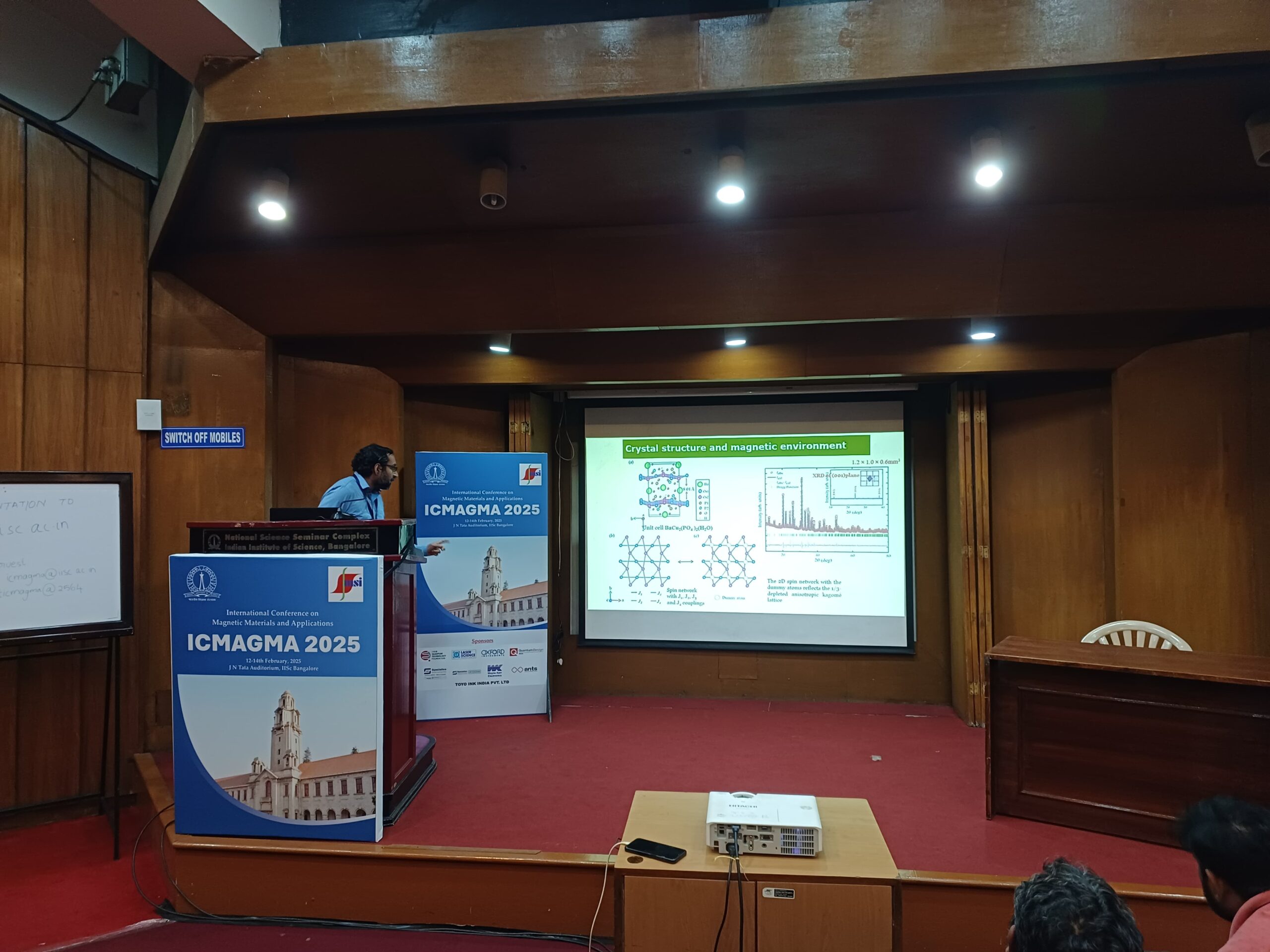
Dr Tanmoy Chakrabarty presented at ICMAGMA2025 organised by the Magnetics Society of India

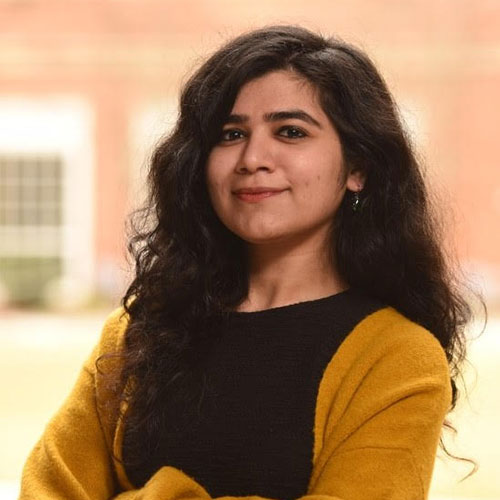
Dr Tanmoy Chakrabarty, Assistant Professor, Physics, SIAS, gave an oral presentation about his research work at the International Conference on Magnetic Materials and Applications (ICMAGMA2025) organised by the Magnetics Society of India (MSI) in collaboration with the Indian Institute of Science (IISc), Bangalore. The conference was held from February 12-14, 2025, at the  IISc campus in Bengaluru, India. 
The title of Dr  Chakrabarty’s talk was , ‘31P NMR studies of the 1/3 depleted 2D kagomé lattice system’.

Abstract of the talk

Subtle interactions in low-D magnets often result in novel states in matter. In this work the team has carried on the bulk and 31P NMR measurements and (DFT+U) electronic structure calculations on the single crystals of Cu-based S=1/2 compound BaCu2(PO4)2(H2O). Based on the hopping parameters calculated from DFT, they find the spin network of the titled compound to be a 2D layer of 1/3-depleted anisotropic kagomé lattice with the magnetic couplings J1, J2, J3, and J4. They observe a broad maximum in the magnetic susceptibility however, the 31P NMR local probe measurements feature an additional sharp magnetic anomaly which confirms the presence of a magnetic transition at TN = 10.5 K. While 1/T1 falls very steeply with temperature below TN, it follows a sublinear power-law behaviour above TN, indicating the presence of dynamic short-range correlations. All these features confirm the complex 2D spin network in this compound.

Dr Sambaiah Gundimeda delivers lectures at Faculty Development Programme at GITAM University

Dr Sambaiah Gundimeda, Associate Professor, Politics, SIAS was invited as a resource person for the Faculty Development Programme at GITAM University, Visakhapatnam, Andhra Pradesh. The programme, held from 12 to 14 February 2025, featured Dr Gundimeda delivering two insightful lectures. His sessions focused on effective publication strategies and research proposal writing for securing funding.

The titles of his lectures were, ‘Unlocking the Secrets of Successful Publishing’ and ‘Crafting Comprehensive Budget Strategies’. 

SIAS student Purnaa Muthu pens a blog for CDJ Plus, the blog of the Community Development Journal (Oxford University Press)

A blog titled Transgender People in Indian Science Institutions: Identity, Community & Belonging by Purnaa Muthu, a third-year SIAS student majoring in Psychology and a former peer tutor at the Centre for Writing and Pedagogy (Krea-CWP), has been published on CDJ Plus, the blog of the Community Development Journal (Oxford University Press).

In this piece, Purnaa explores the work of Sayantan Datta, Assistant Professor of Practice, Krea-CWP, focusing on the lived experiences of transgender, gender non-conforming and nonbinary individuals in Indian science institutions. Along with a comprehensive summary of Sayantan’s previous research, published in the Community Development Journal, she offers new insights from her interview with them.

Read more

Dr Sharin Shajahan Naomi speaks at Guru Nanak College

Dr Sharin Shajahan Naomi, Post-Doctoral Fellow, Krea University was invited by the Humanities department ( Political Science Programme) of Guru Nanak College to present  on India’s foreign policy towards war-torn countries on 11 February 2025. Her presentation focused on India’s foreign  policy to countries like Ukraine, Palestine, Myanmar and historical humanitarian intervention in Bangladesh and Sri Lankan civil war. Dr Sharin Shajahan has given interviews on foreign policy to indian media before. 

Dr Lakshmi Narayanan co-authors an article in Frontiers in Astronomy and Space Sciences

Dr Lakshmi Narayanan, Assistant Professor, Environmental Studies, SIAS has co-authored an article titled ‘Resolving the generation mechanisms and electrodynamical effects of Medium Scale Traveling Ionospheric Disturbances (MSTIDs)’ which has been published in Frontiers in Astronomy and Space Sciences. The work is a perspective article resulting from detailed deliberations of an international team of researchers for 2-3 years led by a NASA scientist. The team has gathered twice at Bern to discuss outstanding problems regarding an ionospheric phenomenon called Medium Scale Traveling Ionospheric Disturbances (MSTIDs). MSTIDs are perturbations propagating in the ionosphere of earth, and they are caused by different mechanisms that are not well understood/characterized. MSTIDs affect satellite based communication, navigation and radio astronomical observations. In this article, they discuss the most important issues in their characterisation and point to some of the inconsistencies that exist in the literature. They also provide some recommendations to the community to address these issues.

Read more

Dr Chirag Dhara co-authors the paper, ‘A scalability-centric perspective on global human development within environmental limits’

Dr Chirag Dhara, Assistant Professor, Environmental Studies, SIAS, recently co-authored a paper titled, ‘A scalability-centric perspective on global human development within environmental limits.’

Nordic countries epitomise “sustainable development:” that is the general global perception. Dr Dhara has co-authored a paper demonstrating that this perception is based on a fundamentally flawed understanding of planetary climate and ecological limits – one that most international organisations, including the UNDP, suffer from. Their research shows that certain middle-income, developing countries offer a better vision for sustainable development.

Read more

Dr Sambaiah Gundimeda delivers a talk at the Centre for Development Studies’ ICSSR-sponsored Capacity Building Programme

Dr Sambaiah Gundimeda, Associate Professor, Politics, SIAS was invited as a resource person by the Centre for Development Studies, Trivandrum, for its ICSSR-sponsored Capacity Building Programme, “Scheduled Castes and Scheduled Tribes – Sub-Plan and Sub-Classification” (6-7 February 2025). He delivered a talk titled “Justice at Last: Examining the Supreme Court’s Verdict on Sub-Classification.”

Dr Gundimeda highlighted how affirmative action has improved Dalit representation but has disproportionately benefited dominant SC sub-groups like Chamars, Mahars, and Malas, while marginalised groups like Madigas and Rellis remain excluded. This disparity led to demands for sub-categorisation, notably by the Madiga Reservation Porata Samithi (MRPS) in Andhra Pradesh.

The Supreme Court’s E.V. Chinnaiah (2004) ruling deemed SCs a homogeneous group, barring states from internal classification. However, Davinder Singh (2014) reopened the debate, culminating in the landmark 2024 ruling that allowed sub-classification based on empirical data. The judgment, reinforcing substantive equality, acknowledges intra-group disparities but raises concerns about implementation and political misuse.

Debates persist over introducing a “creamy layer” filter in SC/ST reservations to prevent monopolisation by privileged sections. Moving forward, a data-driven, equitable distribution framework is essential to uphold the principles of affirmative action while addressing internal inequities.

Research Article by Dr Tanmoy Chakrabarty, published in the “Applied Physics Letters”

A research article by Dr Tanmoy Chakrabarty, Assistant professor, Physics, SIAS titled, “Spin glass and complex magnetism in a high-entropy spinel oxide with five cations at both tetrahedral and octahedral sites” has been published in the “Applied Physics Letters”.

In this publication, Dr Chakrabarty is one of the two corresponding authors.In this work, the team has reported spin glass behavior and complex magnetic properties of a high-entropy spinel oxide with five cataions at tetrahedral and octahedral sites. They have carried out structural studies by XRD and SEM and studied magnetic properties using AC and DC magnetic measurements. The data from the AC magnetization confirms this material’s cluster spin glass state. Although spin glass behavior is a well reported phenomena among magnetic frustration, the novelty of this work is here it is first time observed in a high entropy oxide with 5 cations in both the tetrahedral and octahedral sites. The work highlights the potential of entropy-driven design in tailoring multifunctional materials for advanced applications.

Read more