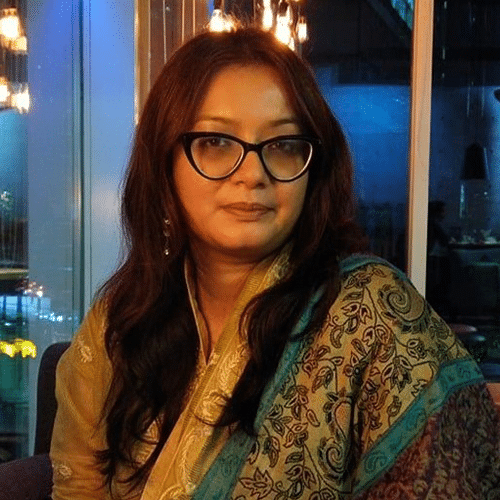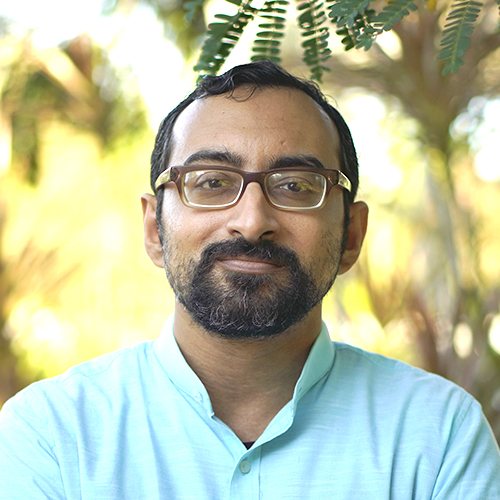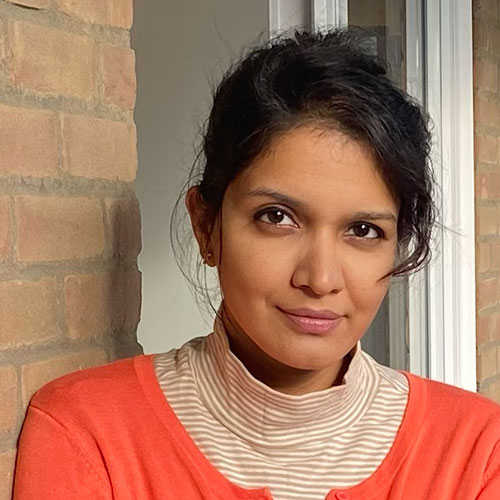
Dr Srajana Kaikini pens an article, The goodness of Jane Goodall in the Deccan Herald

Dr Srajana Kaikini, Assistant Professor, Philosophy, SIAS recently penned her experience, awe and inspiration, listening to Jane Goodall at the Mumbai LitLive Festival in the article The goodness of Jane Goodall in the Deccan Herald. Dr Kaikinideep dives into an interesting question by Goodall—if apes are in fact as angry, as violent, as caring, as loving, and as communicative as human beings, then why not see us in them and why not see them in us?

Read more

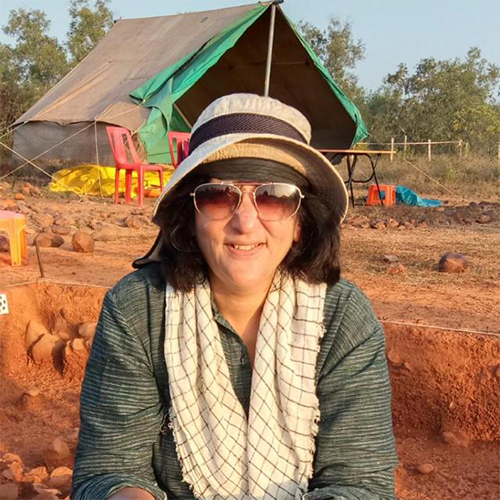
Professor Shanti Pappu co-authors an article published in the Journal of Archaeological Science: Reports

Professor Shanti Pappu, Visiting Professor of Archaeology and History, SIAS has co-authored a paper titled Breaking it Down: Ethnographic Studies on the Manufacture of Basalt Grinding Stones in India, published in the Journal of Archaeological Science: Reports. Her co-authors include Sutonuka Bhattacharya, PhD student and Professor Naama Goren-Inbar from Institute of Archaeology, The Hebrew University of Jerusalem; Dr Prachi Joshi, Senior Research Scholar and Dr Kumar Akhilesh, Director from Sharma Centre for Heritage Education and Professor Gideon Shelach-Lavi from Department of Asian Studies, The Louis Frieberg Chair of East Asian Studies, Hebrew University.

Read more

Dr Srajana Kaikini’s latest is part of Serendipity Arts Foundation’s annual anthology

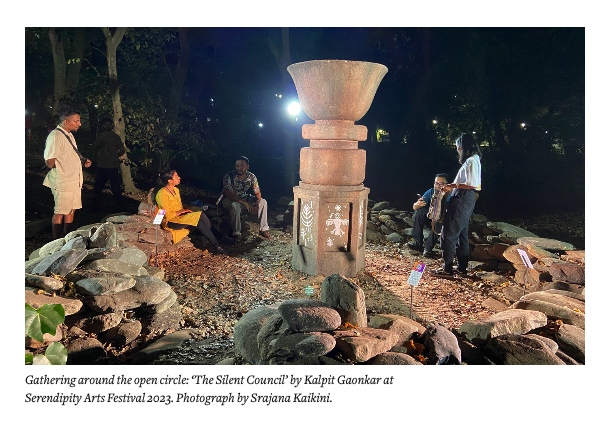
The latest essay ‘Spiral Epistemologies: New Forms for the Public’ (2024) by Dr Srajana Kaikini, Assistant Professor, Philosophy, SIAS is part of the annual anthology Projects / Processes published by the Serendipity Arts Foundation. The essay explores new curatorial forms for the commons reflecting on the Public Art Grant Commissions for 2023 gathered under the project The Island that Never Gets Flooded. 

Professor Shanti Pappu collaborates on a pivotal publication

A recent  publication by Professor Shanti Pappu, Visiting Professor of Archaeology and History, SIAS in collaboration with various other researchers is one of the pilot projects to explore skill acquisition and pedagogy in the context of the forgotten craft of making stone tools. The paper titled  Flakes, Feelings, and Finesse: Experiential Studies of Skill Acquisition in Novice Knappers deals with the stone tool technologies used from around 2.6 Ma to around 300 ka (Lower Palaeolithic). 

Read more

Dr Srajana Kaikini invited to speak at Faculty Development Programme themed around “Critical Humanities and the Futures We Imagine” 

Dr Srajana Kaikini, Assistant Professor, Philosophy, SIAS was invited as a resource person to address over 250 registered participants from various university across the country for the Faculty Development Programme themed around “Critical Humanities and the Futures We Imagine” organised by the Centre for Theory and Criticism, Central University of Kerala and the UGC Malaviya Mission Teacher Training Centre. Dr Kaikini’s session was titled ‘The Curatorial Turn in Education: Notes from Relational Arts Practices’ where she shared insights from the field of curatorial studies and its possibilities within education and pedagogy based on her work around embodiment and learning.

Dr Shikha Rajpurohit awarded the Tagore National Scholarship

Dr Shikha Rajpurohit, Assistant Professor, Philosophy, SIAS has been awarded the Tagore National Scholarship, given for a period of two years by the Ministry of Culture, GOI. Dr Rajpurohit will be working under the aegis of Bhandarkar Oriental Research Institute, Pune to critically edit the Nidarśana commentary of Rājānaka Ānanda on Kāvyaprakāśa. The commentary was written in the 17th century of which eight manuscripts are known to exist till date. The edition will be useful for researchers working in the fields of Sanskrit poetics and Indian philosophy.

Dr Anannya Dasgupta was a discussant at a national conference organised by Manipal Centre for Humanities

Dr Anannya Dasgupta. Director, Centre for Writing & Pedagogy (CWP) and Associate Professor of Literature, SIAS was a discussant on a panel on, “Trends in Literary Studies and English Departments in India” at the national conference on Trends in Literary Studies and English Departments in India organised by Manipal Centre for Humanities on 24 January, 2025.

Sayantan Datta pens an article in The Hindu

Sayantan Datta, Assistant Professor of Practice, Centre for Writing and Pedagogy recently penned an article in The Hindu titled, In breakthrough, scientists find pressure sensor in fat tissue. 

The article discusses PIEZO mechanosensitive channel – a class of proteins that helps us sense pressure. PIEZO channels have been implicated in our ability to sense touch and pain, to understand how our bodies are positioned in space (proprioception), to perceive our body’s internal state (interoception), and to respire, urinate, form blood vessels, regulate bone density, and heal skin wounds. Two new studies have now expanded the ambit of PIEZO channels’ functions.

Know More

Dr Chirag Dhara presents research talks at TISS and IIT Bombay

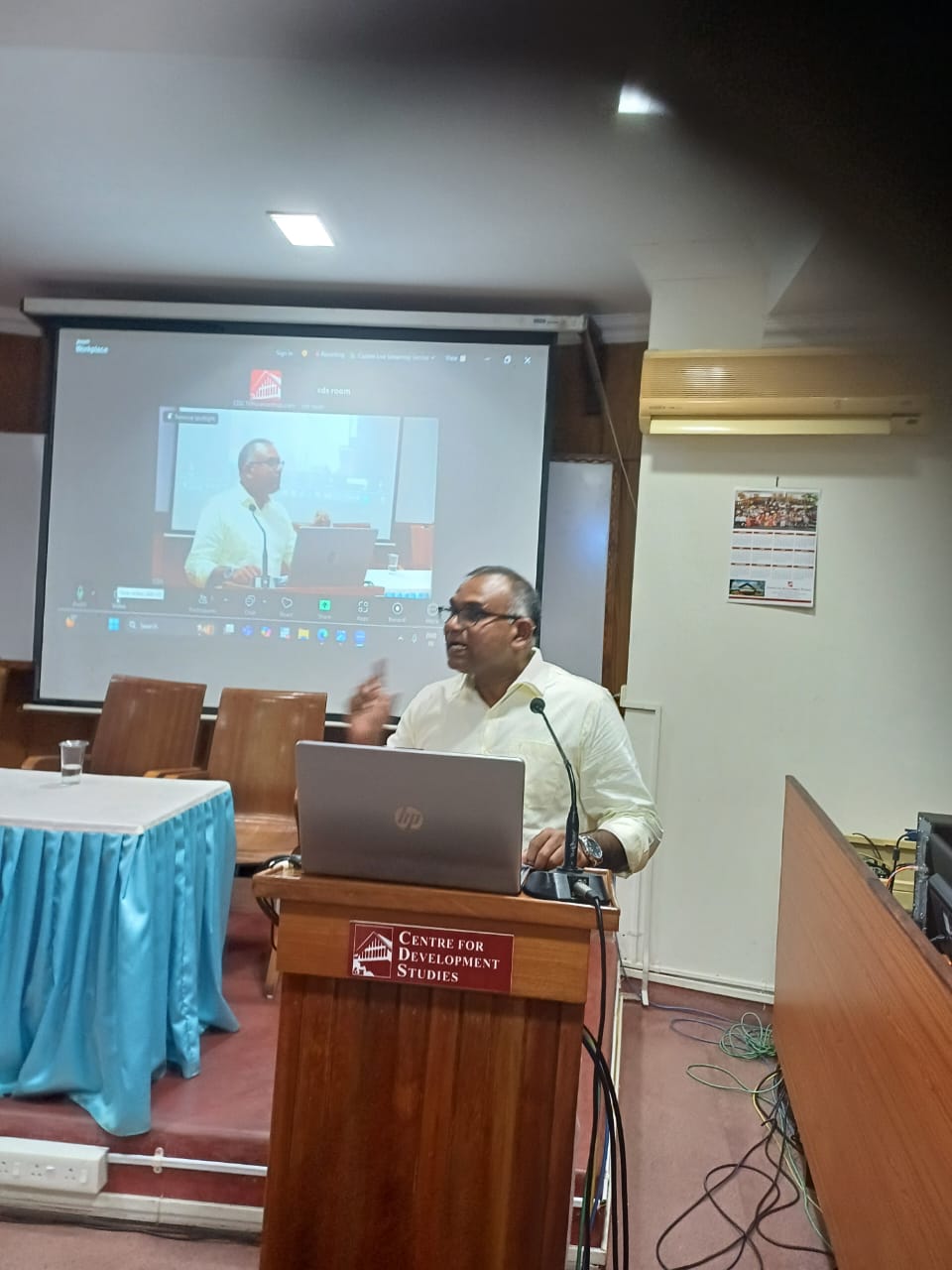
Dr Chirag Dhara, Assistant Professor, Environmental Studies, SIAS was recently invited to  The Tata Institute of Social Sciences (TISS) and IIT Bombay to deliver research talks. Dr Dhara delivered a talk on, ‘The role of historic global inequality in avoided climate destabilisation’ at TISS and two talks titled, ‘What levels of development can humanity sustainably aspire to?’ and  ‘An interpretational lens to understand climate performance indices’ at IIT Bombay.

Dr Chirag Dhara at IIT Bombay

Kaustav Mehta, Teaching Fellow, Data Science, SIAS recently presented a poster at Netscix2025, IIT Indore

Kaustav Mehta, Teaching Fellow, Dats Science, SIAS recently presented a poster at NetsciX 2025, IIT Indore. This work stems from Kaustav’s third year undergraduate capstone project at Krea University, conducted under the supervision of Dr Shyam Kumar Sudhakar, Assistant Professor, Biological Sciences, SIAS. Their research, titled Exploring Comorbidity Networks in Mild Traumatic Brain Injury Subjects through Graph Theory: A Traumatic Brain Injury Model Systems Study, has been developed into a journal paper and poster. The paper is currently under editorial review.

Abstract:
Traumatic brain injuries (TBIs) are characterised by myriad comorbidities that affect the functioning of the affected individuals. The comorbidities that TBI subjects experience span a wide range, ranging from psychiatric diseases to those that affect the various systems of the body. This is compounded by the fact that the problems that TBI subjects face could span over an extended period post-primary injury. 

Further, no drug exists to prevent the spread of secondary injuries after a primary impact. In this study, the researchers employed graph theory to understand the patterns of comorbidities after mild TBIs. Upon application of network analysis and a novel clustering algorithm, they discovered interesting associations between comorbidities in young and old subjects with the condition. Specifically, bipolar disorder was seen as related to cardiovascular comorbidities, a pattern that was observed only in the young subjects. Similar associations between obsessive-compulsive disorder and rheumatoid arthritis were observed in young subjects. Psychiatric comorbidities exhibited differential associations with non-psychiatric comorbidities depending on the age of the cohort. The study results might have implications for effective surveillance and the management of comorbidities post-mild TBIs.

The pre-print is available at

For more details