Dr Gowhar Fazili Publishes a Book Review of M K Raina’s Memoir ‘Before I Forget’ in The Wire

Dr Gowhar Fazili, Assistant Professor of Social Studies, SIAS, Krea University has published a book review in The Wire. The review, titled A Fragmented Memory of Independent India and the Kashmir That Once Was, delves into M K Raina’s memoir Before I Forget. The review provides a critique of the memoir’s reflections on India’s postcolonial history and the cultural changes in Kashmir. 

Read the book review here.

Dr C P Anil Kumar Publishes a Paper in the Indian Journal of Pure and Applied Mathematics (IJPA)

Dr C P Anil Kumar, Assistant Professor of Mathematics, SIAS, Krea University authored a paper titled On Infinity Type Hyperplane Arrangements and Convex Positive Bijections, published in the Indian Journal of Pure and Applied Mathematics (IJPA). 

About the Publication

Consider a hyperplane arrangement, i.e., a finite collection of hyperplanes, in an n-dimensional Euclidean space. We say that an arrangement is generic if there are at least n hyperplanes and a codimension k intersection is formed by exactly k many hyperplanes.  This is an interesting arrangement – for example, for a fixed m ≥ n, a generic arrangement of m hyperplanes in an n-dimensional Euclidean space has the maximum number of regions. Two arrangements are (combinatorially) isomorphic (or equivalent) if there is an ambient linear homeomorphism which preserves incidences between strata and the polyhedral structure of each stratum. In general, it is an interesting (and difficult) problem to understand the isomorphism classes of arrangements.

In this paper, the author introduces and defines a new type of hyperplane arrangements called infinity type hyperplane arrangements.  The concept of normal systems (which is a collection of normal directions to these hyperplanes)  are used to uniquely identify such generic arrangements. The main theorem states that the equivalence of two infinity type generic hyperplane arrangements is equivalent to the isomorphism of corresponding normal systems. The author also considers the case of all generic arrangements and proves that equivalence of arrangements implies isomorphism of normal systems. Further, a counter example is provided to show that the converse need not be true.

DOI ID

Read the article here

Investigating the Angry Sun’s Impact on Earth’s Atmosphere: Dr Lakshmi Narayanan Conducts Collaborative Research and Presents Internationally on Space Weather Effects

Earth is protected from harmful radiation and energetic charged particles through its sufficiently dense atmosphere and invisible magnetic shield known as magnetosphere. Sometimes our host star Sun emits harmful radiation and particle bursts, alongside its life-sustaining light and warmth. When these particles reach Earth, they often break open the magnetic shield to some extent and interact with our atmosphere and ionosphere. 

The ionosphere is a part of our atmosphere at higher heights wherein a small portion of the atmospheric atoms and molecules are stripped into charged particles by sunlight. Indeed, the ozone absorbs less energetic UV light than those creating the ionosphere. Hence the formation of the ionosphere consumes more powerful UV and x-ray from the Sun, thereby ensuring existence of life on Earth’s surface. 

A part of the research activities of Dr Lakshmi Narayanan, Assistant Professor of Environmental Studies, SIAS, Krea University investigates the effects of the angry Sun on the Earth’s upper atmosphere and ionosphere.

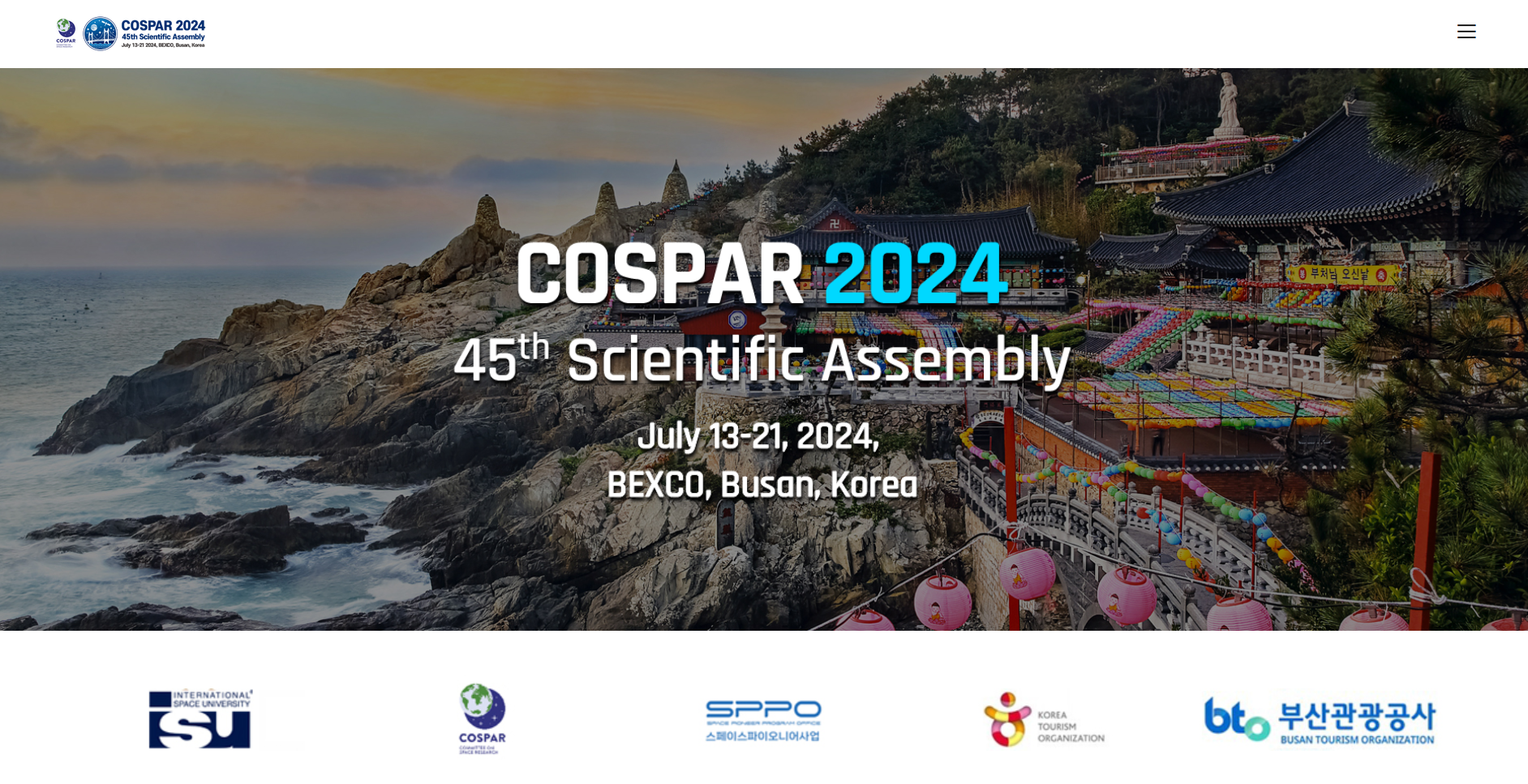
Dr Narayanan participated in COSPAR 2024, the 45th Scientific Assembly of the Committee on Space Research held in Busan, Korea. At this major biennial international event amongst space sciences, on 17 July, 2024 Dr Narayanan delivered a talk titled Global response of topside ionosphere to the severe geomagnetic storm of April 2023, where he presented his research results on the case study of a magnetospheric breaking event that happened during 23-24 April 2023. 

In addition, from 20 June to 23 July Dr Narayanan is visiting the Institute for Space-Earth Environmental Research, Nagoya University, Japan for carrying out a collaborative research project tilted On the impact of geomagnetic disturbances in the gravity wave and tidal dynamics of the mesosphere in the auroral region, funded under the ISEE Joint Research Program, Japan. The project investigates the impact of space weather events caused by solar ejections on the Earth’s middle and upper atmosphere.

Professor Guha Dharmarajan Delivers Talks at the International Centre for Theoretical Sciences, Bangalore

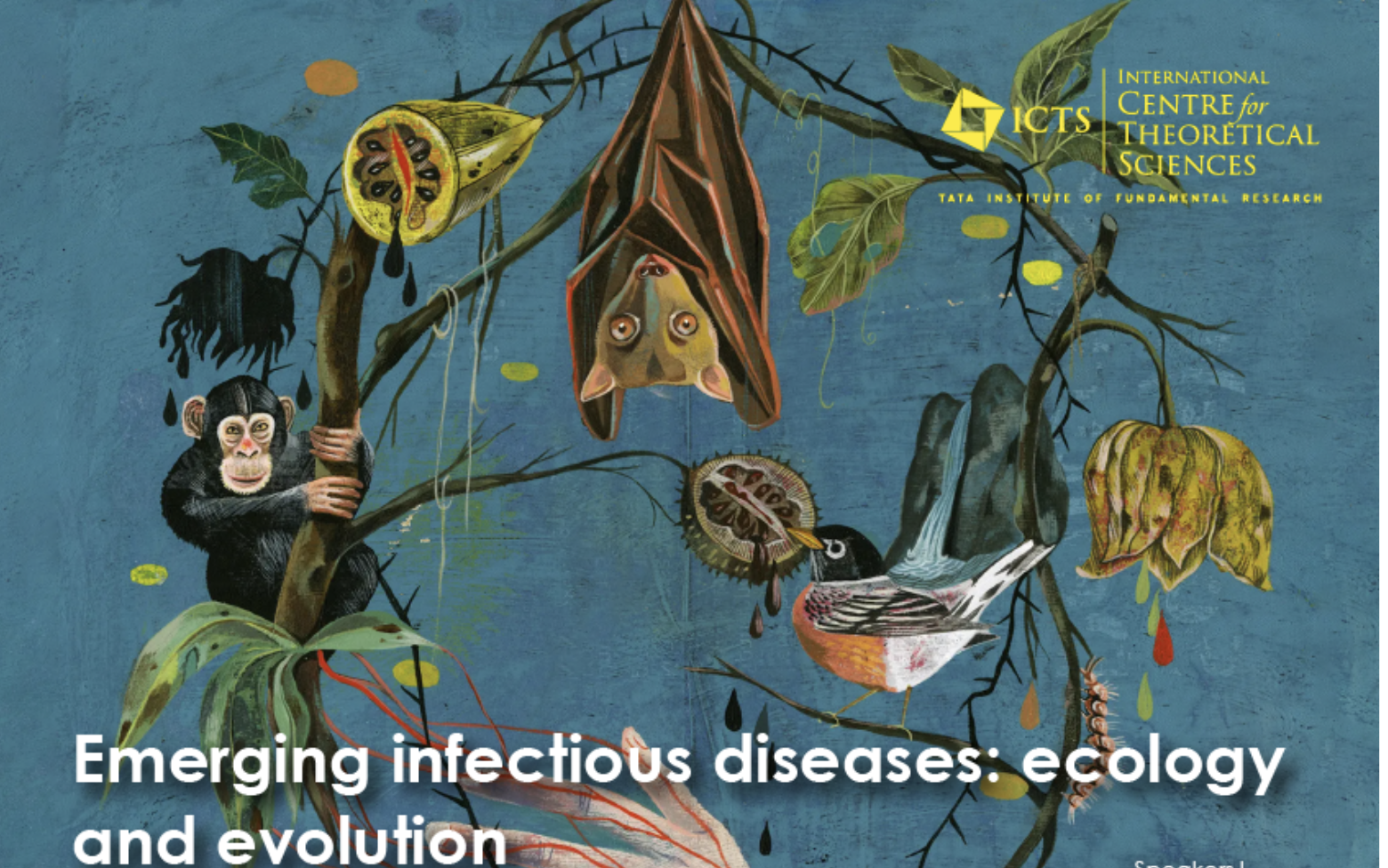
Professor Guha Dharmarajan, Professor of Biology, SIAS, Krea University is an invited speaker at a workshop on Emerging infectious diseases: ecology and evolution, taking place on 1–12 July, 2024 at the International Centre for Theoretical Sciences, Bangalore. In his talks, Professor Dharmarajan provides a broad overview of pathogen spillover dynamics leading to the emergence of zoonotic diseases, like COVID-19.

Pathogen Spillover: Theory and Mechanisms (Lecture 1)

https://www.youtube.com/live/EhtlQFluRdQ?si=zs0IKrBILz0Wfv7J

Pathogen Spillover: Theory and Mechanisms (Lecture 2)

https://www.youtube.com/live/2uidtth_rzs?si=Bpa1GwFBkGKZZNF_

Dr Swarnamalya Ganesh’s New Book Chapter and Magazine Spotlight

Dr Swarnamalya Ganesh’s New Book Chapter and Magazine Spotlight

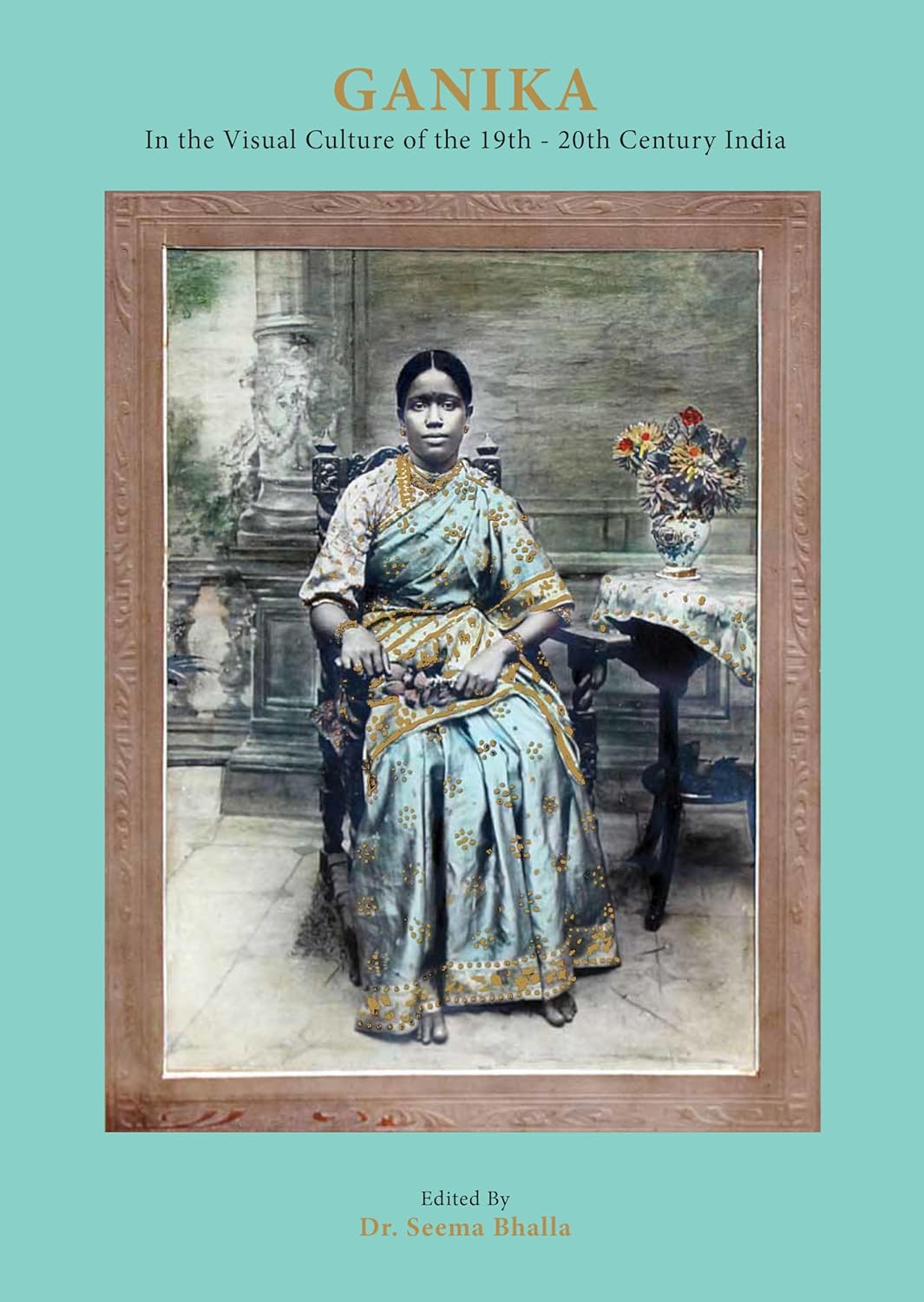
Dr Swarnamalya Ganesh, Assistant Professor of Practice, SIAS, Krea University has contributed a chapter to the book titled Ganika – In The Visual Culture Of The 19th-20th Century India, published by the National Crafts Museum, MATI and Naithani Foundation. In this book, a group of scholars have come together to image a collection of visual cultures associated with the Ganika, as a Devadasi and a Courtesan. Dr Ganesh’s section of the book examines the accoutrements of the Sadir performer, costumes and jewellery, their history, circulation and provenance. 

Link to the book on Amazon

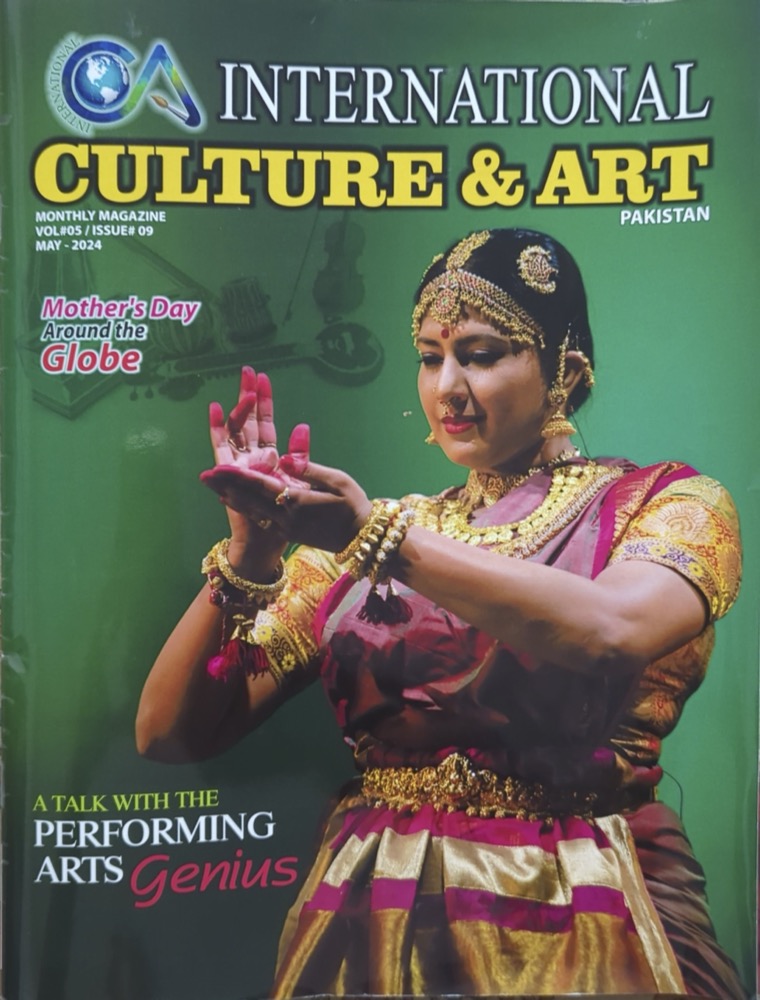
The May edition of the International Culture & Art magazine, Pakistan has featured the profile of Dr Swarnamalya Ganesh and the work that she presented at the Faiz Festival 2024 held on 9–11 February in Lahore, Pakistan. 

Dr Randhir Rai, Visiting Faculty, SIAS, Co-authors a Research Paper with SIAS Students

Dr Randhir Rai, Visiting Faculty in Chemistry, SIAS, Krea University co-authored a research paper titled Solvothermal Synthesis of Cuprous Oxide Microsphere and its Application as Catalyst for Synthesis of β-Hydroxy Triazole. His co-authors included Saurav Saha, Research Scholar, Department of Chemistry, IIT Madras, and SIAS students Sreeshma Ravi and Ameena Abbas. Both students graduated in 2024. Sreeshma Ravi worked on this project as a capstone student under Dr Rai’s mentorship. Ameena Abbas voluntarily contributed to the project due to her interest in the subject.

Read the article here

Dr Proma Raychaudhury Presents a Research Paper at the ICAS:MP and CeMIS-Göttingen Workshop

Dr Proma Raychaudhury, Assistant Professor of Politics, SIAS, Krea University presented her research paper titled Gendering political party culture in contemporary West Bengal: A study of Women’s institutional belonging in the AITC at the ICAS:MP and CeMIS-Göttingen Workshop on Metamorphoses of the Political: Bengal in the New Millennium 2.0, held in Göttingen, Germany on  19-21 June, 2024.

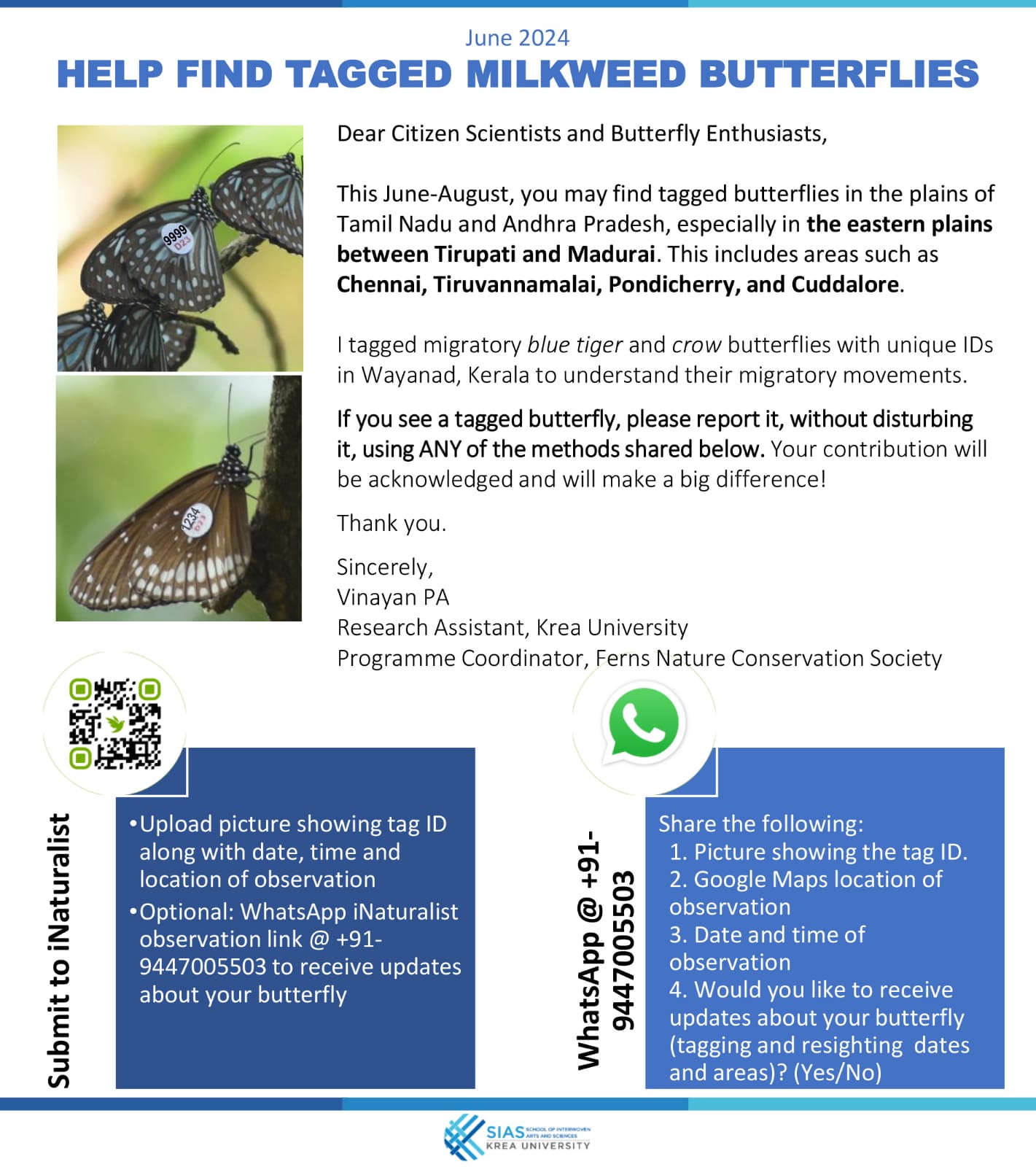
Tracking the Flight: Citizen Scientists and Butterfly Lovers Needed to Aid Butterfly Migration Study in India

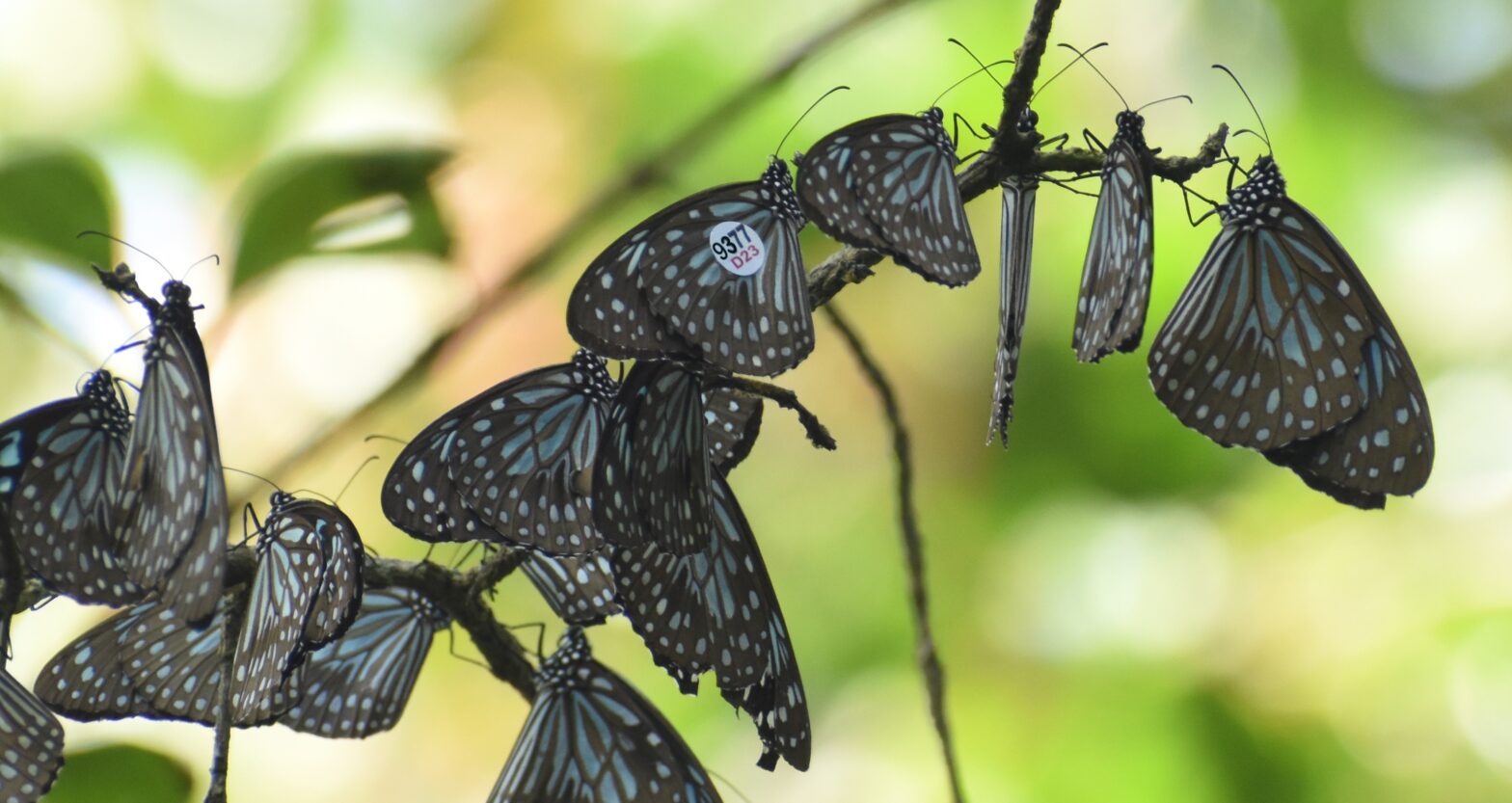
An article published in The Hindu highlights the work by P A Vinayan, Research Assistant, Krea University and Programme Coordinator, Ferns Nature Conservation Society. Vinayan is seeking help from butterfly enthusiasts and citizen scientists to better understand the migratory movements of milkweed butterflies in peninsular India. Studying the migratory movements of animals is crucial to understanding their ecology and possible threats to their migratory behaviour in a changing environment. Vinayan tagged milkweed butterflies (blue tigers and crows) with unique IDs in Wayanad Kerala and is now looking for resightings in the Eastern Ghats and Plains. This work is being carried out under the guidance of Dr Shivani Jadeja, Assistant Professor of Biological Sciences, SIAS, Krea University with funding support from Krea University.

To find out how you can support the project by helping find tagged butterflies, click here

To read the article in The Hindu, click here

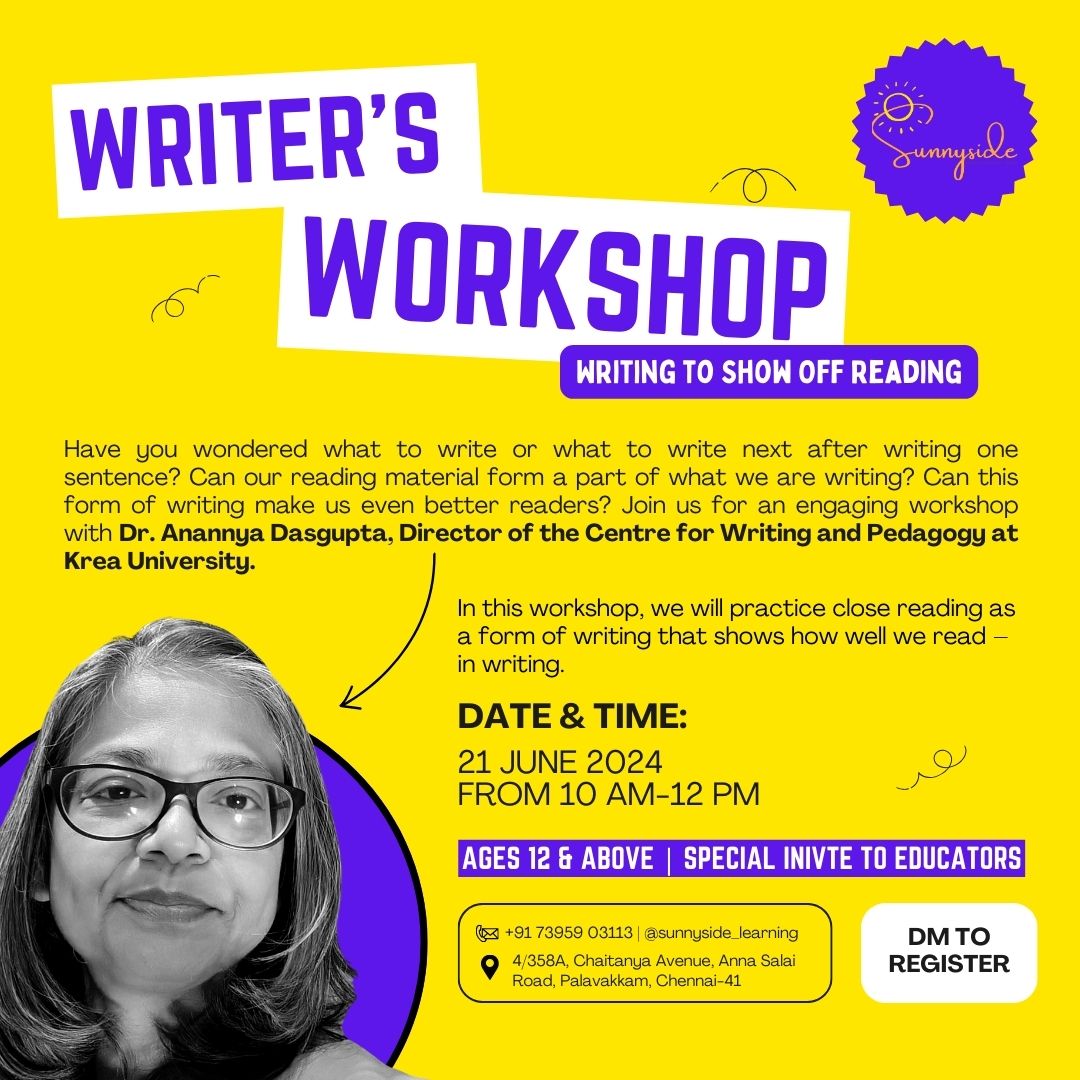
Writer’s Workshop: Writing to Show off Reading with Dr Anannya Dasgupta

Dr Anannya Dasgupta, Director, Centre for Writing & Pedagogy (CWP) at Krea University and Associate Professor of Literature, SIAS, facilitates a workshop titled Writing to Show off Reading, taking place on 21 June, 2024 at Sunnyside, Palavakkam, Chennai. This workshop is curated for children in middle school and above, to help them learn how reading can improve their writing. Through close reading exercises, they will practice writing that shows their understanding of what they read. By working on both reading and writing skills, children will become better readers and more expressive writers.

For details, click here.

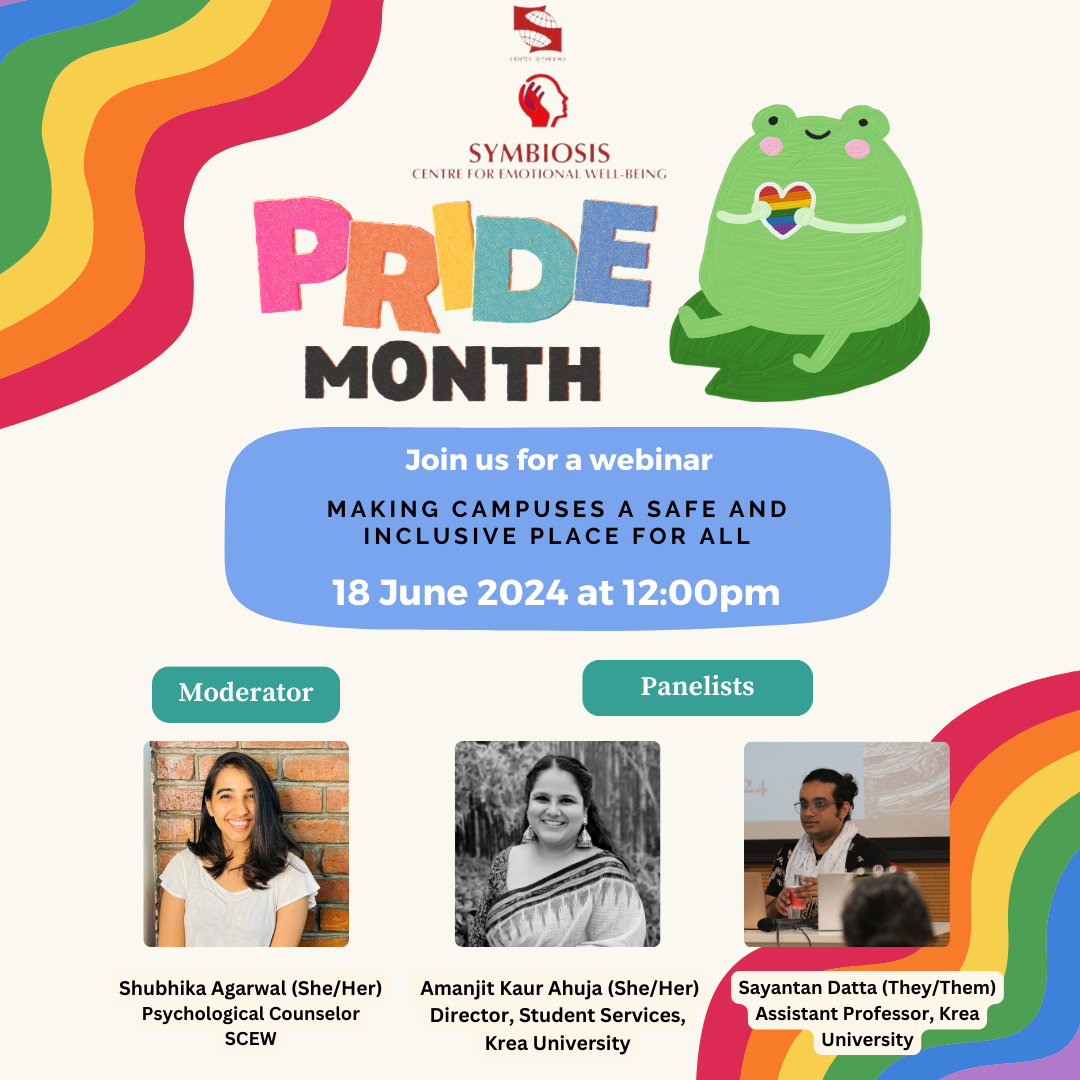
Amanjit Kaur Ahuja and Sayantan Datta Speaking at the Webinar ‘Making Campuses a Safe and Inclusive Place for All’

Amanjit Kaur Ahuja, Director, Student Services, Krea University and Sayantan Datta, Assistant Professor of Practice at the Centre for Writing & Pedagogy (CWP), Krea University, were invited to speak in a webinar organized by the Symbiosis Centre for Emotional Wellbeing on 18 June 2024. The webinar was titled Making Campuses a Safe and Inclusive Place for All

Amanjit drew upon her experience as an administrator to speak about the steps that administrators could take to ensure that students from different marginal backgrounds – especially queer, trans and intersex students – are able to inhabit campuses without the fear of discrimination or prejudice. In addition, Sayantan drew upon their lived experience and research documenting queer, transgender and intersex peoples’ experiences in Indian science institutes to talk about challenges that gender- and sexually marginalized students face on campuses. Both of them spoke about the need to work with the system even as they work actively towards systemic changes.

For the webinar poster, click here