On the Face of It: From Monumental Images to Collective Actions – A Paper Presentation by Dr Rakshi Rath and Dr Srajana Kaikini

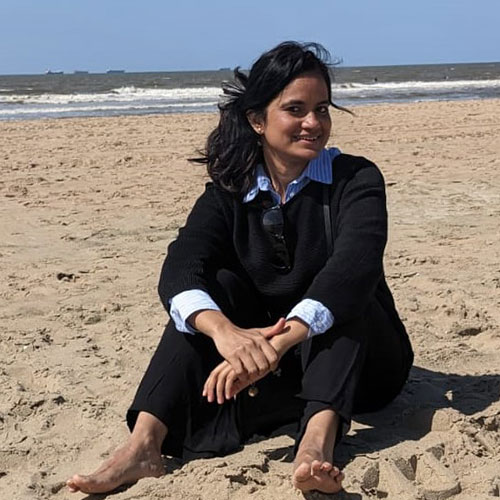
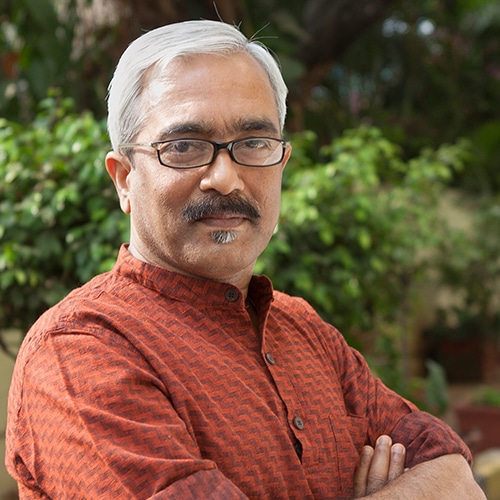
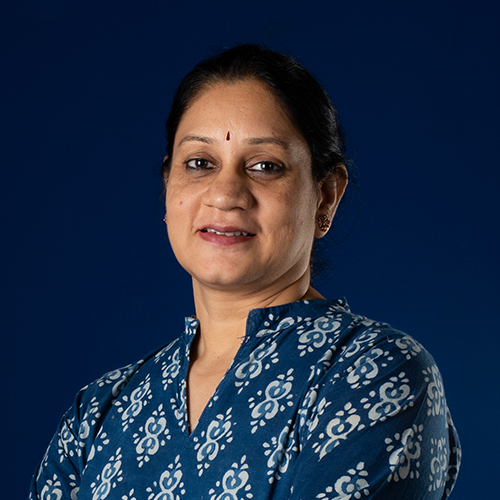
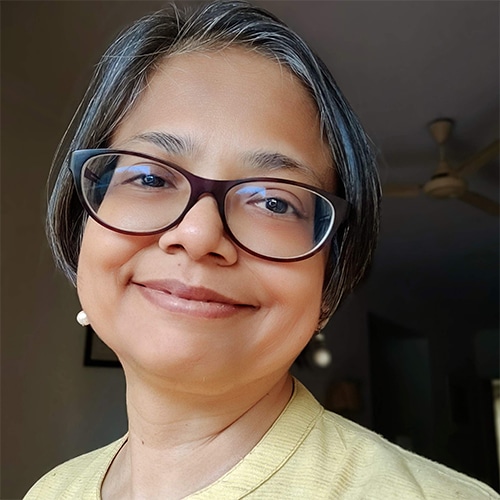
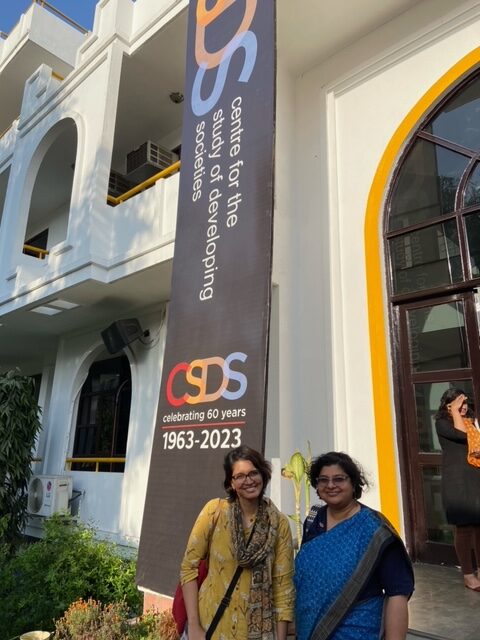
Dr Rakshi Rath, Assistant Professor of Psychology, SIAS, Krea University, and Dr Srajana Kaikini, Assistant Professor of Philosophy, SIAS, Krea University co-presented their paper titled On the Face of It: from Monumental Images to Collective Actions at the Workshop Seminar Twenty-First Century Media? Affective Bodies, Crowds, and Collectives, organised by ICAS:MP TM 7 module, in collaboration with CSDS and Sarai, on 21-23 March, 2024. 

This international workshop was focused on site-specific contributions mapping 21st-century media, addressing material and environmental questions for media and political aesthetics. The paper brings theories of Philosophy and Psychology in critical conversation with each other around social ontology, media aesthetics, and political psychology in an attempt to forge new interdisciplinary frameworks for social action.
Dr Shyam Kumar Sudhakar delivers a talk at IIIT Hyderabad

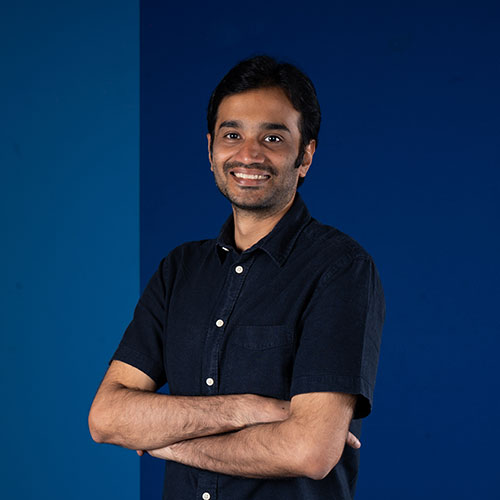
Dr Shyam Kumar Sudhakar, Assistant Professor of Biological Sciences, SIAS, Krea University delivered a talk titled Application of computational modeling and large-scale data analysis for identifying drugs and managing comorbidities after traumatic brain injuries at IIIT Hyderabad.

Abstract:

Traumatic brain injuries (TBI) constitute one of the biggest public health problems facing the world population. Physical trauma to the brain could lead to the damage and subsequent death of the affected neurons, and this could continue for extended periods, causing secondary brain injuries. As a consequence, TBI can cause long-term medical and psychiatric problems. No treatment options exist to date to prevent the cascade of secondary brain injuries. 

When promising therapeutic options are unavailable to treat TBI, carefully crafted patient care programs and disease prevention strategies could lead to better patient experiences. The goal of my research program is twofold: Construct a detailed bio-simulation platform encompassing post-TBI changes at multiple spatial and temporal time scales to identify the most promising therapeutic agents for neuroprotection after TBI; Perform large-scale data analyses of multi-center patient databases to understand the unique pattern of post-traumatic comorbidities as a function of different injury parameters (sex, age, type and severity of injury, years post-injury, socioeconomic status). In this talk, I will illustrate my recent research results pertaining to computational modeling and large-scale mining of patient databases. I believe my dual approach of computational modeling and large-scale data analysis would lead to the discovery of novel drugs and drug combinations to treat the disease and devise vital patient care programs.

Dr Rama Devi delivers an invited lecture at Saveetha School of Law, Chennai, and co-authors a paper published in the Sociological Bulletin

Dr Rama Devi, Visiting Assistant Professor, SIAS, Krea University, delivered an invited lecture titled Domesticity and Autonomy: Occupational Imageries and Employable Skills of Educated Dalit Women, at the National Seminar on Gendering Social Relations: Caste, Wage Work, Literature and Law organised by Saveetha School of Law, Chennai.

About the Talk 

Education is conceived as a powerful and political instrument to gain autonomy, agency, and empowerment for marginalised communities. For women, it holds the promise of liberation from their economic dependence on men by creating several possibilities to gain economic independence, assertive expression of voice, and navigating the tight grasp of patriarchal norms in their everyday lives. This lecture traces how education intersects with gender, norms of domesticity, and modern occupational aspirations to reproduce the ideal of respectable women in the neo-liberal economy.

Dr Rama Devi has also co-authored a paper with Dr Sawmya Ray, IITGuwahati. Titled We Know What is Good for Her: Hunar and Respectable Work for Women, the paper has been published in the Sociological Bulletin. 

Abstract 

Education is often conflated with women’s empowerment. Access to formal education is considered to possess the potential to usher in the elimination of the imposed dependence of women on men by enhancing their employability and easing their entry into the labour market. This article argues that establishing such simplistic interconnections evades hidden constraints of sociocultural conditions entwined with patriarchal ideologies that influence and even partially prohibit women’s access to education vis-a-vis employment, resulting in their marginalisation in the labour market. Examining the nature of educational access and occupational aspirations, of urban women residing in a Delhi settlement, the article shows that patriarchal ideology impresses and controls the nature and outcome of the education they obtain. In the settlement, while most young girls are pursuing higher education, not everyone is expected to channelise their educational degrees to secure paid employment. Unlike men, women are not encouraged to engage in every form of work as the nature of female occupation is tied to notions of honour and disgrace of the family. Locally prevailing patriarchal norms dictate and define what constitutes respectable work for women. They are permitted to aspire and engage in reputable work.

Read the paper here. 

The World Humanities Report 

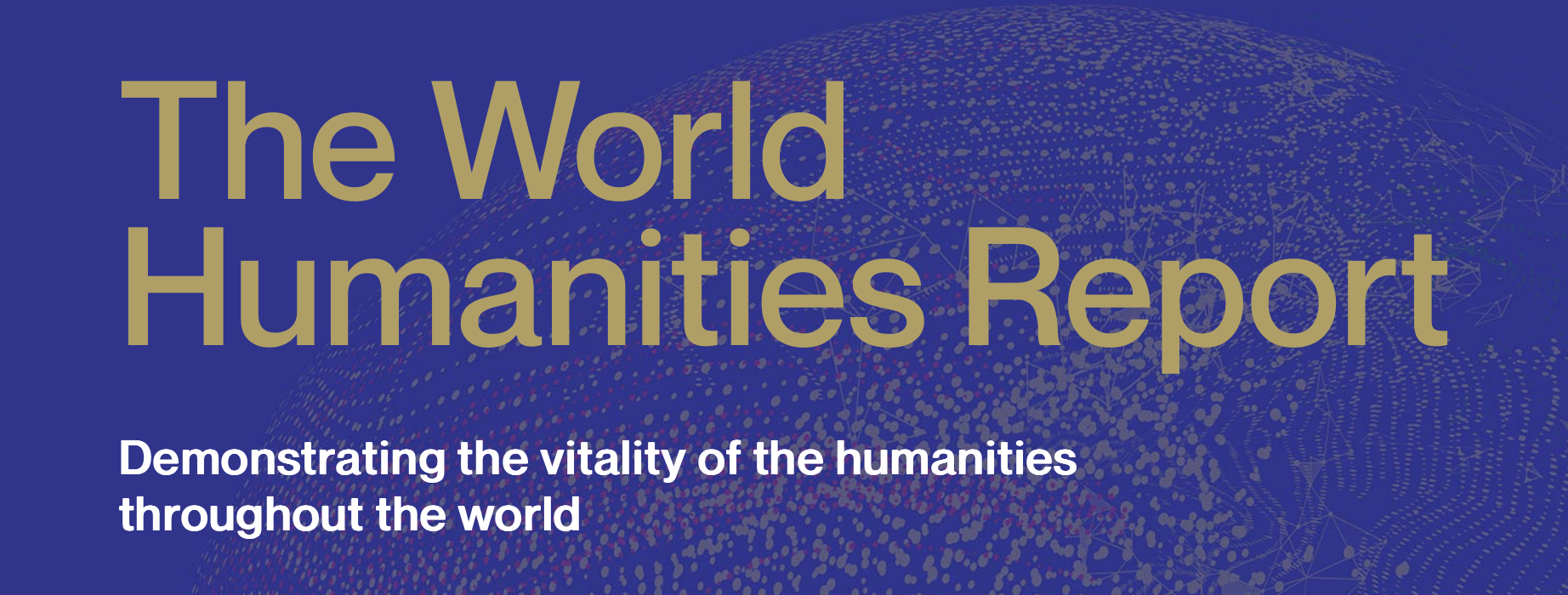
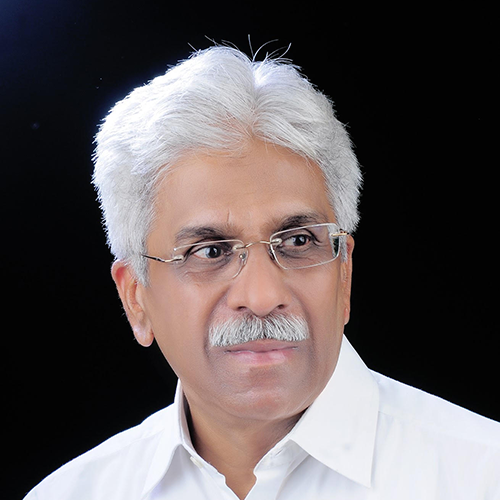
The World Humanities Report (WHR), coordinated by the Consortium of Humanities Centres and Institutes (CHCI) and the International Council of Philosophy and the Human Sciences (CIPSH), in collaboration with UNESCO, has now been released. Professor Bishnu Mohapatra, Director, Moturi Satyanarayana Centre for Advanced Study in the Humanities and Social Sciences and Professor of Politics, SIAS, Krea University is the World Humanities Report (WHR) regional team leader for India and South Asia. 

The World Humanities Report (WHR) presents diverse ways in which the humanities enable us to understand social realities and human entanglements in different regions of the world. In collaboration with UNESCO, the Consortium of Humanities Centres and Institutes (CHCI) and the International Council of Philosophy and the Human Sciences (CIPSH) coordinate the making of this report. Eight core research groups organised regionally (Africa, the Americas, the Arab Region, Australia, Europe, Mainland China, Russia, and India /South Asia) contribute to the fashioning of this report.

On an invitation by CHCI, Professor Bishnu Mohapatra anchored the India /South Asia report. With the help of thirteen critical essays and twelve short video conversations, the India/South Asia report depicts the humanities’ active presence in plural locations, diverse forms, and multiple tongues. Several people were involved in the making of this report, including twenty-nine scholars/researchers drawn from universities, research institutions, and civil society organisations connected to vast swathes of academic disciplines such as history, literary studies, social anthropology, social theory, aesthetics and performance studies, feminist studies, philosophy, cultural studies, linguistics, and musicology.

The report is by no means exhaustive. Its central objective is gestural, which points out how the humanities, despite resource and status-deficits, have enabled critical interrogation of social practices in India and South Asia.  

Read the Report here

Krea University hosts a Workshop on Industrial Policy in Indian States

On 20 March, 2024, Krea University’s Admin Office in Chennai hosted a day-long workshop on Industrial Policy in Indian States. The event was organised by the Madras Institute of Development Studies (MIDS) in collaboration with the New Political Economy Initiative, IIT-Bombay. 

The keynote address was delivered by Professor C Rangarajan, former Governor, RBI. Professor Madhuri Saripalle, Professor, Economics and Chairperson – MBA Programme at IFMR GSB, Krea University was a a speaker on the panel discussion on Sectoral Firms, and Professor Pulapre Balakrishnan, Visiting Professor at SIAS, Krea University chaired the Open-house session. 

For more information, click here

Lede-ing to the Nuts: Learning Journalistic Writing from Squirrels – A  Writing Workshop by Dr Anannya Dasgupta

Dr Anannya Dasgupta, Director, Centre for Writing & Pedagogy (CWP) and Associate Professor of Literature, SIAS, Krea University conducted a  Writing Workshop for Students of the ACJ-Bloomberg Business and Financial Journalism Programme, Asian College of Journalism, Chennai, on 15 March 2024. The workshop is entitled Lede-ing to the Nuts: Learning Journalistic Writing from Squirrels.  

For more details, click here.

Consent or Coercion? Looking back at the Constituent Assembly Debate on Uniform Civil Code – An Article by Dr Sambaiah Gundimeda in the Hindu’s Frontline Magazine

Dr Sambaiah Gundimeda, Associate Professor of Politics, SIAS, Krea University published an article titled Consent or Coercion? Looking back at the Constituent Assembly Debate on Uniform Civil Code in the Hindu’s Frontline Magazine.  

This article critically analyses the Constituent Assembly’s discourse on Uniform Civil Code. By analysing the arguments and counter-arguments of the proponents and opponents of the UCC, respectively, this article argues on the importance of securing the consent of the affected people, and the responsibility of the majority in facilitating the will of the minority. 

To access the article published in Frontline: click here.

You can read the article here

Exploring Christopher Nolan’s Cinematic Grammar: A Post-Oscar Analysis by Ritwik Kaikini

Ritwik Kaikini, Visiting Faculty, Global Arts, SIAS, Krea University, delves into Christopher Nolan’s filmmaking approach in an article titled At Oscars 2024, the triumph of the Christopher Nolan grammar, published in The Federal, India. Following Nolan’s Oscar win, Kaikini examines how Nolan constructs narratives infused with science and a phenomenological perspective. The piece offers insights into Nolan’s distinct style and its impact on cinematic storytelling, shedding light on his unique approach to filmmaking.

Read the article here

Dr Shyam Kumar Sudhakar Presents a Poster at the 16th Young Investigators’ Meeting held on 11–13 March at IISER Bhopal 

Dr Shyam Kumar Sudhakar, Assistant Professor of Biological Sciences, SIAS, Krea University presented a poster titled Discovering Disease Comorbidities in Mild Traumatic Brain Injury Patients Using Graph Network Approach: A Traumatic Brain Injury Model Systems Study during the 16th Young Investigators’ Meeting organised by IndiaBioscience on 11-13 March at IISER Bhopal. 

More info about the event can be found here

Dr Anannya Dasgupta authors a book chapter in the anthology Contemporary Gender Formations in India

A book chapter titled I Am as Big as the City I Walk: Documenting Maya Rao’s ‘The Walk’ by Dr Anannya Dasgupta, Director, Centre for Writing & Pedagogy (CWP) and Associate Professor of Literature, SIAS, Krea University, has been published in the anthology Contemporary Gender Formations in India. The book is edited by Nandini Dhar and published by Routledge, in March, 2024. 

For details, click here