
29 June - 3 July 2026
Overview
The workshop, Advanced Psychophysics: From Behaviour to Brain aims to provide an intensive introduction to advanced psychophysics, integrating:
- Behavioural Methods
- Neuroimaging Techniques (EEG)
- Computational Modelling Approaches
The programme is designed for advanced undergraduate, graduate and PhD students from external institutions with free registration for Krea University students. The workshop will involve morning sessions consisting of 3-hour lectures and demonstrations covering theoretical and methodological foundations. Afternoon sessions will be collaborative, hands-on project development building towards one integrated project by the end of the workshop.
The tentative schedule of topics for each day includes:
- Day 1: Introduction to Psychophysics
- Day 2: EEG Acquisition and Preprocessing
- Day 3: EEG Data Analysis and Interpretation
- Day 4: Computational Modelling in Psychophysics
- Day 5: Project Finalisation and Presentations
On completion of the workshop, participants will have an enhanced understanding of advanced psychophysical methods, practical skills in EEG data collection and analysis, experience in computational modelling of perceptual and cognitive processes, and a completed collaborative project integrating behavioural, neuroimaging, and computational approaches.
The workshop committee is also working on collaborating with prominent publishers in the field.
Schedule
The workshop will comprise of these sessions:
| Day | Time | Session | Speaker |
| Day 1 | 9:00 am – 12:00 pm | Advanced Psychophysics Concepts and PsychoPy Implementation |
Dr Rakesh Sengupta and Dr Sayantan Mandal |
| 2:00 pm – 5:00 pm | Guided Project Phase 1: Students select problem and collect literature | Moderated by various faculty members | |
| Day 2 | 9:00 am – 12:00 pm | Design, methods, and limits of Psychophysics |
Dr Rakesh Sengupta, Dr Rakshi Rath and Dr Suryodaya Sharma |
| 2:00 pm – 5:00 pm | Guided project Phase 2: Students present rationale and discuss and debate design | Moderated by various faculty members | |
| Day 3 | 9:00 am – 12:00 pm | Computational Methods in Brain and behaviour |
Dr Rakesh Sengupta and Dr Shyam Sudhakar |
| 2:00 pm – 5:00 pm | Guided project Phase 3: Experiment Design and Pilot Data | Moderated by various faculty members | |
| Day 4 | 9:00 am – 12:00 pm | Language, computation, & the Brain | Dr Sayantan Mandal |
| 2:00 pm – 5:00 pm | Guided project Phase 4: Preliminary analysis and design modification (if any) | Moderated by various faculty members | |
| Day 5 | 9:00 am – 12:00 pm | Contemporary Methodologies in Cognitive Neuroscience |
Dr Rakesh Sengupta and Dr Sayantan Mandal |
| 2:00 pm – 5:00 pm | Guided project Phase 5: Final data collection and interpretation | Moderated by various faculty members | |
| Day 6 | 9:00 am – 12:00 pm | Correlational vs Explanatory Cognitive Neuroscience | Dr Rakesh Sengupta |
| 2:00 pm – 5:00 pm | Final project presentations and feedback | Moderated by various faculty members |
Registration
- The registration fee of Rs. 5000/- includes the workshop fee and one week’s accommodation at Krea University
- External travel and food are participant-borne, while Krea offers subsidised dining
- There will be a one-night gala dinner for all participants
- Krea University students can avail free registration
Team
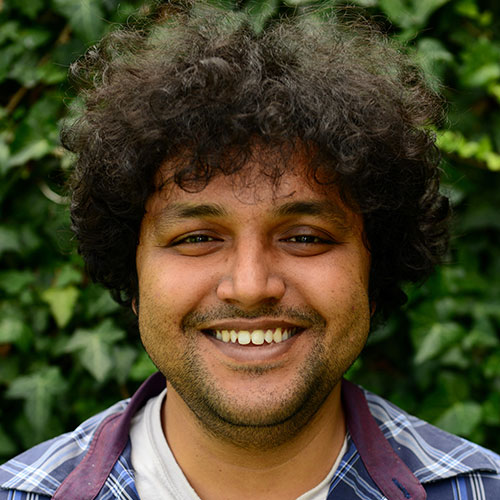
- Dr Rakesh Sengupta
Assistant Professor,
Psychology, SIAS
Psychology, SIAS
View Bio
Dr Rakesh Sengupta
Dr Rakesh Sengupta is a cognitive scientist specialising in vision, attention, and working memory. He was the Director at Center for Creative Cognition, School of Science, SR University, Warangal, Telangana, until recently. While working on his dissertation, Dr Rakesh spent two years as a visiting fellow at Center for Mind/Brain Sciences (CiMec) at the University of Trento, Italy. He completed his PhD from the Center for Neural and Cognitive Science, University of Hyderabad in 2015 with a thesis entitled, Computational and Empirical Investigations of Number, Time, and Memory. Upon completing his doctorate, Dr Rakesh spent two years as a postdoctoral fellow at Centre for Vision Research at York University in Toronto, Canada. His current research involves building computational models of the human number system and working memory using computational, theoretical, behavioral, and neuroimaging methods. He has published and has interest in the disciplines of Behavioral and Computational Neuroscience, Psychology, Philosophy of Mind, Neuroimaging, Biophysics, and Machine Learning.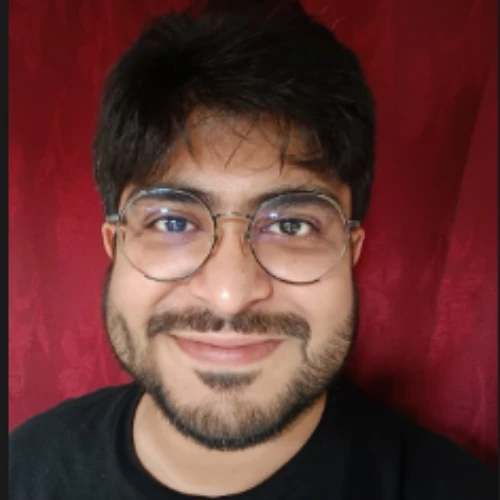
- Dr Sayantan Mandal
Assistant Professor,
Psychology, SIAS
Psychology, SIAS
View Bio
Dr Sayantan Mandal
Dr Sayantan Mandal studies Natural Language from the perspectives of Cognitive Neuroscience and Psychology. Specifically, Dr Mandal explores the computational architecture of natural language phonology, its implementation in the human brain, and the ways in which it interfaces with the sensory and motor systems. He received Masters’ degrees from EFL University (Hyderabad) and The University of Auckland respectively, specialising in Generative Linguistics. Following this, Dr Mandal was a post-graduate psycholinguistics researcher at the MARCS Institute of Brain, Behaviour and Development in Sydney, Australia. His PhD work was carried out at Université Concordia, in Montreal, with support from CNRS’ Bases, Corpus et Langage and Complexity and Cognition Laboratories at Université Côte d’Azur, in Nice, France. Dr Mandal’s research straddles the interfaces between computational-representational theories of Generative Grammar, Biolinguistics and empirical methods in Cognitive Neuroscience. Specialising in using spatial and temporal neuroimaging methods, particularly functional magnetic resonance imaging (fMRI) and electroencephalography (EEG), Dr Mandal aims to identify the neural substrates of cognitive computations. Currently, Dr Mandal is working with colleagues from CNRS on isolating temporal neurophysiological signatures of sub-modules of linguistic and speech processes. Particular research interests include working with undergraduate and graduate students who wish to undertake theoretical and experimental neuropsychological work involving language and its various interfaces, including perception, articulation and vision.
- Dr Rakshi Rath
Assistant Professor,
Psychology, SIAS
Psychology, SIAS
View Bio
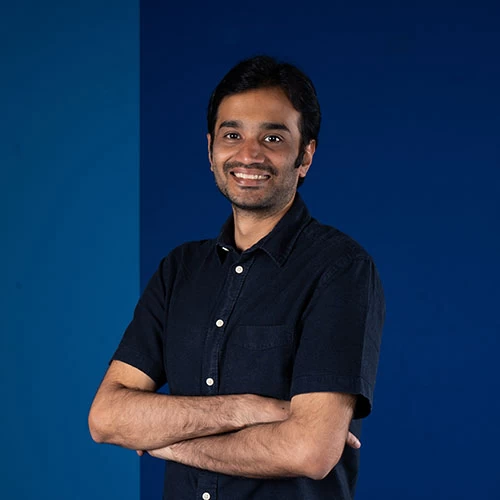
- Dr Shyam Sudhakar
Associate Professor,
Biological Sciences, SIAS
Biological Sciences, SIAS
View Bio
Dr Shyam Kumar Sudhakar is a Neuroscientist with interests and specialisation in the field of Computational Neuroscience. Dr Sudhakar received his PhD from Universiteit Antwerpen, Belgium. At Antwerp, he was supported by the prestigious Marie-Curie fellowship for three years and subsequently with funds from Okinawa Institute of Science and Technology, Japan. During his PhD, he developed a large-scale network model of the granular layer of the cerebellar cortex.
Dr Sudhakar then went on to pursue postdoctoral training at the University of Michigan, Ann Arbor, United States. During his postdoctoral training, he focused on the computational modeling of neurological disorders (Epilepsy, Traumatic Brain Injury) and the modeling of oscillations generated in a brain region called the retrosplenial cortex. Prior to joining Krea University, Dr Sudhakar briefly worked as a post-doctoral researcher at École polytechnique fédérale de Lausanne (EPFL), Switzerland. Dr Sudhakar is an avid traveler and loves exploring new places. In addition to traveling, he spends his free time learning more about financial markets.
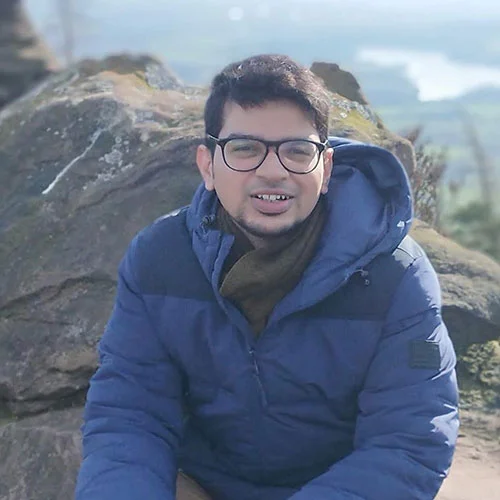
- Dr Suryodaya Sharma
Assistant Professor,
Psychology, SIAS
Psychology, SIAS
View Bio
Dr Suryodaya Sharma has a PhD from the department of Humanities and Social Sciences at the Indian Institute of Technology, Delhi. He is a Senior Research Fellow with the University Grants Commission (UGC-SRF). Earlier, he attended Keele University, UK as a Visiting Fellow supported by the UK-India Education and Research Initiative (UKIERI). He has received his education from the University of Delhi and Banaras Hindu University.
His primary area of interest is the intersection of prejudice, legitimation and oppression, specifically how social inequalities may be naturalised and reproduced in modern and democratic societies. His doctoral project examined the psychological underpinnings of persistence of caste in Indian society in a mixed-method enquiry. He is also involved in many projects with foci ranging from hate speech through memes, identity entrepreneurship by majoritarian leadership and humiliation in Hindu-Muslim relations in Indian society. He seeks to answer complicated questions of social inequalities by exploring the interrelationships between psychological processes and socio-political contexts.