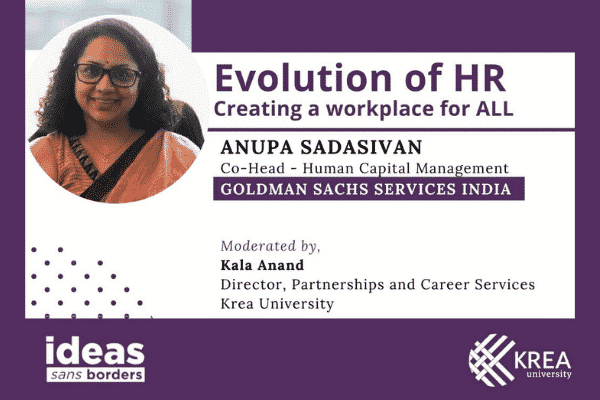
Evolution of HR- Creating a workplace for ALL

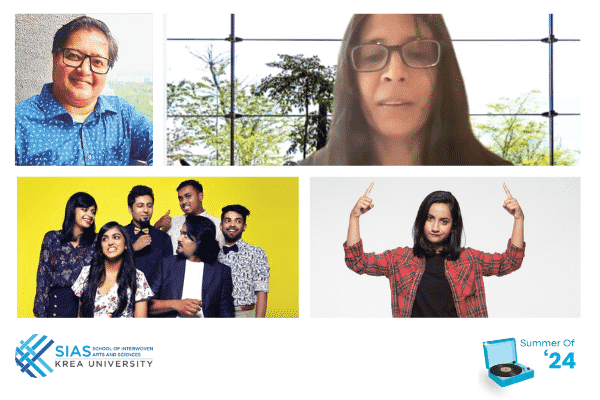
In a highly engaging session with the undergraduate cohorts of Krea University, Anupa Sadasivan, Co-head – Human Capital Management, Goldman Sachs Services India shed light on the important role of diversity and inclusion in organisations, the evolving hiring process and the impact that organisations like Goldman Sachs create as they uphold their organizational values.

In an evening filled with conversations, Anupa took the student audience through the evolution of the HR function, reflecting on her own experiences spanning two decades. “The shift in HR – I have experienced – is moving away from process, to people, to culture, to creating the right environment. It is no longer about saying that these are the tasks one needs to deliver but about how you are enabling people to succeed. Even the language of HR has seen a big shift.”

She emphasised on the need to look at team performances rather than a siloed approach and stressed on collaborative and consensus-driven team environments. Speaking to students eager to learn more about the HR function, she clarified how it is not about being a people’s person but about being solution-oriented with nonlinear thinking, understanding the business, leaders, people, operating environment and being a facilitator. She stressed on capabilities and mindset and not just about subject matter expertise.

While encouraging depth in the space of chosen learning she also spoke of inculcating the agility to move and integrate multi-disciplinary approaches and diverse perspectives. Anupa articulated how Goldman Sachs hires people from multiple disciplines because it is diverse perspectives on the table that matters.

Speaking about diversity and inclusion, Anupa pointed out how diversity has always been in the business principles of Goldman Sachs and how its leaders have always maintained that diversity is not optional but what it must be. This involves, but is not limited to novel digital campus drives, hiring of veterans, bringing back women who have opted out of the workforce through internship programmes, and participating in job fairs for LGBTQ+ professionals. She added, “We would have people across disciplines and streams doing jobs that you would not naturally think they would do.”

When asked about the shift to the hybrid work model, Anupa noted that they are still learning and anchoring the decisions with a people first approach because this was something that did not have a playbook and no one was prepared for. On the current shift, she spoke about how it is important to be constantly aware of what is happening so that one can tweak their responses to it and stay relevant. She also spoke about embracing technology through bite-sized technical training programmes and how Goldman Sachs moved away from a ‘should do’ to ‘do on demand’ approach so that training programs were available at convenience.

About the work across their inclusion networks in the gender, disability, veterans, LGBTQ+ and religion and culture focus areas, she stressed on how important it is to be visible and vocal, to engage in dialogue and take the momentum and conversation forward. “When it comes to inclusion, it is of utmost important to demonstrate commitment through actions and talk about it,” she said.

Many of the greatest discoveries are by people who have had broad exposure to multiple disciplines, says Neuroscientist Dr Tara Thiagarajan in her keynote address to the SIAS Class of ‘24

The School of Interwoven Arts and Sciences (SIAS) at Krea University welcomed nearly 200 talented young students into the third cohort of the undergraduate programme. The inaugural ceremony preceded the virtual five-day interactive orientation event, which brought together all students, faculty and guest speakers.

The admission process at Krea gauges potential beyond academic scores, ensuring a diverse set of students from varied backgrounds and interests. The incoming batch of students come from over 3 countries, 19+ states of India and from various boards of education. In keeping with the University’s need-blind admission and need-aware financial assistance process, over 20 percent of them received financial assistance.

Dr Mahesh Rangarajan, the Vice-Chancellor of Krea University, welcomed the students with the message of embracing changes that would prepare us for future challenges. Relating one epochal event with another, Dr Rangarajan spoke about the significance of 9th August in the history of India, South Asia, and Asia – the launch of the Quit India Movement. Decades later, while circumstances have changed, we continue to live through yet another epochal change, he shared.

His address also elaborated on the educational transformation that awaits India. “There are many ways to prepare yourself for change. One of them is being educated. What is remarkable about India is that it has been at the forefront of a great education transformation. The number of Indians who go to college has doubled. Krea University is a new institution, but what makes us new is the quality of our faculty, our libraries, our facilities and our ability to teach young people on looking at knowledge in an integrated way,” he said.

Chance favours the prepared mind

Neuroscientist and Founder of Sapien Labs, Dr Tara Thiagarajan was the special guest of honour and addressed the students. In her keynote address, she shared the three values that went into creating Krea University. “Krea was started with a vision to build a new institution with these three values- a) Interwoven disciplines b) Porous Boundaries where learning integrates with the real-world, and c) ‘Learn to Learn’- because education is lifelong and not just constrained to the 3-4 years you are here at Krea.”

As she welcomed students to a new kind of learning, Dr Thiagarajan shared inspirational stories of scientists who were not constrained by the system of the time. Narrating the stories of French chemist Antoine Lavoisier and American businessman Cyrus W Fields, Dr Thiagarajan shed light on the extraordinary power of interwoven learning. “They looked at the world and went after whatever they thought was interesting or important. If you don’t look broadly at a problem with multiple perspectives, you are constrained in the possibility of the solutions you find,” she added.

Ending her address with a quote by Louis Pasteur, Dr Thiagarajan encouraged the new cohort to explore widely while at Krea. “As we all start out with great hopes for ourselves. We should know that life is not without obstacles. We look at life as some sort of upward progression. But life throws a lot of things and perhaps you are all acutely aware of this due to the pandemic. There are many things beyond our control. However, what is within our control is how we respond to these obstacles,” she said.

Building Resilience

Dr Shobha Das, Dean of IFMR Graduate School of Business at Krea, in her special address to the incoming cohort, shared how Krea built resilience during these unprecedented times. On dealing with unpredictable changes, Dr Das added, “I would like to suggest three things that would help build resilience. First- Read, don’t glance. Second- Listen more, talk less. And finally, Reflect and don’t judge. Keep yourself open to new information, new views, and different kinds of people.”

Dr Akhila Ramnarayan, Divisional Chair of Literature & the Arts at SIAS, in her special address, shared the importance of Liberal Arts and Sciences to tackle the rich, perplexing questions of the 21st Century. She shared, “In the past year, we have been through so much together. Alone, as a planet, and a University. And yet here we are, welcoming you with all our hearts into the Krea fold with joy and a sense of deep purpose. Because now is the time that the liberal arts and sciences’ mission, with which our mission of Interwoven Learning is deeply intertwined, is put truly to the test. And it is at this time that we must all come together to combine scientific temper with artistic zeal for philosophical preparedness.”

Celebrating inclusion and diversity

The week-long orientation programme also featured industry talks and entertaining activities to welcome the new cohort. Speaking about the challenges and support systems needed for inclusivity and diversity, technologist Ketty Avashia shared his journey through his personal story of coming out as a transman in the workplace. Working as the Vice-President and Platform Integration Lead in India for the global financial company Wells Fargo, Ketty also shared how he became a diversity and inclusion (D&I) advocate and encouraged students to become allies for change.

Ending on a musically funny note

The orientation programme concluded with Krea Nite – an evening full of music, laughter, and excitement. Engaging students and Krea staff and faculty alike with her wry sense of humour was standup comic Urooj Ashfaq. The overall programme ended with a phenomenal performance by Voctronica – India’s first all-vocal ensemble. To watch highlights from the inaugural ceremony, click here.

Global Scholarship Recipient Feature: Neha Jacob

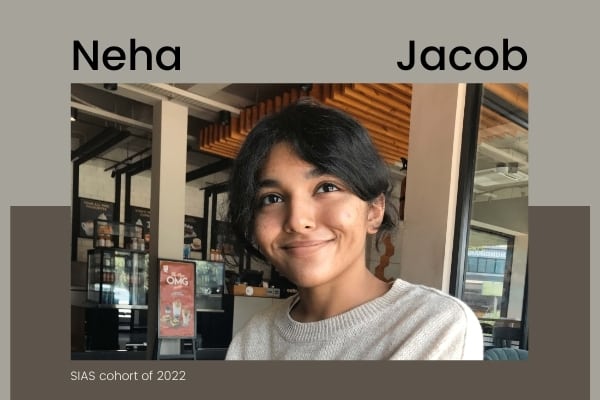
Part of the UG cohort 2022, Neha shares her learnings and experience as a Market Research & Financing intern at ‘Eden GeoTech’.

29 July 2021 | By Ashutosh Verma, Krea Cohort 2022

Neha Jacob, a student from the UG cohort of 2022 at Krea, has always been fascinated by the world of finance. Her interest grew and went to the next level when she became one of the recipients of a global scholarship, supported by CIEE (a Krea global partner). With the summer of 2021 looking up, Neha has begun her internship with Eden GeoTech – innovators in the field of geotechnology with a vision for a sustainable future. 

Sharing the skills she is waiting to acquire and her experience so far, Neha is confident that this global exposure will bring her the career outcomes she hopes for. 

The Internship Experience

The organisation that I selected is a venture capital startup by a few MIT graduates. Along with me, there are also a number of students from around the world interning here. As an intern in Market Research and Financing, I have learnt a lot about investment, the market, financial modelling and have had the opportunity to interact with students from around the world. It also taught me the importance of effective communication owing to the time difference between mine and my colleagues’.

On Skills and Talent

The internship has given me some much-needed insights into the area of financial modelling, which I was not exposed to before. It has also enabled me to interlink investing and finances with Economics, which is a great necessity in economic areas such as budgeting. Additionally, due to the startup nature of the company, I have also gained a deeper understanding of how an organisation cements its base.

About the Programme

I have always been interested in learning more about clean energy and finance, and this internship is giving me just the right exposure. Moreover, due to the global nature of the internship, I am also virtually meeting a lot of new people and expanding my network thus gaining a global perspective on matters that interest me the most.

On Future Aspirations and Assignments

I would like to expand and specialise in economics, leaning towards Environmental Economics. Furthermore, I intend to study and gain expertise in the area of data visualisation.

More than an Internship

I’m having a lot of fun with the internship! It has been very engaging and my superiors are friendly and helpful. They also have a lot of experience in the area which is certainly beneficial for me and my career outcomes. I’ve gained a lot of confidence and experience from this internship. Interning at a startup, and being given an agency in the decision-making process, has made me feel that my work truly matters.

Accessing a world of opportunities

I’ve learnt so many things through this internship. From financial modelling to interacting with my fellow interns from around the world, the internship has been a great opportunity to forge international connections and relationships along with gaining valuable experience!

The Telegraph publishes op-ed piece on ‘Covid phobia’ authored by SIAS professors

Life, undoubtedly, is uncertain; but when we experience this uncertainty in our everyday affairs, we end up suffering from a ‘novel’ phobia — ‘Covid phobia’. 

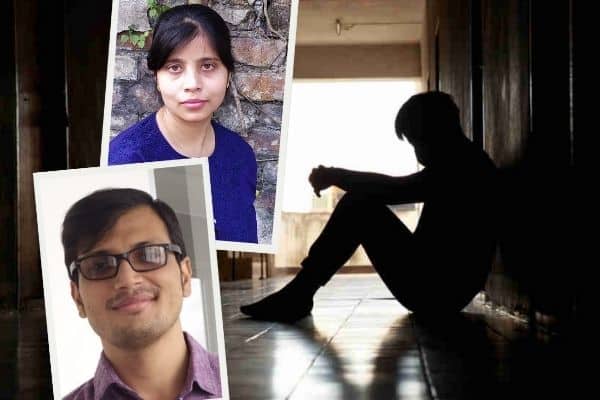
Prof Soumyajit Bhar, Visiting Assistant Professor, and Prof Kalpita Bhar, Assistant Professor of Philosophy, have together authored an important article on rediscovering the human touch amidst a global pandemic. The article elaborates on the importance of collaboration during such an emergent crisis, and how we, as a society, need to find a way to tackle our fears. 

Read the full article here: https://www.telegraphindia.com/opinion/rediscover-the-human-touch-covid-phobia/cid/1821766

15 global scholarships for Undergraduate students this summer

The Partnerships Office at Krea has facilitated compelling global scholarships and opportunities for students, based on their interests and skill-sets. This year, 15 students from the Undergraduate school are recipients of scholarships to various global academic and work programmes.

First-year students Deepaknarayan, Aishwarya Srihari, Diya Ahuja, and Arnav Gulati are all set to pursue a programme in International Relations at the King’s College London (KCL), while second-year students Satvika Char and Pria Susan Jacob will pursue a programme in Psychology at KCL.

Taking their interest in international policy and economics one step further, first-year students Harini Elango, Rhea Parameswaran, Kairav Bhalla and Prashanthi Subbiah have won scholarships to the highly rigorous Data and Policy Summer Scholar Program at the reputed University of Chicago Harris School of Public Policy.

Going beyond summer academic programmes, students received an opportunity to also immerse themselves in global internships. Supported by CIEE (a Krea global partner), second-year students — Jahnavi Chandramouli, Smriti Venkatraman, Malavika Raja, Neha Jacob, and Shreya Hegde — have been offered attractive international projects with international organisations in Europe and USA.

New Faculty appointments at Krea

We are glad to announce that 14 professors have joined the School of Interwoven Arts and Sciences (SIAS) at Krea University across the Division of Sciences, the Division of Humanities & Social Studies, and the Division of Literature & the Arts. 

Division of Sciences

Prof Sudip Roy

Visiting Associate Professor of Chemistry

Dr. Sudip Roy has 19 years of experience in research and innovation. He has worked in the oil and gas, energy (Shell R&D), pharmaceutical sectors (Akamara Biomedicine), and semiconductor industry (Intel). He started his career as an academician and worked as a scientist at the CSIR- National Chemical Laboratory in Pune where he led and guided a group of Ph.D. students and worked on several industrial and government-funded projects in computational chemistry and materials science. He is a co-founder of a company (Prescience Insilico Pvt. Ltd.) working in the development of Artificial Intelligence (AI)/Machine Learning (ML)-based methodologies for highly selective drugs and materials design. Dr. Roy obtained his Ph.D. in chemical sciences from the University of Saarland in Germany followed by post-doctoral work at Technical University Darmstadt, Germany. He is a Chevening fellow 2019 and studied management of research, science, and innovation at the University of Oxford, UK.

Venkata Srinu Bhadram

Assistant Professor of Physics

Venkat is an experimental physicist with research interests spanning across hard condensed matter physics, chemistry, and materials science disciplines. He is deeply engaged in studying matter at extreme pressures in order to discover new technologically relevant materials. He frequently collaborates with computational physicists and chemists for materials modelling and simulations.

Venkat obtained his Masters degree in Physics from IIT Roorkee and Ph.D. in Materials Science from JNCASR in Bangalore. After a short stint at Purdue University in West Lafayette as a visiting researcher, he did his postdoctoral studies at Carnegie Institution for Science in Washington, DC and Sorbonne University in Paris.

He has mentored undergraduate interns during his Ph.D. and postdoc tenures. He emphasizes on hands-on learning and took part in developing and teaching practical oriented courses for summer interns during his Ph.D. Outside academic life, he enjoys sports (TT, cricket, and badminton), travelling, gardening, and cooking.

Prof Tanmoy Chakrabarty

Designation: Assistant Professor of Physics

Tanmoy Chakrabarty is an experimental physicist in condensed matter. His main expertise is solid state nuclear magnetic resonance (SSNMR) which is a powerful local probe technique used in various disciplines. Apart from NMR, he also uses different bulk solid state probes to study low-dimensional and geometrically frustrated magnetic systems which are finally studied in details using SSNMR. Additionally, his research interest also includes dynamic nuclear polarization (DNP) which is an extension of conventional NMR technique to enhance signal to noise manifold times.

After finishing his Masters and doctoral studies in IIT Bombay he did postdoc in TIFR Mumbai and next in Weizmann Institute of Science, Israel for 1 year each. Thereafter, he was awarded an international postdoctoral grant (Mobilitas Pluss) as a principal investigator in NICPB, Tallinn, Estonia for 2 years. His last postdoc was in IFW, Dresden, Germany. In all these places he extended his expertise in SSNMR in various facets. Apart from being a researcher he was always involved in various public scientific outreach activities at a popular level.

Prof Shyam Kumar Sudhakar

Assistant Professor of Biological Sciences

Shyam Kumar Sudhakar is a Neuroscientist with interests and specialization in the field of Computational Neuroscience. Shyam is interested in studying pathological brain states (Epilepsy, Traumatic Brain Injury) with the aim of identifying promising therapeutics to repair the aberrant brain circuits. Shyam does so by using biologically realistic computational modeling and collaborating with experimental researchers in the field. Shyam’s long-term goal is to study how network activity and oscillations are altered in neurological disorders and develop novel strategies to stop the abnormal functioning in such brain states. Shyam believes that his research work would greatly help to uncover the brain mechanisms of behavior and how those mechanisms become abnormal in neurodegenerative diseases.

Shyam received his PhD from Universiteit Antwerpen, Belgium. At Antwerp, he was supported by the prestigious Marie-Curie fellowship for 3 years and subsequently with funds from Okinawa Institute of Science and Technology, Japan. During his PhD, he developed a large-scale network model of the granular layer of the cerebellar cortex.

Shyam then went on to pursue post-doctoral training at the University of Michigan, Ann Arbor, United States. During his postdoctoral training, he focused on computational modeling of neurological disorders (Epilepsy, Traumatic Brain Injury) and modeling of oscillations generated in a brain region called retrosplenial cortex. Prior to joining Krea University, Shyam briefly worked as a post-doctoral researcher at École polytechnique fédérale de Lausanne (EPFL), Switzerland.

Prof Vikash Pandey

Assistant Professor of Math Modeling and Physics

Vikash Pandey is a mathematical physicist and his research interests are quite interdisciplinary with a primary focus towards the physics of complex systems and the resulting memory-driven emergent power-law behavior. After receiving M.Sc degree in Physics from the Banaras Hindu University, Varanasi, he worked as a geophysicist for a seismic company in US, UK, and Africa. Thereafter, he earned his PhD degree from the University of Oslo, Norway, in 2016. He did his postdoctoral research at the University of Oslo, and UiT, The Arctic University of Norway in Tromsø. His publications encompass the fields of fractional calculus, acoustics, fractal geometry, viscoelasticity, non-Newtonian rheology, dielectrics, and nonlinear bubble dynamics. Identifying the underlying mechanism of observed physical phenomena and the ability to describe them with an appropriate mathematical formulation gives him an unmatched joy. His long term research goal is to extend the applications of fractional calculus to the traditional branches of physics such as quantum physics and cosmology. 

In addition to the research, teaching has been an important part of his academic training. After his postdoctoral experience, he began his teaching career in India at the Ahmedabad University, Gujarat, followed by at the University of Petroleum & Energy Studies (UPES), Dehradun. Following his passion towards teaching, he had served as a mentor in one of the massive open online courses (MOOC) offered by the University of Rochester, USA, through Coursera. He was also a representative for the engineering acoustics committee of the Acoustical Society of America. 

Further, he has been actively involved with the public outreach of scientific discoveries because he believes such an outreach is necessary to cultivate scientific temper and critical thinking among the masses.

Prof Chirag Dhara

Assistant Professor of Environmental Studies

Chirag is a quantum physicist turned climate physicist. His primary areas of research are atmospheric thermodynamic models, atmospheric radiation and convection, impact of aerosols (air pollution) on global and regional precipitation and near-term climate change projections.

Other areas of interest are climate change impacts and mitigation, planetary pressures of anthropogenic activities, limits to the “circular economy” and resource theory of sustainability.

Chirag was one of the authors of India’s first comprehensive climate change assessment report, the “Assessment of Climate Change over the Indian Region” released in 2020 – the regional analog of the global scale IPCC WG1 reports. He is also a contributing author to the IPCC’s upcoming AR6 report (2021).

Chirag holds two doctorates, the first in quantum theory from the Institute of Photonic Sciences in Barcelona, Spain (2013) and the second in Earth system sciences from the Max Planck Institute for Biogeochemistry, Jena, Germany (2017). He also spent two years as a Research Associate at the Indian Institute of Tropical Meteorology before joining Krea.

Prof Shibi Vasudevan

Assistant Professor of Mathematics

Shibi Vasudevan’s research interests are in the areas of applied analysis, differential equations and fluid mechanics. His current work is broadly focused on the following themes: stability of solutions to partial differential equation (PDE) models arising from incompressible fluids and atmospheric sciences and in finding ways of obtaining or characterizing (unstable) eigenvalues of linearized differential operators.

He obtained an M.A. and Ph.D. in mathematics from the University of Missouri-Columbia, U.S.A following which he was a postdoctoral fellow at the International Center for Theoretical Sciences (ICTS), Bangalore and the Chennai Mathematical Institute (CMI) in Chennai. His earlier degrees were in engineering (M.S. in aerospace engineering from Iowa State University and B.E. in mechanical engineering from NITK Surathkal).

He also enjoys teaching mathematics and interacting with students. Apart from research and teaching in mathematics, he is interested in increasing access and educational opportunities in mathematics amongst regions and peoples that are traditionally underrepresented.

Division of Humanities & Social Sciences

Prof Geeti Das

Assistant Professor of Politics

Geeti’s work focuses on institutional analysis, sexuality and gender, classification, and science and technology studies. Her dissertation looks at how seemingly radical shifts in science and technology can mask the resilience of an entrenched power structure to reshape itself. She analysed how sexuality and psychiatric classification remained intertwined after ‘homosexuality’ was struck off the DSM (the manual of mental disorders produced by the American Psychiatric Association) in ways that enabled the creation of a new kind of minority politics. Her ongoing research looks at how biosensors, apps, and self-tracking are changing relationships of labour and consumption among users, big data organisations, and states. Her work has appeared in Sexuality Research & Social Policy.

She holds a PhD in Politics from The New School for Social Research and a BA from Bryn Mawr College. At The New School, she received the Dean’s Fellowship, the Outstanding Graduate Student Teaching Award, and the Frieda Wunderlich Memorial Award for Outstanding Dissertation by an International Student. She has taught at The New School, Ashoka University, and O.P. Jindal Global University, focusing on global studies, sexuality and gender, urban politics, technopolitics, and infrastructure.

She worked on academic planning and curriculum development at JGU and The New School, and has done short-term research and editorial work for NGOs in India working on food security and human rights law.

Prof Swarna Rajagopalan

Visiting Professor in Political Science

Swarna Rajagopalan trained as a political scientist, works as an independent scholar, consultant and writer and founded and runs The Prajnya Trust. Her research interests relate to security, politics and gender. She writes regularly for both academic projects and general publications. She has taught politics and international relations at the University of Illinois, Michigan State University and Yale University, in addition to having taught at Sophia College, Mumbai and more recently, at the National Management School’s India campus for Broward University. Swarna’s consultancy work has included academic projects, from conceptualising and organising academic conferences to hosting and co-directing a summer study abroad programme for Michigan State in Chennai for two years. Prajnya works broadly towards gender equality and peace; her work at Prajnya combines all of these elements with training, advocacy, network and capacity-building in the social sector. In addition, Swarna is a founding member of the Women’s Regional Network, a network of women peace activists from Afghanistan, Pakistan, India and Sri Lanka.

Prof Sabah Siddiqui

Assistant Professor of Psychology

Sabah completed her Ph.D. from the University of Manchester on faith healing practices, where she investigated how medical science and traditional/alternative medicine intersect in mental health service provision, deploying methods from critical psychology, ethnography, and social geography. She has also explored the place of fiction in social science methodologies through the trope of ghost stories. Her earlier research on faith healing was published as Religion and Psychoanalysis in India: Critical Cultural Practices (Routledge, 2016). Currently, she is a Co-Investigator on a British Academy grant on traditional medicine in Manchester using a Community Asset Mapping method. She is also a Co-Investigator on a project collecting data about the conditions of work for Rural Sanitation Workers in Haryana during the COVID-19 pandemic. She is co-editing a special issue for the Palgrave Journal of Psychoanalysis, Culture, & Society titled Nationalisms and their Discontents: South Asian Perspectives (to be published in late 2022, deadline for submitting abstracts is August 30, 2021, so please contact me if the topic interests you). She is also contributing to the second edition of A Critical History and Philosophy of Psychology (Cambridge University Press).

Prof Soumyajit Bhar

Visiting Assistant Professor of Environmental Studies (full-time)

Soumyajit straddles action and academic research with more than 14 years of experience of working with environmental and sustainability issues. He has earned a Ph.D. in Sustainability Studies (specialization in Ecological Economics) from ATREE, Bangalore. His dissertation attempts to understand socio-psychological drivers as well as local and regional scale environmental impacts of conspicuous/luxury consumption in India. Soumyajit has an engineering bachelor’s in Computer Science and Engineering and a Master’s with a gold medal in Environment and Development from Jadavpur University. He has diverse work experience, ranging from conducting action research in Sustainable Agriculture and Natural Resource management to teaching in a Krishnamurti Foundation of India School to working as a research fellow at LEAD at Krea University and teaching at Terra.do – an online global climate school.

Soumyajit is furthering research at the intersection of rising consumerism, sustainability concerns, and inequality levels in the context of the Global South. He has published in the journal of Indian Society for Ecological Economics, International Journal of Qualitative Methods, and popular media houses like The Wire, Mongabay, etc. He is a member of a working group under Future Earth’s Knowledge-Action Network for Systems of Sustainable consumption and production, and the Sustainability Transitions Research Network.

Prof Vidya Bharathi Rajkumar

Assistant Professor of Economics

Vidya Bharathi Rajkumar is an applied economist with research interests in the domains of Development and Agricultural Economics and Public Policy. Vidya received her Ph.D. in Applied Economics and Management from Cornell University. At Cornell, Vidya was a Tata-Cornell research scholar at the Tata Cornell Institute (TCI), an inter-disciplinary research group working on identifying solutions to agriculture and nutrition related problems in India. Prior to Cornell, Vidya was a Research Associate at J-PAL India.


Vidya’s research focuses on developmental questions in the context of India, and her doctoral research examines the impact of male migration and remittances on the women and children left behind in India’s agrarian areas. She is keen to pursue a research agenda examining the complex relationships connecting male migration, women’s empowerment in agriculture, and the resultant effects on agricultural productivity. Vidya is also interested in questions that examine the role of social and gender norms in governing women’s agency and employment in patriarchal societies.

Prof Karthik Rao Cavale

Assistant Professor of Political Economy and Urban Studies

Karthik Rao-Cavale is joins Krea University in July 2021 as an Assistant Professor in Political Economy and Urban Studies. He has a PhD from the Department of Urban Studies and Planning at the Massachusetts Institute of Technology, and his research interests lie at the intersection of regional political economy, urban studies, economic geography, and development studies. His dissertation constructs a social history of regional road networks, regimes of circulation, and rural development in southern Tamil Nadu (1915 – 1965).
Karthik previously received a Master’s degree in City and Regional Planning from Rutgers University, New Jersey, and a Bachelor’s degree in Mechanical Engineering from the Indian Institute of Technology, Madras. Karthik’s earlier work in the field of city planning has been published in leading journals such as ‘Transportation Research Record’ and ‘Landscape and Urban Planning’. He has also contributed an empirical chapter to an edited volume on the Indian Supreme Court (Cambridge University Press, 2019), and has edited a special issue of Projections, the MIT Journal of Urban Planning.

Division of Literature & the Arts

Prof Abhishek Shukla

Assistant Professor of Literature

Abhishek Shukla graduated with a BA (Hons.) in English from St. Stephen’s College, Delhi. He went on to read Anglo-Irish Literature & Drama at University College Dublin, where he wrote a dissertation on Johnathan Swift, and completed his Masters degree with a first class honours. He then enrolled at the University of Rochester, where he went on to specialise in nineteenth-century American literature, and to develop a wide-ranging interest in intellectual history, early-American theology, Pragmatist philosophy, and the influence of early-American thought on later American culture.

He wrote his doctoral dissertation on Jonathan Edwards, in which he examines a wide range of Edwards’s scientific, philosophical, theological, and literary works, and unites them into a single system of metaphysics.
While at Rochester, he also taught, or helped teach, a wide variety of undergraduate courses, from an introductory course in Media Studies to an advanced course in the nineteenth-century British novel; from courses in classical Greek literature and twentieth-century European drama to courses on the interaction of science and religion in America from the eighteenth to the mid-twentieth century.

He is a recipient of the Gilman Prize, given each year to an outstanding graduating PhD, and was twice awarded the Dudley Doust Teaching Fellowship at the University of Rochester.
Amidst visuals of pain and panic, Krea student steps up to help people in Hyderabad during the catastrophic Covid-19 second wave

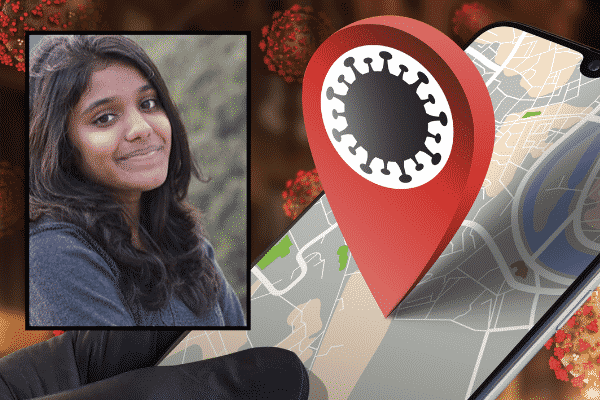
The last month has been a tumultuous one causing the healthcare system to collapse in some states. Lack of oxygen cylinders, hospital beds, and ventilators have been making headlines for weeks continuously, with ordinary citizens stepping up to help ease the pressure on government resources. One such is Manvi Teki – a 2nd-year UG student at Krea University.

Living in Hyderabad with her parents and grandparents, Manvi found it increasingly difficult to continue a “regular life” amidst a healthcare crisis and collective grief. With visuals of mortuaries and crematoria flashing in the media, and the added grief of a close friend’s father losing his battle to COVID-19, Manvi knew something had to be done.

On 1 May, she co-created a WhatsApp group for the sole purpose of identifying sources, verifying leads and compiling information. Called the ‘Hyd-T Covid Support Group’, the team includes entrepreneurs, NGO workers, healthcare professionals, media persons, and several other Hyderabadis from various sections of the society, volunteering 24X7. The group was featured in the local media, including by The Hindu recently, leading to an increase in the number of volunteers, therefore more information and requests.

“After this group was created and as the request for oxygen, medicines, beds, blood plasma went on increasing, we started creating more groups to spread the network of help. Today, there are almost 1000 people, including volunteers from the IT sector, law graduates and a number of other fields. We are addressing and amplifying each and every request that comes our way,” she shares. The group has also initiated a campaign – #KCRSaveYourPeople – to push the Telangana government to announce a lockdown and amp up the healthcare systems.

Volunteering work can get exhausting, mentally and physically. “There have been days when I would spend 4-5 hours looking for an oxygen bed. There are a lot of leads, but verifying them and updating the database is just as important and can save a lot of time and stress,” Manvi notes. For some, a group like this functions as some much-needed moral support. “An old couple living alone in Hyderabad reached out to us after reading about the group. They wanted to know if we could help them in case something happened to them.” In these days of grief and great distress, one can just pause, cry a little and then go back to fulfilling more requests, she adds.

The second wave of the pandemic has not been easy on everybody and rages on, with volunteers across the country chipping in to help with requests and information. The group continues to grow, beyond state borders. Now, people from Andhra Pradesh, Bengaluru, Delhi, and Chennai can join and volunteer too. If you wish to join the group, contact +91 91210-40777 or 91 99596-06667.

Prof Sarabjeet D. Natesan selected for Tata Trusts – Partition Archive Research Grant

Prof Sarabjeet D. Natesan, Associate Professor of Economics at Krea University, has been selected for the Tata Trusts – Partition Archive Research Grant. The Tata Grant is an immersive research residency grant program for academic researchers. It provides an opportunity for those who seek to explore and study The Archive’s complete oral history collections including over 9,400 oral history accounts on video.

In addition to Prof Natesan’s ongoing research interests in the implementation of public policy, her current interwoven research focuses on ‘Bazaars of 1947-Micro Stories of Businesses in Post Partition India’. It explores migration and its economic aftermath through the stories of refugees from the newly carved country of Pakistan to India in 1947. The overarching objective of this work is to piece together a narrative of personal stories of economic despair and challenges, of economic despair and fortitude in small pockets, and to document the contribution of small businesses in rebuilding lives, relationships, communities, and a country.

Student Spotlight: The ‘Her Campus’ Krea Chapter

The Voice of the Youth with ‘Her Campus’

A magazine that has students expressing themselves, relating to other students, and taking the discussion forward about gender, equality, and all the other elements that go into making a level playing field. A handful of students leading this movement, one blogpost and Instagram reel at a time. Whether you want to learn the basics of sewing a button into your shirt, how to socialise while social distancing, or learn hacks to saving money as a college student — the Her Campus Krea chapter is all this and more, with articles, posts, reels and digital content reiterating the belief that the future, indeed, is bright.

HerCampus.com is recognised as the number one global community for college students, written and contributed by student writers from around the world. Started by three college women in 2009, Her Campus is now a massive community with 400 chapters, across 11 countries, on all social media platforms, and raring to cover all topics under the sun with the intent of filling a huge gap in the media market — an online magazine, for and by the youth.

Members of the Her Campus Krea chapter share in great detail about who they are, what they do, and how their contributions help take the voice of the youth to the world.

Who are the founding members of the Her Campus Krea chapter?

The four main people who pushed to launch this initiative out of sheer interest were Akshaya,

Manasa, Gopika, and Ruchika from the Krea Undergraduate cohort of 2022. While looking for members to initially recruit to the core team, we sought to include students who possessed the skill sets their roles necessitated as well as an interest in the initiative itself. In this process, we found out that Irene Sarah and Reyna Eapen were also inclined towards and aware of the initiative.

Akshaya and Manasa took on the role of Campus Correspondents due to prior experience with leadership. Ruchika took on the role of Senior Editor due to prior experience with editing. Gopika took up the position of Marketing and Publicity Director from prior experience with public relations. The same went for Reyna, Social Media Director, who has had experience working with social media design, and Irene, Events Director, who has had plenty of experience in organising and hosting events. For the other members of the chapter, an application form was sent out and students from both cohorts have been selected. 

The Her Campus Krea Executive Board members include:

  1. Akshaya Shankar (Cohort of 2022): Major – Psychology / Minor – Literature
  2. Manasa Krishnan (Cohort of 2022): Major – Economics / Minor – Business Studies
  3. Ruchika Gupta (Cohort of 2022): Major: Economics / Minor – Psychology
  4. Gopika Krishna C (Cohort of 2022): Major – Biological Sciences / Minor – Psychology
  5. Reyna Eapen (Cohort of 2022): Major – Mathematics / Concentration – Psychology and Computer Science
  6. Irene Sarah (Cohort of 2022): Major – Economics / Minor – Business Studies

How did you hear about Her Campus?

We got to know about this initiative through Akshaya’s sister and we were inspired by Her Campus Ashoka. We had heard of the kind of work that was being initiated by Her Campus which drew us towards it. The initiative takes place in a very corporate setting – with chapter members reporting back to their respective executives, who in turn report to the campus correspondents. The campus correspondents then communicate on everyone’s behalf with the Her Campus Media team at Boston. It has been launched at Krea because the initiative itself stands for inclusivity and interesting cultural as well as artistic interactions. We look to be more than just a simple online magazine. While the emphasis is placed on digital content, we also plan on hosting events and fundraisers with our larger aim being community-building.

What kind of submissions have you made thus far?

We have made submissions along the vertices of wellness, beauty, lifestyle, entertainment, sex and relationships, literature, friendship, career, money, and lots more!

This website has links to all the articles that have been published on HC Krea’s website.

Who comes up with the story ideas/topics? What is the writing process like?

All the writers are given the opportunity and freedom to pick topics and pitch ideas that appeal to them. Once the article ideas are approved (which is pretty much always), the content writers go on to write it and then send it in for editing. The writing process as such encapsulates each

writer’s own style and subjective takes on where they see the articles going. The idea is for every writer to have the creative freedom to shape articles the way they envision them!

Do only regular writers contribute to Her Campus?

For the most part, they are regular writers. This is because we hope for it to be a learning and growing experience for them as well, which requires time. Given that they are regular writers, they have the opportunity to explore a variety of topics and really showcase their skills over a range of categories and articles. However, we also encourage writers who are eager to say something to send in their articles on a case by case basis!

How has the experience been so far?

The experience has truly been a very enriching one. In this short time, we have learnt a lot more about team management, team building, writing, etc.

What is the Krea chapter’s plan, in terms of impactful messaging?

The intent is to cover exciting, trendy, and current topics. HC as a platform is extremely inclusive and open, always welcoming all sorts of informed opinions and views. This way, HC also creates a space for writers to be heard and make room for topics of substance to be discussed. The aim is to curate content that differs from a typical college magazine – and by giving writers the agency to write about almost any topic under the sun, HC does offer an element of freedom when it comes to written content.

Ultimately, we aim to make all chapter members feel like they belong here and build a space where they feel comfortable voicing their opinions.

Vasudha Katju presents paper on women’s movements in India at the ‘Conceptualizing Difference Conference’

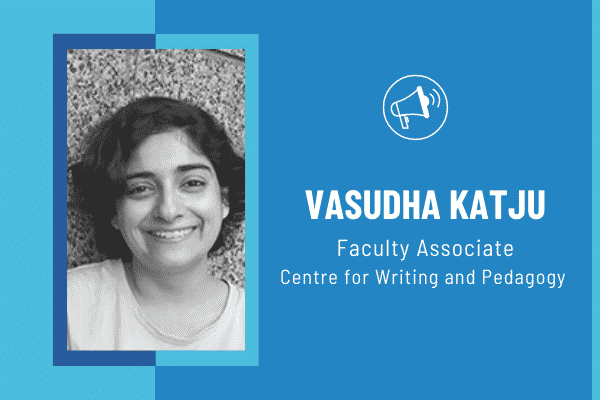
Vasudha Katju, Faculty Associate – Centre for Writing and Pedagogy at Krea University, presented her paper titled ‘Difference in Indian Feminist Activism: Caste and Sexuality in the Autonomous Women’s Movement’, as part of the panel on political activism at the ‘Conceptualizing Difference Conference’. Organised by The Centre for Citizenship, Civil Society, Rule of Law at the University of Aberdeen, the conference features speakers, scholars and researchers from all over the world, sharing their work on “difference” as a political category.